Blog

Mazda Service Explained: What Your Mazda Actually Needs, When It Needs It, and Why Proper Maintenance Matters

Mazda has built a strong reputation for making vehicles that feel sharper, more refined, and more premium than many of their direct competitors. Whether someone drives a Mazda3, CX-30, CX-5, CX-50, CX-70, CX-90, or a Miata, the appeal is usually the same: strong driving dynamics, upscale design, solid engineering, and a daily ownership experience that feels more thoughtful than average.

But none of that means much if the vehicle is neglected.

A Mazda can be reliable, smooth, and rewarding to own for years, but like any modern vehicle, it depends heavily on proper service. This is where many drivers get confused. They know they need maintenance, but they do not always know what “Mazda service” really includes, what matters most, what can wait, and what should never be ignored.

This article breaks all of that down in detail. If you want a deep, clear explanation of Mazda service, what it includes, when it matters, and why it directly affects reliability, performance, resale value, and long-term ownership cost, this is the guide.

What Mazda Service Really Means

When people say “Mazda service,” they often mean one of two things.

The first is routine maintenance: oil changes, tire rotations, brake inspections, fluid checks, filter replacements, and factory-scheduled services that keep the car running as intended.

The second is repair and diagnostic work: fixing warning lights, replacing worn components, solving noises, correcting alignment issues, repairing suspension parts, resolving battery or electrical problems, and addressing anything that has gone wrong.

Both are important, but routine service is what usually determines whether the second category stays manageable or becomes expensive.

Mazda service is not just about changing oil and hoping for the best. Modern Mazdas rely on a combination of mechanical precision, electronic systems, sensors, safety technology, and increasingly sophisticated drivetrains. Skipping service does not just shorten engine life. It can affect fuel economy, brake performance, ride quality, transmission behavior, tire wear, emissions performance, and even the way driver-assistance systems function.

That is why regular Mazda service is not optional if someone wants the vehicle to keep feeling like a Mazda instead of turning into just another worn-out car.

Why Mazda Maintenance Matters More Than Many Drivers Realize

A lot of owners assume that if a vehicle is still driving, it must be fine. That is one of the biggest mistakes in car ownership.

By the time a problem becomes obvious, it is often already more expensive than it would have been if caught earlier.
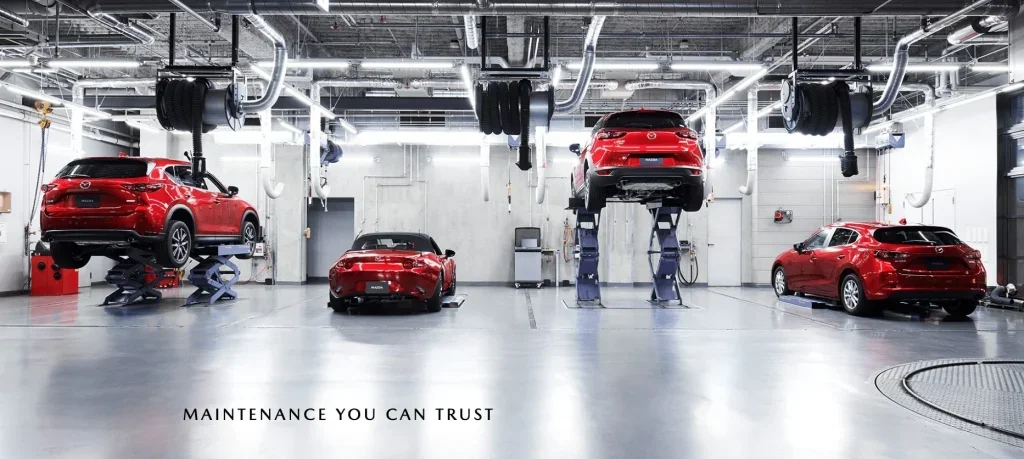
Take engine oil, for example. Old or degraded oil does not always cause immediate visible symptoms. The engine may still run, the vehicle may still move, and the driver may feel nothing unusual. But internally, wear protection can be dropping, heat control can worsen, deposits can build, and the engine can slowly lose the smoothness and durability it was designed to have.

The same logic applies to brakes, tires, alignment, coolant condition, filters, and transmission fluid. Many service items do not fail dramatically at first. They deteriorate quietly. That is what makes them dangerous from a cost perspective.

Mazda vehicles are engineered to deliver a refined, responsive drive. When service is delayed, the vehicle may still function, but it gradually loses the qualities that made it enjoyable in the first place. Steering can feel less precise. Braking can feel less confident. Ride quality can become harsher. Fuel consumption can creep upward. Cabin air quality can worsen. Tire noise can increase. The car may still be usable, but it is no longer operating at the level it should.

The Core Types of Mazda Service

To understand Mazda maintenance properly, it helps to break it into categories.

1. Engine oil and filter service

This is the most basic and most essential service every Mazda needs.

Oil lubricates internal engine components, reduces friction, controls heat, and helps prevent wear. The oil filter traps contaminants so they do not continue circulating through the engine.
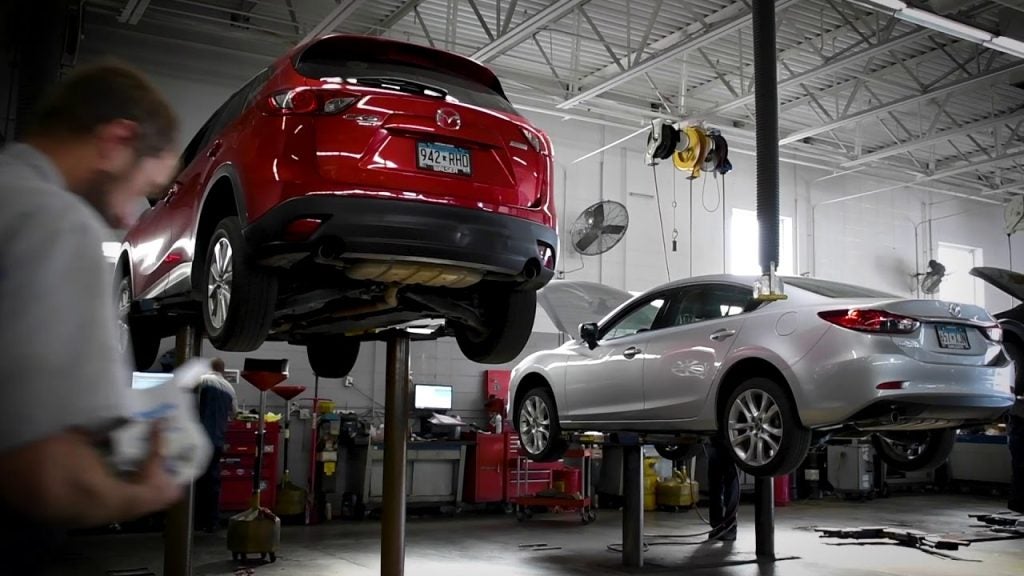
Skipping oil changes is one of the fastest ways to shorten engine life. Even if the engine does not fail immediately, neglected oil service increases long-term wear and can contribute to expensive issues later.

For many Mazda owners, oil service is the maintenance item they recognize most easily, but it should never be treated as the only maintenance item that matters.

2. Tire rotation and tire inspection

Tires wear differently depending on drivetrain layout, alignment condition, driving style, road conditions, and inflation pressure. Rotating them helps extend tire life and keeps wear more even.

A proper Mazda service visit should not just rotate tires. It should also include checking tire condition, tread depth, sidewall health, inflation levels, and signs of uneven wear.

Uneven tire wear can reveal bigger issues like poor alignment, suspension wear, or persistent underinflation. That makes tire inspection more valuable than many people realize.

3. Brake service

Brake service can range from inspection to pad replacement, rotor replacement, brake fluid exchange, or diagnosis of brake noise and vibration.

Brakes are obviously a safety-critical system, but they also strongly influence how confident a vehicle feels in daily driving. A Mazda with strong brakes feels composed. A Mazda with neglected brakes feels cheap, noisy, and uncertain.

Brake service should not be delayed once symptoms appear. Squealing, grinding, pedal pulsation, longer stopping distances, or a soft pedal all deserve attention quickly.

4. Fluid checks and replacement services

A Mazda uses multiple fluids beyond engine oil. These can include:

  • coolant
  • brake fluid
  • transmission fluid
  • differential fluid on some AWD models
  • transfer case fluid on applicable models
  • windshield washer fluid
  • power steering fluid on models that use it, though many newer systems are electric

Fluids are often ignored because they are not as visible as tires or brake pads. But they are essential to system protection and long-term durability. A vehicle may not warn you until the problem is already advanced.

5. Filter replacement

Two filters matter frequently in regular service discussions:

  • engine air filter
  • cabin air filter

The engine air filter affects airflow to the engine and can influence efficiency and performance if neglected badly enough. The cabin air filter affects the air you breathe inside the vehicle, as well as HVAC system efficiency.

These are not the most glamorous service items, but they matter for overall ownership quality.

6. Battery and electrical system inspection

Modern Mazdas rely heavily on electrical systems, modules, sensors, infotainment hardware, and advanced safety technology. Battery health matters more than it used to.

A weak battery can create odd symptoms long before complete failure. Slow starts, warning lights, infotainment irregularities, or inconsistent electronic behavior can all be linked to battery or charging system health.

A proper service visit should include basic battery testing or at least a battery condition assessment when there are signs of age or performance decline.

7. Alignment and suspension inspection

Mazda vehicles are often praised for their road manners, and suspension condition plays a huge role in that. If the alignment is off or suspension components are wearing out, the vehicle stops feeling planted and confident.

Poor alignment can also destroy tires early. That means ignoring it is not just a handling issue. It becomes a tire-cost issue too.

8. Major interval service

At certain mileage or time intervals, more extensive service becomes necessary. This can include spark plugs, deeper fluid service, belt inspections, more detailed system checks, and other scheduled items depending on model and engine.

These larger services are where many owners try to cut corners. Sometimes that works for a little while. Long term, it usually does not.

What a Good Mazda Service Visit Should Include

A proper Mazda service appointment should be more than just a quick oil drain and refill.

A strong service visit usually includes:

  • review of maintenance due based on mileage and time
  • oil and filter replacement if due
  • tire rotation if appropriate
  • brake inspection
  • fluid level and condition checks
  • tire pressure adjustment
  • visual inspection underneath the vehicle
  • battery condition review
  • filter inspection
  • reset of maintenance reminders if needed
  • communication with the customer about what is due now versus what is coming soon

The communication part matters a lot. Good service is not only technical. It is also about transparency. Owners should understand what is urgent, what is preventative, and what can reasonably be scheduled later.

That is how trust is built in a service department.

Mazda Service by Ownership Stage

Service needs change depending on how old the Mazda is and how many kilometres or miles it has accumulated.

New Mazda ownership

In the early period of ownership, service is mostly preventative and routine. The focus is on:

  • regular oil changes
  • inspections
  • tire rotations
  • maintaining warranty compliance
  • catching any early issues before they grow

At this stage, the goal is not just to maintain the vehicle. It is to establish a service history and keep the vehicle operating exactly as designed.

Mid-life Mazda ownership

Once the vehicle has been on the road for a few years, service becomes more layered. In addition to the basics, owners start needing:

  • brake work
  • tire replacement
  • battery attention
  • fluid renewals
  • filters more regularly
  • alignment checks
  • suspension monitoring

This is the stage where disciplined service makes the biggest difference. A well-maintained mid-life Mazda still feels excellent. A neglected one starts to feel aged quickly.

Higher-mileage Mazda ownership

At higher mileage, the focus shifts even more toward preservation. The basics still matter, but so do:

  • sealing issues
  • wear items
  • ignition components
  • cooling system condition
  • drivetrain fluid condition
  • suspension fatigue
  • noise diagnosis
  • electrical reliability

This is where owners either benefit from years of careful maintenance or begin paying for years of delay.

Common Mazda Service Items Owners Should Never Ignore

Some service items seem small until they become big.

Delayed oil changes

This is still one of the most damaging habits in vehicle ownership. People often stretch oil service too far because the car still “feels fine.” That is not a reliable indicator.

Uneven tire wear

This usually means something else is happening. It could be alignment, inflation, suspension, or driving-condition related. Ignoring it just leads to premature tire replacement and reduced stability.

Brake noise

Not all brake noise means disaster, but it should never be dismissed casually. Early brake attention is much cheaper than waiting until pads damage rotors or overall performance declines.

Cooling system neglect

Overheating or cooling issues can become engine-damaging problems very fast. Coolant health and cooling system condition deserve respect.

Warning lights

Too many drivers treat warning lights as background decoration. On a modern Mazda, a warning light can point to emissions issues, sensor failures, charging concerns, brake system problems, or engine-management faults. Delaying diagnosis can turn a smaller issue into a much larger one.

The Difference Between Basic Service and Real Preventative Maintenance

Many service departments advertise low-cost basics because that gets people in the door. Oil change, tire rotation, inspection. Those services matter. But real preventative maintenance goes further.

Real preventative maintenance means servicing the vehicle based on what it actually needs before symptoms become obvious. It means thinking beyond today’s invoice and focusing on long-term condition.

That includes:

  • doing fluid service before fluid is badly degraded
  • replacing filters before performance drops noticeably
  • correcting alignment before tires are ruined
  • addressing brake wear before rotor damage
  • replacing aging batteries before roadside failure
  • identifying minor leaks before they become major repairs

This is the difference between reactive ownership and proactive ownership. Mazda vehicles generally reward the second approach.

Why OEM and Mazda-Specific Service Knowledge Matters

Not every shop understands Mazda the same way.

That does not mean every independent shop is bad or every dealer is perfect. It means Mazda-specific knowledge has real value. A technician familiar with Mazda vehicles is more likely to understand common patterns, model-specific maintenance needs, software procedures, inspection points, and brand-specific service standards.

That matters more on newer vehicles with:

  • driver-assistance systems
  • electronic parking brakes
  • infotainment integration
  • advanced diagnostics
  • turbocharged setups
  • AWD systems
  • hybrid or electrified components on select models

The more complex the vehicle, the more valuable correct service knowledge becomes.

How Service Affects Mazda Reliability

A lot of reliability conversations are too simplistic. People act as if reliability is something the factory decides once and the owner has no role afterward. That is not how real ownership works.

Two identical Mazda vehicles can have very different long-term reliability outcomes depending on service history.

One gets regular maintenance, timely inspections, quality fluids, and early attention to minor issues. The other gets delayed oil changes, ignored warning lights, skipped inspections, cheap shortcuts, and reactive repairs only when something breaks.

Those two vehicles may have started the same, but after five or seven years, they often feel completely different.

So when people ask whether a Mazda is reliable, the right answer is often: it can be very reliable if serviced properly.

How Service Affects Resale Value

Service history has a major impact on resale strength.
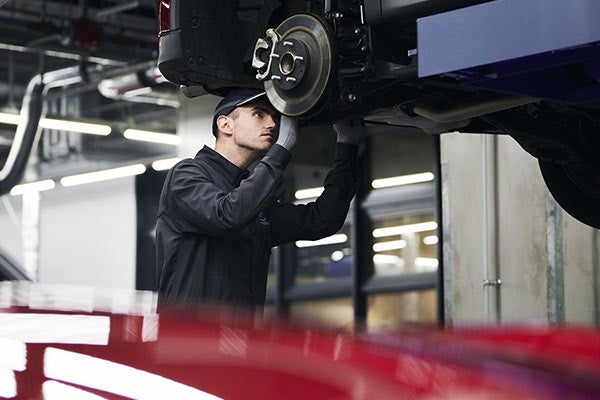
A Mazda with clean records, documented maintenance, and evidence of consistent care is more attractive to the next buyer. It creates confidence. Buyers assume, correctly, that disciplined ownership usually means fewer surprises.

A Mazda with gaps in service history, visible neglect, uneven tires, overdue maintenance, or warning-light stories becomes harder to sell and usually commands less money.

This matters whether someone is keeping the car long term or planning to trade it later. Good service does not just preserve the vehicle. It preserves the financial strength of the asset.

Mazda Service for Different Driver Types

Not every Mazda owner uses the vehicle the same way. Service needs vary based on lifestyle.

The commuter

A commuter may rack up mileage quickly, meaning more frequent oil service, tire attention, and brake monitoring.

The city driver

A mostly urban driver may not accumulate massive mileage, but stop-and-go use can still be hard on brakes, tires, and overall wear patterns.

The highway driver

Highway driving can be easier on some components, but high annual mileage still means maintenance intervals arrive quickly.

The performance-minded driver

Someone who drives aggressively or enjoys the vehicle’s handling more intensely may go through tires and brakes faster and should pay closer attention to wear.

The low-mileage owner

Even low-mileage vehicles still need service based on time, not just distance. Fluids age. Batteries weaken. Tires age out. Filters collect dirt. Sitting does not eliminate maintenance needs.

What Great Mazda Service Feels Like to the Customer

The best Mazda service experience is not just about completing the work. It is about reducing stress for the customer.

A strong service experience feels:

  • organized
  • transparent
  • professional
  • informed
  • not pushy
  • clear about priorities
  • respectful of time
  • proactive without being alarmist

Customers should leave understanding:

  • what was done
  • what needs attention soon
  • what can wait
  • how the vehicle is doing overall

That kind of service builds repeat business because it turns maintenance from a vague expense into a clear ownership strategy.

Final Thoughts: Mazda Service Is What Protects the Mazda Experience

People buy Mazdas for more than transportation. They buy them because they like the way they drive, the way they look, the way they feel inside, and the way they balance practicality with refinement.

Service is what protects that experience.

Without proper service, even a great Mazda gradually loses the qualities that made it special. With proper service, it can remain smooth, capable, reliable, and rewarding for years longer than many owners expect.

So if someone asks what Mazda service really is, the best answer is this:

It is not just maintenance. It is the ongoing process that protects the performance, safety, comfort, value, and long-term integrity of the vehicle.

A Mazda that is serviced properly does not just last longer. It drives better, ages better, sells better, and costs less to own in the long run.

That is why detailed, consistent Mazda service is never just another appointment on the calendar. It is one of the smartest things an owner can do.

Recommended Posts

Is Mazda a Luxury Brand?

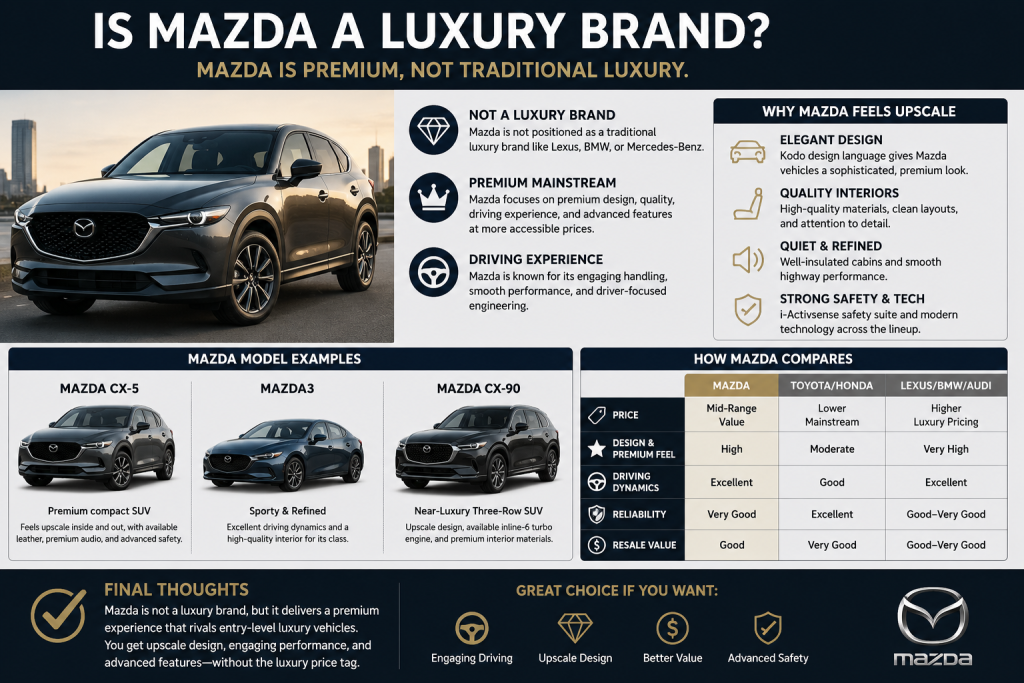
Is Mazda a Luxury Brand? Mazda is not officially a luxury brand, but it is one of the clearest examples of a premium mainstream brand. That means Mazda sits between regular brands like Toyota, Honda, Hyundai, Nissan, and Subaru, and traditional luxury brands like Lexus, Acura, BMW, Audi, Mercedes-Benz, and Volvo. Mazda does not sell itself as a full luxury automaker, but many of its newer vehicles feel more upscale than their price suggests. The simple answer is this: Mazda is not a luxury brand, but it is a premium-feeling brand with luxury-like design, interiors, and driving dynamics. Why People Think Mazda Is a Luxury Brand People ask whether Mazda is a luxury brand because newer Mazda models look and feel more expensive than many mainstream competitors. Mazda has focused heavily on interior quality, clean design, quiet cabins, better materials, strong paint colors, refined driving feel, and upscale trims. Models like the Mazda CX-5, CX-50, CX-70, CX-90, Mazda3, and MX-5 Miata all show that Mazda is trying to be more than just another economy car brand. Mazda itself has leaned into the idea of “premium” more than “luxury.” In a 2026 Mazda survey, the company described modern premium value as being about design, comfort, technology, and daily experience rather than just the badge on the grille. Mazda said its focus remains on vehicles that elevate everyday driving through thoughtful design, intuitive technology, and safety. Mazda USA That is exactly where Mazda fits today. It is not trying to copy Lexus directly. It is trying to make mainstream vehicles feel more special. Mazda Is Premium, Not Traditional Luxury A traditional luxury brand usually offers things like exclusive dealer experiences, higher-end powertrains, wider customization, premium materials across the lineup, prestige branding, luxury service programs, and higher base pricing. Mazda does not fully operate in that space. Instead, Mazda gives buyers a more premium experience without jumping fully into luxury-brand pricing. This is why shoppers often compare a loaded Mazda CX-5 or Mazda CX-90 against entry-level Lexus, Acura, Volvo, Audi, or BMW models. Motor1 reported that Mazda’s internal idea of “premium” does not necessarily mean “luxury.” The brand has been aiming for a more boutique, higher-end customer, but not in the same exact way as traditional luxury automakers. Motor1 That distinction matters. Mazda is premium by design and feel. It is not luxury by official market category. What Makes Mazda Feel Upscale? Mazda vehicles often feel upscale because of the way they are designed. The cabins usually avoid the cheap, cluttered look found in some mainstream vehicles. Controls are simple. Materials feel better than expected. Steering and handling are more engaging. Exterior styling is mature and elegant instead of loud or overly busy. Mazda’s Kodo design philosophy is a big part of this. The brand focuses on shape, proportion, motion, and restraint. That gives many Mazda vehicles a more expensive look than their window sticker suggests. The result is a brand that feels grown-up. A Mazda may not have the badge prestige of a Lexus or BMW, but the vehicle itself often feels more refined than many shoppers expect. Is the Mazda CX-5 a Luxury SUV? The Mazda CX-5 is not a luxury SUV, but upper trims can feel close to entry-level luxury. A well-equipped CX-5 can include leather seating, available Nappa leather on certain trims in some markets, a premium audio system, heated and ventilated front seats, a quiet cabin, elegant interior design, and strong handling. That is why the CX-5 is often cross-shopped against premium compact SUVs. But it is still priced and positioned as a mainstream compact SUV. The CX-5 is best described as a premium compact SUV, not a true luxury SUV. Is the Mazda CX-90 a Luxury SUV? The Mazda CX-90 is probably the closest Mazda gets to luxury right now. It uses a rear-biased platform, available inline-six turbo engine, upscale cabin design, premium materials, and a more refined three-row SUV layout. Car and Driver describes the CX-90 as part of Mazda’s continuing effort to position itself as a premium brand, with elegant styling and a luxurious interior. Car and Driver That does not make the CX-90 a Mercedes-Benz GLS or BMW X7 competitor. But it does make it one of the most premium-feeling mainstream three-row SUVs. For buyers who want near-luxury feel without full luxury pricing, the CX-90 is one of Mazda’s strongest arguments. Is Mazda More Premium Than Toyota or Honda? Yes, Mazda often feels more premium than Toyota or Honda at similar price points. Toyota and Honda usually focus more on practicality, resale value, fuel economy, reliability, and broad appeal. Mazda focuses more on design, interior feel, and driving enjoyment. That does not mean Mazda is better for every buyer. Toyota and Honda may still be stronger choices for maximum resale value, hybrid selection, or long-term low-cost ownership. But if the question is which mainstream brand feels more upscale, Mazda is usually one of the top answers. Mazda’s advantage is emotional. The cars feel more carefully styled and more enjoyable to drive. Mazda vs Lexus, Acura, BMW, and Audi Mazda is not in the same official category as Lexus, Acura, BMW, or Audi. Luxury brands usually offer stronger badge prestige, more powerful engines, higher-end dealer experiences, deeper luxury options, and more expensive flagship models. They also usually come with higher ownership costs. Mazda’s advantage is value. A loaded Mazda can give shoppers a premium cabin, handsome design, and strong driving dynamics for less money than many luxury SUVs. But there are still differences. A Lexus RX, BMW X3, Audi Q5, or Mercedes-Benz GLC may offer more luxury-brand prestige, more advanced powertrain options, more refinement, or a more traditional luxury ownership experience. Mazda gives you a premium feel. Luxury brands give you the luxury badge and ecosystem. Is Mazda Trying to Become a Luxury Brand? Mazda has been moving more upscale, but it has not fully become a luxury brand. The brand has invested in more premium products, cleaner retail spaces, better interiors, higher-end SUVs, and more refined vehicle platforms. But Mazda still sells mainstream vehicles and competes heavily with Toyota, Honda, Subaru, Hyundai, Kia, and Nissan. The best way to describe Mazda’s strategy is near-luxury or premium mainstream. That is a smart position because many buyers want a vehicle that feels expensive without paying full luxury-brand pricing. Is Mazda Worth It Over a Luxury Brand? Mazda can be worth it if you care more about the vehicle experience than the badge. A Mazda makes sense if you want upscale styling, a nice interior, good handling, strong safety features, and lower pricing than many luxury vehicles. It may also cost less to insure, maintain, and repair than some German luxury brands. A luxury brand makes more sense if badge prestige, maximum refinement, advanced powertrain choices, concierge-level dealer experience, or higher-end materials are the priority. For many buyers, Mazda is the smarter middle ground. FAQs About Mazda as a Luxury Brand Is Mazda considered a luxury brand? No. Mazda is not officially considered a luxury brand. It is better described as a premium mainstream brand. Is Mazda a premium brand? Yes. Mazda has moved strongly into premium territory with upscale design, refined interiors, better driving dynamics, and higher-end models like the CX-70 and CX-90. Is Mazda as good as Lexus? Mazda can feel premium, but Lexus is a true luxury brand with stronger reliability reputation, dealer experience, and luxury-market positioning. Mazda is usually more affordable. Is Mazda better than Toyota? Mazda often feels more stylish and premium than Toyota, while Toyota usually has stronger hybrid options, resale value, and long-term reliability reputation. Is the Mazda CX-5 luxury? The Mazda CX-5 is not a true luxury SUV, but higher trims can feel near-luxury compared with many mainstream compact SUVs. Is the Mazda CX-90 a luxury SUV? The Mazda CX-90 is not officially a luxury SUV, but it is one of Mazda’s most premium vehicles and can feel close to entry-level luxury SUVs. Final Thoughts: Mazda Is Not Luxury, But It Feels Premium Mazda is not a luxury brand in the traditional sense. It does not sit directly beside Lexus, BMW, Audi, Mercedes-Benz, or Volvo. But it has become one of the most premium-feeling mainstream automakers. That is Mazda’s sweet spot. You get upscale design, strong driving feel, refined interiors, and a more emotional ownership experience without paying full luxury-brand prices. For shoppers who want something nicer than a basic mainstream SUV but do not care about a luxury badge, Mazda makes a very strong case.

Are Mazdas Expensive to Maintain?

Are Mazdas Expensive to Maintain? No, Mazdas are not expensive to maintain compared with many other brands. The simple answer is this: Mazda maintenance costs are usually lower than the industry average and close to Toyota and Honda in real-world ownership cost. Mazda is not always the absolute cheapest brand to maintain, but it is generally affordable, especially compared with European luxury brands, larger trucks, and some turbocharged or hybrid vehicles. RepairPal lists the average annual repair and maintenance cost for Mazda at $462, which is below the overall average of $652 for all vehicle models. RepairPal also gives Mazda a strong overall reliability profile, which helps explain why Mazda is often considered one of the better mainstream brands for long-term ownership. Why Mazda Maintenance Is Usually Affordable Mazda maintenance is usually affordable because most Mazda vehicles use fairly conventional gas engines, widely available parts, and relatively simple drivetrains compared with luxury brands. Mazda also does not rely as heavily on complicated hybrid systems across its whole lineup as some competitors. Many popular models, like the Mazda3, Mazda6, CX-30, CX-5, and CX-9, use proven gasoline engines and automatic transmissions that many independent shops can service. That matters because maintenance cost is not just about parts. It is also about labor time, diagnostic complexity, and how easy the vehicle is to work on. Mazda gives you a more premium-feeling interior and driving experience without the full luxury-brand service bill. Mazda Maintenance Cost Per Year The average Mazda costs about $462 per year for maintenance and repairs, according to RepairPal. RepairPal That is lower than the overall vehicle average and competitive with other reliable mainstream brands. For comparison, Toyota and Honda are often slightly cheaper, but Mazda is usually in the same general ownership-cost range. The gap is not huge for most common repairs and regular maintenance. Where costs can increase is with older high-mileage models, turbocharged engines, AWD systems, poor service history, or vehicles that were neglected by previous owners. Are Mazda CX-5 Maintenance Costs High? No, the Mazda CX-5 is not expensive to maintain for a compact SUV. RepairPal lists the annual repair and maintenance cost for the Mazda CX-5 at $447, compared with $573 for midsize SUVs and $652 for all vehicle models. RepairPal That makes the CX-5 one of Mazda’s stronger ownership-cost examples. It gives shoppers a premium-feeling cabin, sharp handling, and available AWD without the maintenance cost of a luxury SUV. A CX-5 can cost more to maintain if it has turbo power, AWD, higher mileage, or poor service records, but a well-maintained gas CX-5 is usually affordable to own. Are Mazda Parts Expensive? Mazda parts are usually not expensive compared with luxury brands. Common maintenance items like oil filters, air filters, brake pads, spark plugs, belts, tires, and fluids are generally reasonable. Mazda parts may sometimes cost a little more than the cheapest Toyota or Honda parts, but they are not usually in BMW, Mercedes-Benz, Audi, or Volvo territory. The biggest factor is where you service the vehicle. A Mazda dealership may cost more than a trusted independent shop, especially for basic maintenance. But dealership service can be useful for recalls, warranty repairs, software updates, and model-specific inspections. For routine maintenance, many Mazda owners can keep costs controlled by following the maintenance schedule and avoiding deferred repairs. What Mazda Maintenance Costs the Most? Most Mazda maintenance is normal: oil changes, tires, brakes, filters, spark plugs, fluids, batteries, and inspections. The more expensive items usually come later in ownership. These can include suspension parts, control arms, wheel bearings, engine mounts, transmission service, AWD system service, air-conditioning repairs, infotainment repairs, and turbo-related repairs on turbo models. Older Mazda vehicles can also need rust-related repairs depending on climate, road salt, and storage conditions. If you are buying used, check the service history carefully. A cheap used Mazda with skipped maintenance can become more expensive than a slightly pricier one with clean records. Is Mazda Cheaper to Maintain Than Toyota? Mazda is usually close to Toyota, but Toyota is often slightly cheaper long-term. Toyota’s biggest advantage is its extremely broad parts availability, huge service network, and long-standing reputation for simple, durable vehicles. Mazda is still affordable, but Toyota often wins if the only question is lowest possible maintenance cost. That said, Mazda often feels more upscale and more engaging to drive. For many shoppers, the small difference in maintenance cost is worth it for the better interior feel and sharper driving experience. Is Mazda Cheaper to Maintain Than Honda? Mazda and Honda are usually close in maintenance costs. Honda is known for efficient engines, strong resale value, and low ownership costs. Mazda is also affordable, especially on naturally aspirated models like many Mazda3 and CX-5 trims. The better choice depends on the specific model and condition. A well-maintained Mazda CX-5 can be cheaper to own than a neglected Honda CR-V. A clean Honda Civic can be cheaper than an older Mazda with poor service records. Condition matters more than the badge. Is Mazda Cheaper to Maintain Than Subaru? Mazda is often cheaper to maintain than Subaru. Subaru’s standard AWD systems are a major selling point, but they can add maintenance complexity and cost. Subaru models may also have specific repair patterns that can raise ownership costs depending on the year and model. Mazda offers available AWD on many models, but not every Mazda has it. A front-wheel-drive Mazda3 or CX-5 may be cheaper to maintain than an AWD Subaru with similar mileage. Is Mazda Cheaper to Maintain Than Luxury Brands? Yes, Mazda is much cheaper to maintain than most luxury brands. This is one of Mazda’s biggest strengths. Mazda vehicles often feel more premium than other mainstream brands, but they do not usually carry the repair costs of BMW, Audi, Mercedes-Benz, Lexus, Acura, or Volvo. Lexus and Acura may still have strong reliability and reasonable costs for luxury brands, but Mazda usually stays cheaper because it is still a mainstream brand. If you want a near-luxury feel without luxury maintenance bills, Mazda is one of the best brands to consider. Do Turbo Mazdas Cost More to Maintain? Yes, turbocharged Mazdas can cost more to maintain than non-turbo models. A turbo engine has more heat, more pressure, and more components than a naturally aspirated engine. It also needs consistent oil changes and proper maintenance to stay healthy. Mazda’s turbo engines can be strong, but buyers should not treat them like low-maintenance base engines. If you are buying a used turbo Mazda, look for regular oil changes, no boost-related issues, clean startup, no smoke, no oil leaks, and no signs of abuse. For the lowest maintenance costs, a non-turbo Mazda is usually the safer choice. Is Mazda AWD Expensive to Maintain? Mazda AWD is not usually expensive, but it can add cost compared with front-wheel drive. AWD systems have extra components, including a rear differential and driveline parts. These parts may need fluid service and inspection over time. Tires also matter more on AWD vehicles because mismatched tire wear can create drivetrain stress. If you want the lowest possible ownership cost, front-wheel drive is usually cheaper. If you need better traction in rain, snow, or mountain driving, Mazda AWD can be worth the added cost. Used Mazda Maintenance: What to Check Used Mazdas can be affordable, but maintenance history is critical. Before buying a used Mazda, check for oil-change records, tire condition, brake wear, suspension noise, transmission behavior, coolant condition, battery age, rust, infotainment issues, and open recalls. For Mazda CX-5, Mazda3, Mazda6, CX-30, and CX-9 models, also check that the infotainment screen works properly and that the backup camera, Bluetooth, navigation, and control knob function as expected. A class action settlement reported in 2025 involved Mazda Connect infotainment issues on several 2014 to 2023 Mazda models, including Mazda3, Mazda6, CX-3, CX-5, CX-9, and MX-5. Mazda denied wrongdoing but agreed to settlement terms involving reimbursements and warranty extension coverage for eligible owners. The Sun That does not make Mazdas expensive overall, but it is a reminder to check electronics before buying used. How to Keep Mazda Maintenance Costs Low The best way to keep Mazda maintenance costs low is simple: follow the maintenance schedule and fix small issues early. Do regular oil changes. Replace air and cabin filters on time. Rotate tires. Keep the correct tire pressure. Change spark plugs when due. Service fluids as recommended. Do not ignore warning lights. Use quality parts. Keep records. For AWD models, keep tires matched and rotate them regularly. For turbo models, use the correct oil and do not stretch oil-change intervals too far. A Mazda that gets basic maintenance on time can be one of the more affordable vehicles to own. Are Mazdas Good Long-Term Cars? Yes, Mazdas are good long-term cars when maintained properly. Mazda has built a strong reputation for combining reliability, driving enjoyment, and upscale design without extreme ownership costs. Many Mazda3, Mazda6, CX-5, and CX-9 models can last well beyond 150,000 miles with regular service. The key is not neglecting maintenance. Like any vehicle, a Mazda will become expensive if oil changes are skipped, tires are ignored, brakes are delayed, or small leaks are allowed to become major repairs. Should You Buy a Mazda If You Want Low Maintenance Costs? Yes, Mazda is a strong choice if you want a vehicle that feels more premium than many mainstream brands but does not cost like a luxury car to maintain. Toyota and Honda may still be the safest choices for the absolute lowest long-term costs, but Mazda is very competitive. It is especially attractive if you want a better driving feel and nicer interior without jumping into luxury-brand repairs. For shoppers comparing Mazda models, look at the latest new Mazda inventory or compare pre-owned options in the used inventory. If you are budgeting around payments, trade value, and service costs, you can also review current Mazda specials. FAQs About Mazda Maintenance Costs Are Mazdas expensive to maintain? No. Mazdas are generally affordable to maintain. RepairPal lists the average annual Mazda repair and maintenance cost at $462, which is below the industry average. Is the Mazda CX-5 expensive to maintain? No. The Mazda CX-5 is one of the more affordable SUVs to maintain. RepairPal lists its average annual repair and maintenance cost at $447. Are Mazda parts expensive? Mazda parts are usually not expensive compared with luxury brands. Common maintenance parts are generally reasonable and widely available. Is Mazda cheaper to maintain than Toyota? Mazda is usually close to Toyota, but Toyota is often slightly cheaper long-term. Mazda may feel more premium and more enjoyable to drive. Is Mazda cheaper to maintain than Honda? Mazda and Honda are usually close. The better buy depends on the specific model, mileage, service history, and condition. Do Mazda turbo engines cost more to maintain? Yes, Mazda turbo engines can cost more than non-turbo engines because they add heat, pressure, and more components. They require consistent oil changes and proper maintenance. Are used Mazdas expensive to fix? Used Mazdas are usually not expensive to fix if they have been maintained well. Neglected used Mazdas can become costly, especially if they have turbo, AWD, infotainment, or suspension issues. Final Thoughts: Mazdas Are Affordable to Maintain Mazdas are not expensive to maintain for most drivers. They cost less than the industry average, are usually close to Toyota and Honda in ownership costs, and are much cheaper to maintain than most luxury brands. The Mazda CX-5 is a strong example, with average annual repair and maintenance costs below the broader vehicle average. The best Mazda to own is the one with clean service records, regular oil changes, no major accident history, and the right drivetrain for your needs. Choose carefully, maintain it properly, and a Mazda can deliver premium feel without premium repair bills.

What Engine Does the 2015 Mazda CX-5 Have?

What Engine Does the 2015 Mazda CX-5 Have? The 2015 Mazda CX-5 came with two engine options in North America: a 2.0L SKYACTIV-G 4-cylinder engine and a 2.5L SKYACTIV-G 4-cylinder engine. The simple answer is this: most 2015 Mazda CX-5 models have the 2.5L SKYACTIV-G 4-cylinder engine, while the base Sport front-wheel-drive model could come with the smaller 2.0L SKYACTIV-G engine. Mazda’s official 2015 CX-5 specifications list the 2.0L engine at 155 horsepower and the 2.5L engine at 184 horsepower. Mazda 2015 CX-5 specs 2015 Mazda CX-5 Engine Options The 2015 Mazda CX-5 was offered with Mazda’s SKYACTIV-G gasoline engines. The smaller engine was a 2.0L SKYACTIV-G 4-cylinder. It produced 155 horsepower and was available on Sport front-wheel-drive models. Mazda offered it with either a 6-speed manual transmission or a 6-speed automatic transmission, depending on configuration. Mazda 2015 CX-5 specs The larger engine was a 2.5L SKYACTIV-G 4-cylinder. It produced 184 horsepower and was used on Sport AWD, Touring, and Grand Touring models. This engine came with a 6-speed automatic transmission. Mazda 2015 CX-5 specs Which 2015 CX-5 Engine Is More Common? The 2.5L engine is the more common and more desirable choice for most used buyers. It gives the CX-5 better acceleration, stronger highway passing power, and a more relaxed driving feel than the 2.0L engine. The 2.0L is fuel-efficient and simple, but it can feel underpowered, especially with passengers, cargo, hills, or highway merging. Edmunds notes that the 2015 Mazda CX-5 Sport front-wheel-drive model came with the 2.0L 4-cylinder engine making 155 horsepower and 150 lb-ft of torque, while other models used the stronger 2.5L 4-cylinder with 184 horsepower and 185 lb-ft of torque. Edmunds 2015 Mazda CX-5 2.0L Engine The 2.0L SKYACTIV-G engine was the entry-level engine. It made 155 horsepower and 150 lb-ft of torque. This engine was mainly found in the base Sport front-wheel-drive model. It could be paired with a 6-speed manual transmission or a 6-speed automatic transmission. This engine is fine if you want a basic, efficient used SUV and do not care much about quick acceleration. But for most buyers, the 2.5L engine is the better fit. 2015 Mazda CX-5 2.5L Engine The 2.5L SKYACTIV-G engine was the stronger option. It made 184 horsepower and 185 lb-ft of torque. It was standard on Touring and Grand Touring models and was also used on Sport AWD models. Edmunds lists the 2015 CX-5 Touring with a 2.5L inline-4 gas engine, 184 hp, 185 lb-ft of torque, and a 6-speed automatic transmission. Edmunds For most shoppers, this is the engine to look for. It gives the CX-5 a better balance of fuel economy and usable power. Is the 2015 Mazda CX-5 Engine Reliable? Yes, the 2015 Mazda CX-5 engines are generally considered reliable, especially when maintained properly. Mazda’s SKYACTIV-G engines are known for being efficient, relatively simple compared with turbocharged engines, and strong for daily driving. The 2015 CX-5 did not use a turbo engine in the North American market, which helps reduce complexity. As with any used vehicle, maintenance matters. Before buying a 2015 CX-5, check for regular oil changes, coolant condition, transmission service history, clean startup, no warning lights, no oil leaks, and no signs of overheating. Which 2015 Mazda CX-5 Engine Should You Buy? For most buyers, the 2.5L SKYACTIV-G engine is the better choice. It has more power, better real-world drivability, and is easier to recommend for highway driving, family use, and daily commuting. The 2.0L engine can still be a good option if the price is right and you want the simplest base model, but it is not as strong when the vehicle is loaded. If you are shopping used, focus more on condition than engine alone. A clean 2.0L CX-5 with full service records can be better than a neglected 2.5L model. FAQs About the 2015 Mazda CX-5 Engine What engine does the 2015 Mazda CX-5 have? The 2015 Mazda CX-5 has either a 2.0L SKYACTIV-G 4-cylinder engine or a 2.5L SKYACTIV-G 4-cylinder engine, depending on trim and drivetrain. Does the 2015 Mazda CX-5 have a V6? No, the 2015 Mazda CX-5 does not have a V6 engine. It only came with 4-cylinder gasoline engines in North America. How much horsepower does the 2015 Mazda CX-5 have? The 2.0L engine makes 155 horsepower, while the 2.5L engine makes 184 horsepower. Which 2015 Mazda CX-5 engine is better? The 2.5L SKYACTIV-G 4-cylinder is better for most buyers because it has more power and feels stronger in everyday driving. Is the 2015 Mazda CX-5 turbocharged? No, the 2015 Mazda CX-5 was not turbocharged in the North American market. Turbocharged CX-5 models came later. Final Thoughts: The 2.5L Is the One Most Buyers Want The 2015 Mazda CX-5 came with two engines: a 2.0L SKYACTIV-G 4-cylinder and a 2.5L SKYACTIV-G 4-cylinder. The 2.0L engine was mainly for base Sport front-wheel-drive models. The 2.5L engine was used in more trims and is the better choice for most shoppers because it offers stronger acceleration and better everyday drivability. If you are buying a used 2015 CX-5, look for the 2.5L engine, clean maintenance records, no warning lights, and a solid inspection. That combination gives you the best chance of getting a dependable compact SUV with Mazda’s sharp driving feel.