

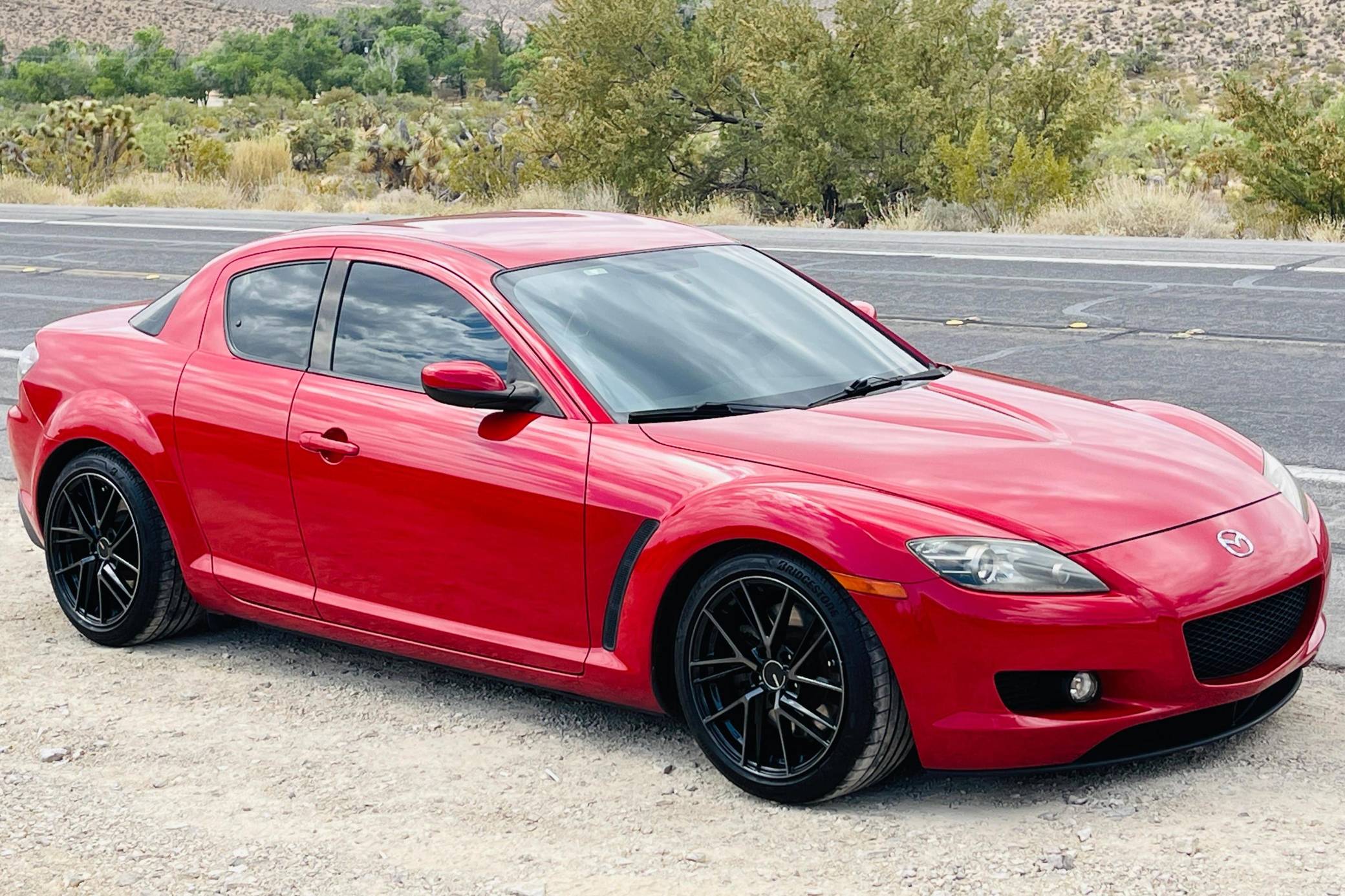
The Mazda RX-8 is one of the most misunderstood modern sports cars ever sold. To some, it is a financial time bomb with an “unreliable” rotary engine. To others, it is one of the last truly analog, high-revving driver’s cars you can buy for real money without selling a kidney.
In 2026, RX-8 prices are still low, examples are getting rarer, and buyer confusion is at an all-time high. This guide exists for one reason: to tell you exactly what you’re getting into before you buy one.
No myths. No nostalgia goggles. Just the mechanical, financial, and ownership reality.
The RX-8’s Real Identity (And Why Most Buyers Get It Wrong)
The RX-8 was never meant to be a muscle car, a commuter appliance, or a torque monster. Mazda engineered it around a philosophy that now barely exists: lightweight balance, high revs, and mechanical feel over raw numbers.
Unlike turbocharged four-cylinders or lazy V6 coupes of the era, the RX-8’s rotary engine behaves more like a motorcycle engine trapped inside a sports car. Power builds with revs. The redline sits high. The reward comes only if you drive it properly.
This is the first reality check:
If you short-shift, baby it, or drive only short city trips, an RX-8 will punish you.
This is why the RX-8 earned its reputation. Not because it was inherently fragile, but because it was widely misunderstood and badly owned.
For broader context on Mazda’s engineering mindset and why the RX-8 is such an outlier, readers should first understand Mazda’s brand reliability philosophy. This is covered in depth in Marin Mazda’s long-form breakdown on whether Mazdas are actually good long-term vehicles.
Engine Deep Dive: The Renesis Rotary Explained Properly
At the center of everything is the 1.3-liter Renesis rotary engine. Calling it “1.3 liters” is misleading, but that’s how it’s officially rated. What matters more is how it works.
How a Rotary Is Different
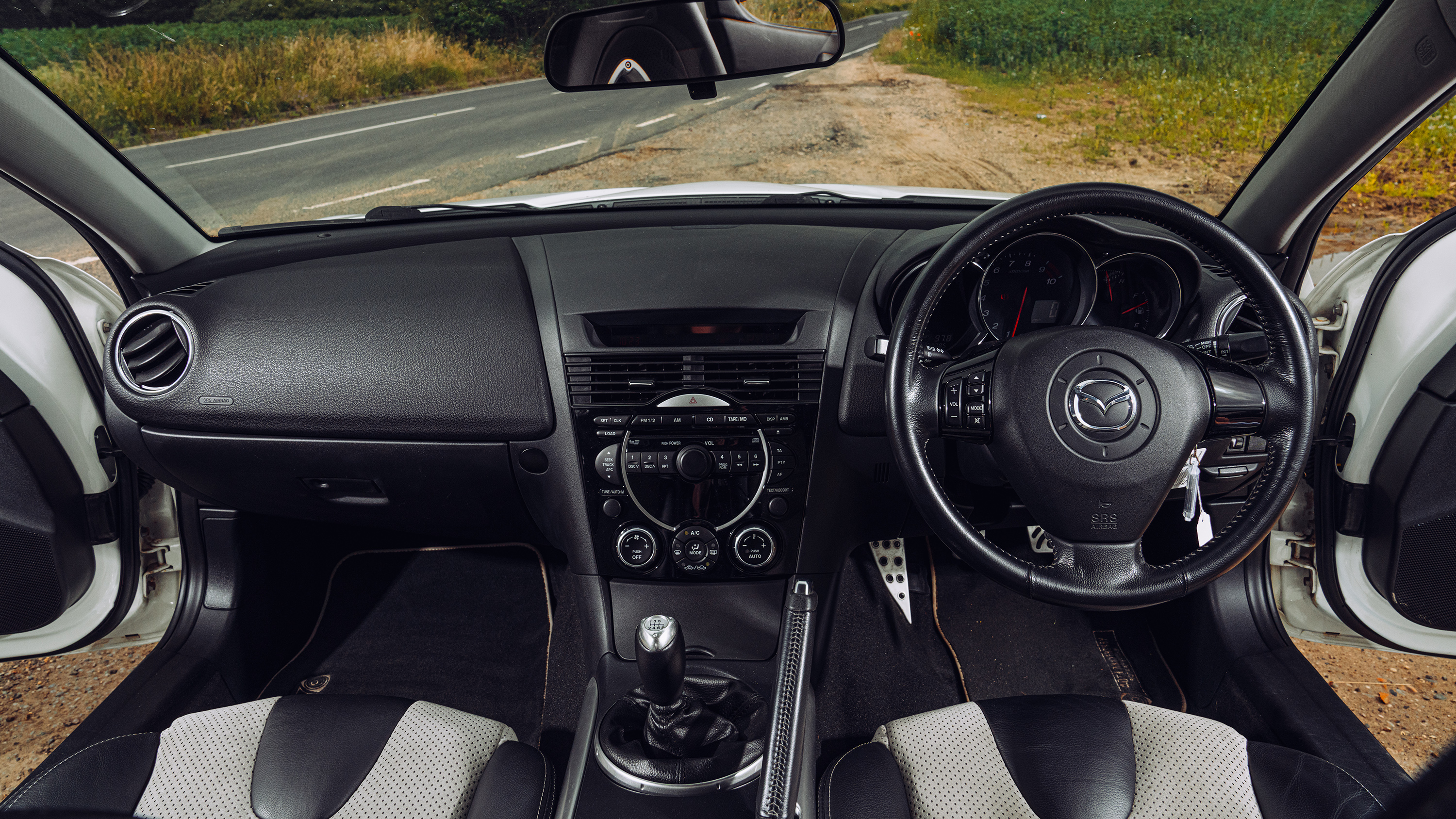
A rotary engine doesn’t use pistons. Instead, it uses triangular rotors spinning inside a housing. Fewer moving parts. Less vibration. A compact footprint that allows the engine to sit far back in the chassis for near-perfect weight distribution.
Key Advantages
- Exceptionally smooth at high RPM
- Extremely compact and lightweight
- Allows a true 50:50 weight balance
- Unique exhaust note and throttle response
Key Disadvantages
- Low torque compared to piston engines
- Burns oil by design
- Sensitive to neglect and improper driving habits
This last point is critical. Rotary engines must burn oil to lubricate internal seals. That is not a defect. That is how they are designed. Owners who don’t check oil regularly or run extended oil change intervals are the ones who end up needing engine rebuilds early.
RX-8 Performance Specs (What the Numbers Don’t Tell You)
On paper, RX-8 specs look underwhelming in 2026. In reality, they tell only half the story.
Typical Manual RX-8 Specs:
- Horsepower: ~232–238 hp
- Torque: ~159 lb-ft
- Redline: ~9,000 RPM
- 0–60 mph: ~6.5 seconds
- Drivetrain: Rear-wheel drive
- Weight Distribution: Nearly perfect 50:50
Those numbers won’t scare modern turbo hot hatches. But numbers don’t capture how the RX-8 delivers performance.
The RX-8 rewards commitment. Keep it above 6,000 RPM and it comes alive. Let it breathe, and it delivers one of the most communicative chassis experiences Mazda has ever produced, rivaled only by the MX-5 Miata in purity.
This is why RX-8 owners who understand the car love it, while casual buyers sell it within a year.
Handling: Where the RX-8 Still Embarrasses New Cars
Even in 2026, few cars at this price point handle like an RX-8.
- Near-perfect steering feedback
- Neutral cornering behavior
- Predictable breakaway at the limit
- Excellent balance on twisty roads
This isn’t accidental. Mazda engineered the RX-8 around handling first. The rotary’s compact size allowed the engine to sit low and far back, lowering the center of gravity and improving turn-in.
If you’ve read Marin Mazda’s breakdown of Mazda sports cars ranked by driving feel, the RX-8 consistently sits near the top despite its age.
The Truth About RX-8 Reliability (No Sugarcoating)
Let’s address the elephant in the room.
Are RX-8s Reliable?
They are conditionally reliable.
That means reliability depends heavily on:
- Ownership history
- Maintenance discipline
- Driving habits
The Most Common RX-8 Problems
- Ignition Coil Failure
Weak coils cause misfires, poor starts, and eventually engine damage if ignored. - Flooding Issues (Early Cars)
Short trips and cold shutdowns can cause unburnt fuel buildup, especially on early models. - Low Compression
Worn apex seals lead to poor hot starts and loss of power. This is the big one. - Oil Neglect
Owners unfamiliar with rotary oil consumption destroy engines without realizing it.
Engine Rebuild Reality
Many RX-8 engines need rebuilding between 80,000–120,000 miles if poorly maintained. Well-maintained examples can exceed that comfortably.
This is why service records matter more than mileage.
For readers comparing rotary reliability to traditional Mazda engines, Marin Mazda’s long-form guide on Mazda engine longevity provides essential context.
Model Years That Matter (Buy These, Avoid These)
Not all RX-8s are created equal.
2004–2006 (Early Years)
- More prone to flooding
- Early ignition issues
- Least desirable unless already rebuilt
2007–2008 (Improved)
- Updated engine management
- Better reliability overall
- Solid value buys if documented
2009–2011 (Best Years)
- Revised internals
- Improved oil metering
- Best choice for 2026 buyers
If you’re shopping seriously, prioritize 2009–2011 manual cars with compression test results.
What to Check Before Buying an RX-8 (Non-Negotiable)
If a seller can’t provide these, walk away.
Mandatory Checks
- Rotary-specific compression test
- Ignition coil replacement history
- Oil consumption records
- Warm and cold start behavior
- Cooling system condition
A clean Carfax means nothing if compression is low.
This inspection mindset mirrors Marin Mazda’s used Mazda buying checklist, which applies doubly to specialty models like the RX-8.
Ownership Costs in 2026 (Realistic Numbers)
Fuel
RX-8s are not fuel efficient. Expect consumption similar to a V6 sports coupe.
Maintenance
- Frequent oil checks
- Regular spark plug and coil replacements
- Higher labor costs due to rotary specialization
Repairs
- Minor repairs are manageable
- Engine rebuilds are expensive but not inevitable
If you budget like an enthusiast instead of a commuter, ownership makes sense.
Who Should Buy an RX-8 in 2026?
You should buy an RX-8 if:
- You enjoy driving for the sake of driving
- You understand mechanical responsibility
- You value handling over straight-line speed
- You want something genuinely different
You should not buy an RX-8 if:
- You want low-effort ownership
- You ignore maintenance
- You expect torque at 2,000 RPM
- You need a reliable short-trip city car
Final Verdict: Is the RX-8 a Smart Buy in 2026?
The RX-8 is not a bad car.
It is a misunderstood enthusiast car.
For buyers who do their homework, inspect properly, and maintain it correctly, the RX-8 remains one of the most rewarding driver’s cars Mazda has ever built. For buyers who treat it like a normal used coupe, it becomes an expensive lesson.
That gap is why prices are still low. And that gap is exactly where smart buyers win.
If you’re exploring Mazda ownership beyond the RX-8, Marin Mazda’s in-depth guides on Mazda reliability, sports car history, and long-term ownership costs are essential reading before making any decision.

Connect with us


