

Are Mazdas Expensive to Maintain?

Are Mazdas Expensive to Maintain?
No, Mazdas are not expensive to maintain compared with many other brands.
The simple answer is this: Mazda maintenance costs are usually lower than the industry average and close to Toyota and Honda in real-world ownership cost. Mazda is not always the absolute cheapest brand to maintain, but it is generally affordable, especially compared with European luxury brands, larger trucks, and some turbocharged or hybrid vehicles.
RepairPal lists the average annual repair and maintenance cost for Mazda at $462, which is below the overall average of $652 for all vehicle models. RepairPal also gives Mazda a strong overall reliability profile, which helps explain why Mazda is often considered one of the better mainstream brands for long-term ownership.
Why Mazda Maintenance Is Usually Affordable
Mazda maintenance is usually affordable because most Mazda vehicles use fairly conventional gas engines, widely available parts, and relatively simple drivetrains compared with luxury brands.
Mazda also does not rely as heavily on complicated hybrid systems across its whole lineup as some competitors. Many popular models, like the Mazda3, Mazda6, CX-30, CX-5, and CX-9, use proven gasoline engines and automatic transmissions that many independent shops can service.
That matters because maintenance cost is not just about parts. It is also about labor time, diagnostic complexity, and how easy the vehicle is to work on.
Mazda gives you a more premium-feeling interior and driving experience without the full luxury-brand service bill.
Mazda Maintenance Cost Per Year
The average Mazda costs about $462 per year for maintenance and repairs, according to RepairPal. RepairPal
That is lower than the overall vehicle average and competitive with other reliable mainstream brands.
For comparison, Toyota and Honda are often slightly cheaper, but Mazda is usually in the same general ownership-cost range. The gap is not huge for most common repairs and regular maintenance.
Where costs can increase is with older high-mileage models, turbocharged engines, AWD systems, poor service history, or vehicles that were neglected by previous owners.
Are Mazda CX-5 Maintenance Costs High?
No, the Mazda CX-5 is not expensive to maintain for a compact SUV.
RepairPal lists the annual repair and maintenance cost for the Mazda CX-5 at $447, compared with $573 for midsize SUVs and $652 for all vehicle models. RepairPal
That makes the CX-5 one of Mazda’s stronger ownership-cost examples. It gives shoppers a premium-feeling cabin, sharp handling, and available AWD without the maintenance cost of a luxury SUV.
A CX-5 can cost more to maintain if it has turbo power, AWD, higher mileage, or poor service records, but a well-maintained gas CX-5 is usually affordable to own.
Are Mazda Parts Expensive?
Mazda parts are usually not expensive compared with luxury brands.
Common maintenance items like oil filters, air filters, brake pads, spark plugs, belts, tires, and fluids are generally reasonable. Mazda parts may sometimes cost a little more than the cheapest Toyota or Honda parts, but they are not usually in BMW, Mercedes-Benz, Audi, or Volvo territory.
The biggest factor is where you service the vehicle. A Mazda dealership may cost more than a trusted independent shop, especially for basic maintenance. But dealership service can be useful for recalls, warranty repairs, software updates, and model-specific inspections.
For routine maintenance, many Mazda owners can keep costs controlled by following the maintenance schedule and avoiding deferred repairs.
What Mazda Maintenance Costs the Most?
Most Mazda maintenance is normal: oil changes, tires, brakes, filters, spark plugs, fluids, batteries, and inspections.
The more expensive items usually come later in ownership. These can include suspension parts, control arms, wheel bearings, engine mounts, transmission service, AWD system service, air-conditioning repairs, infotainment repairs, and turbo-related repairs on turbo models.
Older Mazda vehicles can also need rust-related repairs depending on climate, road salt, and storage conditions.
If you are buying used, check the service history carefully. A cheap used Mazda with skipped maintenance can become more expensive than a slightly pricier one with clean records.
Is Mazda Cheaper to Maintain Than Toyota?
Mazda is usually close to Toyota, but Toyota is often slightly cheaper long-term.
Toyota’s biggest advantage is its extremely broad parts availability, huge service network, and long-standing reputation for simple, durable vehicles. Mazda is still affordable, but Toyota often wins if the only question is lowest possible maintenance cost.
That said, Mazda often feels more upscale and more engaging to drive. For many shoppers, the small difference in maintenance cost is worth it for the better interior feel and sharper driving experience.
Is Mazda Cheaper to Maintain Than Honda?
Mazda and Honda are usually close in maintenance costs.
Honda is known for efficient engines, strong resale value, and low ownership costs. Mazda is also affordable, especially on naturally aspirated models like many Mazda3 and CX-5 trims.
The better choice depends on the specific model and condition. A well-maintained Mazda CX-5 can be cheaper to own than a neglected Honda CR-V. A clean Honda Civic can be cheaper than an older Mazda with poor service records.
Condition matters more than the badge.
Is Mazda Cheaper to Maintain Than Subaru?
Mazda is often cheaper to maintain than Subaru.
Subaru’s standard AWD systems are a major selling point, but they can add maintenance complexity and cost. Subaru models may also have specific repair patterns that can raise ownership costs depending on the year and model.
Mazda offers available AWD on many models, but not every Mazda has it. A front-wheel-drive Mazda3 or CX-5 may be cheaper to maintain than an AWD Subaru with similar mileage.
Is Mazda Cheaper to Maintain Than Luxury Brands?
Yes, Mazda is much cheaper to maintain than most luxury brands.
This is one of Mazda’s biggest strengths. Mazda vehicles often feel more premium than other mainstream brands, but they do not usually carry the repair costs of BMW, Audi, Mercedes-Benz, Lexus, Acura, or Volvo.
Lexus and Acura may still have strong reliability and reasonable costs for luxury brands, but Mazda usually stays cheaper because it is still a mainstream brand.
If you want a near-luxury feel without luxury maintenance bills, Mazda is one of the best brands to consider.
Do Turbo Mazdas Cost More to Maintain?
Yes, turbocharged Mazdas can cost more to maintain than non-turbo models.
A turbo engine has more heat, more pressure, and more components than a naturally aspirated engine. It also needs consistent oil changes and proper maintenance to stay healthy.
Mazda’s turbo engines can be strong, but buyers should not treat them like low-maintenance base engines. If you are buying a used turbo Mazda, look for regular oil changes, no boost-related issues, clean startup, no smoke, no oil leaks, and no signs of abuse.
For the lowest maintenance costs, a non-turbo Mazda is usually the safer choice.
Is Mazda AWD Expensive to Maintain?
Mazda AWD is not usually expensive, but it can add cost compared with front-wheel drive.
AWD systems have extra components, including a rear differential and driveline parts. These parts may need fluid service and inspection over time. Tires also matter more on AWD vehicles because mismatched tire wear can create drivetrain stress.
If you want the lowest possible ownership cost, front-wheel drive is usually cheaper. If you need better traction in rain, snow, or mountain driving, Mazda AWD can be worth the added cost.
Used Mazda Maintenance: What to Check
Used Mazdas can be affordable, but maintenance history is critical.
Before buying a used Mazda, check for oil-change records, tire condition, brake wear, suspension noise, transmission behavior, coolant condition, battery age, rust, infotainment issues, and open recalls.
For Mazda CX-5, Mazda3, Mazda6, CX-30, and CX-9 models, also check that the infotainment screen works properly and that the backup camera, Bluetooth, navigation, and control knob function as expected.
A class action settlement reported in 2025 involved Mazda Connect infotainment issues on several 2014 to 2023 Mazda models, including Mazda3, Mazda6, CX-3, CX-5, CX-9, and MX-5. Mazda denied wrongdoing but agreed to settlement terms involving reimbursements and warranty extension coverage for eligible owners. The Sun
That does not make Mazdas expensive overall, but it is a reminder to check electronics before buying used.
How to Keep Mazda Maintenance Costs Low
The best way to keep Mazda maintenance costs low is simple: follow the maintenance schedule and fix small issues early.
Do regular oil changes. Replace air and cabin filters on time. Rotate tires. Keep the correct tire pressure. Change spark plugs when due. Service fluids as recommended. Do not ignore warning lights. Use quality parts. Keep records.
For AWD models, keep tires matched and rotate them regularly. For turbo models, use the correct oil and do not stretch oil-change intervals too far.
A Mazda that gets basic maintenance on time can be one of the more affordable vehicles to own.
Are Mazdas Good Long-Term Cars?
Yes, Mazdas are good long-term cars when maintained properly.
Mazda has built a strong reputation for combining reliability, driving enjoyment, and upscale design without extreme ownership costs. Many Mazda3, Mazda6, CX-5, and CX-9 models can last well beyond 150,000 miles with regular service.
The key is not neglecting maintenance. Like any vehicle, a Mazda will become expensive if oil changes are skipped, tires are ignored, brakes are delayed, or small leaks are allowed to become major repairs.
Should You Buy a Mazda If You Want Low Maintenance Costs?
Yes, Mazda is a strong choice if you want a vehicle that feels more premium than many mainstream brands but does not cost like a luxury car to maintain.
Toyota and Honda may still be the safest choices for the absolute lowest long-term costs, but Mazda is very competitive. It is especially attractive if you want a better driving feel and nicer interior without jumping into luxury-brand repairs.
For shoppers comparing Mazda models, look at the latest new Mazda inventory or compare pre-owned options in the used inventory. If you are budgeting around payments, trade value, and service costs, you can also review current Mazda specials.
FAQs About Mazda Maintenance Costs
Are Mazdas expensive to maintain?
No. Mazdas are generally affordable to maintain. RepairPal lists the average annual Mazda repair and maintenance cost at $462, which is below the industry average.
Is the Mazda CX-5 expensive to maintain?
No. The Mazda CX-5 is one of the more affordable SUVs to maintain. RepairPal lists its average annual repair and maintenance cost at $447.
Are Mazda parts expensive?
Mazda parts are usually not expensive compared with luxury brands. Common maintenance parts are generally reasonable and widely available.
Is Mazda cheaper to maintain than Toyota?
Mazda is usually close to Toyota, but Toyota is often slightly cheaper long-term. Mazda may feel more premium and more enjoyable to drive.
Is Mazda cheaper to maintain than Honda?
Mazda and Honda are usually close. The better buy depends on the specific model, mileage, service history, and condition.
Do Mazda turbo engines cost more to maintain?
Yes, Mazda turbo engines can cost more than non-turbo engines because they add heat, pressure, and more components. They require consistent oil changes and proper maintenance.
Are used Mazdas expensive to fix?
Used Mazdas are usually not expensive to fix if they have been maintained well. Neglected used Mazdas can become costly, especially if they have turbo, AWD, infotainment, or suspension issues.
Final Thoughts: Mazdas Are Affordable to Maintain
Mazdas are not expensive to maintain for most drivers.
They cost less than the industry average, are usually close to Toyota and Honda in ownership costs, and are much cheaper to maintain than most luxury brands. The Mazda CX-5 is a strong example, with average annual repair and maintenance costs below the broader vehicle average.
The best Mazda to own is the one with clean service records, regular oil changes, no major accident history, and the right drivetrain for your needs. Choose carefully, maintain it properly, and a Mazda can deliver premium feel without premium repair bills.
Is Mazda a Luxury Brand?
Is Mazda a Luxury Brand?
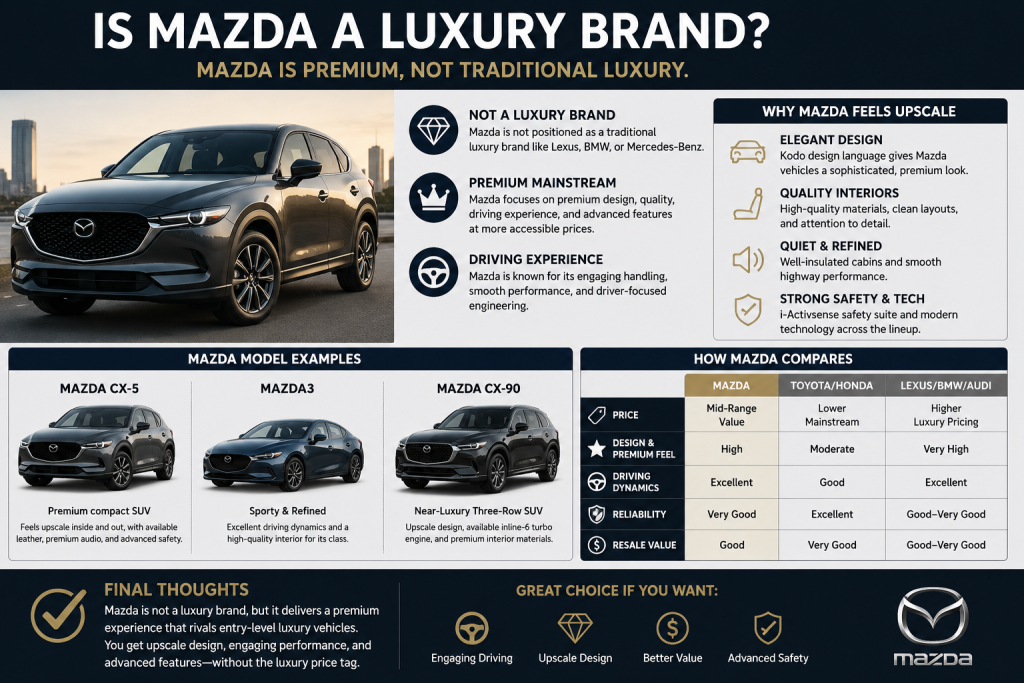
Mazda is not officially a luxury brand, but it is one of the clearest examples of a premium mainstream brand.
That means Mazda sits between regular brands like Toyota, Honda, Hyundai, Nissan, and Subaru, and traditional luxury brands like Lexus, Acura, BMW, Audi, Mercedes-Benz, and Volvo. Mazda does not sell itself as a full luxury automaker, but many of its newer vehicles feel more upscale than their price suggests.
The simple answer is this: Mazda is not a luxury brand, but it is a premium-feeling brand with luxury-like design, interiors, and driving dynamics.
Why People Think Mazda Is a Luxury Brand
People ask whether Mazda is a luxury brand because newer Mazda models look and feel more expensive than many mainstream competitors.
Mazda has focused heavily on interior quality, clean design, quiet cabins, better materials, strong paint colors, refined driving feel, and upscale trims. Models like the Mazda CX-5, CX-50, CX-70, CX-90, Mazda3, and MX-5 Miata all show that Mazda is trying to be more than just another economy car brand.
Mazda itself has leaned into the idea of “premium” more than “luxury.” In a 2026 Mazda survey, the company described modern premium value as being about design, comfort, technology, and daily experience rather than just the badge on the grille. Mazda said its focus remains on vehicles that elevate everyday driving through thoughtful design, intuitive technology, and safety. Mazda USA
That is exactly where Mazda fits today. It is not trying to copy Lexus directly. It is trying to make mainstream vehicles feel more special.
Mazda Is Premium, Not Traditional Luxury
A traditional luxury brand usually offers things like exclusive dealer experiences, higher-end powertrains, wider customization, premium materials across the lineup, prestige branding, luxury service programs, and higher base pricing.
Mazda does not fully operate in that space.
Instead, Mazda gives buyers a more premium experience without jumping fully into luxury-brand pricing. This is why shoppers often compare a loaded Mazda CX-5 or Mazda CX-90 against entry-level Lexus, Acura, Volvo, Audi, or BMW models.
Motor1 reported that Mazda’s internal idea of “premium” does not necessarily mean “luxury.” The brand has been aiming for a more boutique, higher-end customer, but not in the same exact way as traditional luxury automakers. Motor1
That distinction matters. Mazda is premium by design and feel. It is not luxury by official market category.
What Makes Mazda Feel Upscale?
Mazda vehicles often feel upscale because of the way they are designed.
The cabins usually avoid the cheap, cluttered look found in some mainstream vehicles. Controls are simple. Materials feel better than expected. Steering and handling are more engaging. Exterior styling is mature and elegant instead of loud or overly busy.
Mazda’s Kodo design philosophy is a big part of this. The brand focuses on shape, proportion, motion, and restraint. That gives many Mazda vehicles a more expensive look than their window sticker suggests.
The result is a brand that feels grown-up. A Mazda may not have the badge prestige of a Lexus or BMW, but the vehicle itself often feels more refined than many shoppers expect.
Is the Mazda CX-5 a Luxury SUV?
The Mazda CX-5 is not a luxury SUV, but upper trims can feel close to entry-level luxury.
A well-equipped CX-5 can include leather seating, available Nappa leather on certain trims in some markets, a premium audio system, heated and ventilated front seats, a quiet cabin, elegant interior design, and strong handling.
That is why the CX-5 is often cross-shopped against premium compact SUVs. But it is still priced and positioned as a mainstream compact SUV.
The CX-5 is best described as a premium compact SUV, not a true luxury SUV.
Is the Mazda CX-90 a Luxury SUV?
The Mazda CX-90 is probably the closest Mazda gets to luxury right now.
It uses a rear-biased platform, available inline-six turbo engine, upscale cabin design, premium materials, and a more refined three-row SUV layout. Car and Driver describes the CX-90 as part of Mazda’s continuing effort to position itself as a premium brand, with elegant styling and a luxurious interior. Car and Driver
That does not make the CX-90 a Mercedes-Benz GLS or BMW X7 competitor. But it does make it one of the most premium-feeling mainstream three-row SUVs.
For buyers who want near-luxury feel without full luxury pricing, the CX-90 is one of Mazda’s strongest arguments.
Is Mazda More Premium Than Toyota or Honda?
Yes, Mazda often feels more premium than Toyota or Honda at similar price points.
Toyota and Honda usually focus more on practicality, resale value, fuel economy, reliability, and broad appeal. Mazda focuses more on design, interior feel, and driving enjoyment.
That does not mean Mazda is better for every buyer. Toyota and Honda may still be stronger choices for maximum resale value, hybrid selection, or long-term low-cost ownership. But if the question is which mainstream brand feels more upscale, Mazda is usually one of the top answers.
Mazda’s advantage is emotional. The cars feel more carefully styled and more enjoyable to drive.
Mazda vs Lexus, Acura, BMW, and Audi
Mazda is not in the same official category as Lexus, Acura, BMW, or Audi.
Luxury brands usually offer stronger badge prestige, more powerful engines, higher-end dealer experiences, deeper luxury options, and more expensive flagship models. They also usually come with higher ownership costs.
Mazda’s advantage is value. A loaded Mazda can give shoppers a premium cabin, handsome design, and strong driving dynamics for less money than many luxury SUVs.
But there are still differences. A Lexus RX, BMW X3, Audi Q5, or Mercedes-Benz GLC may offer more luxury-brand prestige, more advanced powertrain options, more refinement, or a more traditional luxury ownership experience.
Mazda gives you a premium feel. Luxury brands give you the luxury badge and ecosystem.
Is Mazda Trying to Become a Luxury Brand?
Mazda has been moving more upscale, but it has not fully become a luxury brand.
The brand has invested in more premium products, cleaner retail spaces, better interiors, higher-end SUVs, and more refined vehicle platforms. But Mazda still sells mainstream vehicles and competes heavily with Toyota, Honda, Subaru, Hyundai, Kia, and Nissan.
The best way to describe Mazda’s strategy is near-luxury or premium mainstream.
That is a smart position because many buyers want a vehicle that feels expensive without paying full luxury-brand pricing.
Is Mazda Worth It Over a Luxury Brand?
Mazda can be worth it if you care more about the vehicle experience than the badge.
A Mazda makes sense if you want upscale styling, a nice interior, good handling, strong safety features, and lower pricing than many luxury vehicles. It may also cost less to insure, maintain, and repair than some German luxury brands.
A luxury brand makes more sense if badge prestige, maximum refinement, advanced powertrain choices, concierge-level dealer experience, or higher-end materials are the priority.
For many buyers, Mazda is the smarter middle ground.
FAQs About Mazda as a Luxury Brand
Is Mazda considered a luxury brand?
No. Mazda is not officially considered a luxury brand. It is better described as a premium mainstream brand.
Is Mazda a premium brand?
Yes. Mazda has moved strongly into premium territory with upscale design, refined interiors, better driving dynamics, and higher-end models like the CX-70 and CX-90.
Is Mazda as good as Lexus?
Mazda can feel premium, but Lexus is a true luxury brand with stronger reliability reputation, dealer experience, and luxury-market positioning. Mazda is usually more affordable.
Is Mazda better than Toyota?
Mazda often feels more stylish and premium than Toyota, while Toyota usually has stronger hybrid options, resale value, and long-term reliability reputation.
Is the Mazda CX-5 luxury?
The Mazda CX-5 is not a true luxury SUV, but higher trims can feel near-luxury compared with many mainstream compact SUVs.
Is the Mazda CX-90 a luxury SUV?
The Mazda CX-90 is not officially a luxury SUV, but it is one of Mazda’s most premium vehicles and can feel close to entry-level luxury SUVs.
Final Thoughts: Mazda Is Not Luxury, But It Feels Premium
Mazda is not a luxury brand in the traditional sense.
It does not sit directly beside Lexus, BMW, Audi, Mercedes-Benz, or Volvo. But it has become one of the most premium-feeling mainstream automakers.
That is Mazda’s sweet spot. You get upscale design, strong driving feel, refined interiors, and a more emotional ownership experience without paying full luxury-brand prices. For shoppers who want something nicer than a basic mainstream SUV but do not care about a luxury badge, Mazda makes a very strong case.
What Engine Does the 2015 Mazda CX-5 Have?
What Engine Does the 2015 Mazda CX-5 Have?
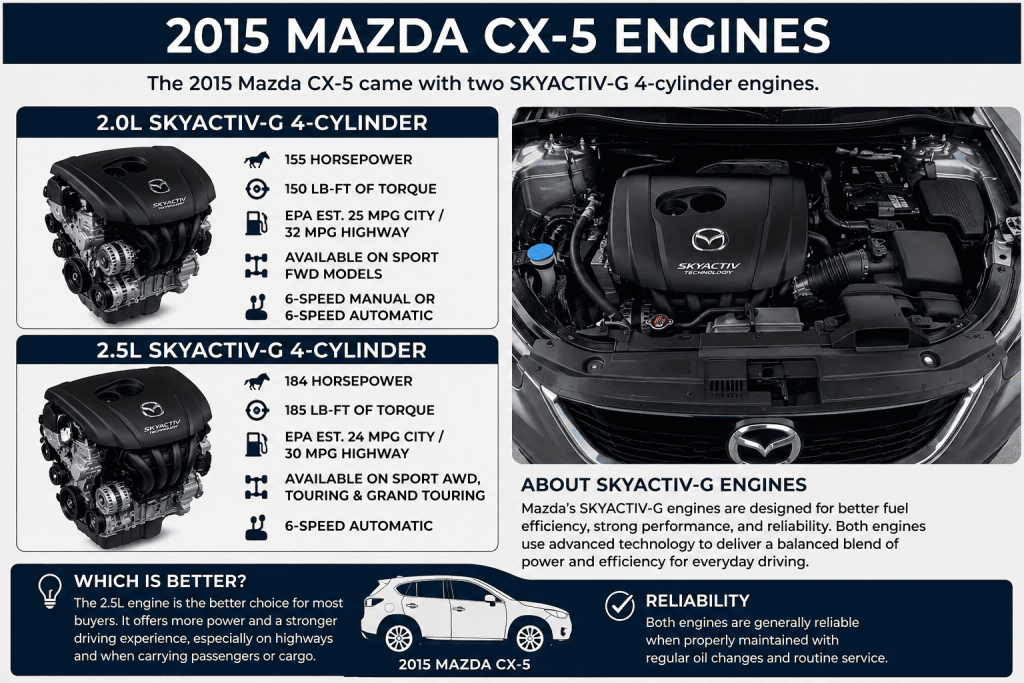
The 2015 Mazda CX-5 came with two engine options in North America: a 2.0L SKYACTIV-G 4-cylinder engine and a 2.5L SKYACTIV-G 4-cylinder engine.
The simple answer is this: most 2015 Mazda CX-5 models have the 2.5L SKYACTIV-G 4-cylinder engine, while the base Sport front-wheel-drive model could come with the smaller 2.0L SKYACTIV-G engine. Mazda’s official 2015 CX-5 specifications list the 2.0L engine at 155 horsepower and the 2.5L engine at 184 horsepower. Mazda 2015 CX-5 specs
2015 Mazda CX-5 Engine Options
The 2015 Mazda CX-5 was offered with Mazda’s SKYACTIV-G gasoline engines.
The smaller engine was a 2.0L SKYACTIV-G 4-cylinder. It produced 155 horsepower and was available on Sport front-wheel-drive models. Mazda offered it with either a 6-speed manual transmission or a 6-speed automatic transmission, depending on configuration. Mazda 2015 CX-5 specs
The larger engine was a 2.5L SKYACTIV-G 4-cylinder. It produced 184 horsepower and was used on Sport AWD, Touring, and Grand Touring models. This engine came with a 6-speed automatic transmission. Mazda 2015 CX-5 specs
Which 2015 CX-5 Engine Is More Common?
The 2.5L engine is the more common and more desirable choice for most used buyers.
It gives the CX-5 better acceleration, stronger highway passing power, and a more relaxed driving feel than the 2.0L engine. The 2.0L is fuel-efficient and simple, but it can feel underpowered, especially with passengers, cargo, hills, or highway merging.
Edmunds notes that the 2015 Mazda CX-5 Sport front-wheel-drive model came with the 2.0L 4-cylinder engine making 155 horsepower and 150 lb-ft of torque, while other models used the stronger 2.5L 4-cylinder with 184 horsepower and 185 lb-ft of torque. Edmunds
2015 Mazda CX-5 2.0L Engine
The 2.0L SKYACTIV-G engine was the entry-level engine.
It made 155 horsepower and 150 lb-ft of torque. This engine was mainly found in the base Sport front-wheel-drive model. It could be paired with a 6-speed manual transmission or a 6-speed automatic transmission.
This engine is fine if you want a basic, efficient used SUV and do not care much about quick acceleration. But for most buyers, the 2.5L engine is the better fit.
2015 Mazda CX-5 2.5L Engine
The 2.5L SKYACTIV-G engine was the stronger option.
It made 184 horsepower and 185 lb-ft of torque. It was standard on Touring and Grand Touring models and was also used on Sport AWD models. Edmunds lists the 2015 CX-5 Touring with a 2.5L inline-4 gas engine, 184 hp, 185 lb-ft of torque, and a 6-speed automatic transmission. Edmunds
For most shoppers, this is the engine to look for. It gives the CX-5 a better balance of fuel economy and usable power.
Is the 2015 Mazda CX-5 Engine Reliable?
Yes, the 2015 Mazda CX-5 engines are generally considered reliable, especially when maintained properly.
Mazda’s SKYACTIV-G engines are known for being efficient, relatively simple compared with turbocharged engines, and strong for daily driving. The 2015 CX-5 did not use a turbo engine in the North American market, which helps reduce complexity.
As with any used vehicle, maintenance matters. Before buying a 2015 CX-5, check for regular oil changes, coolant condition, transmission service history, clean startup, no warning lights, no oil leaks, and no signs of overheating.
Which 2015 Mazda CX-5 Engine Should You Buy?
For most buyers, the 2.5L SKYACTIV-G engine is the better choice.
It has more power, better real-world drivability, and is easier to recommend for highway driving, family use, and daily commuting. The 2.0L engine can still be a good option if the price is right and you want the simplest base model, but it is not as strong when the vehicle is loaded.
If you are shopping used, focus more on condition than engine alone. A clean 2.0L CX-5 with full service records can be better than a neglected 2.5L model.
FAQs About the 2015 Mazda CX-5 Engine
What engine does the 2015 Mazda CX-5 have?
The 2015 Mazda CX-5 has either a 2.0L SKYACTIV-G 4-cylinder engine or a 2.5L SKYACTIV-G 4-cylinder engine, depending on trim and drivetrain.
Does the 2015 Mazda CX-5 have a V6?
No, the 2015 Mazda CX-5 does not have a V6 engine. It only came with 4-cylinder gasoline engines in North America.
How much horsepower does the 2015 Mazda CX-5 have?
The 2.0L engine makes 155 horsepower, while the 2.5L engine makes 184 horsepower.
Which 2015 Mazda CX-5 engine is better?
The 2.5L SKYACTIV-G 4-cylinder is better for most buyers because it has more power and feels stronger in everyday driving.
Is the 2015 Mazda CX-5 turbocharged?
No, the 2015 Mazda CX-5 was not turbocharged in the North American market. Turbocharged CX-5 models came later.
Final Thoughts: The 2.5L Is the One Most Buyers Want
The 2015 Mazda CX-5 came with two engines: a 2.0L SKYACTIV-G 4-cylinder and a 2.5L SKYACTIV-G 4-cylinder.
The 2.0L engine was mainly for base Sport front-wheel-drive models. The 2.5L engine was used in more trims and is the better choice for most shoppers because it offers stronger acceleration and better everyday drivability.
If you are buying a used 2015 CX-5, look for the 2.5L engine, clean maintenance records, no warning lights, and a solid inspection. That combination gives you the best chance of getting a dependable compact SUV with Mazda’s sharp driving feel.

If you’ve been searching “Mazda CX-5 years to avoid,” you might expect a list of problem years, recalls, or horror stories. But here’s the surprise: there really aren’t any. Unlike many crossovers that stumbled through awkward early years or rushed redesigns, the Mazda CX-5 has maintained a reputation for exceptional reliability, refinement, and driver engagement since its debut in 2013.
Mazda’s consistency — powered by its Japanese engineering discipline and relentless focus on quality — means every CX-5 generation offers solid performance and long-term dependability. So instead of a warning list, this guide will show you why there’s no CX-5 year you need to avoid, and how each version has only built on the success of the one before it. And if you’re ready to see just how refined the current models have become, you can browse available offers at Marin Mazda or explore ongoing SUV specials through Marin Mazda’s offers page.
The CX-5 Legacy: Reliability Through Every Generation
Mazda introduced the CX-5 in 2013 as its first crossover to feature Skyactiv Technology — a holistic engineering approach focusing on lightweight design, efficient engines, and perfectly balanced handling. From day one, it was clear this wasn’t just another small SUV.
While many early compact SUVs from other brands suffered from transmission failures, oil leaks, or electrical gremlins, the CX-5 earned near-universal praise for mechanical stability. Consumer reliability scores, independent reviews, and long-term owner reports consistently placed it among the most dependable vehicles in its class.
And that pattern hasn’t changed — through the first-generation models (2013–2016), the second-generation redesign (2017–2021), and the refreshed modern lineup (2022–present), the CX-5 has remained one of the most reliable small SUVs you can buy.
2013–2016: The Beginning of a Benchmark
When the CX-5 launched in 2013, it immediately distinguished itself with crisp steering and surprisingly athletic handling for an SUV. The first models featured the 2.0-liter Skyactiv-G engine with 155 horsepower — not overly powerful, but extremely efficient and smooth.
By 2014, Mazda upgraded to a 2.5-liter engine offering more torque without sacrificing fuel economy. This was a turning point that kept owners satisfied and earned strong reliability scores.
Common owner feedback: The early CX-5s were praised for reliability, fuel economy, and precise handling. Minor issues like infotainment system updates or normal wear-and-tear items were easily addressed — nothing close to what would qualify as a “bad year.”
Mazda’s commitment to detail and rigorous Japanese quality testing prevented the typical early-production troubles seen in other first-gen crossovers.
Verdict: The early years (2013–2016) are safe, smart buys — the foundation of Mazda’s crossover success.
2017–2021: The Premium Leap
Mazda fully redesigned the CX-5 in 2017, and the changes were profound. The styling matured into a sleek, sculpted form under the KODO — Soul of Motion design language, while the interior jumped into near-luxury territory.
This generation also brought major improvements to ride comfort, noise insulation, and advanced safety tech. In 2019, Mazda introduced the 2.5-liter turbocharged engine, offering up to 250 horsepower — turning the CX-5 into one of the quickest and most engaging SUVs in its class.
Reliability record: Outstanding. The 2017–2021 CX-5 consistently achieved top-tier reliability ratings from industry surveys and publications. There were no chronic mechanical failures, and recalls were minimal.
Owners who maintained their vehicles routinely reported trouble-free experiences well past 100,000 miles. That’s a testament to Mazda’s manufacturing precision and its refusal to cut corners on materials or assembly.
Verdict: Every CX-5 from 2017 to 2021 remains a fantastic choice — whether you want value, power, or refinement.
2022–Present: Modern Excellence
The most recent CX-5 refinement (beginning with the 2022 model year) built upon Mazda’s award-winning platform with subtle but meaningful upgrades. The exterior design sharpened, the suspension was retuned for smoother ride comfort, and the cabin was further elevated with improved sound insulation and high-quality finishes.
Mazda also made all-wheel drive standard across every trim, underscoring its confidence in the CX-5’s capability and safety.
Current trims include:
- CX-5 2.5 S Select / Preferred / Carbon Edition — balance of value and sophistication
- CX-5 2.5 Turbo / Turbo Signature — refined performance with premium luxury touches
Safety-wise, the latest CX-5 models continue Mazda’s legacy of excellence, earning Top Safety Pick+ ratings year after year.
There are no systemic issues, no reliability warnings, and no red flags — just continuous refinement and durability.
If you’re ready to step into one of the most complete small SUVs on the market, see current CX-5 lease and finance offers on Marin Mazda’s specials page.
Addressing the “Years to Avoid” Myth
Online “years to avoid” lists often appear for SEO traffic rather than genuine data — and Mazda owners know it. The CX-5 simply doesn’t have a bad model year.
Unlike competitors who rushed redesigns or outsourced engineering, Mazda maintains a meticulous, centralized design and testing process in Japan. Every mechanical system is stress-tested under extreme conditions before reaching production.
So, what you’ll find across all CX-5 generations is consistency — not volatility. Even early models still run smoothly on the road, and later models only build on that foundation.
If you come across online claims about early infotainment quirks or cosmetic wear, those are normal for vehicles of that age and hardly justification for calling any year “one to avoid.”
Why Mazda Maintains Its Reliability Edge
The reason the CX-5 defies the “avoid” stereotype lies in Mazda’s company culture. Mazda treats every vehicle as an integrated system, not a collection of parts. That means:
- Holistic Design: Mazda engineers handle engines, transmissions, and chassis development together — ensuring harmony between components.
- In-House Manufacturing: Key parts like engines, transmissions, and control modules are made under Mazda’s direct supervision in Japan.
- Attention to Weight and Balance: Every CX-5 is tuned for ideal handling, reducing strain on mechanical components.
- Long Testing Cycles: Mazda’s validation process exceeds typical industry standards by thousands of hours.
In other words: reliability isn’t luck — it’s engineered into every CX-5 from the start.
Performance & Ownership Experience
Beyond reliability, the CX-5 continues to deliver something few crossovers can — genuine driving enjoyment. Whether equipped with the efficient 2.5-liter engine or the punchy turbocharged version, the CX-5 feels balanced, responsive, and composed in corners.
The cabin experience is also pure Mazda: quiet, refined, and intuitive. Materials rival entry-level luxury SUVs, while features like heated seats, Bose audio, and advanced driver assistance elevate everyday driving.
Owners often say they “still look forward to driving it” years later — a rare sentiment in the SUV segment.
And with Mazda’s straightforward maintenance schedule, owning a CX-5 is as simple as it is satisfying.
If you want to experience this level of craftsmanship firsthand, schedule a test drive or view current CX-5 incentives at Marin Mazda.
Comparison: CX-5 vs. the Competition
| Model | Reliability Trend | Driving Feel | Interior Quality |
|---|---|---|---|
| Mazda CX-5 | Consistently excellent | Engaging, balanced | Premium, near-luxury |
| Honda CR-V | Reliable but less fun | Comfortable, soft | Functional |
| Toyota RAV4 | Solid reliability | Competent but uninvolving | Practical |
| Hyundai Tucson | Improving | Smooth, but average handling | Tech-focused |
The CX-5 manages to blend Japanese reliability with genuine emotion — something rivals rarely achieve. That’s why many car reviewers continue to rank it the driver’s choice in its class, year after year.
Ownership Longevity
Well-maintained CX-5s regularly surpass 200,000 miles without major repairs. Mazda’s robust Skyactiv engines are built with forged internals, and their transmissions are tuned conservatively for durability.
Maintenance costs remain modest, with most service intervals focused on fluids and filters. And because Mazda parts share architecture across global models, replacements are readily available and affordable.
In short: if longevity and reliability are your priorities, any CX-5 — regardless of model year — is a safe bet.
The Truth: No CX-5 Years to Avoid
After more than a decade on the market, the verdict is clear. There are no bad Mazda CX-5 years.
From its debut in 2013 to the latest 2025 models, Mazda has maintained exceptional reliability, top safety scores, and one of the best reputations for build quality in its segment. It’s the rare SUV that has improved every year without ever taking a step backward.
The result: a crossover you can buy used or new with total confidence.
To see current deals, Certified Pre-Owned options, or limited-time offers, check out Marin Mazda’s specials page — where every CX-5, no matter the trim or year, reflects Mazda’s ongoing commitment to quality.
Final Thoughts: A Decade of Consistency
For a vehicle that’s been on the road for over ten years, the CX-5’s record is remarkable. While other automakers stumble with recalls or design missteps, Mazda keeps refining rather than reinventing.
The answer to “Mazda CX-5 years to avoid” is simple: none. Instead of worrying about what to skip, you can focus on choosing the trim, color, and engine that best match your lifestyle.
Every CX-5 embodies Mazda’s Japanese philosophy of craftsmanship and emotional connection to driving. It’s dependable, elegant, and designed for real people who love the road.
When you’re ready to bring that experience home, visit Marin Mazda’s specials page to find the perfect CX-5 — new, used, or Certified Pre-Owned — backed by a legacy that has nothing to avoid and everything to admire.
Mazda CX-5 Reliability FAQ | Marin Mazda
1) Are there any Mazda CX-5 years to avoid?
No. Unlike many compact SUVs that had rocky starts or redesign issues, every Mazda CX-5 model year from 2013 to today has proven dependable. There are no “bad years” — Mazda’s Japanese-engineered Skyactiv platform has delivered consistent quality across all generations.
2) Is the first-generation CX-5 (2013-2016) reliable?
Yes. The first-gen CX-5 earned high owner satisfaction and reliability ratings. The 2.5-liter engine introduced in 2014 added more power without compromising efficiency, and there were no recurring mechanical or transmission problems.
3) What changed in the second generation (2017-2021)?
The 2017 redesign brought premium styling, a quieter cabin, and improved suspension tuning. By 2019, the 2.5-liter turbo engine joined the lineup, offering up to 250 horsepower. Reliability remained top-tier, with minimal recalls and strong long-term durability.
4) How reliable are the 2022–present CX-5 models?
Outstanding. The latest CX-5 versions feature standard AWD, refined interiors, and enhanced sound insulation. There are no systemic issues — these models continue to earn IIHS Top Safety Pick+ and J.D. Power reliability awards.
5) What’s the most reliable Mazda CX-5 engine?
Both the 2.5-liter naturally aspirated and 2.5-liter turbocharged Skyactiv-G engines are highly dependable. The non-turbo version offers simplicity and longevity, while the turbo adds performance with no notable reliability trade-off.
6) Do older CX-5s have common issues?
Minor wear items only — such as infotainment software updates or suspension bushings after 100k miles. No major engine, transmission, or electrical failures have been widespread in any CX-5 generation.
7) How long can a Mazda CX-5 last?
With regular maintenance, most CX-5s easily surpass 200,000 miles. Many owners report trouble-free ownership for over a decade thanks to Mazda’s in-house engines and transmissions.
8) Are maintenance costs high?
No. Routine services like oil changes, brakes, and fluids are affordable and straightforward. Mazda’s reliability and shared parts network help keep long-term ownership costs low.
9) What safety features make the CX-5 stand out?
All trims include Mazda i-Activsense, featuring:
- Adaptive Cruise Control
- Blind-Spot Monitoring
- Lane-Keep Assist
- Smart Brake Support
- Rear Cross-Traffic Alert
This technology suite has helped every CX-5 earn elite safety ratings since 2017.
10) How does CX-5 reliability compare to rivals?
| Model | Reliability | Driving Feel | Interior Quality |
|---|---|---|---|
| Mazda CX-5 | Excellent | Engaging, balanced | Premium |
| Honda CR-V | Strong | Smooth, conservative | Functional |
| Toyota RAV4 | Solid | Predictable | Practical |
| Hyundai Tucson | Improving | Average | Tech-focused |
The CX-5 uniquely blends Japanese reliability with sporty driving dynamics, something competitors rarely match.
11) What’s the best CX-5 trim for value and dependability?
The CX-5 2.5 S Preferred and Carbon Edition trims balance luxury, reliability, and price perfectly. Higher trims like Turbo Signature add power and refinement without sacrificing longevity.
12) Do Certified Pre-Owned CX-5s hold up well?
Absolutely. Mazda’s CPO program includes a 160-point inspection, 7-year/100,000-mile powertrain warranty, and CARFAX® history report, making used CX-5s a top value pick at Marin Mazda.
13) Has the CX-5 ever had major recalls?
No. Only small-scale service campaigns (like infotainment or minor component updates) — none affecting safety or drivability.
14) What contributes to the CX-5’s long-term reliability?
- In-house engine and transmission manufacturing in Japan
- Rigorous testing and balanced chassis tuning
- Conservative engine mapping for durability
- Premium materials and tight build tolerances
15) Does the CX-5 have good resale value?
Yes. Thanks to reliability and design appeal, CX-5 resale values rival top brands like Toyota and Honda. Models with the 2.5 Turbo or Carbon Edition trims are especially strong performers.
16) How does the CX-5 perform over 100,000 miles?
Exceptionally. Owners consistently report smooth shifting, stable fuel economy, and minimal oil consumption — no major failures or costly repairs even past 150,000 miles.
17) What’s the most fuel-efficient CX-5?
The 2.5-liter non-turbo CX-5 achieves around 28 mpg combined, while Turbo versions average 25 mpg. The AWD setup is among the most efficient in its class.
18) How does the CX-5 handle compared to competitors?
It’s often called the “driver’s SUV.” Mazda’s suspension tuning delivers precise steering, composed handling, and the trademark “connected” feeling absent in most crossovers.
19) Where can I find current CX-5 lease or finance offers?
Check Marin Mazda’s specials page for real-time incentives, including 0% APR financing, loyalty bonuses, and Certified Pre-Owned promotions.
20) What’s the verdict — are there any CX-5 years to avoid?
None. From its 2013 debut through the latest 2025 models, the Mazda CX-5 has remained one of the most reliable and rewarding SUVs ever built. Every generation represents refinement, not risk — and you can shop with confidence at Marin Mazda, where reliability meets craftsmanship.
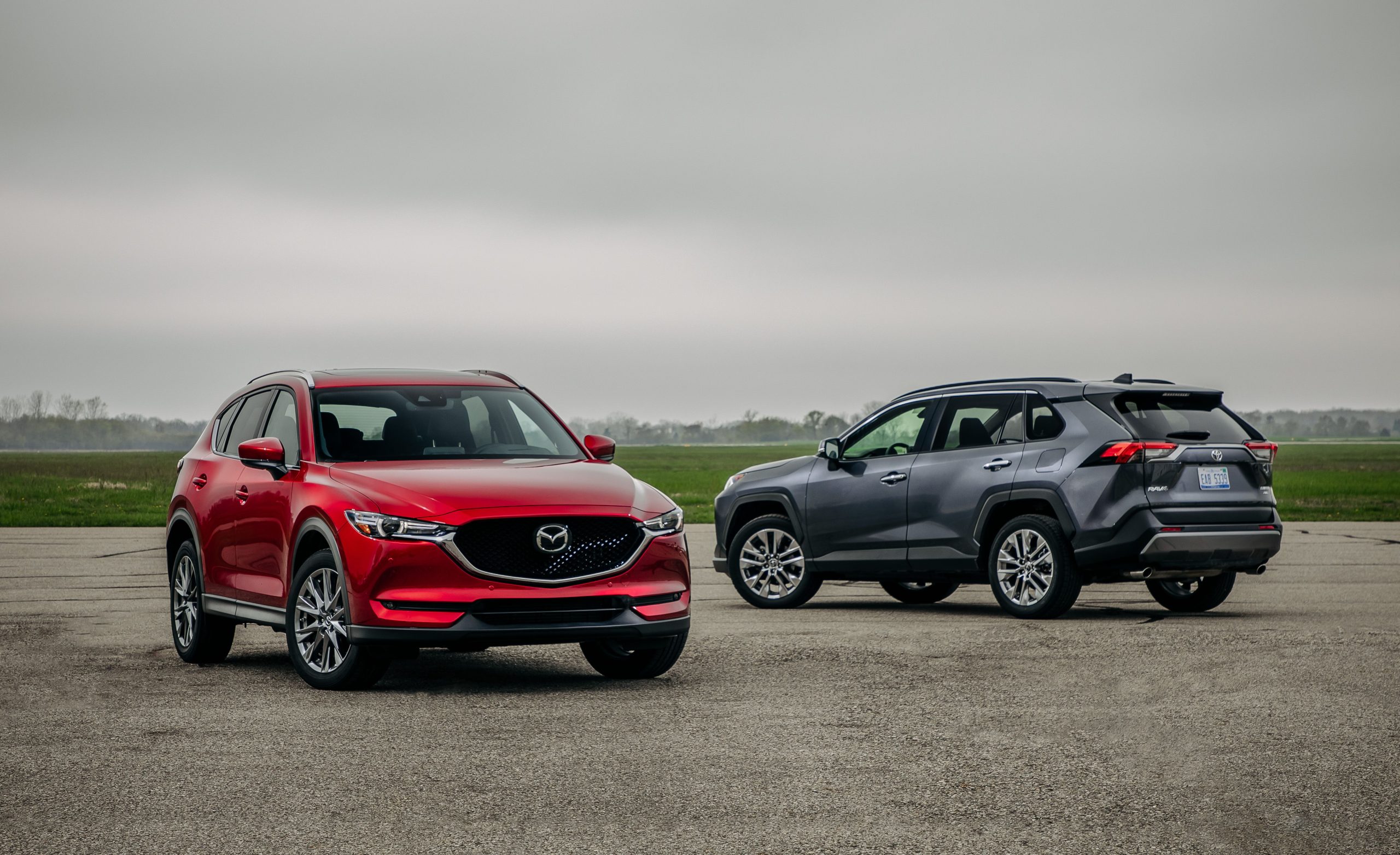
When choosing between Mazda and Toyota, two of Japan’s most trusted automakers, reliability often tops the list of buyer concerns. Both brands have strong reputations for longevity and dependability—but what do the data say? Let’s break it down.
1. Industry-Leading Dependability Scores
The 2025 J.D. Power Vehicle Dependability Study measures issues reported per 100 vehicles (PP100) after three years of ownership:
- Mazda scored 161 PP100, ranking second among mass-market brands.
- Toyota came in third, with 162 PP100.
A one-point difference in PP100 is nearly negligible, but it indicates both brands deliver outstanding long-term performance.
2. Consumer Reports Rankings
While Consumer Reports identifies Toyota (and its Lexus brand) as slightly more consistent overall in reliability, Mazda remains strongly positioned:
- Toyota leads, followed closely by Lexus.
- Mazda earns consistent top-five reliability rankings.
So, while Toyota holds a slight edge, Mazda isn’t far behind by any stretch.
3. Repair Costs & Maintenance
According to RepairPal data:
- Mazda is among the most affordable brands to maintain.
- Average annual repair costs, across Mazda models, are around $462—well below the industry average.
Toyota tends to have slightly higher but still low maintenance expenses, reinforcing its reliability edge.
4. Model-to-Model Comparison
Models like the Mazda CX-5 have demonstrated reliability performance that matches or surpasses competitors like the Toyota RAV4:
- One study found the Mazda CX-5 to be “in many cases… more reliable and safer” than the RAV4.
Individual model results further support Mazda’s overall reliability.
5. Real-World and Community Feedback
Mazda owners often report surprise at how trouble-free their vehicles remain long after purchase:
“Mazda is… right ahead of Honda… top‑5 brand in the world in reliability.”
While some may cite minor quirks on newer models, Mazda consistently lands among the top reliable brands globally.
Final Takeaways
- Head-to-Head: Mazda and Toyota are nearly tied in reliability—both deliver long-term durability and low problem rates.
- Toyota’s Strengths: Slight edge in dependability scores, particularly at the model level.
- Mazda’s Advantages: Lower maintenance costs and surprising reliability on high-end or sporty models.
- Your Choice: Choose Toyota if you want the rock-solid default; choose Mazda for added style, driving enjoyment, and equally reliable ownership.
Explore Both at Marin Mazda
Ready to evaluate Mazda’s reliability for yourself? Visit Marin Mazda in San Rafael to test drive our most dependable models and learn about the confidence that comes with ownership.
Marin Mazda
807 Francisco Blvd E, San Rafael, CA 94901
Phone: (415) 454‑7000
Reliable driving starts here.

The Mazda 626 was one of Mazda’s longest-running and most influential models. Spanning over two decades, this midsize sedan quietly carved out a loyal following across North America, Europe, Asia, and beyond. Known for its balance of performance, comfort, and affordability, the Mazda 626 was a serious contender in a market dominated by giants like the Honda Accord and Toyota Camry.
Though discontinued in the early 2000s, the 626 remains a symbol of reliability and innovation during its era. Here’s everything you need to know about the Mazda 626 — from its origins to its specs and why it still holds a place in the hearts of many car enthusiasts and former owners.
1. A Brief History of the Mazda 626
The Mazda 626 began its life in 1978, introduced as the export nameplate for the Mazda Capella in global markets. It was designed to be a more refined alternative to compact sedans, offering more interior space, better driving dynamics, and a modern look.
Across its five generations, the 626 evolved from a simple rear-wheel-drive coupe into a technologically advanced front-wheel-drive sedan with optional V6 engines, automatic transmissions, and even four-wheel steering in some variants.
Timeline Overview:
| Generation | Years Produced | Drivetrain | Notable Features |
|---|---|---|---|
| 1st Gen | 1978–1982 | RWD | Clean styling, rear-wheel drive layout, coupe/sedan/wagon options |
| 2nd Gen | 1983–1987 | FWD (some RWD early) | More modern styling, fuel injection, turbo in some markets |
| 3rd Gen | 1988–1992 | FWD | Larger body, 4WS option, improved safety |
| 4th Gen | 1993–1997 | FWD | Optional V6, improved handling, refined design |
| 5th Gen | 1998–2002 | FWD | Contemporary design, Ford CD4E automatic transmission, V6 or 4-cylinder |
The 626 was replaced in most global markets by the Mazda6 in 2003, marking the end of an era.
2. Design and Styling
Each generation of the Mazda 626 reflected the design language of its time. The first generation had classic late-70s boxy styling, while the second introduced sleeker body lines and European influence. By the fourth and fifth generations, the 626 had grown into a mature, understated sedan with aerodynamic curves and a conservative silhouette.
Mazda focused on blending subtle styling cues with functionality, which helped the 626 remain relevant without being flashy. Features like pop-up headlights (in early coupes), flush-mounted glass, and body-color bumpers in later years gave it a modern feel.
In the 1998–2002 models, Mazda shifted toward a more Americanized design, especially for the U.S.-built models assembled in Michigan through the Flat Rock Assembly Plant — a joint venture with Ford.
3. Powertrain and Performance
One of the defining characteristics of the Mazda 626 was the variety of engine and transmission options across its generations.
Common Engine Options:
| Engine Type | Displacement | Power Output | Notes |
|---|---|---|---|
| I4 SOHC | 2.0L | ~90–130 hp | Found in early models and base trims |
| I4 DOHC | 2.0L–2.2L | ~110–140 hp | More refined, fuel-injected models |
| V6 DOHC | 2.5L | ~160–170 hp | Available in LX and ES trims (1993–2002) |
| Turbocharged I4 | 2.0L Turbo | ~145–165 hp | Limited markets, 80s models |
| Diesel | 2.0L / 2.2L | ~60–80 hp | Offered outside North America |
Transmissions included 5-speed manuals, 4-speed automatics, and a performance-enhancing 4WS (four-wheel steering) system in select high-end trims.
Later V6 models offered brisk acceleration for the segment, while the 4-cylinder versions focused more on economy and daily drivability.
4. Interior and Features
Interior quality and technology improved drastically with each generation.
Notable Interior Features by Era:
- 1980s Models: Basic analog gauges, optional cassette players, cloth seating, and air conditioning were available only in higher trims.
- Early 90s Models: Power windows, power locks, sunroof, upgraded stereo systems, tilt steering wheels, and driver-side airbags.
- 1998–2002 Models: Dual airbags, CD players, leather interior options, automatic climate control, keyless entry, anti-lock brakes (ABS), and traction control in top trims.
Seating was typically comfortable, with good legroom for a midsize car. Trunk space was generous, and split-folding rear seats became standard in later years.
5. Reliability and Common Issues
The Mazda 626 was praised for its reliability — especially the 4-cylinder manual transmission versions. However, some automatic transmissions (notably the Ford CD4E automatic) used in later models developed reputational issues over time, particularly in hot climates or with infrequent maintenance.
Common Issues Reported:
- Transmission failure (especially in 1994–2002 automatics)
- Rust in northern climates, particularly wheel wells and rocker panels
- Electrical issues with power windows and dash illumination
- Timing belt maintenance critical in 2.5L V6 engines to prevent failure
With regular maintenance, however, many 626s routinely exceeded 300,000 km (over 186,000 miles) with no major issues.
6. Trim Levels and Variants
Mazda 626 trim levels varied slightly by year and market, but in North America, the typical structure included:
| Trim Level | Description |
|---|---|
| Base/DX | Entry-level with minimal features, 4-cylinder only |
| LX | Mid-range with power accessories, upgraded interior, available V6 |
| ES | Top-tier with V6, alloy wheels, premium audio, leather interior |
In some markets, station wagon versions were also sold, offering family-friendly utility without sacrificing driving comfort.
7. Legacy and Impact
Though the Mazda 626 is no longer in production, it laid the groundwork for the Mazda6, which went on to receive global acclaim for its driving dynamics, design, and refinement. The 626 represented a transitional period for Mazda — a shift from budget-focused cars to well-rounded, driver-oriented vehicles that could compete head-to-head with Japanese and American rivals.
Its quiet reliability and balanced engineering made it a favorite among families, commuters, and even car enthusiasts looking for a hidden gem on the used market.
Conclusion: A Midsize Sedan Worth Remembering
The Mazda 626 may not be as flashy or widely remembered as some of its competitors, but it played an important role in Mazda’s evolution. With its solid mechanics, practical design, and competitive pricing, it became a staple in countless driveways throughout the 1980s and 1990s.
Whether you owned one, plan to restore one, or are simply a fan of automotive history, the 626 deserves its due as one of the most dependable and underrated midsize sedans of its time.
Let me know if you want a version of this blog optimized for SEO, dealership content, or targeting Mazda service/restoration leads.
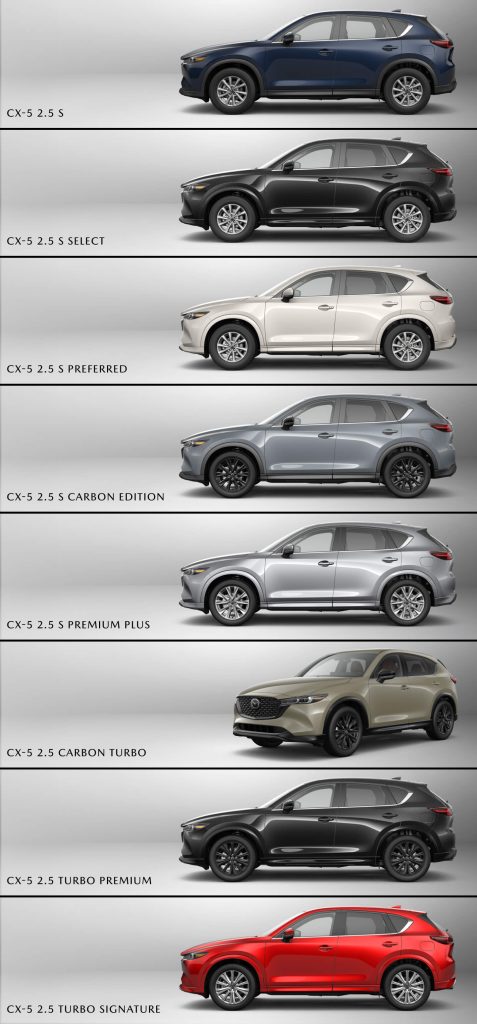
The 2025 Mazda CX-5 lineup is structured to cover a wide range of buyers, from basic daily drivers to higher-end, near-luxury SUVs. Each trim builds incrementally, mainly through comfort, technology, and performance upgrades.
Trim Breakdown
The base CX-5 2.5 S comes with a naturally aspirated 2.5L engine, standard all-wheel drive, and core features like infotainment and driver assistance systems. It covers the essentials without adding much beyond that.
Moving up, the 2.5 S Select adds practical upgrades such as dual-zone climate control, rear privacy glass, and additional connectivity. These are usability improvements rather than major changes.
The 2.5 S Preferred starts introducing more comfort-focused features, including leather seating, a power liftgate, and a moonroof. This is typically where the vehicle begins to feel more premium.
The 2.5 S Carbon Edition is mostly a styling package layered on top of the Preferred trim. It adds visual differentiation like black exterior elements and red leather interiors but doesn’t significantly change functionality.
The 2.5 S Premium Plus adds more advanced features such as ventilated seats, a head-up display, and wireless charging. At this point, the focus shifts toward convenience and driver experience.
Turbocharged options begin with the 2.5 Carbon Turbo, which introduces a more powerful engine producing up to 250 horsepower on premium fuel. This trim combines performance with the Carbon Edition styling.
The 2.5 Turbo Premium builds on that with added technology, including a larger display, navigation, and upgraded audio. It’s positioned as a performance-focused trim with more advanced features.
At the top, the 2.5 Turbo Signature focuses on interior quality and refinement. It includes materials like Nappa leather, real wood trim, and features such as a 360-degree camera system. The difference here is primarily in finish and detail rather than capability.
Family Use
For practical use, trims like Preferred and Premium Plus are the most balanced. They include features that matter for everyday driving, such as easier cargo access, better seating materials, and added convenience without pushing into higher cost brackets.
Safety features like blind spot monitoring, adaptive cruise control, and lane-keeping systems are standard across the lineup, with incremental enhancements at higher trims.
Performance Differences
The main performance distinction is between naturally aspirated and turbocharged models. The standard engine is sufficient for typical driving, while the turbo variants provide noticeably stronger acceleration and responsiveness.
Feature Progression
Lower trims focus on functionality. Mid-level trims add comfort and convenience. Upper trims emphasize technology and interior quality. The differences are incremental rather than transformative.
AWD System
All trims include standard all-wheel drive. This is consistent across the lineup and does not require an upgrade, which simplifies decision-making for buyers in regions with variable weather.
Final Take
There is no single “best” trim. The base trims cover basic needs effectively. Mid-range trims offer the best balance of features and cost. Higher trims are mainly justified if you specifically want more power or higher-end materials.
Mazda Service Explained: What Your Mazda Actually Needs, When It Needs It, and Why Proper Maintenance Matters

Mazda has built a strong reputation for making vehicles that feel sharper, more refined, and more premium than many of their direct competitors. Whether someone drives a Mazda3, CX-30, CX-5, CX-50, CX-70, CX-90, or a Miata, the appeal is usually the same: strong driving dynamics, upscale design, solid engineering, and a daily ownership experience that feels more thoughtful than average.
But none of that means much if the vehicle is neglected.
A Mazda can be reliable, smooth, and rewarding to own for years, but like any modern vehicle, it depends heavily on proper service. This is where many drivers get confused. They know they need maintenance, but they do not always know what “Mazda service” really includes, what matters most, what can wait, and what should never be ignored.
This article breaks all of that down in detail. If you want a deep, clear explanation of Mazda service, what it includes, when it matters, and why it directly affects reliability, performance, resale value, and long-term ownership cost, this is the guide.
What Mazda Service Really Means
When people say “Mazda service,” they often mean one of two things.
The first is routine maintenance: oil changes, tire rotations, brake inspections, fluid checks, filter replacements, and factory-scheduled services that keep the car running as intended.
The second is repair and diagnostic work: fixing warning lights, replacing worn components, solving noises, correcting alignment issues, repairing suspension parts, resolving battery or electrical problems, and addressing anything that has gone wrong.
Both are important, but routine service is what usually determines whether the second category stays manageable or becomes expensive.
Mazda service is not just about changing oil and hoping for the best. Modern Mazdas rely on a combination of mechanical precision, electronic systems, sensors, safety technology, and increasingly sophisticated drivetrains. Skipping service does not just shorten engine life. It can affect fuel economy, brake performance, ride quality, transmission behavior, tire wear, emissions performance, and even the way driver-assistance systems function.
That is why regular Mazda service is not optional if someone wants the vehicle to keep feeling like a Mazda instead of turning into just another worn-out car.
Why Mazda Maintenance Matters More Than Many Drivers Realize
A lot of owners assume that if a vehicle is still driving, it must be fine. That is one of the biggest mistakes in car ownership.
By the time a problem becomes obvious, it is often already more expensive than it would have been if caught earlier.

Take engine oil, for example. Old or degraded oil does not always cause immediate visible symptoms. The engine may still run, the vehicle may still move, and the driver may feel nothing unusual. But internally, wear protection can be dropping, heat control can worsen, deposits can build, and the engine can slowly lose the smoothness and durability it was designed to have.
The same logic applies to brakes, tires, alignment, coolant condition, filters, and transmission fluid. Many service items do not fail dramatically at first. They deteriorate quietly. That is what makes them dangerous from a cost perspective.
Mazda vehicles are engineered to deliver a refined, responsive drive. When service is delayed, the vehicle may still function, but it gradually loses the qualities that made it enjoyable in the first place. Steering can feel less precise. Braking can feel less confident. Ride quality can become harsher. Fuel consumption can creep upward. Cabin air quality can worsen. Tire noise can increase. The car may still be usable, but it is no longer operating at the level it should.
The Core Types of Mazda Service
To understand Mazda maintenance properly, it helps to break it into categories.
1. Engine oil and filter service
This is the most basic and most essential service every Mazda needs.
Oil lubricates internal engine components, reduces friction, controls heat, and helps prevent wear. The oil filter traps contaminants so they do not continue circulating through the engine.
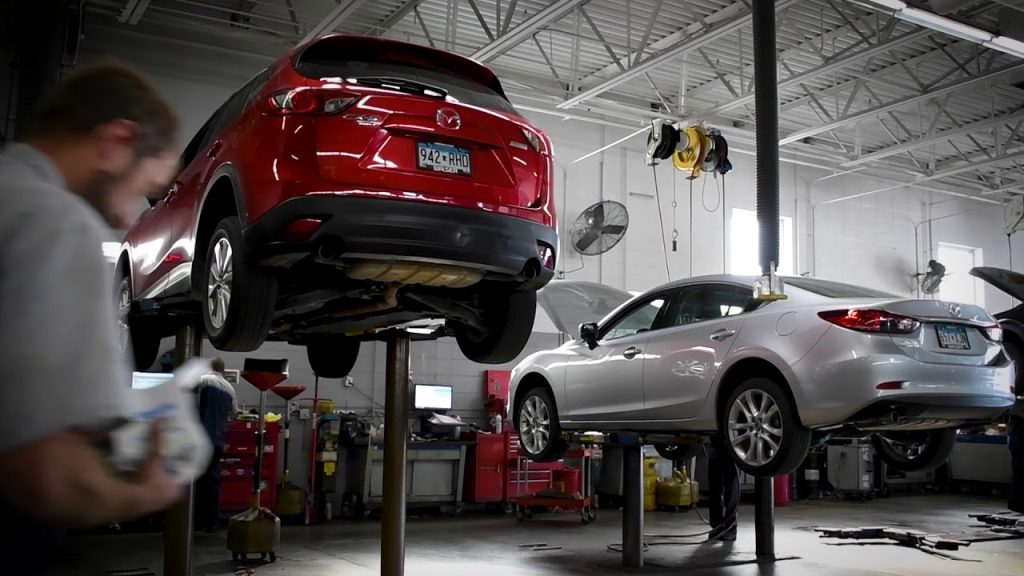
Skipping oil changes is one of the fastest ways to shorten engine life. Even if the engine does not fail immediately, neglected oil service increases long-term wear and can contribute to expensive issues later.
For many Mazda owners, oil service is the maintenance item they recognize most easily, but it should never be treated as the only maintenance item that matters.
2. Tire rotation and tire inspection
Tires wear differently depending on drivetrain layout, alignment condition, driving style, road conditions, and inflation pressure. Rotating them helps extend tire life and keeps wear more even.
A proper Mazda service visit should not just rotate tires. It should also include checking tire condition, tread depth, sidewall health, inflation levels, and signs of uneven wear.
Uneven tire wear can reveal bigger issues like poor alignment, suspension wear, or persistent underinflation. That makes tire inspection more valuable than many people realize.
3. Brake service
Brake service can range from inspection to pad replacement, rotor replacement, brake fluid exchange, or diagnosis of brake noise and vibration.
Brakes are obviously a safety-critical system, but they also strongly influence how confident a vehicle feels in daily driving. A Mazda with strong brakes feels composed. A Mazda with neglected brakes feels cheap, noisy, and uncertain.
Brake service should not be delayed once symptoms appear. Squealing, grinding, pedal pulsation, longer stopping distances, or a soft pedal all deserve attention quickly.
4. Fluid checks and replacement services
A Mazda uses multiple fluids beyond engine oil. These can include:
- coolant
- brake fluid
- transmission fluid
- differential fluid on some AWD models
- transfer case fluid on applicable models
- windshield washer fluid
- power steering fluid on models that use it, though many newer systems are electric
Fluids are often ignored because they are not as visible as tires or brake pads. But they are essential to system protection and long-term durability. A vehicle may not warn you until the problem is already advanced.
5. Filter replacement
Two filters matter frequently in regular service discussions:
- engine air filter
- cabin air filter
The engine air filter affects airflow to the engine and can influence efficiency and performance if neglected badly enough. The cabin air filter affects the air you breathe inside the vehicle, as well as HVAC system efficiency.
These are not the most glamorous service items, but they matter for overall ownership quality.
6. Battery and electrical system inspection
Modern Mazdas rely heavily on electrical systems, modules, sensors, infotainment hardware, and advanced safety technology. Battery health matters more than it used to.
A weak battery can create odd symptoms long before complete failure. Slow starts, warning lights, infotainment irregularities, or inconsistent electronic behavior can all be linked to battery or charging system health.
A proper service visit should include basic battery testing or at least a battery condition assessment when there are signs of age or performance decline.
7. Alignment and suspension inspection
Mazda vehicles are often praised for their road manners, and suspension condition plays a huge role in that. If the alignment is off or suspension components are wearing out, the vehicle stops feeling planted and confident.
Poor alignment can also destroy tires early. That means ignoring it is not just a handling issue. It becomes a tire-cost issue too.
8. Major interval service
At certain mileage or time intervals, more extensive service becomes necessary. This can include spark plugs, deeper fluid service, belt inspections, more detailed system checks, and other scheduled items depending on model and engine.
These larger services are where many owners try to cut corners. Sometimes that works for a little while. Long term, it usually does not.
What a Good Mazda Service Visit Should Include
A proper Mazda service appointment should be more than just a quick oil drain and refill.
A strong service visit usually includes:
- review of maintenance due based on mileage and time
- oil and filter replacement if due
- tire rotation if appropriate
- brake inspection
- fluid level and condition checks
- tire pressure adjustment
- visual inspection underneath the vehicle
- battery condition review
- filter inspection
- reset of maintenance reminders if needed
- communication with the customer about what is due now versus what is coming soon
The communication part matters a lot. Good service is not only technical. It is also about transparency. Owners should understand what is urgent, what is preventative, and what can reasonably be scheduled later.
That is how trust is built in a service department.
Mazda Service by Ownership Stage
Service needs change depending on how old the Mazda is and how many kilometres or miles it has accumulated.
New Mazda ownership
In the early period of ownership, service is mostly preventative and routine. The focus is on:
- regular oil changes
- inspections
- tire rotations
- maintaining warranty compliance
- catching any early issues before they grow
At this stage, the goal is not just to maintain the vehicle. It is to establish a service history and keep the vehicle operating exactly as designed.
Mid-life Mazda ownership
Once the vehicle has been on the road for a few years, service becomes more layered. In addition to the basics, owners start needing:
- brake work
- tire replacement
- battery attention
- fluid renewals
- filters more regularly
- alignment checks
- suspension monitoring
This is the stage where disciplined service makes the biggest difference. A well-maintained mid-life Mazda still feels excellent. A neglected one starts to feel aged quickly.
Higher-mileage Mazda ownership
At higher mileage, the focus shifts even more toward preservation. The basics still matter, but so do:
- sealing issues
- wear items
- ignition components
- cooling system condition
- drivetrain fluid condition
- suspension fatigue
- noise diagnosis
- electrical reliability
This is where owners either benefit from years of careful maintenance or begin paying for years of delay.
Common Mazda Service Items Owners Should Never Ignore
Some service items seem small until they become big.
Delayed oil changes
This is still one of the most damaging habits in vehicle ownership. People often stretch oil service too far because the car still “feels fine.” That is not a reliable indicator.
Uneven tire wear
This usually means something else is happening. It could be alignment, inflation, suspension, or driving-condition related. Ignoring it just leads to premature tire replacement and reduced stability.
Brake noise
Not all brake noise means disaster, but it should never be dismissed casually. Early brake attention is much cheaper than waiting until pads damage rotors or overall performance declines.
Cooling system neglect
Overheating or cooling issues can become engine-damaging problems very fast. Coolant health and cooling system condition deserve respect.
Warning lights
Too many drivers treat warning lights as background decoration. On a modern Mazda, a warning light can point to emissions issues, sensor failures, charging concerns, brake system problems, or engine-management faults. Delaying diagnosis can turn a smaller issue into a much larger one.
The Difference Between Basic Service and Real Preventative Maintenance
Many service departments advertise low-cost basics because that gets people in the door. Oil change, tire rotation, inspection. Those services matter. But real preventative maintenance goes further.
Real preventative maintenance means servicing the vehicle based on what it actually needs before symptoms become obvious. It means thinking beyond today’s invoice and focusing on long-term condition.
That includes:
- doing fluid service before fluid is badly degraded
- replacing filters before performance drops noticeably
- correcting alignment before tires are ruined
- addressing brake wear before rotor damage
- replacing aging batteries before roadside failure
- identifying minor leaks before they become major repairs
This is the difference between reactive ownership and proactive ownership. Mazda vehicles generally reward the second approach.
Why OEM and Mazda-Specific Service Knowledge Matters
Not every shop understands Mazda the same way.
That does not mean every independent shop is bad or every dealer is perfect. It means Mazda-specific knowledge has real value. A technician familiar with Mazda vehicles is more likely to understand common patterns, model-specific maintenance needs, software procedures, inspection points, and brand-specific service standards.
That matters more on newer vehicles with:
- driver-assistance systems
- electronic parking brakes
- infotainment integration
- advanced diagnostics
- turbocharged setups
- AWD systems
- hybrid or electrified components on select models
The more complex the vehicle, the more valuable correct service knowledge becomes.
How Service Affects Mazda Reliability
A lot of reliability conversations are too simplistic. People act as if reliability is something the factory decides once and the owner has no role afterward. That is not how real ownership works.
Two identical Mazda vehicles can have very different long-term reliability outcomes depending on service history.
One gets regular maintenance, timely inspections, quality fluids, and early attention to minor issues. The other gets delayed oil changes, ignored warning lights, skipped inspections, cheap shortcuts, and reactive repairs only when something breaks.
Those two vehicles may have started the same, but after five or seven years, they often feel completely different.
So when people ask whether a Mazda is reliable, the right answer is often: it can be very reliable if serviced properly.
How Service Affects Resale Value
Service history has a major impact on resale strength.

A Mazda with clean records, documented maintenance, and evidence of consistent care is more attractive to the next buyer. It creates confidence. Buyers assume, correctly, that disciplined ownership usually means fewer surprises.
A Mazda with gaps in service history, visible neglect, uneven tires, overdue maintenance, or warning-light stories becomes harder to sell and usually commands less money.
This matters whether someone is keeping the car long term or planning to trade it later. Good service does not just preserve the vehicle. It preserves the financial strength of the asset.
Mazda Service for Different Driver Types
Not every Mazda owner uses the vehicle the same way. Service needs vary based on lifestyle.
The commuter
A commuter may rack up mileage quickly, meaning more frequent oil service, tire attention, and brake monitoring.
The city driver
A mostly urban driver may not accumulate massive mileage, but stop-and-go use can still be hard on brakes, tires, and overall wear patterns.
The highway driver
Highway driving can be easier on some components, but high annual mileage still means maintenance intervals arrive quickly.
The performance-minded driver
Someone who drives aggressively or enjoys the vehicle’s handling more intensely may go through tires and brakes faster and should pay closer attention to wear.
The low-mileage owner
Even low-mileage vehicles still need service based on time, not just distance. Fluids age. Batteries weaken. Tires age out. Filters collect dirt. Sitting does not eliminate maintenance needs.
What Great Mazda Service Feels Like to the Customer
The best Mazda service experience is not just about completing the work. It is about reducing stress for the customer.
A strong service experience feels:
- organized
- transparent
- professional
- informed
- not pushy
- clear about priorities
- respectful of time
- proactive without being alarmist
Customers should leave understanding:
- what was done
- what needs attention soon
- what can wait
- how the vehicle is doing overall
That kind of service builds repeat business because it turns maintenance from a vague expense into a clear ownership strategy.
Final Thoughts: Mazda Service Is What Protects the Mazda Experience
People buy Mazdas for more than transportation. They buy them because they like the way they drive, the way they look, the way they feel inside, and the way they balance practicality with refinement.
Service is what protects that experience.
Without proper service, even a great Mazda gradually loses the qualities that made it special. With proper service, it can remain smooth, capable, reliable, and rewarding for years longer than many owners expect.
So if someone asks what Mazda service really is, the best answer is this:
It is not just maintenance. It is the ongoing process that protects the performance, safety, comfort, value, and long-term integrity of the vehicle.
A Mazda that is serviced properly does not just last longer. It drives better, ages better, sells better, and costs less to own in the long run.
That is why detailed, consistent Mazda service is never just another appointment on the calendar. It is one of the smartest things an owner can do.
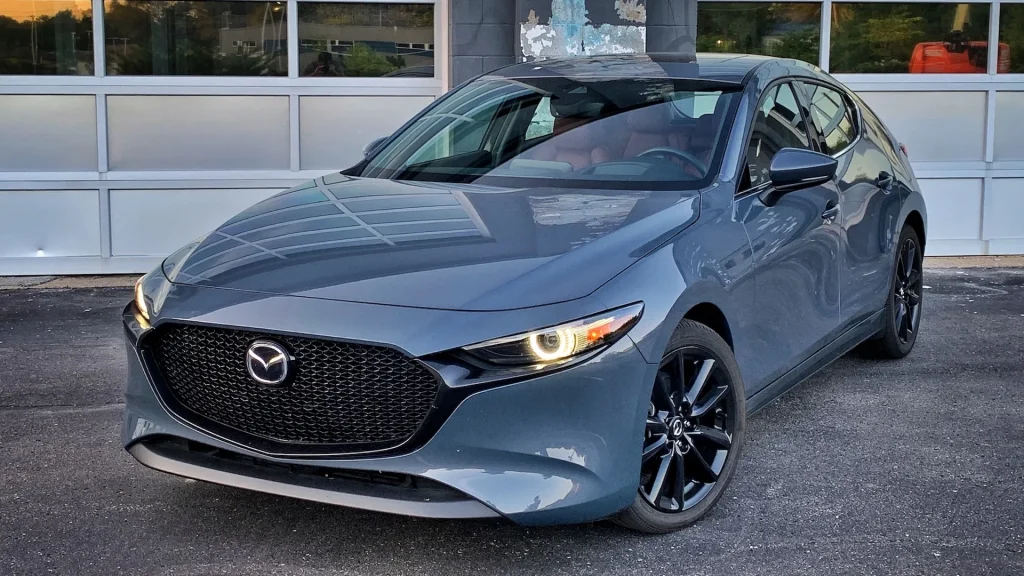
If you are shopping for a Mazda3, one of the biggest decisions is not just which trim, sedan or hatchback, or whether to go with front-wheel drive or all-wheel drive. The bigger question for many buyers is this: should you lease it or finance it?
A lot of dealership content answers that question too simply. Lease if you want lower payments. Finance if you want to own the car. That is true, but it is not enough. The better answer depends on who you are, how you drive, how long you keep cars, how much flexibility you want, and what kind of financial habits you actually have in real life.
That is especially true with the Mazda3, because this is not a throwaway economy car. It sits in a very interesting part of the market. It is affordable enough to be practical, refined enough to feel premium, and reliable enough that long-term ownership can make real sense. That changes the lease versus finance conversation quite a bit.
Mazda has built a reputation for making vehicles that feel more upscale than their price point suggests, and that is true whether you are looking at the Mazda3 or cross-shopping something bigger like the CX-50. In fact, if you also want to see how Mazda’s compact crossover compares in terms of value, design, efficiency, and everyday usability, this in-depth Mazda CX-50 review is a strong companion read.
So if you are trying to decide what is better for a Mazda3, this is the real breakdown.
Why the Mazda3 Makes This Question More Interesting Than Most Cars
The Mazda3 is not like every compact car. It has always carried a slightly different personality. While other compact sedans and hatchbacks often focus almost entirely on efficiency and price, the Mazda3 adds style, cabin quality, and driving enjoyment to the equation.
That matters because the way a car is positioned affects whether leasing or financing makes more sense.
For example, with a very basic low-cost car, many buyers finance because the goal is simply to own transportation as cheaply as possible over time. With a more expensive luxury vehicle, leasing can look attractive because depreciation is steeper and many buyers want to switch into a new one every few years.
The Mazda3 sits somewhere in the middle. It has enough quality and long-term appeal to justify ownership, but it also feels premium enough that some buyers treat it like a lifestyle car they want to refresh more often. That is why there is no one-size-fits-all answer. The right decision depends on the kind of Mazda3 buyer you are.
What Leasing a Mazda3 Really Means
Leasing is basically paying for the portion of the car you use during a fixed term rather than paying for the entire vehicle. You are not really buying the Mazda3 in the traditional sense. You are paying for a set period of use, usually with mileage and condition rules attached.
That is why lease payments are often lower than finance payments on the same vehicle. You are not covering the full price of the Mazda3. You are covering the expected depreciation during the lease period, plus rent charges and fees.
For many buyers, this creates immediate appeal. Lower monthly cost. Newer car. Warranty coverage. Less long-term commitment.
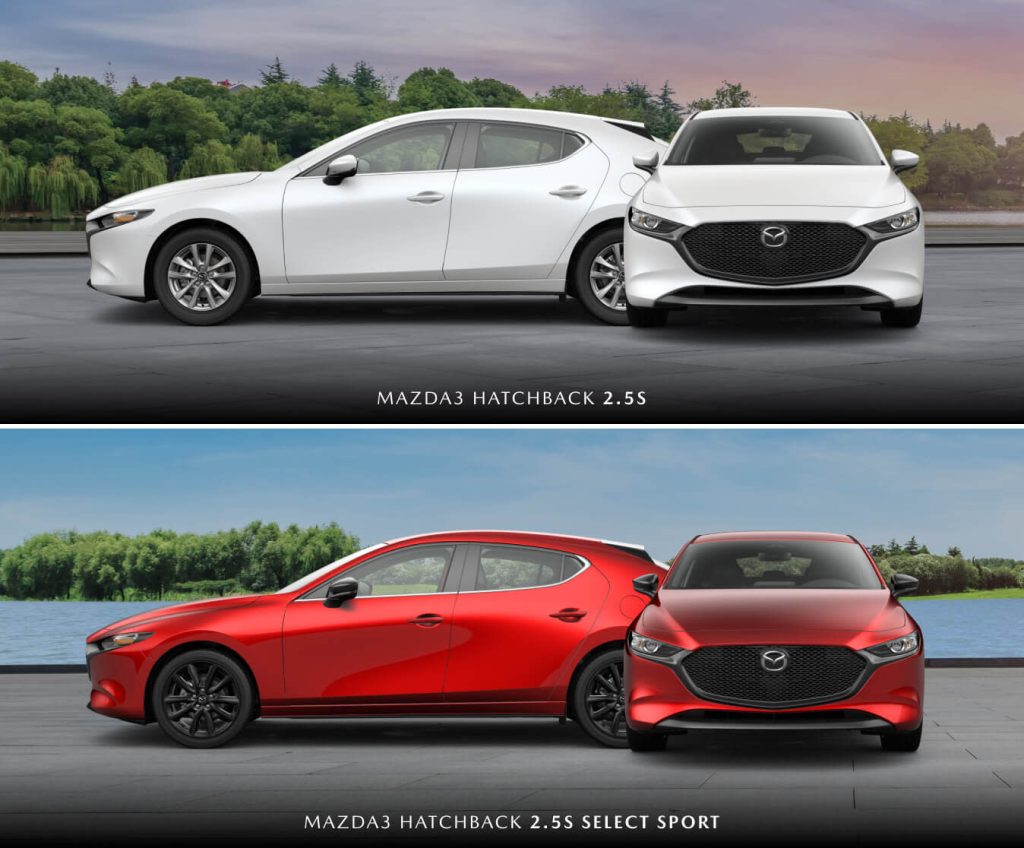
On the surface, a Mazda3 can actually be a very good lease candidate for the right person. It is stylish, modern, and pleasant to live with. If you want that experience for three years and then want the freedom to move on, leasing can be a clean solution.
But the catch is that a lease works best only when your driving habits and personality fit the structure.
If you drive more than average, tend to keep cars in rough condition, want freedom to modify the vehicle, or hate restrictions, leasing can become frustrating fast.
What Financing a Mazda3 Really Means
Financing is more straightforward. You are buying the Mazda3 over time with monthly payments. At the end of the term, assuming the loan is paid off, the car is yours.
That seems less glamorous in the short term because monthly payments are often higher than a lease, especially if the term is shorter. But financing changes the long-term math dramatically.
Once the loan is paid, you still have an asset. It may depreciate, yes, but it still has trade-in value, resale value, and utility value. Even if you keep it after it is paid off, those payment-free years are where ownership often starts making serious financial sense.
The Mazda3 is exactly the kind of car where this matters. It is not a vehicle people usually throw away after a short period. It is a sensible compact with a premium feel, and many owners keep them for years. That makes financing especially attractive for buyers who think beyond the first 36 months.
Lease a Mazda3 If You Want a New-Car Lifestyle
Let’s start with the buyer type that should seriously consider leasing.
If you like driving newer vehicles all the time, leasing a Mazda3 can make a lot of sense. The Mazda3 is one of those cars that looks good, feels well made, and offers a surprisingly upscale cabin for the class. If you enjoy that fresh-car experience and want to stay in a newer model every few years, leasing supports that lifestyle better than financing.
This is especially true if you are the kind of buyer who values convenience over long-term asset building. Some people simply do not want to think about keeping a car for eight years. They do not want to deal with aging tires, out-of-warranty repairs, or selling a used vehicle later. They want a predictable monthly cost, factory coverage, and an easy exit point. Leasing works well for that mindset.
A lease can also make sense for the buyer who wants a nicer trim than they would otherwise consider. Maybe the monthly difference between financing a base Mazda3 and leasing a better-equipped trim feels small enough that leasing opens the door to features you actually want. Better interior materials, more technology, maybe all-wheel drive or a hatchback configuration that feels more premium. For the right buyer, that can be worth it.
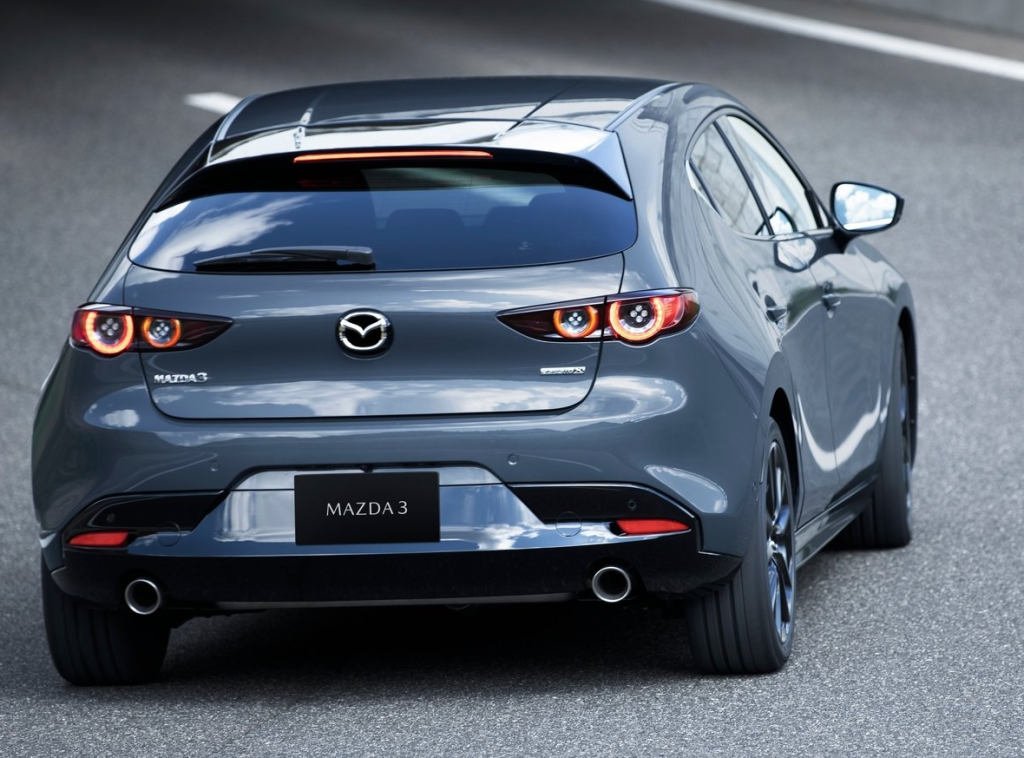
But the ideal Mazda3 lease customer usually has another key trait: low to moderate mileage. If you commute lightly, work from home part of the week, or mostly use the car for local driving, a lease becomes much easier to justify. If you are adding kilometres aggressively every year, leasing becomes less attractive because mileage penalties can erase the short-term payment advantage.
Finance a Mazda3 If You Want the Smartest Long-Term Value
Now let’s talk about the kind of buyer who should finance.
For most normal Mazda3 shoppers, financing is the stronger overall move.
Why? Because the Mazda3 is a car that makes sense to keep. It has the kind of reputation, packaging, and ownership appeal that rewards long-term use. This is not a vehicle that only makes sense during the warranty window. It is one of those compact cars that people buy because it stays practical long after the new-car smell disappears.
If you are buying a Mazda3 because you want dependable transportation with a premium edge, financing usually aligns better with that goal.
This is even more true if you drive a lot. Long commuters, regional salespeople, people with long highway routines, and anyone who racks up mileage quickly are usually better off financing. A financed Mazda3 gives you the freedom to drive without constantly thinking about lease thresholds and end-of-term penalties.
Financing is also better for the buyer who wants ownership flexibility. Once you own the car, you can keep it, trade it, sell it, or drive it payment-free. That freedom matters more than many people realize. A lease keeps you on a short leash, financially and contractually. Financing gives you more control.
The Mazda3’s personality also supports ownership. It is refined enough that you will probably still enjoy it years later, and practical enough that it does not become hard to justify once it is no longer brand new. That is not true of every car.
The Mazda3 Sedan Buyer vs the Mazda3 Hatchback Buyer
Interestingly, body style can sometimes hint at whether a buyer is more likely to prefer leasing or financing.
Mazda3 sedan buyers are often more practical. They may be looking for a refined commuter, something efficient and comfortable, something they can own for years without feeling bored. That buyer often leans finance because the vehicle is being chosen as a long-term value play.
Mazda3 hatchback buyers are often a little more lifestyle-driven. Not always, but often. They may care more about design, flexibility, and a slightly more premium visual identity. Some of those buyers still finance, of course, but they are a bit more likely to fit the kind of profile that also considers leasing because they enjoy refreshing into newer vehicles more often.
That does not mean sedan equals finance and hatchback equals lease. It just means the buyer mindset sometimes aligns that way. The more practical and long-term your view is, the more financing usually wins. The more style-driven and short-cycle your view is, the more leasing starts to make sense.
Lease the Mazda3 If You Hate Ownership Risk
There is one more type of person who often prefers leasing: the person who hates uncertainty.
Some buyers do not necessarily want to maximize long-term value. They want to minimize risk and reduce hassle. They like knowing their car is newer, under warranty, and easier to hand back before it becomes an older used vehicle with age-related wear.
That logic is understandable.
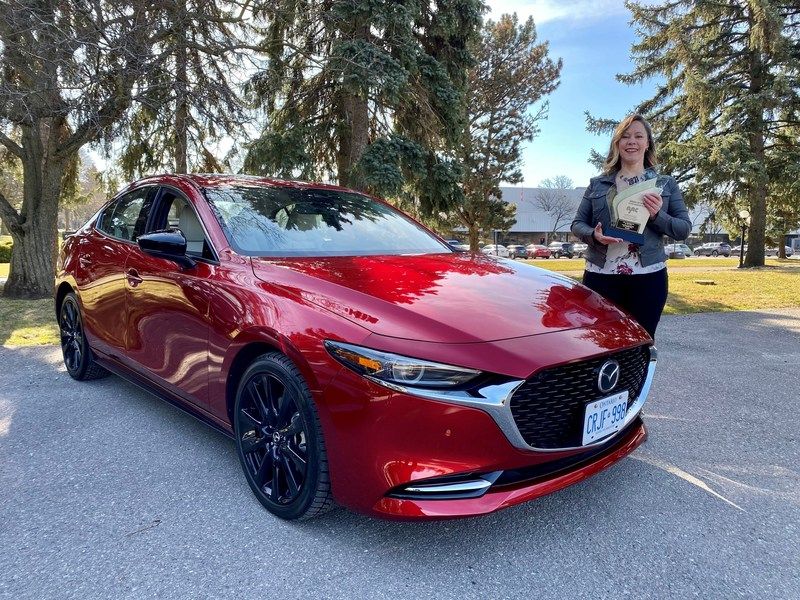
If you are the kind of person who does not want to think about long-term repair exposure, resale timing, or keeping a vehicle deep into its lifecycle, leasing gives you an orderly structure. You get in, enjoy the Mazda3, and get out on schedule.
For people who treat a car the same way others treat a phone contract or appliance cycle, leasing fits psychologically. The car is not something to keep forever. It is something to use efficiently for a defined period.
The catch is that this comfort comes at a price. While lease payments may look lower month to month, repeated leasing can keep you in a permanent payment cycle. That is great for convenience, but not always great for total long-term cost.
Finance the Mazda3 If You Think in Five-Year Blocks Instead of Three-Year Blocks
This is the biggest dividing line.
If you naturally think in three-year windows, leasing probably appeals to you more. If you think in five-year or seven-year windows, financing almost always becomes the stronger argument.
The Mazda3 is one of those cars where the ownership value starts to compound over time. The longer you keep it after the loan is paid off, the more the economics improve. Even if maintenance costs rise gradually as the car ages, you often still come out ahead versus staying on an endless cycle of short-term leased vehicles.
This is especially true for buyers who are financially disciplined. If you finance a Mazda3, pay it down properly, and then keep driving it after the payments end, you create a huge difference in your total transportation cost over time.
That is where financing really wins for the Mazda3. It is not always the prettiest short-term option, but it is often the smarter long-term one.
What Type of Guy Should Lease a Mazda3?
If we are being very direct, the ideal Mazda3 lease customer is usually this guy:
He wants a clean, refined, stylish daily driver but does not care much about keeping cars for a long time. He likes new design, new tech, lower short-term payments, and the feeling of being in something fresh. He probably drives average or below-average mileage. He prefers predictable monthly costs and likes the idea of handing the car back before it gets old enough to become his problem.
He may be a younger professional. He may be image-conscious without wanting a luxury badge. He may want a better trim than he would comfortably finance. He may value convenience more than ownership.
For that guy, leasing a Mazda3 makes perfect sense.
What Type of Guy Should Finance a Mazda3?
The ideal Mazda3 finance customer is different.
He sees the Mazda3 as a genuinely smart car to own, not just rent. He probably appreciates that it feels premium, but he is still grounded in long-term value. He drives enough that mileage restrictions would annoy him. He wants the flexibility to keep the vehicle, trade it on his own terms, or drive it payment-free later.
He may be a commuter. He may be a practical buyer who still wants something with personality. He may be someone buying his first genuinely nice daily driver and planning to keep it for years. He may simply understand that the Mazda3 is a car that often makes more sense to own than to cycle through repeatedly.
For that guy, financing is usually the better fit.
Where People Get This Decision Wrong
A lot of buyers choose based only on the monthly payment. That is where mistakes happen.
A lower payment does not automatically mean the better decision. It may mean you are paying less to use the car for now, but getting less long-term value in return.
On the other hand, a higher finance payment does not automatically mean the smarter move either. If you constantly trade early, get bored quickly, or never keep the car long enough to capture ownership value, financing loses much of its advantage.
The right answer comes from matching the structure to your behavior.
If you are the type to keep cars a long time, financing works because your behavior supports it.
If you are the type to move on every few years and prefer newness over ownership, leasing works because your behavior supports that.
The worst move is choosing a finance deal and trading out too early, or choosing a lease when you know you drive far too much and will hate the restrictions.
So Which Is Better for the Mazda3?
For most buyers, financing is better.
That is the honest answer.
The Mazda3 is not the kind of car that only makes sense as a short-term use product. It is well rounded, refined, practical, and generally worth owning. If you are the average compact-car buyer who wants strong long-term value, financing usually suits this vehicle better.
But leasing is still a very good choice for a specific kind of buyer. If you want lower short-term commitment, like changing cars often, drive limited mileage, and care more about convenience than long-term ownership, leasing can absolutely be the right move.
So the answer is not really lease versus finance in the abstract. It is this:
Finance the Mazda3 if you are a long-term value buyer. Lease the Mazda3 if you are a short-term lifestyle buyer.
That is the cleanest way to think about it.
Final Verdict
The Mazda3 is one of the few compact cars that genuinely works well either way, which is part of what makes it so appealing. It is practical enough to justify financing and polished enough to justify leasing.
Still, if you strip away the sales language and look at the kind of vehicle the Mazda3 really is, financing usually comes out ahead for most buyers. It aligns better with the Mazda3’s strengths: solid long-term value, everyday practicality, and the kind of ownership experience that remains satisfying well beyond the first few years.
Leasing still has its place. For the lower-mileage buyer who wants newer cars, lower short-term commitment, and a clean exit strategy, it can be a very smart move. But for the average guy shopping for a Mazda3 as a real-world daily driver, financing is usually the better fit.
If you want, I can also add your earlier Mazda3 sedan and hatchback review link into this same article so both Marin Mazda blog URLs are naturally interlinked.
Mazda3 Reliability : Expert Review
When people search for a reliable compact car, the same names usually dominate the conversation. Toyota Corolla. Honda Civic. Maybe the Hyundai Elantra if someone wants value. Yet one of the strongest all-around choices in the segment keeps getting overlooked: the Mazda3.
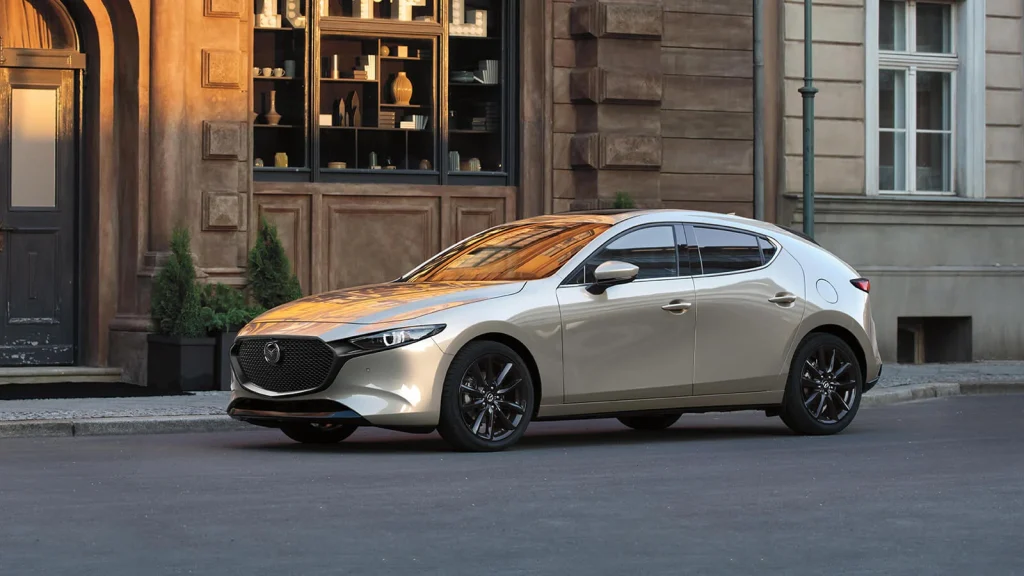
That is strange, because the Mazda3 has quietly built one of the most convincing reputations in the class. It is dependable, refined, comfortable, and far more upscale than many compact rivals. It also avoids one of the biggest traps in the modern car market: being technically impressive on paper but frustrating to own once the warranty excitement wears off.
The Mazda3 is not perfect. No honest reliability review should pretend otherwise. Some model years are stronger than others, some owners have dealt with electrical annoyances or brake-related complaints, and like every modern vehicle it still requires proper maintenance. But if the question is whether the Mazda3 is generally a reliable car worth owning, the answer is yes. In fact, it is one of the smartest compact cars for buyers who want something practical without settling for something dull.
And if you want a broader overview of the vehicle beyond dependability alone, this detailed Mazda3 sedan and hatchback review does a great job explaining why the model continues to stand out in the segment.
Is the Mazda3 Reliable?
In real-world ownership terms, yes, the Mazda3 is widely considered reliable.
That does not mean every single model year is flawless or that every used Mazda3 on the market is automatically a smart buy. Reliability is always more nuanced than that. A car can have a good long-term reputation and still have weak years, neglected examples, or a few recurring issues that buyers should know about. The Mazda3 fits that pattern. It is generally strong, but you still need to understand where it shines and where caution makes sense.
What makes the Mazda3 appealing is that its reliability is paired with quality. Many reliable compact cars are bought because they are logical. The Mazda3 is bought because it is logical and still feels desirable. It looks premium, drives with more personality than most competitors, and has an interior that often feels closer to an entry-level luxury car than a budget commuter.
That matters. Reliability is not just about whether the engine starts in the morning. It is also about whether the car continues to feel solid, quiet, and confidence-inspiring after years of ownership. The Mazda3 tends to do well in that respect.
Why the Mazda3 Has a Strong Reliability Reputation
Mazda has taken a more disciplined approach than many mainstream brands. While other manufacturers have often chased complexity for the sake of marketing headlines, Mazda has usually focused on refining proven hardware.
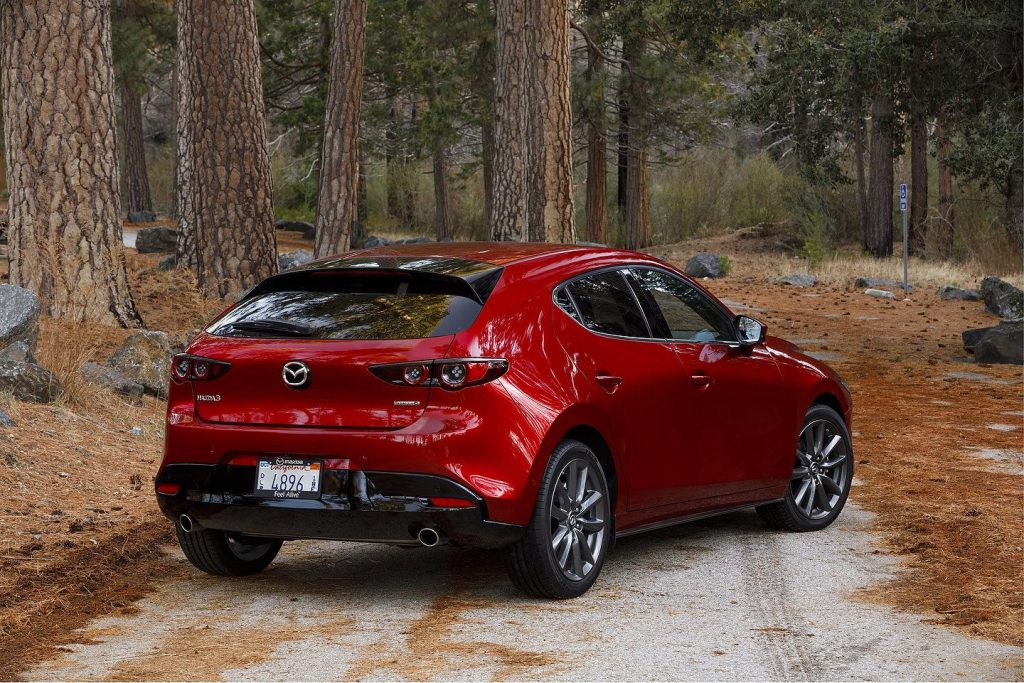
That strategy helps the Mazda3.
Instead of overloading the car with gimmicky engineering, Mazda has generally kept the formula clean. The engines are well understood. The automatic transmissions are conventional rather than overly experimental. The chassis is mature. The steering and suspension tuning are designed to feel engaging without making the car fragile or overly complicated to maintain.
This is one of the biggest reasons why the Mazda3 has aged well as a product line. Mazda tends to improve things incrementally rather than tossing out a formula every few years just to claim something is new. Buyers benefit from that restraint.
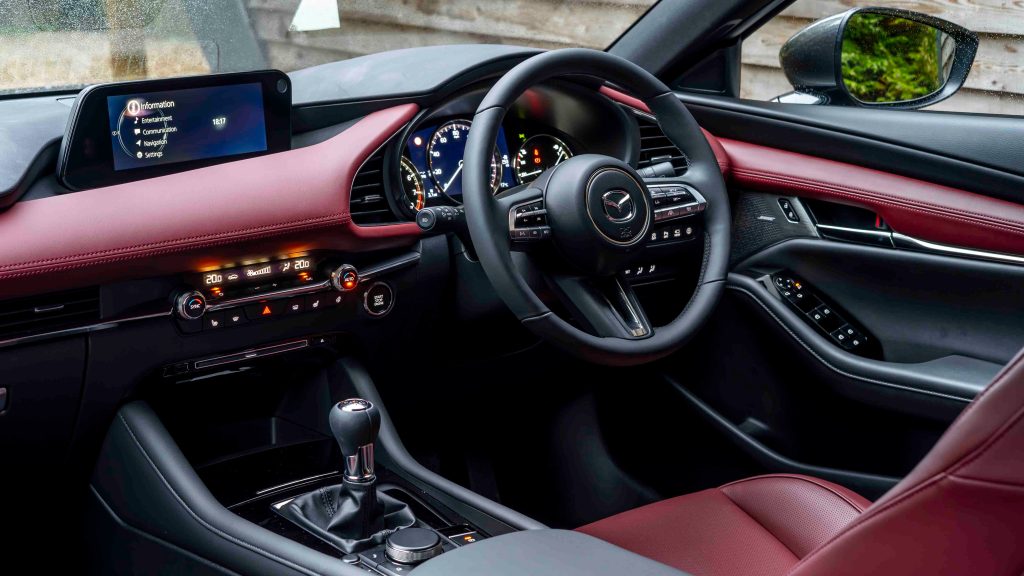
For long-term ownership, boring engineering choices are often the best engineering choices. That may not sound exciting in an advertisement, but it is excellent news for anyone planning to keep a car for many years or buy one used with confidence.
The Mazda3 Feels Better Built Than Many Rivals
One of the reasons the Mazda3 gets so much respect from owners is that it tends to feel substantial. Some compact cars feel like appliances. They function, but they are not especially satisfying. You notice cheap plastics, road noise, weak insulation, and a general sense that cost-cutting shaped too many decisions.
The Mazda3 usually avoids that impression.
Close the door and it feels heavier and more deliberate. Sit inside and the dashboard layout feels mature. Drive it for a week and the steering, seating position, and cabin finish start to separate it from many other cars in the class. These qualities do not show up neatly in a reliability chart, but they matter a lot in real ownership. Cars that feel well made often earn stronger owner satisfaction, and the Mazda3 has been good at delivering that kind of confidence.
That is also why many buyers researching dependability eventually end up reading a full Mazda3 sedan and hatchback review, because reliability is only part of the story. The Mazda3 is attractive because it combines dependability with genuine quality.
Mazda3 Engines and Powertrains: A Big Reason It Holds Up Well
The Mazda3’s reliability story becomes easier to understand once you look at the hardware. Mazda has largely avoided the most problematic kinds of powertrain experimentation that have burned other brands.
Naturally aspirated Mazda3 models are often the safest long-term bet. These versions typically offer a smooth, predictable ownership experience. They do not chase extreme output numbers, and that tends to work in their favor over time. Less stress on the engine often means fewer unpleasant surprises later.
Turbocharged Mazda3 models can also be solid, but they naturally bring more complexity. More power is usually more fun, but it can also mean higher ownership sensitivity. That does not make the turbo models bad choices. It just means maintenance becomes even more important, and buyers should be stricter about service records, oil changes, and overall condition.
The transmission side of the equation also helps. Mazda has not leaned as heavily on some of the more controversial transmission solutions that have hurt other compact cars. That restraint has contributed to a steadier reputation.
In simple terms, the Mazda3 benefits from a proven formula: well-developed engines, conventional transmission behavior, and a platform that has been refined rather than constantly reinvented.
Model Year Differences Matter
A big mistake buyers make is assuming a reliable nameplate means every model year is equally safe. That is never true, and it is not true for the Mazda3 either.
Some Mazda3 years have stronger reputations than others. In general, later years within a generation tend to be safer bets than first-year redesigns. That pattern is common across the auto industry. The launch year of a new generation often brings early bugs, software annoyances, trim-specific issues, or quality inconsistencies that get cleaned up later.
For the Mazda3, that means buyers should be especially careful with older problem-prone years and more thoughtful with first-year redesign examples. This does not mean those cars are automatically bad. It means they deserve more scrutiny.
If you are shopping used and your priority is long-term dependability, later examples from a mature generation are often the sweet spot. You get the benefit of improved engineering refinement without paying brand-new car prices.
Best Mazda3 Years for Reliability
If the goal is to find a used Mazda3 with the fewest headaches possible, buyers should usually focus on these kinds of examples:
2021 and newer current-generation models
These tend to benefit from Mazda having more time to refine the latest generation. Early launch bugs are less of a concern, cabin technology is more settled, and overall quality tends to feel more polished.
Clean 2017 to 2018 models
These can be very attractive used buys if they have been maintained properly. By this stage, the prior generation was mature and well understood, which is often good news for reliability.
Well-documented one-owner cars
A well-kept Mazda3 from a slightly weaker year can still be a better buy than a neglected Mazda3 from a stronger year. Service history matters more than internet rankings once you are looking at a specific used vehicle.
The best used Mazda3 is almost always the one with the cleanest maintenance record, no unresolved recalls, smooth driving behavior, and clear signs of careful ownership.
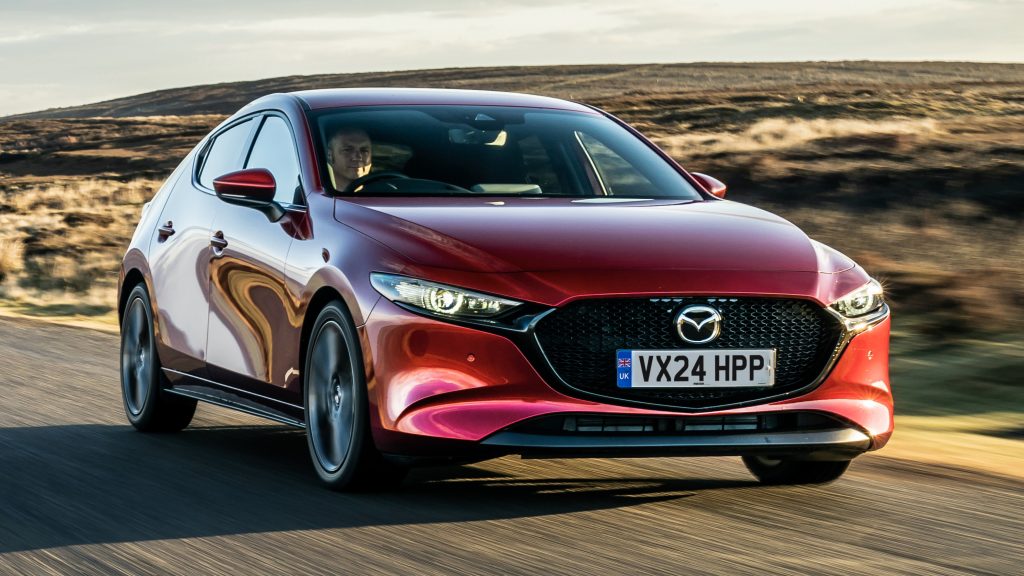
Mazda3 Years to Approach More Carefully
Not every Mazda3 year inspires the same confidence.
Older versions, especially those with heavy mileage, limited records, or visible wear, deserve extra caution. Some years have seen more owner complaints related to brakes, interior accessories, electrical quirks, and HVAC issues. None of that automatically disqualifies the car, but it changes the buying strategy. If you are looking at one of these examples, a pre-purchase inspection becomes essential.
This is especially true if the car looks suspiciously cheap compared to the market. A bargain Mazda3 can be a smart purchase, but it can also be a warning sign. Deferred maintenance, accident repairs, neglected fluid service, and unresolved warning lights can turn a cheap compact car into a very expensive lesson.
Common Mazda3 Problems Owners Should Know About
Again, the Mazda3 is reliable overall, but not flawless. There are a few areas that tend to come up more often in owner discussions and complaint histories.
Electrical annoyances
Some owners have reported smaller electrical issues rather than catastrophic failures. These can include infotainment glitches, warning messages, sensor behavior, or minor electronic frustrations. These are rarely as financially destructive as an engine or transmission failure, but they can still be irritating.
Brake-related complaints
Certain older Mazda3 years have generated notable brake complaints. In many used cars, brakes are more a condition issue than a design issue, but it is still worth checking for uneven wear, vibration, pulling, or noisy operation.
HVAC and AC concerns
Air conditioning and heater performance have appeared in owner complaint trends for some years. If you are buying used, test climate performance carefully and do not treat AC weakness as a minor inconvenience. It can become a costly repair.
Interior wear and accessories
Mazda interiors often feel upscale, but older examples can still develop trim wear, rattles, or accessory issues. These are not deal-breakers, but they affect ownership satisfaction and can hint at how well the previous owner treated the vehicle.
The key point is that the Mazda3’s common issues tend to be more manageable than the truly catastrophic failure patterns seen in some competitors. That difference is a big part of why the car still earns strong respect.
Maintenance Is the Difference Between a Good Mazda3 and a Bad One
A Mazda3 will usually treat you well if you treat it well.
That sounds obvious, but it matters more than many buyers realize. Reliable vehicles still need oil changes on time, brakes serviced properly, fluids checked, tires rotated, and suspension wear addressed before it becomes more serious. Skip those basics long enough and even a well-engineered car can feel unreliable.
If you are buying new, this means following the maintenance schedule closely and not treating routine service as optional.
If you are buying used, this means asking the right questions:
- Was the oil changed consistently?
- Are there full service records?
- Has the car had any accident damage?
- Are recalls completed?
- Does it drive smoothly when cold and warm?
- Is there any hesitation, clunking, vibration, or warning light activity?
The Mazda3 is the kind of car that rewards disciplined ownership. That is actually a positive sign. It means the vehicle is not inherently fragile, but it also will not magically overcome neglect.
Sedan vs Hatchback: Is One More Reliable?
From a reliability standpoint, the Mazda3 sedan and hatchback are close enough that most buyers should not treat body style as the deciding factor.
Mechanically, the two versions share the same basic DNA. That means reliability usually comes down to the specific car’s condition, powertrain, maintenance history, and mileage rather than whether it has a trunk or a liftgate.
The sedan is often the more conservative choice. It has a classic compact-car shape and may appeal more to shoppers who want a straightforward commuter.
The hatchback adds versatility and tends to attract buyers who care more about design and cargo flexibility. It often feels a little more distinctive and premium.
Reliability should not be what decides between them. Buy the one that fits your needs better and focus on the actual condition of the vehicle.
How the Mazda3 Compares to the Honda Civic and Toyota Corolla
This is where the Mazda3 becomes especially interesting.
The Civic and Corolla have stronger mainstream reputations for reliability, and that is not accidental. They have earned those reputations over decades. But the Mazda3 deserves to be part of the same conversation, especially for buyers who want a better overall driving and interior experience.
Here is the real distinction:
- Toyota Corolla: safest reputation, low drama, extremely rational
- Honda Civic: broad appeal, efficient, good packaging, strong market trust
- Mazda3: premium feel, engaging drive, strong dependability, more personality
The Mazda3 may not always be the absolute king of every reliability chart, but it is often the most satisfying all-around package for buyers who want dependability without the feeling of compromise.
That is why so many compact-car shoppers end up choosing it after reading not just a reliability article, but also a full Mazda3 sedan and hatchback review, because the model’s appeal is how well it balances the emotional side and the practical side.
Is the Mazda3 Expensive to Maintain?
Generally, no. The Mazda3 is not considered an expensive car to keep on the road compared with many competitors.
Routine ownership costs are usually manageable. Oil changes, brake service, tire replacements, and standard maintenance items tend to stay within normal compact-car territory. It is not the kind of vehicle that is notorious for constant high-dollar surprises.
That said, trim level and engine choice matter. A naturally aspirated front-wheel-drive Mazda3 will usually be simpler and cheaper to own long term than a turbocharged all-wheel-drive version. That does not make the higher-end trims bad choices. It just means buyers should be realistic. More features and more performance often bring slightly higher ownership sensitivity.
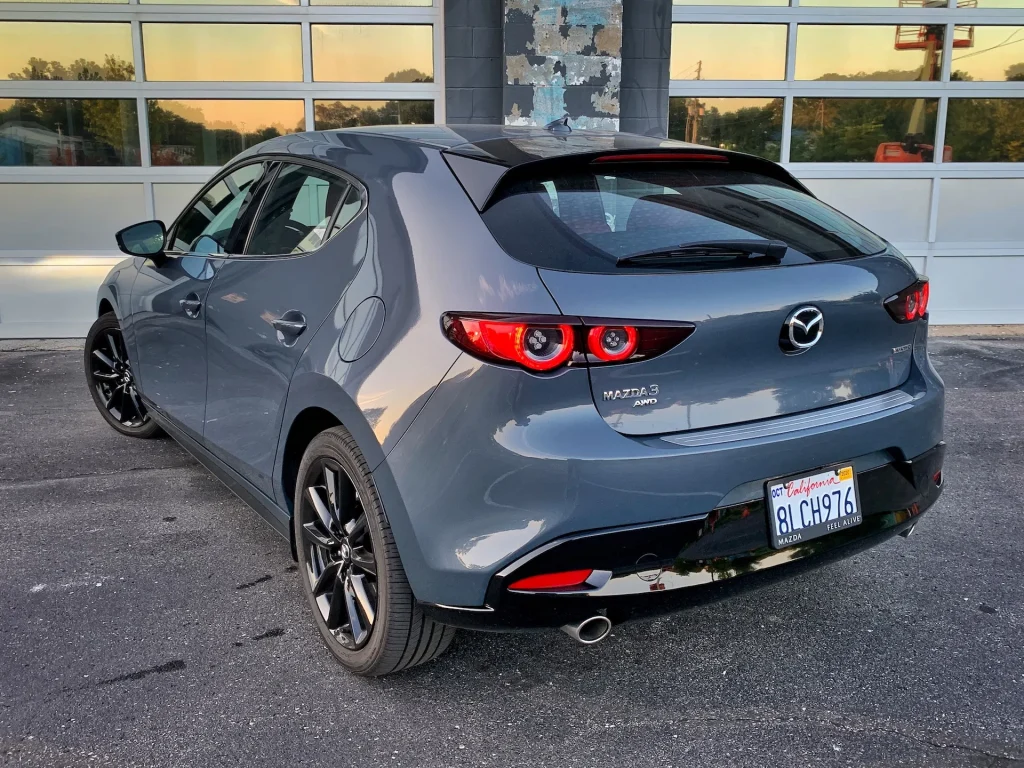
If maximum low-cost simplicity is your goal, choose a clean, non-turbo model with a strong service history. If you want more performance and premium features, the car can still be dependable, but maintenance discipline becomes even more important.
Should You Buy a High-Mileage Mazda3?
A high-mileage Mazda3 can absolutely be worth buying, but only if the condition supports it.
Mileage by itself does not tell the whole story. A well-maintained Mazda3 with higher mileage can be a better purchase than a lower-mileage example that has been neglected, driven hard, or poorly repaired after an accident.
When evaluating a high-mileage car, focus on these things:
- Cold start behavior
- Smooth transmission operation
- Brake feel
- Suspension noise
- Tire wear consistency
- Interior wear relative to mileage
- Service records
- Signs of leaks or rough repairs
The Mazda3 can age well, but it is still a modern car. Once maintenance has been ignored, problems can stack up. A good inspection matters much more than wishful thinking.
Who Is the Mazda3 Best For?
The Mazda3 is an excellent fit for buyers who want reliability but refuse to settle for an economy car that feels disposable.
It makes sense for:
- commuters who want something efficient and comfortable
- young professionals who want a premium-feeling compact without luxury-brand costs
- used-car shoppers looking for a well-rounded long-term vehicle
- buyers who care about handling, design, and cabin quality as much as dependability
It may be less ideal for:
- buyers who want the absolute cheapest possible maintenance path
- shoppers who need maximum rear-seat room
- people who treat servicing as optional and expect the car to tolerate neglect forever
The Mazda3 rewards owners who appreciate quality and stay on top of maintenance.
Final Verdict: Is the Mazda3 a Reliable Car?
Yes, the Mazda3 is a reliable car, and more importantly, it is a reliable car that still feels special.
That is what separates it from much of the compact segment. Plenty of small cars can get you from point A to point B. The Mazda3 manages to do that while offering a better cabin, sharper design, and a more refined driving experience than many direct rivals.
It is not perfect. Some years are better than others. Some owners have dealt with electrical quirks, HVAC complaints, or brake-related issues. Used buyers still need to pay attention to maintenance history, recall status, and overall condition. But those are normal realities of car ownership, not red flags that destroy the Mazda3’s credibility.
If you want one of the safest overall bets in the compact market, the Mazda3 deserves to be near the top of your list. And if you want a model that combines dependability with genuine quality, it may be one of the best choices in the entire class.
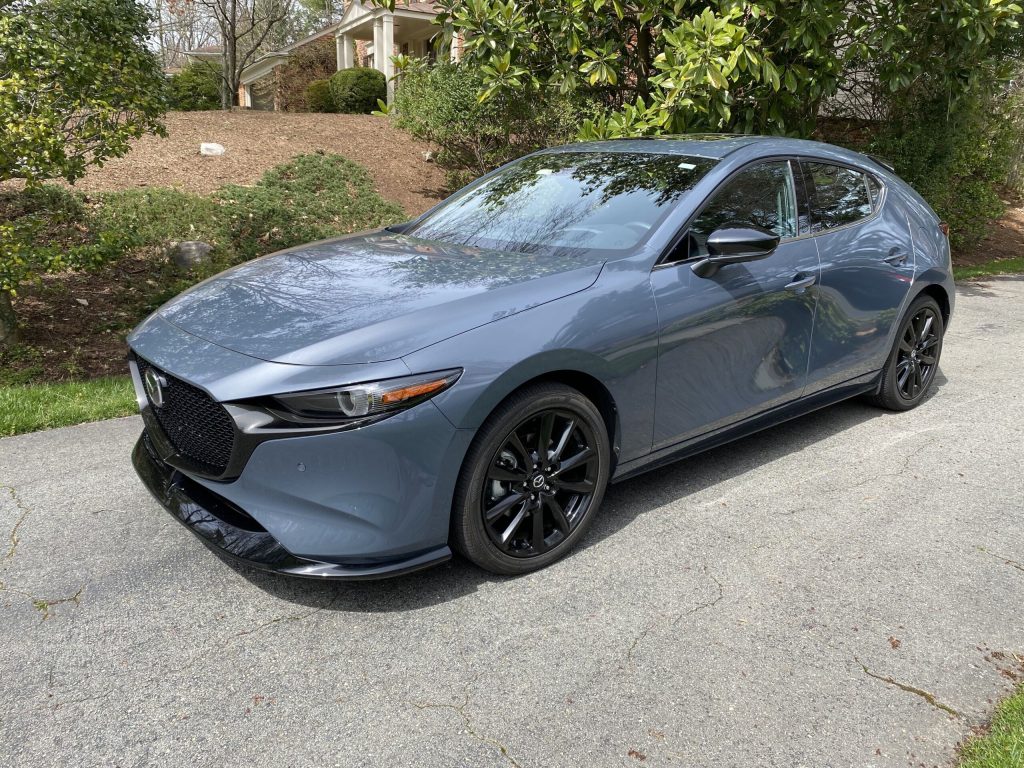
For buyers who want the full picture on why this model continues to earn praise, this in-depth Mazda3 sedan and hatchback review is a strong companion read and fits naturally alongside this reliability breakdown.
Connect with us


