

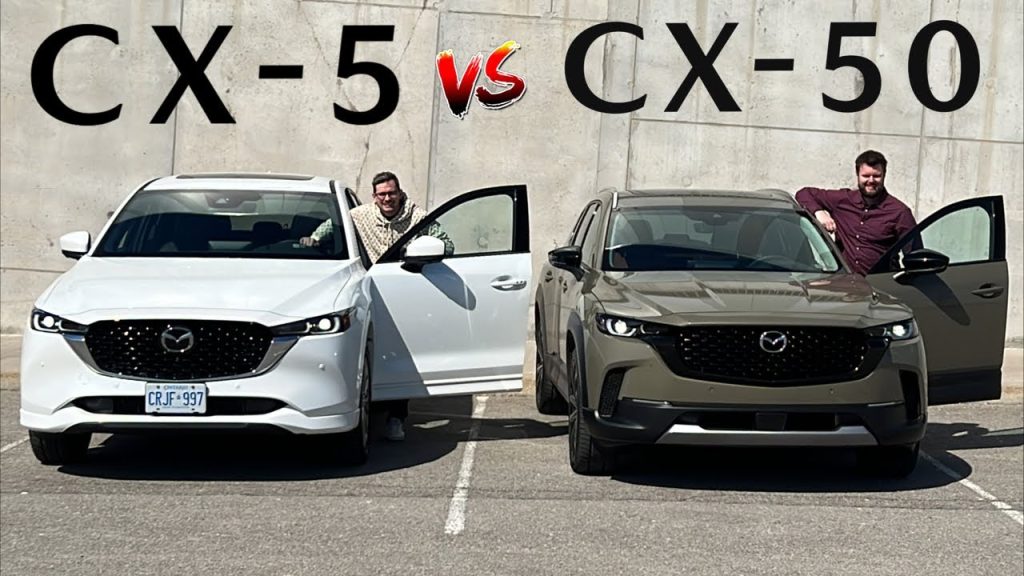
Whether you’re shopping for a new compact SUV for daily driving, family use, weekend adventures, or a blend of all three, Mazda’s CX-5 and CX-50 stand out for their stylish design, premium interior appointments, dynamic driving feel, and well-rounded safety tech. Understanding how these two models differ and overlap in specification, performance, utility, and ownership experience is crucial before choosing the right SUV for your lifestyle.
Start your comparison and see both SUVs available at Marin Mazda:
https://www.marinmazda.net/
In this deep dive, we’ll break down every key aspect below — from powertrain and fuel economy to cargo space, technology, safety systems, driving dynamics, pricing, and how they fit into different real-world use cases.
1. Overview – What Mazda Offers
Mazda positions the CX-5 as a refined compact SUV with balanced everyday usability, comfort, and technology. The CX-50, while similar in footprint and functionality, emphasizes rugged styling and versatility, and has optional performance-oriented or efficiency-focused powertrains such as turbocharged and hybrid options. Both share Mazda’s Skyactiv engineering philosophy, but deliver slightly different SUV experiences tuned to distinct buyer priorities.
2. Powertrain & Performance Specs
Standard Engines
Both models use a naturally aspirated 2.5-liter four-cylinder engine as their base powertrain, producing around 187 hp with smooth delivery and predictable performance in daily driving conditions. This standard engine is paired with an automatic transmission and all-wheel drive in most trims, contributing to a confident driving experience in rain, light off-road, and on-road scenarios.
Optional Powertrains (CX-50 Advantage)
The CX-50 expands what’s available:
- Turbo Engine: Mazda’s available Skyactiv-G 2.5T turbocharged engine produces significantly more power — around 256 hp and 320 lb-ft with premium fuel — giving pronounced improvements in acceleration and highway passing.
- Hybrid Option: Mazda offers a hybrid version of the CX-50 that boosts fuel efficiency into the high-30s (≈38 mpg combined) thanks to electric assist systems — a meaningful shift for buyers focusing on economy or reducing fuel cost.
By contrast, the 2026 Mazda CX-5 redesign retains only the base engine — Mazda has discontinued the turbo option for this model year in favor of simplicity and plans to introduce a hybrid in future years.
What This Means for Buyers:
➡ CX-5 — Reliable, balanced performance with a focus on everyday comfort and efficiency.
➡ CX-50 — More flexibility with performance or efficiency options, suitable for those who want more power or significant fuel-economy benefits.
3. Size, Dimensions & Cargo Space
At a glance, both SUVs fall into the same compact class, but Mazda designs them with slightly different proportions and space priorities:
Exterior Size Comparison
- For previous model years — the CX-50 has generally been slightly larger than the CX-5, with a longer overall body and wheelbase, giving it a more planted appearance.
- For 2026, the redesigned CX-5 now shares the same 110.8-inch wheelbase as the CX-50, and is only about 1.2 inches shorter in overall length, which narrows the size gap between them.
Interior Passenger Space
According to detailed spec comparisons:
- Earlier models showed the CX-5 having slightly more passenger volume than the CX-50, even if the CX-50 had a longer exterior footprint.
- Real-world usage reports suggest that both SUVs comfortably seat five passengers with similar legroom and headroom dimensions, though roofline and seat placement can affect perceived spaciousness.
Cargo & Versatility
Cargo capacity varies slightly depending on how it’s measured:
- Rear Cargo (Seats Up):
- CX-50: ~31.4 cu ft
- CX-5: ~30.8 cu ft
- Maximum Cargo (Seats Folded):
- CX-5 holds more overall space when rear seats are folded (~59.3 cu ft) than the CX-50 (~56.3 cu ft).
With flat load floors and split-folding rear seats, both SUVs make loading gear, groceries, strollers, or luggage straightforward. The CX-50’s slightly lower rear opening and wider load area can make loading bulky items easier, even if the CX-5 wins on folded cargo maximums.
Buyer Insight:
➡ CX-5’s advantage — slightly greater maximum cargo space with seats folded.
➡ CX-50’s advantage — broader loading area and slightly larger rear cargo volume with seats in place.
4. Fuel Economy & Efficiency
Fuel economy in compact SUVs can make a difference for long-term ownership costs:
- Base engine fuel economy is similar for both models — roughly 26 mpg combined — as noted in Mazda’s EPA classifications.
- The CX-50 Turbo sees a modest drop in combined mileage (~25 mpg) due to higher performance output, while the hybrid CX-50 stands out around 38 mpg combined — a significant advantage for many buyers.
Real-World Takeaway:
➡ If efficiency is a priority, the CX-50 Hybrid makes the biggest difference.
➡ If fuel economy is less critical than performance or comfort, the base engine versions of both SUVs deliver comparable results.
5. Suspension, Handling & Ride Quality
Ride and handling feedback from experts and spec comparisons points to subtle differences grounded in design focus:
- The CX-5 historically uses a multilink rear suspension with a stabilizer bar, tuned for roadway comfort and refined on-road manners.
- The CX-50 uses a torsion beam rear suspension, which helps support higher ride height adaptability and a more rugged stance without sacrificing stability.
Both SUVs maintain independent MacPherson front struts, ensuring responsive handling and well-controlled body motions under normal driving conditions.
Center of Gravity and Driving Feel:
➡ CX-5 — Slightly softer, comfort-oriented handling that prioritizes smooth everyday use.
➡ CX-50 — A bit firmer with an adventure-leaning setup suited for light off-pavement travel or unpaved roads.
6. Infotainment, Connectivity & Tech
Display & User Interface Differences
Infotainment systems vary between the two models and across trims:
- CX-5: Some trims (especially 2026 models) offer a larger display (up to 15.6 inches) and updated interface with integrated smartphone mirroring and Google-based controls, marking a major tech upgrade.
- CX-50: Typically features Mazda’s traditional Mazda Connect™ system with smaller screens (8.8–10.25 inches), controlled via console knob or touch depending on trim. Third-party comparisons note differences in display size and speaker configurations between CX-5 and CX-50.
Both support Apple CarPlay™ and Android Auto™, Bluetooth connectivity, USB ports, and optional premium audio options, though the CX-5’s larger screen provides a noticeable tech upgrade on higher trims.
7. Safety & Driver-Assist Features
Both SUVs include Mazda’s suite of advanced driver-assist and safety tech, such as:
- Blind-Spot Monitoring
- Rear Cross-Traffic Alert
- Lane-Keep Assist and Lane-Departure Warning
- Adaptive Cruise Control
- Automatic Emergency Braking
While specifics vary by trim, standard safety equipment is robust on both vehicles, and advanced assistive features are available or standard on many configurations. jfurther details on safety tech are often provided by Mazda and dealership spec sheets.
Safety Focus:
➡ CX-5 aims to provide refined, predictable protection centered on everyday driving.
➡ CX-50 typically extends access to more driver-assist options on upper trims, appealing to buyers who want broad coverage and extra safety support.
8. Interior Comfort, Materials & Build Quality
Both models offer premium interior materials and comfortable seating across trims, including:
- Cloth or leather seating options
- Heated and ventilated front seats
- Panoramic sunroofs on select trims
- Quality infotainment and climate systems
Interior build quality is often cited as a highlight of Mazda’s line, with soft-touch materials and thoughtful ergonomics. Some buyers prefer the CX-5’s slightly larger rear passenger area and taller seating position, while others appreciate the CX-50’s rugged-leaning interior styling and utility feel.
9. Pricing & Value
Price comparisons help illustrate the models’ relative value:
- Mazda CX-5 typically starts at a slightly lower MSRP compared with the CX-50.
- Mazda CX-50 base pricing starts around the same range but includes the potential for turbo and hybrid powertrains, making it slightly more versatile in value per feature set.
Because trims and features vary widely, buyers are encouraged to review the full inventory and current pricing at Marin Mazda to find the best match for their budget and requirements:
https://www.marinmazda.net/
10. Real-World Use Cases – Which One Fits You?
Urban & Everyday Commuting
The Mazda CX-5 excels in everyday driving due to its refined comfort, quiet cabin, and ease of maneuvering in daily traffic or city environments. Its updated technology and spacious interior in the 2026 redesign also make it family-friendly and practical for road-trip use.
Adventure & Outdoor Lifestyles
The Mazda CX-50 is engineered for active lifestyles with a rugged design ethos, available turbo power for extra punch, and hybrid efficiency for long trips. Its higher towing capacity and hands-on utility features make it especially attractive for buyers who frequently haul gear or navigate light off-road scenarios.
Specification Summary
| Feature | Mazda CX-5 | Mazda CX-50 |
|---|---|---|
| Base Engine | 2.5 L naturally aspirated | 2.5 L naturally aspirated |
| Optional Turbo | Discontinued (2026) | Available Turbo |
| Hybrid Option | Future (2027+) | Available |
| Cargo Behind Seats | ~30.8 cu ft | ~31.4 cu ft |
| Max Cargo | ~59.3 cu ft | ~56.3 cu ft |
| Fuel Economy | ~26 mpg combined | ~26 mpg combined (higher with hybrid) |
| Towing | ~2,000 lbs | ~3,500 lbs (turbo) |
| Tech | Large integrated touchscreen available | Mazda Connect™ |
| Ride Focus | Refined, comfort | Rugged, versatile |
| MSRP Range | Often lower | Slightly higher or similar |
Final Thoughts
Both Mazda SUVs deliver compelling blends of performance, technology, safety, and comfort. If you value everyday refinement, newer tech interfaces, and slightly more cargo flexibility, the CX-5 may be your best fit. If you want more power options, rugged styling, hybrid availability, and stronger towing capability, the CX-50 expands what Mazda’s compact SUV line can do.
Explore both SUVs, compare trim levels, and find pricing and availability at Marin Mazda:
https://www.marinmazda.net/
If you’d like this formatted as SEO-optimized HTML with headings and meta structure ready for your blog, just ask!
Connect with us


