

Keeping the water, brakes, and engine in good shape matters — but tire pressure is one of the most important maintenance items most drivers overlook. Proper tire inflation affects safety, fuel economy, tire life, handling, and even braking distance, and varies with wheel size, load, and temperature. In this detailed guide we’ll explain Mazda-specific recommendations and real-world considerations for every CX-5 owner.
📍 Schedule tire and service maintenance here: https://marinmazda.net/
(Visit the official dealer site for factory-correct checks and adjustments)
Recommended Mazda CX-5 Tire Pressure Values
Mazda’s recommended inflation levels for the CX-5 tires depend on wheel size — the most common factory configurations are:
- 34 psi for 17-inch wheels
- 36 psi for 19-inch wheels
These are the pressures Mazda and many dealer service guides list as target cold inflation pressure for the CX-5.
What “cold pressure” means:
“Cold” means the vehicle hasn’t been driven in the past three hours or has been driven less than a short distance at low speed (tires haven’t heated up). Pressure increases when tires are warm, so always check when cold.
Where to find your exact value:
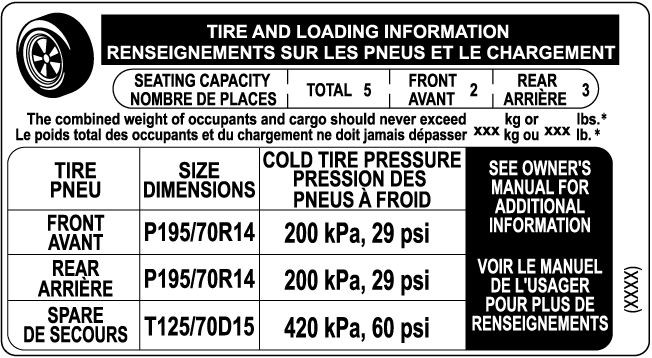
Your specific model year and tire size may vary slightly — always check the tire placard on the driver’s door jamb or owner’s manual first. Mazda prints the official PSI values there.
🧠 Why Tire Pressure Matters
Proper inflation isn’t just about preventing a limp tire — it plays a role in how the CX-5 behaves and performs every mile:
🚗 Safety & Handling
When tires are at the correct pressure:
- The contact patch with the road is optimized
- Braking distances stay within design limits
- Cornering grip improves
Under-inflated tires can overheat and become unstable, increasing crash risk.
⛽ Fuel Efficiency
Each psi below the recommended level increases rolling resistance, which requires more energy (fuel) to move the vehicle. Correct pressures help maintain the CX-5’s efficient performance.
🛞 Tire Wear & Life
Under-inflation wears tread edges prematurely, while over-inflation excessively wears the center — both shorten tire life and reduce value.
📉 Comfort & Performance
Traditional Mazda CX-5 tire settings are chosen to balance ride comfort and responsive steering. Straying far from recommended PSI can make the ride harsh or sluggish.
🔍 How to Check Tire Pressure
🛠 What You Need
- Quality tire pressure gauge (digital or dial)
- Air compressor (at a station or home unit)
- Manufacturer recommended PSI (from door placard or owner’s manual)
🪄 Step-by-Step
- Check when cold: Before driving or after the vehicle sits for a few hours.
- Unscrew valve caps: From each tire.
- Press gauge on valve: Ensure an accurate reading.
- Compare to recommended numbers: 34 psi (17″) or 36 psi (19″).
- Add or release air as needed: Until tires match the target pressure.
- Replace valve caps: To keep dirt out.
Checking monthly (or before long trips) is best practice — and because pressure naturally drops over time even without an obvious leak, waiting until a light comes on means you’re already significantly under-inflated.
📶 Tire Pressure Monitoring System (TPMS)
The Mazda CX-5 includes a Tire Pressure Monitoring System (TPMS) designed to alert you when pressures are significantly below recommended levels.
🚨 TPMS Warning Light Behavior
- Solid light: Means at least one tire is under-inflated to a level the system considers unsafe.
- Flashing light at startup: Often indicates a TPMS sensor fault rather than low tire pressure.
📊 Limitations of TPMS
- TPMS doesn’t display exact psi values on many CX-5 models; it simply alerts low pressure.
- Sensors usually trigger when pressure drops about 25% below the recommended value — eg approximately 28 psi for 34–36 psi settings — which means the light may come on later than ideal.
Because of this, manual pressure checks remain important — especially if your vehicle doesn’t show real-time psi in the dash.
🌡 Temperature & Tire Pressure
Tire pressure changes with temperature:
- For every 10 °F drop, pressure can decrease ~1-2 psi.
- Cold mornings or seasonal drops can make a properly set tire become under-inflated overnight.
This is why you should check tire pressures more often in winter, and possibly adjust before heavy cold snaps.
🧪 Adjusting Pressure for Loads
If you often haul heavy cargo or passengers, slightly raising tire pressures (within manufacturer tolerances) can reduce sidewall flex and improve stability. However:
- Any adjustment should stay within a few psi of the recommended value to preserve safety and tire wear balance.
- Always consult the door placard or owner’s manual for exact limits.
🧰 Best Practices for Maintaining Proper Tire Pressure
Here’s a checklist to follow:
✔ Monthly Pressure Checks
Use a gauge and check all four tires even if TPMS light is off.
✔ Before Long Trips
Check and adjust before highway drives or heavy loads.
✔ After Seasonal Temperature Changes
Significant ambient changes demand ahead-of-time checks.
✔ After a Pressure Warning Light
Immediately check and adjust that tire — and all others — even if the light goes off.
✔ Use Reliable Tools
Cheap stick gauges are often inaccurate; digital gauges or professional station gauges are best.
🧩 Common Myths & Misconceptions
❌ “PSI Doesn’t Matter Much”
Incorrect — even a few psi off the recommended number can noticeably affect handling, fuel economy, and wear.
❌ “TPMS Is Precise”
TPMS indicates low pressure, but it doesn’t give accurate psi values. Manual checks still matter.
❌ “All Tires Same PSI”
Different wheel sizes on the CX-5 (17″ vs 19″) have different recommendations (34 psi vs 36 psi).
🚘 When to Seek Professional Help
If you notice any of the following, it’s worth having your CX-5 inspected by professionals:
- TPMS light stays on despite correct psi
- Rapid or frequent pressure loss
- Uneven tire wear
- Damaged valve stems or rims
- Persistent vibration or pulling at highway speeds
You can always have Mazda-certified technicians inspect and service your tires at https://marinmazda.net/.
📊 Quick Reference Summary
| Wheel Size | Recommended Tire Pressure |
|---|---|
| 17″ wheels | 34 psi (cold) |
| 19″ wheels | 36 psi (cold) |
If exact specs aren’t clear for your specific trim, always defer to the tire placard inside the driver’s door or the Mazda owner’s manual first.
🧠 Final Takeaways
- Proper tire pressure enhances safety, handling, and fuel economy.
- Mazda CX-5 typically uses 34 psi (17″) or 36 psi (19″) cold pressure.
- Monthly checks and seasonal adjustments help maintain correct pressures.
- TPMS alerts are useful, but manual checks are still required.
- For professional checks, sensor calibration, or pressure adjustments, trust certified service at https://marinmazda.net/.
Connect with us


