

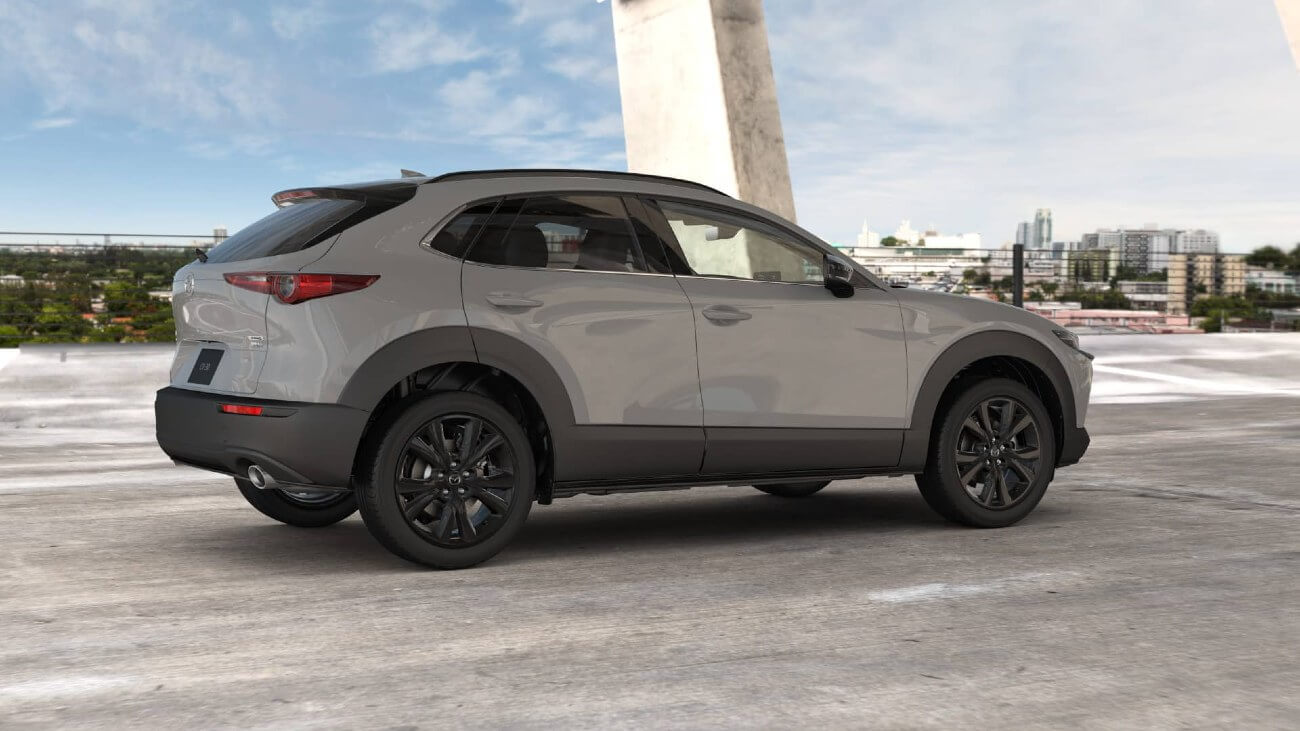
Choosing between two standout subcompact crossovers? Let’s dive into how the Mazda CX‑30 and Hyundai Kona compare in appearance, safety performance, and in-cabin technology—so you can make a well-informed decision.
1. Distinct Design & Interior Quality
Mazda CX‑30
- Featuring Mazda’s elegant “Kodo” design language, the CX‑30 presents sleek curves and a premium stance that catches the eye.
- Inside, the cabin is refined and driver-focused, with tactile materials, minimalist design, and optional top-tier touches like Bose sound and leather upholstery .
- Drivability is complemented by a well-balanced steering feel and chassis cooling tailored for springtime Bay Area drives.
Hyundai Kona
- Bold and sporty styling gives the Kona a youthful curb appeal, especially in its N-Line trims.
- The interior is functional with a modern layout, but it lacks the upscale feel and material refinement of the CX‑30.
2. Safety Ratings & Driver Assist Tech
Crash Test Results
- Both models earn top safety honors: 5‑star NHTSA ratings and IIHS Top Safety Pick+ status (CX‑30 confirmed, Kona legacy).
- The CX‑30 consistently receives Superior assessment in automatic emergency braking, while the Kona earns “Advanced”.
Driver Assistance Systems
- Mazda’s i‑Activsense® suite includes: Blind Spot Monitoring, Lane Keep Assist, Smart Brake Support, Adaptive Cruise with Stop & Go, and optional 360° View Monitor—providing a robust safety package.
- Kona also offers similar features including Blind Spot View Monitor and Highway Driving Assist, with the benefit of a strong 10‑year/100k‑mile powertrain warranty .
3. Interior Tech & Usability
Mazda CX‑30
- Features an 8.8″ (or 10.25″) non-touchscreen controlled by a dial—a system designed to minimize driver distraction.
- Standard Apple CarPlay and Android Auto (wired or wireless), plus premium options like Bose audio and Active Driving Display .
Honda Kona
- Offers larger 7″ or 9″ touchscreens with intuitive menus and navigation options.
- Though user-friendly, it doesn’t match Mazda’s overall refinement and tactile controls.
4. Space, Cargo, and Practicality
| Feature | Mazda CX‑30 | Hyundai Kona |
|---|---|---|
| Cargo (rear seats) | 20.2 cu ft | 25.5 cu ft |
| Max Cargo Volume | 45.2 cu ft | 63.7 cu ft |
| Second-Row Legroom | ~36.3 in | ~38.2 in |
- Kona offers more passenger space and maximum cargo capacity—ideal for families or frequent gear use.
- CX‑30 focuses on delivering a refined, driver-centric interior, yielding compromise in rear space.
5. Fuel Economy & Efficiency
- Hyundai Kona FWD: up to 29 city / 34 highway MPG; AWD models slightly less.
- Mazda CX‑30: approximately 26 city / 33 highway MPG.
Verdict: Kona edges out CG‑30 on pure fuel efficiency, though the CX‑30 remains competitive while offering a more engaging driving experience.
Overall Comparison
| Category | Mazda CX‑30 | Hyundai Kona |
|---|---|---|
| Design & Quality | Premium design & materials | Bold styling, functional cabin |
| Safety | Top-tier crash & AEB ratings | Excellent safety, strong tech |
| Interior Tech | Dial-controlled refinement | Larger touchscreens, easy-to-use |
| Cargo & Space | Compact with less space | More cargo, more passenger room |
| Fuel Economy | Very good | Slightly better |
| Warranty | Standard 5-year/60k mile | Best-in-class 10/100k powertrain |
Final Recommendation
Choose the Mazda CX‑30 if you value:
- Premium cabin ambiance and driving precision
- A cohesive and minimized infotainment experience
- Best-in-class safety feel and brake response
Choose the Hyundai Kona if you prefer:
- More cargo and passenger space
- Better fuel efficiency
- A robust factory warranty
Visit Marin Mazda to Compare Them In Person
Curious how each one fits your California lifestyle? Stop by Marin Mazda in San Rafael to test drive both models and explore current lease or finance offers.
Marin Mazda
807 Francisco Blvd E, San Rafael, CA 94901
(415) 454‑7000
www.marinmazda.net
See which crossover truly suits your style, safety needs, and the way you drive.
Connect with us


