

In an era where automakers redesign vehicles every few years just to stay relevant, the 2025 Mazda CX-5 does something almost rebellious: it stays the course. No radical reinvention. No oversized, glued-on tablet screens. No desperate electrification gimmicks just to check a marketing box.
And yet, year after year, the CX-5 remains one of the best-selling compact SUVs in North America.
So what’s the secret?
It isn’t hype. It isn’t incentives. It isn’t blind brand loyalty.
It’s engineering maturity.
The 2025 Mazda CX-5 continues refining a formula that competitors are still trying to copy: premium design, real driving dynamics, mechanical reliability, and an ownership experience that doesn’t fall apart after 36 months.
Let’s break down why this SUV refuses to fade away.
Exterior Design: Aging Better Than the Competition
Mazda’s Kodo design philosophy emphasizes motion within stillness. Instead of aggressive creases and exaggerated body lines, the CX-5 relies on proportion, surfacing, and subtle detailing.
For 2025, the updates remain deliberate rather than dramatic:
- Refined grille accents
- Updated lighting signatures
- Fresh alloy wheel designs
- Subtle trim-specific styling differentiation
The result is an SUV that still looks expensive parked next to rivals released far more recently.
While some competitors chase futuristic themes that may age poorly, the CX-5 leans into timelessness. It doesn’t try to look like an EV. It doesn’t pretend to be off-road extreme. It simply looks refined.
That restraint is its advantage.
Interior: The Compact SUV That Feels Like a Luxury Car
Open the door and you immediately understand why so many buyers cross-shop the CX-5 with entry-level luxury SUVs.
Mazda’s interior philosophy revolves around driver-centric ergonomics and tactile quality. Instead of overwhelming occupants with screens and gloss black surfaces, the CX-5 focuses on:
- Horizontal layout for visual calmness
- Premium soft-touch materials across the dash and door panels
- Real stitching on higher trims
- Minimalist button placement with intuitive logic
- Excellent seat bolstering and long-distance comfort
The driving position is particularly noteworthy. Unlike many compact SUVs that exaggerate ride height, the CX-5 positions the driver in a more car-like posture. That contributes significantly to its dynamic feel.
Noise insulation also deserves attention. Road and wind noise are impressively controlled for this segment, giving the CX-5 a composed highway demeanor.
Infotainment: Practical Over Flashy
The infotainment system continues Mazda’s rotary-command controller approach rather than full touchscreen dominance.
On paper, some criticize this.
In real-world driving, it makes sense.
Why?
- Reduced distraction
- Easier control without reaching forward
- Better tactile precision
- No smudged display surfaces
Wireless Apple CarPlay and Android Auto are integrated on most trims, and the display resolution remains crisp and well-positioned.
Mazda’s philosophy is clear: technology should support the driving experience, not overwhelm it.
Powertrain Options: Proven, Refined, Reliable
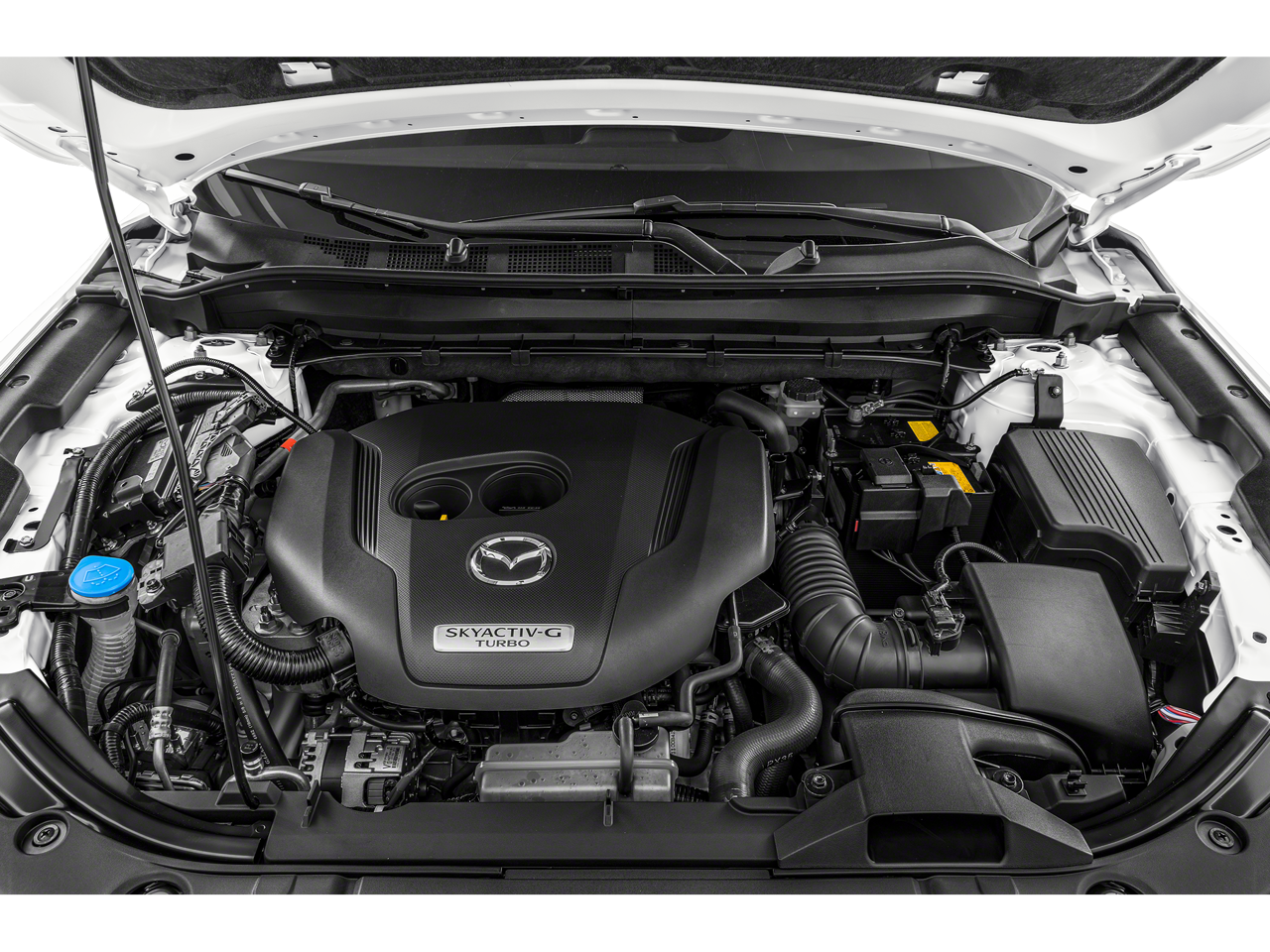
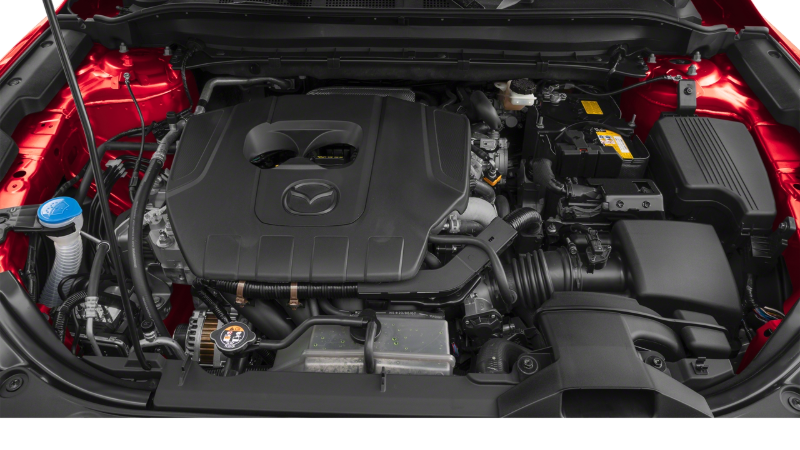
The 2025 Mazda CX-5 retains two engine choices.
2.5L Naturally Aspirated Inline-Four
This engine focuses on linear power delivery and long-term durability. It’s smooth, predictable, and perfectly adequate for urban commuting and highway merging.
Advantages:
- Strong reliability history
- No turbo lag
- Lower long-term maintenance risk
- Consistent fuel economy
2.5L Turbocharged Engine
For drivers wanting more urgency, the turbo option delivers substantial mid-range torque.
Benefits include:
- Confident highway passing power
- Strong acceleration without excessive noise
- Improved towing capability
- Seamless integration with AWD
Both engines pair with a traditional 6-speed automatic transmission. No CVT. No dual-clutch complexity.
That decision alone sets the CX-5 apart in a segment increasingly dominated by CVT-equipped competitors.
All-Wheel Drive: Not Just a Checkbox
Mazda’s i-Activ AWD system comes standard in many markets.
Unlike reactive systems that engage only after slip occurs, i-Activ continuously monitors:
- Steering input
- Throttle application
- Wheel speed
- Ambient temperature
- Road surface conditions
It preloads torque to rear wheels before traction loss becomes obvious.
The result is an SUV that feels planted in rain and snow without feeling heavy or inefficient.
For Canadian climates and northern U.S. winters, that’s not a luxury feature. It’s a necessity.
Driving Dynamics: Still the Benchmark
This is where the CX-5 separates itself from the pack.
Mazda engineers tune suspension geometry for balance rather than softness. The steering offers actual feedback. Body roll is minimal.
You don’t get the floating sensation common in many compact SUVs.
Instead, you get:
- Precise turn-in
- Stable mid-corner behavior
- Predictable weight transfer
- Confident highway composure
Even after years on the market, few rivals match the CX-5’s steering calibration.
It doesn’t drive like an appliance.
It drives like a vehicle designed by enthusiasts.
Ride Comfort: Balanced, Not Mushy
The CX-5 avoids extremes.
It isn’t harsh.
It isn’t overly soft.
Instead, it delivers:
- Controlled absorption of road imperfections
- Minimal vertical oscillation
- Stable highway tracking
- Reduced cabin vibration
Mazda’s G-Vectoring Control Plus system subtly adjusts engine torque and braking inputs to improve stability during cornering. It operates in the background, unnoticed, but contributes to the vehicle’s overall composure.
Fuel Economy: Real-World Consistency
While some competitors advertise slightly better laboratory ratings, the CX-5 delivers predictable efficiency in everyday use.
Owners frequently report:
- Stable highway economy
- Minimal winter performance drop
- No dramatic AWD penalties
- Consistent long-term averages
In practical ownership, consistency often matters more than marginal spec-sheet advantages.
Safety: Intelligent Without Being Intrusive
The 2025 CX-5 includes an advanced suite of safety technologies.
Standard or available features include:
- Adaptive cruise control
- Lane departure warning
- Lane-keeping assist
- Blind spot monitoring
- Rear cross-traffic alert
- Automatic emergency braking
Importantly, these systems are calibrated to avoid excessive false alerts.
Mazda avoids aggressive steering corrections that can frustrate drivers. Instead, the assistance feels supportive and measured.
Cargo and Practicality
The CX-5 remains competitive in cargo capacity within the compact SUV class.
Key strengths:
- Wide rear opening
- Low lift-over height
- Flat-folding rear seats
- Under-floor storage compartments
While some rivals may offer marginally larger cubic-foot numbers, the CX-5’s space is usable and intelligently designed.
Rear passenger comfort is solid, though taller occupants may prefer midsize options.
Trim Strategy: Logical and Transparent
Mazda structures trims with clarity.
Base trims are not stripped-down penalty boxes.
Mid-level trims add meaningful comfort upgrades.
Top trims introduce premium materials and turbo performance.
There’s no obvious “bait trim” forcing buyers into expensive packages for basic necessities.
That transparency builds consumer trust.
Reliability: The Quiet Advantage
One of the biggest advantages of the 2025 CX-5 is maturity.
This platform has been refined for years.
That means:
- Known mechanical performance
- Established service procedures
- Strong reliability data
- Fewer first-year redesign surprises
In contrast, many competitors rely on new-generation hybrid systems or experimental turbo configurations.
Mazda chose evolution over revolution.
Long-term owners benefit.
Cost of Ownership: Manageable and Predictable
Maintenance costs remain reasonable.
Insurance rates tend to be competitive within the segment.
Parts availability is strong.
Independent service familiarity is widespread.
Nothing about owning a CX-5 feels complicated.
That simplicity reduces long-term stress.
Where It Faces Competition
It’s important to be balanced.
The CX-5 does not offer:
- A hybrid variant
- A full digital dashboard
- Massive interior screens
- Third-row seating
If electrification is a priority, buyers may look elsewhere.
But if driving quality, material refinement, and long-term durability rank higher, the CX-5 remains difficult to beat.
Why Buyers Keep Choosing It
Because it delivers a rare combination:
- Premium-level interior quality
- Engaging driving dynamics
- Proven powertrains
- Refined AWD system
- Competitive pricing
- Long-term reliability confidence
Many compact SUVs compete on features.
The CX-5 competes on feel.
That distinction matters more than most buyers initially realize.
Final Verdict: The SUV That Didn’t Need to Change
The 2025 Mazda CX-5 proves that constant redesign isn’t required for relevance.
Instead of chasing trends, it focuses on fundamentals:
- Mechanical honesty
- Ergonomic intelligence
- Design maturity
- Driver engagement
In a market increasingly crowded with flashy, over-digitized crossovers, the CX-5 feels refreshingly deliberate.
It doesn’t try to impress you in the showroom.
It impresses you every day after purchase.
And that’s why, even without a dramatic overhaul, the 2025 Mazda CX-5 continues to dominate conversations in the compact SUV segment.
If you value how a vehicle drives, feels, and lasts, the CX-5 remains one of the smartest buys on the road today.
Connect with us


