

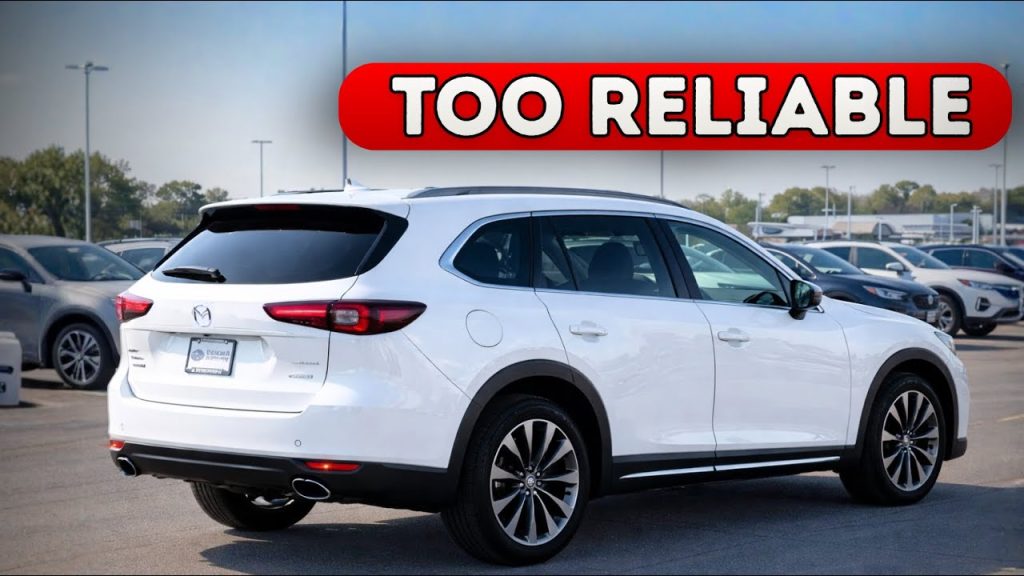
A Deep Ownership Guide Based on Engineering, Real-World Use, and Long-Term Reality
Mazda SUVs occupy a unique space in the market. They are not positioned as budget vehicles, but they are not luxury-priced either. They compete on design, driving feel, and engineering discipline rather than flashy tech or gimmicks. But for most buyers, one question matters more than styling or driving dynamics:
Are Mazda SUVs actually reliable long-term vehicles, or do they just feel good when new?
The short answer is yes, Mazda SUVs are generally reliable.
The long answer is more nuanced, and far more useful for buyers who plan to keep their vehicle long-term.
Reliability is not a single trait. It is a combination of mechanical durability, system simplicity, repair predictability, and long-term ownership stability. Some brands build reliable engines but unreliable electronics. Others build strong drivetrains but weak transmissions. Some brands look reliable early but become expensive after 100,000 miles.
Mazda’s reliability profile is different. It is built on conservative mechanical design, mature engineering platforms, and incremental technology adoption rather than radical experimentation. That approach tends to produce vehicles that age well.
What “Reliable” Actually Means in Real Ownership
Most people think reliability means “it doesn’t break.”
In reality, reliability has layers:
- Mechanical longevity
Engines, transmissions, drivetrains, and cooling systems surviving high mileage without major failure. - Operational stability
Fewer warning lights, sensor failures, electronic glitches, and software issues. - Maintenance predictability
Routine service remains routine instead of becoming repair-heavy. - Cost stability
Repairs remain affordable and predictable, not sudden catastrophic expenses.
Mazda SUVs generally perform well in all four categories, especially when compared to brands that use more complex powertrains or experimental systems.
Mazda’s Engineering Philosophy and Why It Matters
Mazda does not engineer vehicles like most mainstream brands.
Instead of chasing extreme fuel economy through complex turbo-hybrid systems or heavy electrification early, Mazda focused on:
- High-compression naturally aspirated engines
- Efficient combustion design
- Lightweight vehicle architecture
- Balanced power-to-weight ratios
- Conservative transmission tuning
- Mechanical simplicity
This philosophy matters for reliability because complexity is the enemy of longevity.
Fewer moving parts means fewer failure points.
Fewer electronic dependencies mean fewer system-level faults.
Simpler drivetrains mean fewer cascading failures.
Mazda has historically avoided:
- Dual-clutch transmissions in mass models
- Early hybrid complexity
- Experimental CVT systems
- Over-electrification of basic systems
That conservative design strategy pays dividends long-term.
Powertrain Reliability
Engines
Mazda’s Skyactiv-G gasoline engines are widely considered some of the most durable mass-market engines in modern vehicles. They use:
- High compression ratios
- Direct injection
- Optimized combustion chambers
- Efficient thermal management
- Strong internal component tolerances
These engines are not built for extreme output. They are built for longevity and consistency.
They are not highly stressed engines, which is one of the biggest predictors of long-term reliability.
Turbocharged Mazda engines are also generally reliable, but like all turbo engines, they require:
- More frequent oil changes
- Higher-quality oil
- Better cooling maintenance
- Proper warm-up and cool-down habits
Turbo reliability is more owner-behavior dependent.
Transmissions
Mazda primarily uses traditional automatic transmissions, not CVTs and not dual-clutch systems in most of its SUVs.
This matters.
Traditional automatics:
- Handle torque better
- Age more predictably
- Are easier to service
- Are more tolerant of heat
- Have better long-term durability
This is a major reliability advantage compared to brands that rely heavily on CVTs.
Electrical and Software Reliability
This is where modern vehicles struggle across the industry.
Mazda SUVs are not immune to:
- Infotainment glitches
- Sensor errors
- Software updates
- Camera system faults
- Driver-assist calibration issues
However, these are typically non-drivetrain issues. They do not affect the ability of the vehicle to move, operate safely, or function mechanically.
In other words:
Mazda SUVs may occasionally have software annoyances, but they rarely have systemic mechanical failures.
That distinction matters for long-term ownership.
Suspension, Steering, and Chassis Reliability
Mazda builds vehicles with a strong emphasis on driving dynamics, which means:
- Rigid chassis design
- Proper suspension geometry
- Balanced weight distribution
- Controlled body movement
- Strong steering components
This reduces uneven wear, improves component life, and minimizes stress on joints and bushings.
Suspension wear is normal in all vehicles, but Mazda components tend to wear predictably, not prematurely.
Reliability by Mazda SUV Model
Mazda CX-5
One of the most reliable compact SUVs in its segment.
Long production history, mature platform, proven engines and transmissions.
Excellent long-term ownership reputation.
Mazda CX-30
Mechanically solid, newer platform.
Reliability is good, but newer models naturally carry more software complexity.
Mazda CX-50
Strong structural platform.
Good mechanical reliability, but newer platform means less long-term data.
Mazda CX-9 (previous generation)
Strong V6 reliability record.
Good long-term durability when properly maintained.
Mazda CX-90 (new generation large SUV)
Advanced platform with more complexity.
Too new for full long-term reliability assessment.
Early reliability is acceptable, but long-term data is still developing.
Maintenance and Ownership Reality
Mazda SUVs are not maintenance-free vehicles. They are maintenance-stable vehicles.
This means:
- Regular service keeps them reliable
- Ignored maintenance creates problems
- Preventive care matters
But they do not have:
- Chronic transmission failures
- Systemic engine defects
- High failure-rate components
- Unstable powertrains
Cost of Ownership Reliability
Reliability is also financial.
Mazda SUVs tend to have:
- Reasonable parts costs
- Wide parts availability
- Lower labor complexity
- Fewer specialty systems
- Predictable service schedules
They are not cheap cars, but they are cost-stable vehicles.
Long-Term Ownership Pattern
Owners who keep Mazda SUVs long-term typically report:
- Stable performance
- Predictable maintenance
- Low major repair frequency
- Consistent drivability
- Few catastrophic failures
Problems that do occur tend to be:
- Sensors
- Electronics
- Wear components
- Software issues
- Suspension wear
- Infotainment issues
Not drivetrain failures.
What Actually Reduces Mazda SUV Reliability
- Skipped maintenance
- Poor-quality oil
- Long oil change intervals
- Overheating
- Ignoring warning lights
- Low-quality fuel
- Lack of cooling system service
- Turbo neglect
- Transmission fluid neglect
- Ignored recalls
These issues affect any brand, but modern Mazdas are less tolerant of neglect than older vehicles.
Reliability Compared to Other Brands
Mazda SUVs generally outperform:
- Brands with heavy CVT reliance
- Brands with early hybrid complexity
- Brands with high-output turbo systems
- Brands with over-electrified platforms
Mazda prioritizes mechanical stability over novelty.
Are Mazda SUVs Built to Last 200,000+ Miles
Yes, with proper maintenance.
This requires:
- Regular oil changes
- Cooling system care
- Transmission servicing
- Suspension maintenance
- Brake system maintenance
- Proper fuel quality
- Proper driving habits
Mazda powertrains are capable of high mileage when maintained properly.
FAQ Section
Are Mazda SUVs reliable long term?
Yes. They are known for strong long-term mechanical reliability and predictable ownership costs.
Which Mazda SUV is the most reliable?
Historically, the CX-5 has the strongest reliability record due to its mature platform and proven powertrain.
Are Mazda SUVs expensive to maintain?
No. Maintenance costs are generally average for the segment, not premium.
Do Mazda SUVs have transmission problems?
No widespread transmission failure patterns exist for Mazda SUVs.
Are turbo Mazda SUVs reliable?
Yes, but turbo engines require more disciplined maintenance.
Are Mazda SUVs better than Toyota or Honda for reliability?
Toyota still leads in conservative reliability engineering. Mazda is competitive and often comparable in real-world ownership.
Do Mazda SUVs have electrical issues?
Occasional software and sensor issues exist, but not at systemic failure levels.
Are Mazda SUVs good for high-mileage ownership?
Yes, with proper maintenance.
Do Mazda SUVs have known engine problems?
No widespread engine failure patterns exist in modern Mazda SUVs.
Is Mazda a reliable brand overall?
Yes. Mazda is widely considered one of the more reliable mainstream automotive brands.
Final Conclusion
Mazda SUVs are reliable vehicles, not because they are overbuilt, but because they are intelligently engineered.
They rely on:
- Mechanical simplicity
- Proven powertrain design
- Conservative engineering
- Mature transmission systems
- Balanced vehicle architecture
They avoid excessive complexity and experimental systems, which is one of the biggest predictors of long-term reliability.
They are not perfect. No brand is.
But they are structurally sound, mechanically stable, and ownership-predictable vehicles.
For buyers who value:
- Long-term ownership
- Predictable maintenance
- Mechanical durability
- Stable performance
- Lower long-term risk
Mazda SUVs are a strong reliability choice in the SUV market.
Connect with us


