

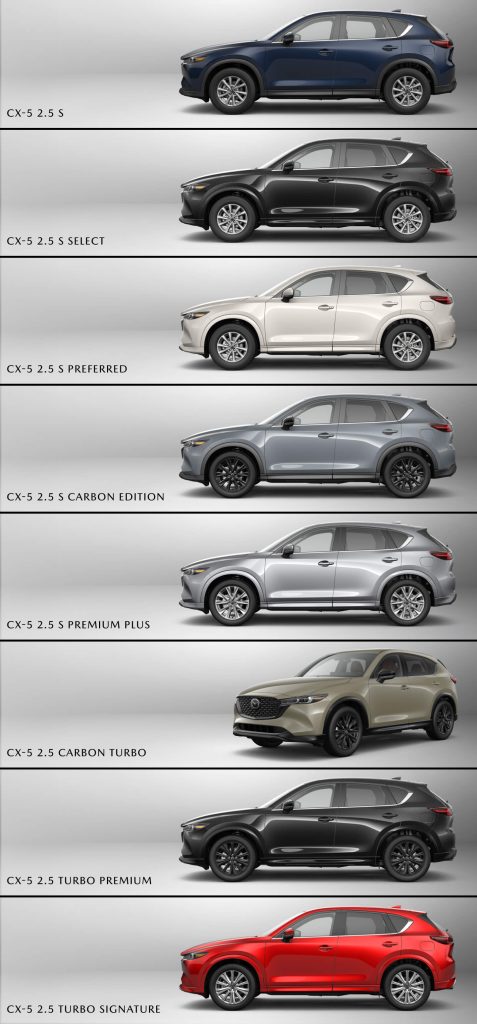
The 2025 Mazda CX-5 lineup is structured to cover a wide range of buyers, from basic daily drivers to higher-end, near-luxury SUVs. Each trim builds incrementally, mainly through comfort, technology, and performance upgrades.
Trim Breakdown
The base CX-5 2.5 S comes with a naturally aspirated 2.5L engine, standard all-wheel drive, and core features like infotainment and driver assistance systems. It covers the essentials without adding much beyond that.
Moving up, the 2.5 S Select adds practical upgrades such as dual-zone climate control, rear privacy glass, and additional connectivity. These are usability improvements rather than major changes.
The 2.5 S Preferred starts introducing more comfort-focused features, including leather seating, a power liftgate, and a moonroof. This is typically where the vehicle begins to feel more premium.
The 2.5 S Carbon Edition is mostly a styling package layered on top of the Preferred trim. It adds visual differentiation like black exterior elements and red leather interiors but doesn’t significantly change functionality.
The 2.5 S Premium Plus adds more advanced features such as ventilated seats, a head-up display, and wireless charging. At this point, the focus shifts toward convenience and driver experience.
Turbocharged options begin with the 2.5 Carbon Turbo, which introduces a more powerful engine producing up to 250 horsepower on premium fuel. This trim combines performance with the Carbon Edition styling.
The 2.5 Turbo Premium builds on that with added technology, including a larger display, navigation, and upgraded audio. It’s positioned as a performance-focused trim with more advanced features.
At the top, the 2.5 Turbo Signature focuses on interior quality and refinement. It includes materials like Nappa leather, real wood trim, and features such as a 360-degree camera system. The difference here is primarily in finish and detail rather than capability.
Family Use
For practical use, trims like Preferred and Premium Plus are the most balanced. They include features that matter for everyday driving, such as easier cargo access, better seating materials, and added convenience without pushing into higher cost brackets.
Safety features like blind spot monitoring, adaptive cruise control, and lane-keeping systems are standard across the lineup, with incremental enhancements at higher trims.
Performance Differences
The main performance distinction is between naturally aspirated and turbocharged models. The standard engine is sufficient for typical driving, while the turbo variants provide noticeably stronger acceleration and responsiveness.
Feature Progression
Lower trims focus on functionality. Mid-level trims add comfort and convenience. Upper trims emphasize technology and interior quality. The differences are incremental rather than transformative.
AWD System
All trims include standard all-wheel drive. This is consistent across the lineup and does not require an upgrade, which simplifies decision-making for buyers in regions with variable weather.
Final Take
There is no single “best” trim. The base trims cover basic needs effectively. Mid-range trims offer the best balance of features and cost. Higher trims are mainly justified if you specifically want more power or higher-end materials.
Connect with us


