


A deep, human, no-nonsense look at one of the most controversial sports cars ever built
Few cars trigger as much debate as the Mazda RX-8. Mention it in a car forum or at a meet, and you’ll hear two completely different stories. One side calls it unreliable, fragile, and expensive to own. The other side calls it one of the best-handling driver’s cars ever made, unfairly blamed for problems most owners caused themselves.
So what’s the truth?
Is the Mazda RX-8 really that bad?
Is it a good car to buy today?
And why does it still attract so much attention nearly two decades later?
This in-depth article cuts through the myths, the horror stories, and the nostalgia to explain what the RX-8 actually is, why it failed commercially, and whether it makes sense for a real buyer in today’s market.
What the Mazda RX-8 Was Meant to Be
To understand the RX-8, you have to understand Mazda’s mindset in the early 2000s.
At the time, most sports coupes were doing one of two things:
- Chasing straight-line speed
- Chasing luxury
Mazda went in a completely different direction.
The RX-8 was designed to be:
- Naturally balanced
- Lightweight for its size
- Perfectly distributed front-to-rear
- Engineered around feel rather than numbers
It wasn’t built to dominate drag races or dyno charts. It was built to reward the driver, especially on twisty roads and track days.
And in that one area, it succeeded brilliantly.
The Rotary Engine: Genius and the Source of All Trouble
The RX-8’s reputation lives and dies by one thing: the rotary engine.
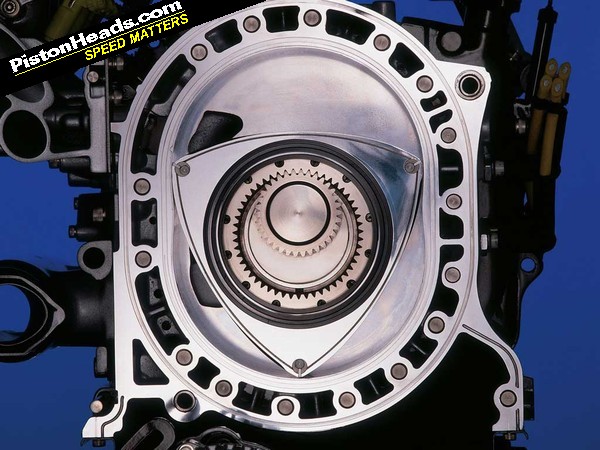
Mazda used the RENESIS rotary, a compact, high-revving engine unlike anything else sold in a mass-production car at the time. No pistons. No valves. Just smooth rotation and sky-high revs.
Why Mazda Loved the Rotary
From an engineering perspective, the rotary had huge advantages:
- Extremely compact size
- Very low center of gravity
- Smooth power delivery
- Ability to rev safely past 9,000 RPM
This allowed Mazda to mount the engine far back in the chassis, giving the RX-8 near-perfect weight distribution.
The result?
Handling that embarrassed cars with far more power.
Why Owners Hated It
The rotary also came with serious downsides:
- High oil consumption (by design, not a defect)
- Poor fuel economy
- Sensitivity to maintenance
- Cold-start and flooding issues if abused
Here’s the critical point many people miss:
The RX-8 didn’t fail because the rotary was bad.
It failed because most owners didn’t understand it.
Is the Mazda RX-8 a Good Car?
This is the most searched question, and the answer depends entirely on who you are.
The Honest Short Answer
For the average car buyer looking for cheap, reliable transportation: no.
For an enthusiast who understands what they’re buying: yes, absolutely.
The RX-8 is not a forgiving car. It does not tolerate neglect, ignorance, or cheap ownership habits. But when cared for properly, it delivers something few cars ever have: pure, mechanical connection.
Why the RX-8 Got Such a Bad Reputation
The RX-8 entered the market at exactly the wrong time.
Problem #1: Sold to the Wrong Buyers
Mazda marketed the RX-8 like a normal sporty coupe. That attracted buyers who:
- Never checked oil levels
- Did short, cold trips only
- Ignored warm-up procedures
- Treated it like a Corolla with a spoiler
Rotary engines don’t work that way.
Problem #2: Oil Consumption Shock
RX-8s intentionally burn oil as part of normal operation. Owners unfamiliar with this panicked, ignored it, or blamed Mazda.
Running low on oil in a rotary engine is catastrophic.
Problem #3: Emissions Regulations
The RENESIS engine was clean enough to launch, but tightening emissions rules killed its long-term viability. Mazda had to make compromises that affected durability.
The RX-8 became a victim of regulations as much as engineering.
What the RX-8 Gets Right (Even Today)
Despite the reputation, the RX-8 excels in areas that still matter.
Handling and Balance
This is where the RX-8 shines brightest.
- Near 50:50 weight distribution
- Hydraulic steering with real feedback
- Neutral cornering behavior
- Predictable chassis at the limit
Even modern sports cars struggle to match the RX-8’s chassis feel without electronic trickery.
Steering Feel
The RX-8’s steering is often described as “telepathic.” It communicates road texture, grip limits, and chassis balance in a way modern EPS systems rarely do.
This alone keeps the RX-8 relevant among enthusiasts.
Practicality (Surprisingly)
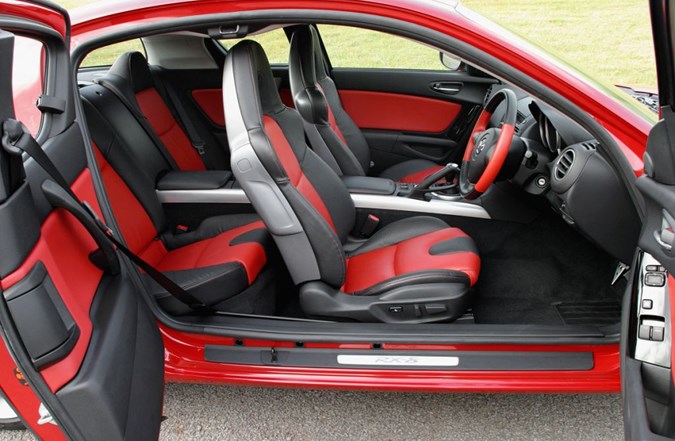
Thanks to its rear-hinged doors, the RX-8 offers:
- Usable rear seats
- Easier access than most coupes
- Decent trunk space for a sports car
It’s one of the few true sports coupes that can function as a daily driver if you accept its quirks.
Reliability: The Real Story
The RX-8 is not unreliable in the traditional sense. It doesn’t randomly break electrical systems or eat transmissions. Its reputation comes almost entirely from engine failures, and those failures follow patterns.
Common RX-8 Problems
- Loss of compression over time
- Apex seal wear
- Flooded engines from improper shutdown
- Weak ignition coils in early models
Here’s the important distinction:
Most RX-8 engine failures are preventable.
Owners who:
- Check oil regularly
- Warm the engine properly
- Use quality ignition components
- Avoid short cold starts
often see far better longevity than the horror stories suggest.
Buying a Used Mazda RX-8 Today
Searches for “Mazda RX-8 for sale” and “RX-8 coupe for sale” are rising, largely because prices are still relatively low.
Why Prices Are Tempting
- Depreciation hit the RX-8 hard
- Fear keeps demand low
- Many clean examples still exist
This creates an unusual situation: exceptional chassis for very little money.
What to Check Before Buying
If you’re considering an RX-8, these checks are non-negotiable:
- Compression test (rotary-specific)
- Cold start behavior
- Hot restart behavior
- Oil consumption history
- Ignition system condition
Skipping these steps is how people end up hating the RX-8.
Ownership Costs: What No One Tells You
The RX-8 is not cheap to own, but it’s not outrageous either if expectations are realistic.
Fuel
Fuel economy is poor by modern standards. This is the price of high-revving rotary performance.
Oil
You will add oil between changes. This is normal.
Maintenance
Preventive maintenance is essential. Reactive maintenance is expensive.
The RX-8 punishes laziness more than incompetence.
Is the Mazda RX-8 Really That Bad?
No.
But it is honest.
It doesn’t hide its demands. It doesn’t forgive neglect. It doesn’t pretend to be something it’s not.
The RX-8 is a car that asks something of its owner in return for what it gives. In an era of increasingly isolated, automated driving, that relationship is rare.
Who Should Buy an RX-8?
The RX-8 makes sense if:
- You enjoy learning your car
- You value handling over horsepower
- You understand rotary ownership
- You want something genuinely different
It does not make sense if:
- You want cheap transportation
- You hate maintenance
- You expect Toyota-level indifference
- You never check fluids
The RX-8’s Legacy
The Mazda RX-8 represents the end of an era. It was the last mass-produced rotary sports car, and likely the last of its kind.
It failed commercially, not because it was bad, but because it demanded more from buyers than the market was willing to give.
Ironically, that’s exactly why it’s so interesting today.
Final Verdict
So, is the Mazda RX-8 a good car?
Yes for the right person.
No for the wrong expectations.
It is one of the most misunderstood cars ever built. Treat it like an appliance, and it will punish you. Treat it like a machine with character, and it will reward you in ways few cars can.
The RX-8 isn’t bad.
It’s just honest.
And honesty, in cars and in life, often gets blamed for things it didn’t do.
Connect with us


