


A complete, editor-level look at Mazda’s origins, manufacturing, and global identity
If you’ve ever asked, “What country are Mazda cars from?”, the simple answer is Japan. But like most things in the modern automotive world, the full story is more layered than a one-word reply.
Mazda is a Japanese car company. It was founded in Japan, headquartered in Japan, engineered in Japan, and still operates as an independent Japanese automaker today. However, like most global manufacturers, Mazda builds vehicles in multiple countries to serve different markets.
Understanding where Mazda comes from means understanding its history, philosophy, and how globalization reshaped automotive production.
Let’s break it down properly.
Mazda’s Origin: Hiroshima, Japan
Mazda was founded in 1920 in Hiroshima, Japan. The company originally began as Toyo Cork Kogyo Co., Ltd., producing cork products rather than automobiles.
By the 1930s, Mazda shifted into machinery and eventually vehicle production. The first Mazda-branded vehicle was a three-wheeled truck introduced in 1931. Passenger cars followed later, with the company steadily growing into one of Japan’s major automakers.
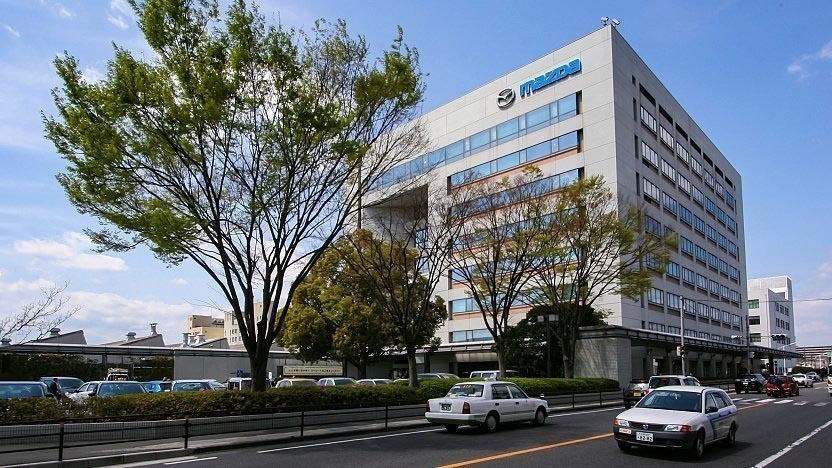
Unlike some manufacturers that moved headquarters or were acquired by foreign corporations, Mazda’s corporate heart has always remained in Hiroshima.
That matters more than people think.
What Makes Mazda “Japanese”?
When people ask where a car is from, they usually mean one of three things:
- Where was the company founded?
- Where is the company headquartered?
- Where is the vehicle built?
For Mazda:
- Founded in: Japan
- Headquarters: Hiroshima, Japan
- Corporate identity: Japanese
- Major engineering operations: Japan
Mazda remains culturally and structurally Japanese. Strategic decisions, engineering philosophies, and design direction originate from Japan.
Where Are Mazda Cars Built Today?
Even though Mazda is Japanese, not every Mazda vehicle is built in Japan.
Modern automotive manufacturing is global. Companies build cars closer to their largest markets to reduce shipping costs, tariffs, and supply chain delays.
Here are Mazda’s primary production locations:
Japan
Mazda’s core production facilities remain in Japan, including:
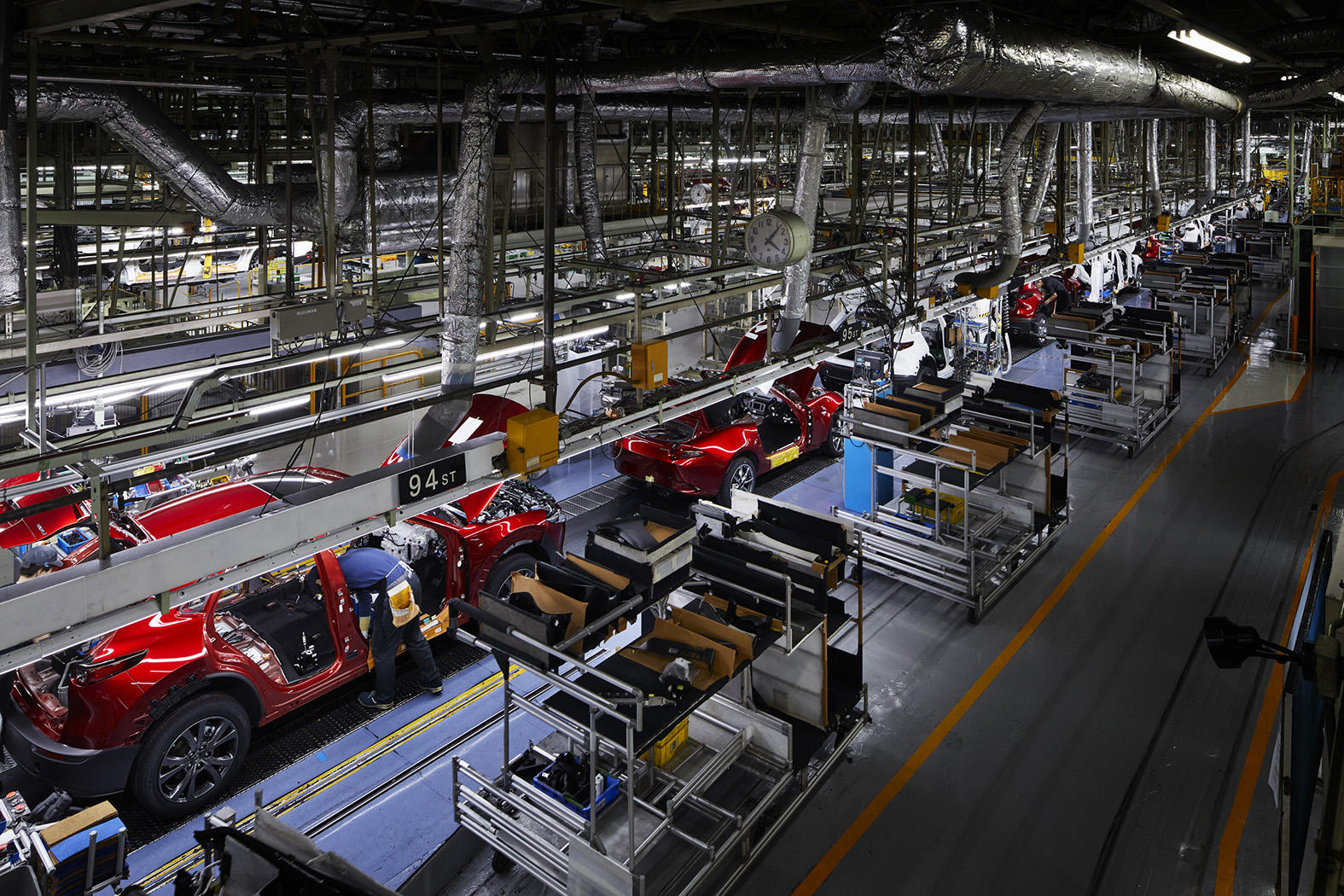
- Hiroshima Plant (Main factory)
- Hofu Plant
These factories produce many global models and are considered Mazda’s flagship manufacturing sites.
Mexico
Mazda operates a major plant in Salamanca, Mexico. This facility builds several models for North America and other regions.
United States
Mazda co-owns a manufacturing facility in Huntsville, Alabama, through a joint venture with Toyota. This plant produces select models for the U.S. market.
Does Build Location Change the Brand’s Origin?
No.
A Mazda built in Mexico or the United States is still a Japanese vehicle brand. The engineering, design philosophy, and company leadership remain Japanese.
This is no different from:
- Toyota building vehicles in Kentucky
- Honda building vehicles in Ohio
- BMW building vehicles in South Carolina
The brand identity and national origin remain tied to the company’s headquarters and ownership.
Is Mazda Owned by Another Country?
Mazda is not owned by a foreign automaker.
Historically:
- Ford once held a controlling stake in Mazda (1990s–early 2010s)
- That relationship ended, and Mazda regained independence
Today:
- Toyota holds a minority stake in Mazda
- Mazda remains an independent Japanese automaker
It is not owned by Toyota, nor is it a subsidiary of another country’s corporation.
Why Mazda’s Japanese Identity Matters
Japan has built a global reputation for automotive reliability and disciplined engineering. Mazda reflects many of these cultural traits:
- Continuous refinement instead of radical redesign
- Mechanical simplicity where possible
- Strong emphasis on efficiency and durability
- Precision manufacturing standards
Mazda’s design philosophy, known as “Jinba Ittai” (horse and rider as one), reflects traditional Japanese attention to harmony between driver and machine.
This cultural foundation is deeply Japanese.
Mazda’s Global Growth
Mazda expanded internationally throughout the late 20th century. By the 1970s and 1980s, Mazda vehicles were sold widely in North America and Europe.
One major milestone was the development of the rotary engine, which became a signature innovation for the company. Few automakers were willing to take such engineering risks, and Mazda’s willingness to pursue unconventional solutions became part of its identity.
Even as Mazda expanded globally, its leadership and engineering base remained in Hiroshima.
Are Japanese-Built Mazdas More Reliable?
Some buyers specifically seek vehicles built in Japan, believing they are more reliable.
While Japanese factories are known for extremely high quality control standards, modern global manufacturing is highly standardized. Mazda applies strict quality protocols across all its facilities.
In practice:
- A Mazda built in Mexico is held to Mazda’s engineering standards
- A Mazda built in Alabama follows Mazda’s quality systems
Reliability differences are more likely to depend on model design and maintenance history than assembly location.
How Mazda Compares to Other Japanese Brands
Mazda is often mentioned alongside:
- Toyota
- Honda
- Subaru
- Nissan
Among these brands, Mazda occupies a unique position. It emphasizes driving engagement and premium interior design more than some competitors, while still maintaining strong reliability records.
Unlike Toyota, Mazda does not pursue ultra-conservative engineering at all costs. Instead, it balances reliability with performance and refinement.
That balance is very much rooted in Japanese design philosophy.
The Economic Importance of Hiroshima
Mazda is not just headquartered in Hiroshima; it is deeply tied to the region’s economy and identity.
The company is one of Hiroshima’s largest employers and remains symbolically linked to the city’s post-war recovery and growth. Mazda’s presence has shaped Hiroshima into a major automotive hub.
Few global automakers are as geographically tied to their founding city as Mazda is to Hiroshima.
Common Confusion About Mazda’s Origin
Some people assume Mazda is:
- Owned by Ford (historically true, but not anymore)
- Owned by Toyota (not true; only a minority partnership)
- An American brand because it builds cars in North America
None of those assumptions are accurate today.
Mazda remains Japanese in origin, headquarters, and corporate identity.
The Final Answer
Mazda cars are from Japan.
The company was founded in Hiroshima in 1920 and continues to operate as a Japanese automaker. While many Mazda vehicles are built in Mexico or the United States for global markets, the brand itself remains rooted in Japan.
Its engineering philosophy, corporate leadership, and cultural identity are unmistakably Japanese.
Connect with us


