

Mazda Service Explained: What Your Mazda Actually Needs, When It Needs It, and Why Proper Maintenance Matters
Mazda has built a strong reputation for making vehicles that feel sharper, more refined, and more premium than many of their direct competitors. Whether someone drives a Mazda3, CX-30, CX-5, CX-50, CX-70, CX-90, or a Miata, the appeal is usually the same: strong driving dynamics, upscale design, solid engineering, and a daily ownership experience that feels more thoughtful than average.
But none of that means much if the vehicle is neglected.
A Mazda can be reliable, smooth, and rewarding to own for years, but like any modern vehicle, it depends heavily on proper service. This is where many drivers get confused. They know they need maintenance, but they do not always know what “Mazda service” really includes, what matters most, what can wait, and what should never be ignored.
This article breaks all of that down in detail. If you want a deep, clear explanation of Mazda service, what it includes, when it matters, and why it directly affects reliability, performance, resale value, and long-term ownership cost, this is the guide.
What Mazda Service Really Means
When people say “Mazda service,” they often mean one of two things.
The first is routine maintenance: oil changes, tire rotations, brake inspections, fluid checks, filter replacements, and factory-scheduled services that keep the car running as intended.
The second is repair and diagnostic work: fixing warning lights, replacing worn components, solving noises, correcting alignment issues, repairing suspension parts, resolving battery or electrical problems, and addressing anything that has gone wrong.
Both are important, but routine service is what usually determines whether the second category stays manageable or becomes expensive.
Mazda service is not just about changing oil and hoping for the best. Modern Mazdas rely on a combination of mechanical precision, electronic systems, sensors, safety technology, and increasingly sophisticated drivetrains. Skipping service does not just shorten engine life. It can affect fuel economy, brake performance, ride quality, transmission behavior, tire wear, emissions performance, and even the way driver-assistance systems function.
That is why regular Mazda service is not optional if someone wants the vehicle to keep feeling like a Mazda instead of turning into just another worn-out car.
Why Mazda Maintenance Matters More Than Many Drivers Realize
A lot of owners assume that if a vehicle is still driving, it must be fine. That is one of the biggest mistakes in car ownership.
By the time a problem becomes obvious, it is often already more expensive than it would have been if caught earlier.
Take engine oil, for example. Old or degraded oil does not always cause immediate visible symptoms. The engine may still run, the vehicle may still move, and the driver may feel nothing unusual. But internally, wear protection can be dropping, heat control can worsen, deposits can build, and the engine can slowly lose the smoothness and durability it was designed to have.
The same logic applies to brakes, tires, alignment, coolant condition, filters, and transmission fluid. Many service items do not fail dramatically at first. They deteriorate quietly. That is what makes them dangerous from a cost perspective.
Mazda vehicles are engineered to deliver a refined, responsive drive. When service is delayed, the vehicle may still function, but it gradually loses the qualities that made it enjoyable in the first place. Steering can feel less precise. Braking can feel less confident. Ride quality can become harsher. Fuel consumption can creep upward. Cabin air quality can worsen. Tire noise can increase. The car may still be usable, but it is no longer operating at the level it should.
The Core Types of Mazda Service
To understand Mazda maintenance properly, it helps to break it into categories.
1. Engine oil and filter service
This is the most basic and most essential service every Mazda needs.
Oil lubricates internal engine components, reduces friction, controls heat, and helps prevent wear. The oil filter traps contaminants so they do not continue circulating through the engine.
Skipping oil changes is one of the fastest ways to shorten engine life. Even if the engine does not fail immediately, neglected oil service increases long-term wear and can contribute to expensive issues later.
For many Mazda owners, oil service is the maintenance item they recognize most easily, but it should never be treated as the only maintenance item that matters.
2. Tire rotation and tire inspection
Tires wear differently depending on drivetrain layout, alignment condition, driving style, road conditions, and inflation pressure. Rotating them helps extend tire life and keeps wear more even.
A proper Mazda service visit should not just rotate tires. It should also include checking tire condition, tread depth, sidewall health, inflation levels, and signs of uneven wear.
Uneven tire wear can reveal bigger issues like poor alignment, suspension wear, or persistent underinflation. That makes tire inspection more valuable than many people realize.
3. Brake service
Brake service can range from inspection to pad replacement, rotor replacement, brake fluid exchange, or diagnosis of brake noise and vibration.
Brakes are obviously a safety-critical system, but they also strongly influence how confident a vehicle feels in daily driving. A Mazda with strong brakes feels composed. A Mazda with neglected brakes feels cheap, noisy, and uncertain.
Brake service should not be delayed once symptoms appear. Squealing, grinding, pedal pulsation, longer stopping distances, or a soft pedal all deserve attention quickly.
4. Fluid checks and replacement services
A Mazda uses multiple fluids beyond engine oil. These can include:
- coolant
- brake fluid
- transmission fluid
- differential fluid on some AWD models
- transfer case fluid on applicable models
- windshield washer fluid
- power steering fluid on models that use it, though many newer systems are electric
Fluids are often ignored because they are not as visible as tires or brake pads. But they are essential to system protection and long-term durability. A vehicle may not warn you until the problem is already advanced.
5. Filter replacement
Two filters matter frequently in regular service discussions:
- engine air filter
- cabin air filter
The engine air filter affects airflow to the engine and can influence efficiency and performance if neglected badly enough. The cabin air filter affects the air you breathe inside the vehicle, as well as HVAC system efficiency.
These are not the most glamorous service items, but they matter for overall ownership quality.
6. Battery and electrical system inspection
Modern Mazdas rely heavily on electrical systems, modules, sensors, infotainment hardware, and advanced safety technology. Battery health matters more than it used to.
A weak battery can create odd symptoms long before complete failure. Slow starts, warning lights, infotainment irregularities, or inconsistent electronic behavior can all be linked to battery or charging system health.
A proper service visit should include basic battery testing or at least a battery condition assessment when there are signs of age or performance decline.
7. Alignment and suspension inspection
Mazda vehicles are often praised for their road manners, and suspension condition plays a huge role in that. If the alignment is off or suspension components are wearing out, the vehicle stops feeling planted and confident.
Poor alignment can also destroy tires early. That means ignoring it is not just a handling issue. It becomes a tire-cost issue too.
8. Major interval service
At certain mileage or time intervals, more extensive service becomes necessary. This can include spark plugs, deeper fluid service, belt inspections, more detailed system checks, and other scheduled items depending on model and engine.
These larger services are where many owners try to cut corners. Sometimes that works for a little while. Long term, it usually does not.
What a Good Mazda Service Visit Should Include
A proper Mazda service appointment should be more than just a quick oil drain and refill.
A strong service visit usually includes:
- review of maintenance due based on mileage and time
- oil and filter replacement if due
- tire rotation if appropriate
- brake inspection
- fluid level and condition checks
- tire pressure adjustment
- visual inspection underneath the vehicle
- battery condition review
- filter inspection
- reset of maintenance reminders if needed
- communication with the customer about what is due now versus what is coming soon
The communication part matters a lot. Good service is not only technical. It is also about transparency. Owners should understand what is urgent, what is preventative, and what can reasonably be scheduled later.
That is how trust is built in a service department.
Mazda Service by Ownership Stage
Service needs change depending on how old the Mazda is and how many kilometres or miles it has accumulated.
New Mazda ownership
In the early period of ownership, service is mostly preventative and routine. The focus is on:
- regular oil changes
- inspections
- tire rotations
- maintaining warranty compliance
- catching any early issues before they grow
At this stage, the goal is not just to maintain the vehicle. It is to establish a service history and keep the vehicle operating exactly as designed.
Mid-life Mazda ownership
Once the vehicle has been on the road for a few years, service becomes more layered. In addition to the basics, owners start needing:
- brake work
- tire replacement
- battery attention
- fluid renewals
- filters more regularly
- alignment checks
- suspension monitoring
This is the stage where disciplined service makes the biggest difference. A well-maintained mid-life Mazda still feels excellent. A neglected one starts to feel aged quickly.
Higher-mileage Mazda ownership
At higher mileage, the focus shifts even more toward preservation. The basics still matter, but so do:
- sealing issues
- wear items
- ignition components
- cooling system condition
- drivetrain fluid condition
- suspension fatigue
- noise diagnosis
- electrical reliability
This is where owners either benefit from years of careful maintenance or begin paying for years of delay.
Common Mazda Service Items Owners Should Never Ignore
Some service items seem small until they become big.
Delayed oil changes
This is still one of the most damaging habits in vehicle ownership. People often stretch oil service too far because the car still “feels fine.” That is not a reliable indicator.
Uneven tire wear
This usually means something else is happening. It could be alignment, inflation, suspension, or driving-condition related. Ignoring it just leads to premature tire replacement and reduced stability.
Brake noise
Not all brake noise means disaster, but it should never be dismissed casually. Early brake attention is much cheaper than waiting until pads damage rotors or overall performance declines.
Cooling system neglect
Overheating or cooling issues can become engine-damaging problems very fast. Coolant health and cooling system condition deserve respect.
Warning lights
Too many drivers treat warning lights as background decoration. On a modern Mazda, a warning light can point to emissions issues, sensor failures, charging concerns, brake system problems, or engine-management faults. Delaying diagnosis can turn a smaller issue into a much larger one.
The Difference Between Basic Service and Real Preventative Maintenance
Many service departments advertise low-cost basics because that gets people in the door. Oil change, tire rotation, inspection. Those services matter. But real preventative maintenance goes further.
Real preventative maintenance means servicing the vehicle based on what it actually needs before symptoms become obvious. It means thinking beyond today’s invoice and focusing on long-term condition.
That includes:
- doing fluid service before fluid is badly degraded
- replacing filters before performance drops noticeably
- correcting alignment before tires are ruined
- addressing brake wear before rotor damage
- replacing aging batteries before roadside failure
- identifying minor leaks before they become major repairs
This is the difference between reactive ownership and proactive ownership. Mazda vehicles generally reward the second approach.
Why OEM and Mazda-Specific Service Knowledge Matters
Not every shop understands Mazda the same way.
That does not mean every independent shop is bad or every dealer is perfect. It means Mazda-specific knowledge has real value. A technician familiar with Mazda vehicles is more likely to understand common patterns, model-specific maintenance needs, software procedures, inspection points, and brand-specific service standards.
That matters more on newer vehicles with:
- driver-assistance systems
- electronic parking brakes
- infotainment integration
- advanced diagnostics
- turbocharged setups
- AWD systems
- hybrid or electrified components on select models
The more complex the vehicle, the more valuable correct service knowledge becomes.
How Service Affects Mazda Reliability
A lot of reliability conversations are too simplistic. People act as if reliability is something the factory decides once and the owner has no role afterward. That is not how real ownership works.
Two identical Mazda vehicles can have very different long-term reliability outcomes depending on service history.
One gets regular maintenance, timely inspections, quality fluids, and early attention to minor issues. The other gets delayed oil changes, ignored warning lights, skipped inspections, cheap shortcuts, and reactive repairs only when something breaks.
Those two vehicles may have started the same, but after five or seven years, they often feel completely different.
So when people ask whether a Mazda is reliable, the right answer is often: it can be very reliable if serviced properly.
How Service Affects Resale Value
Service history has a major impact on resale strength.
A Mazda with clean records, documented maintenance, and evidence of consistent care is more attractive to the next buyer. It creates confidence. Buyers assume, correctly, that disciplined ownership usually means fewer surprises.
A Mazda with gaps in service history, visible neglect, uneven tires, overdue maintenance, or warning-light stories becomes harder to sell and usually commands less money.
This matters whether someone is keeping the car long term or planning to trade it later. Good service does not just preserve the vehicle. It preserves the financial strength of the asset.
Mazda Service for Different Driver Types
Not every Mazda owner uses the vehicle the same way. Service needs vary based on lifestyle.
The commuter
A commuter may rack up mileage quickly, meaning more frequent oil service, tire attention, and brake monitoring.
The city driver
A mostly urban driver may not accumulate massive mileage, but stop-and-go use can still be hard on brakes, tires, and overall wear patterns.
The highway driver
Highway driving can be easier on some components, but high annual mileage still means maintenance intervals arrive quickly.
The performance-minded driver
Someone who drives aggressively or enjoys the vehicle’s handling more intensely may go through tires and brakes faster and should pay closer attention to wear.
The low-mileage owner
Even low-mileage vehicles still need service based on time, not just distance. Fluids age. Batteries weaken. Tires age out. Filters collect dirt. Sitting does not eliminate maintenance needs.
What Great Mazda Service Feels Like to the Customer
The best Mazda service experience is not just about completing the work. It is about reducing stress for the customer.
A strong service experience feels:
- organized
- transparent
- professional
- informed
- not pushy
- clear about priorities
- respectful of time
- proactive without being alarmist
Customers should leave understanding:
- what was done
- what needs attention soon
- what can wait
- how the vehicle is doing overall
That kind of service builds repeat business because it turns maintenance from a vague expense into a clear ownership strategy.
Final Thoughts: Mazda Service Is What Protects the Mazda Experience
People buy Mazdas for more than transportation. They buy them because they like the way they drive, the way they look, the way they feel inside, and the way they balance practicality with refinement.
Service is what protects that experience.
Without proper service, even a great Mazda gradually loses the qualities that made it special. With proper service, it can remain smooth, capable, reliable, and rewarding for years longer than many owners expect.
So if someone asks what Mazda service really is, the best answer is this:
It is not just maintenance. It is the ongoing process that protects the performance, safety, comfort, value, and long-term integrity of the vehicle.
A Mazda that is serviced properly does not just last longer. It drives better, ages better, sells better, and costs less to own in the long run.
That is why detailed, consistent Mazda service is never just another appointment on the calendar. It is one of the smartest things an owner can do.
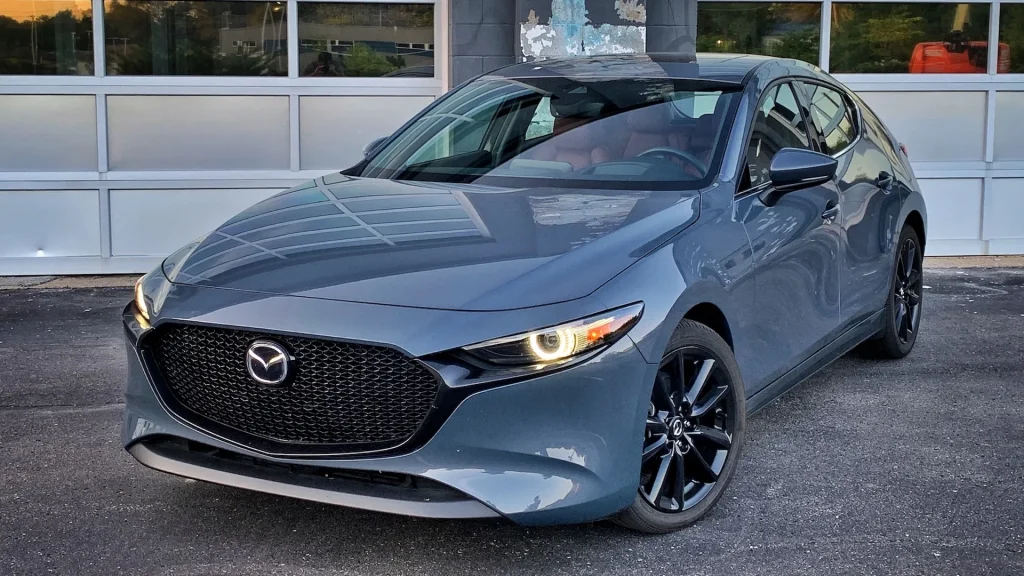
If you are shopping for a Mazda3, one of the biggest decisions is not just which trim, sedan or hatchback, or whether to go with front-wheel drive or all-wheel drive. The bigger question for many buyers is this: should you lease it or finance it?
A lot of dealership content answers that question too simply. Lease if you want lower payments. Finance if you want to own the car. That is true, but it is not enough. The better answer depends on who you are, how you drive, how long you keep cars, how much flexibility you want, and what kind of financial habits you actually have in real life.
That is especially true with the Mazda3, because this is not a throwaway economy car. It sits in a very interesting part of the market. It is affordable enough to be practical, refined enough to feel premium, and reliable enough that long-term ownership can make real sense. That changes the lease versus finance conversation quite a bit.
Mazda has built a reputation for making vehicles that feel more upscale than their price point suggests, and that is true whether you are looking at the Mazda3 or cross-shopping something bigger like the CX-50. In fact, if you also want to see how Mazda’s compact crossover compares in terms of value, design, efficiency, and everyday usability, this in-depth Mazda CX-50 review is a strong companion read.
So if you are trying to decide what is better for a Mazda3, this is the real breakdown.
Why the Mazda3 Makes This Question More Interesting Than Most Cars
The Mazda3 is not like every compact car. It has always carried a slightly different personality. While other compact sedans and hatchbacks often focus almost entirely on efficiency and price, the Mazda3 adds style, cabin quality, and driving enjoyment to the equation.
That matters because the way a car is positioned affects whether leasing or financing makes more sense.
For example, with a very basic low-cost car, many buyers finance because the goal is simply to own transportation as cheaply as possible over time. With a more expensive luxury vehicle, leasing can look attractive because depreciation is steeper and many buyers want to switch into a new one every few years.
The Mazda3 sits somewhere in the middle. It has enough quality and long-term appeal to justify ownership, but it also feels premium enough that some buyers treat it like a lifestyle car they want to refresh more often. That is why there is no one-size-fits-all answer. The right decision depends on the kind of Mazda3 buyer you are.
What Leasing a Mazda3 Really Means
Leasing is basically paying for the portion of the car you use during a fixed term rather than paying for the entire vehicle. You are not really buying the Mazda3 in the traditional sense. You are paying for a set period of use, usually with mileage and condition rules attached.
That is why lease payments are often lower than finance payments on the same vehicle. You are not covering the full price of the Mazda3. You are covering the expected depreciation during the lease period, plus rent charges and fees.
For many buyers, this creates immediate appeal. Lower monthly cost. Newer car. Warranty coverage. Less long-term commitment.
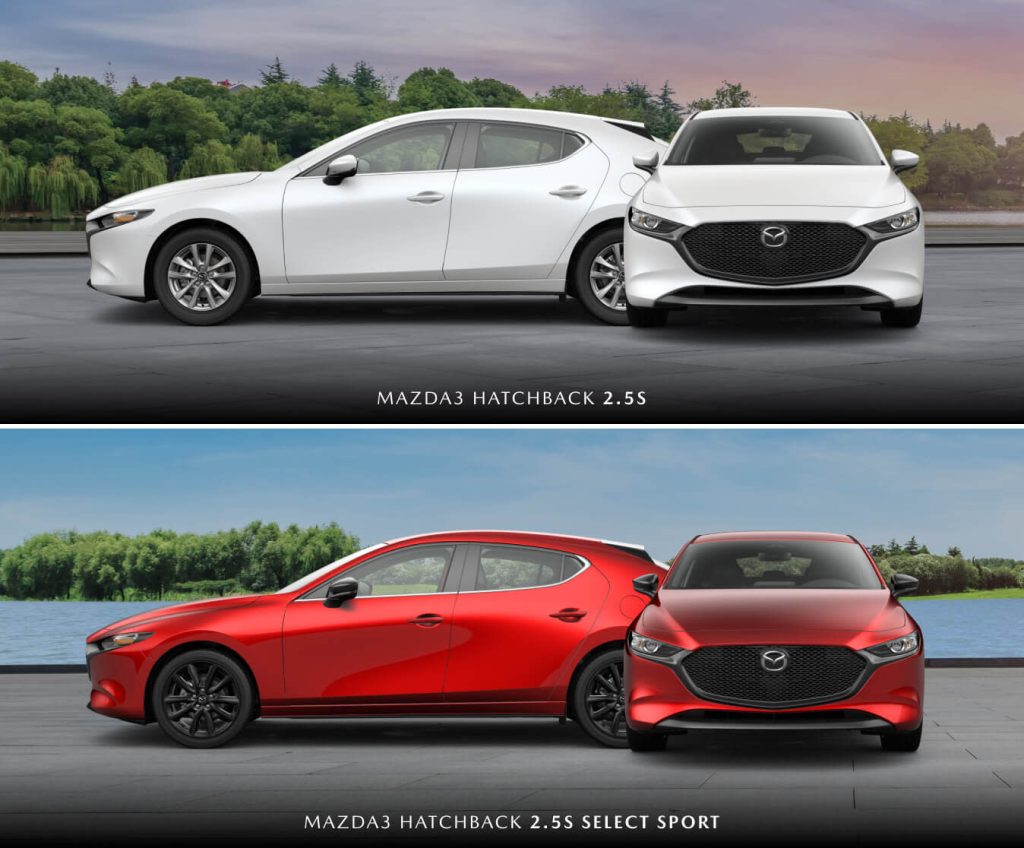
On the surface, a Mazda3 can actually be a very good lease candidate for the right person. It is stylish, modern, and pleasant to live with. If you want that experience for three years and then want the freedom to move on, leasing can be a clean solution.
But the catch is that a lease works best only when your driving habits and personality fit the structure.
If you drive more than average, tend to keep cars in rough condition, want freedom to modify the vehicle, or hate restrictions, leasing can become frustrating fast.
What Financing a Mazda3 Really Means
Financing is more straightforward. You are buying the Mazda3 over time with monthly payments. At the end of the term, assuming the loan is paid off, the car is yours.
That seems less glamorous in the short term because monthly payments are often higher than a lease, especially if the term is shorter. But financing changes the long-term math dramatically.
Once the loan is paid, you still have an asset. It may depreciate, yes, but it still has trade-in value, resale value, and utility value. Even if you keep it after it is paid off, those payment-free years are where ownership often starts making serious financial sense.
The Mazda3 is exactly the kind of car where this matters. It is not a vehicle people usually throw away after a short period. It is a sensible compact with a premium feel, and many owners keep them for years. That makes financing especially attractive for buyers who think beyond the first 36 months.
Lease a Mazda3 If You Want a New-Car Lifestyle
Let’s start with the buyer type that should seriously consider leasing.
If you like driving newer vehicles all the time, leasing a Mazda3 can make a lot of sense. The Mazda3 is one of those cars that looks good, feels well made, and offers a surprisingly upscale cabin for the class. If you enjoy that fresh-car experience and want to stay in a newer model every few years, leasing supports that lifestyle better than financing.
This is especially true if you are the kind of buyer who values convenience over long-term asset building. Some people simply do not want to think about keeping a car for eight years. They do not want to deal with aging tires, out-of-warranty repairs, or selling a used vehicle later. They want a predictable monthly cost, factory coverage, and an easy exit point. Leasing works well for that mindset.
A lease can also make sense for the buyer who wants a nicer trim than they would otherwise consider. Maybe the monthly difference between financing a base Mazda3 and leasing a better-equipped trim feels small enough that leasing opens the door to features you actually want. Better interior materials, more technology, maybe all-wheel drive or a hatchback configuration that feels more premium. For the right buyer, that can be worth it.
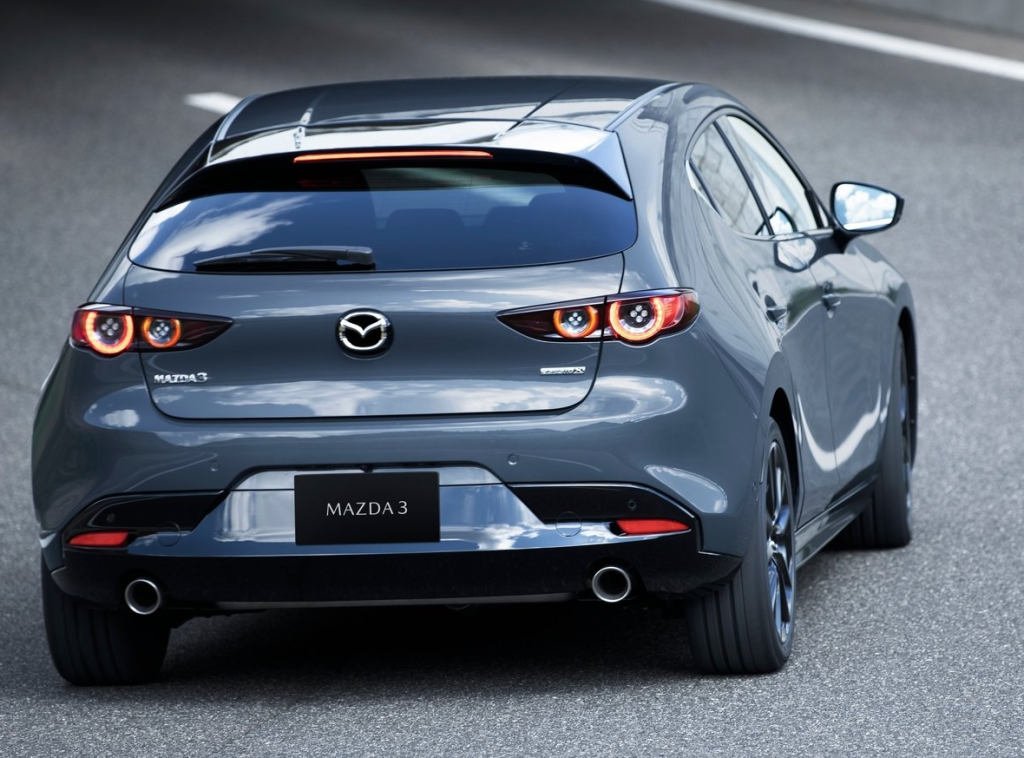
But the ideal Mazda3 lease customer usually has another key trait: low to moderate mileage. If you commute lightly, work from home part of the week, or mostly use the car for local driving, a lease becomes much easier to justify. If you are adding kilometres aggressively every year, leasing becomes less attractive because mileage penalties can erase the short-term payment advantage.
Finance a Mazda3 If You Want the Smartest Long-Term Value
Now let’s talk about the kind of buyer who should finance.
For most normal Mazda3 shoppers, financing is the stronger overall move.
Why? Because the Mazda3 is a car that makes sense to keep. It has the kind of reputation, packaging, and ownership appeal that rewards long-term use. This is not a vehicle that only makes sense during the warranty window. It is one of those compact cars that people buy because it stays practical long after the new-car smell disappears.
If you are buying a Mazda3 because you want dependable transportation with a premium edge, financing usually aligns better with that goal.
This is even more true if you drive a lot. Long commuters, regional salespeople, people with long highway routines, and anyone who racks up mileage quickly are usually better off financing. A financed Mazda3 gives you the freedom to drive without constantly thinking about lease thresholds and end-of-term penalties.
Financing is also better for the buyer who wants ownership flexibility. Once you own the car, you can keep it, trade it, sell it, or drive it payment-free. That freedom matters more than many people realize. A lease keeps you on a short leash, financially and contractually. Financing gives you more control.
The Mazda3’s personality also supports ownership. It is refined enough that you will probably still enjoy it years later, and practical enough that it does not become hard to justify once it is no longer brand new. That is not true of every car.
The Mazda3 Sedan Buyer vs the Mazda3 Hatchback Buyer
Interestingly, body style can sometimes hint at whether a buyer is more likely to prefer leasing or financing.
Mazda3 sedan buyers are often more practical. They may be looking for a refined commuter, something efficient and comfortable, something they can own for years without feeling bored. That buyer often leans finance because the vehicle is being chosen as a long-term value play.
Mazda3 hatchback buyers are often a little more lifestyle-driven. Not always, but often. They may care more about design, flexibility, and a slightly more premium visual identity. Some of those buyers still finance, of course, but they are a bit more likely to fit the kind of profile that also considers leasing because they enjoy refreshing into newer vehicles more often.
That does not mean sedan equals finance and hatchback equals lease. It just means the buyer mindset sometimes aligns that way. The more practical and long-term your view is, the more financing usually wins. The more style-driven and short-cycle your view is, the more leasing starts to make sense.
Lease the Mazda3 If You Hate Ownership Risk
There is one more type of person who often prefers leasing: the person who hates uncertainty.
Some buyers do not necessarily want to maximize long-term value. They want to minimize risk and reduce hassle. They like knowing their car is newer, under warranty, and easier to hand back before it becomes an older used vehicle with age-related wear.
That logic is understandable.
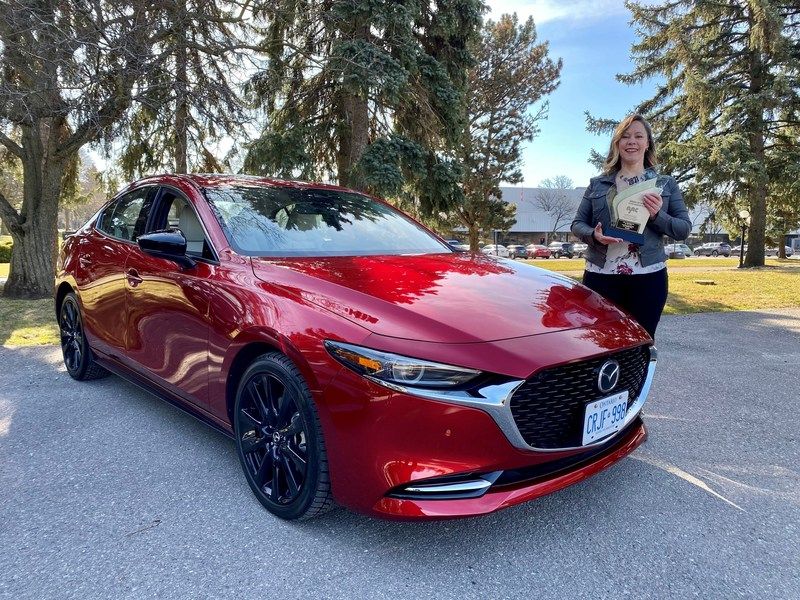
If you are the kind of person who does not want to think about long-term repair exposure, resale timing, or keeping a vehicle deep into its lifecycle, leasing gives you an orderly structure. You get in, enjoy the Mazda3, and get out on schedule.
For people who treat a car the same way others treat a phone contract or appliance cycle, leasing fits psychologically. The car is not something to keep forever. It is something to use efficiently for a defined period.
The catch is that this comfort comes at a price. While lease payments may look lower month to month, repeated leasing can keep you in a permanent payment cycle. That is great for convenience, but not always great for total long-term cost.
Finance the Mazda3 If You Think in Five-Year Blocks Instead of Three-Year Blocks
This is the biggest dividing line.
If you naturally think in three-year windows, leasing probably appeals to you more. If you think in five-year or seven-year windows, financing almost always becomes the stronger argument.
The Mazda3 is one of those cars where the ownership value starts to compound over time. The longer you keep it after the loan is paid off, the more the economics improve. Even if maintenance costs rise gradually as the car ages, you often still come out ahead versus staying on an endless cycle of short-term leased vehicles.
This is especially true for buyers who are financially disciplined. If you finance a Mazda3, pay it down properly, and then keep driving it after the payments end, you create a huge difference in your total transportation cost over time.
That is where financing really wins for the Mazda3. It is not always the prettiest short-term option, but it is often the smarter long-term one.
What Type of Guy Should Lease a Mazda3?
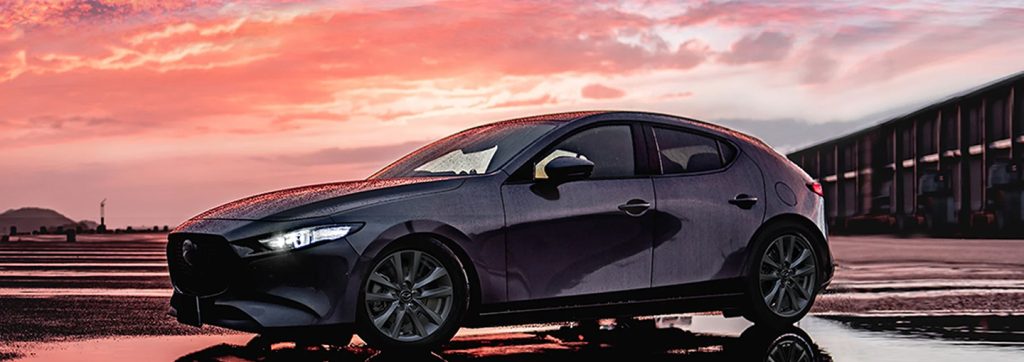
If we are being very direct, the ideal Mazda3 lease customer is usually this guy:
He wants a clean, refined, stylish daily driver but does not care much about keeping cars for a long time. He likes new design, new tech, lower short-term payments, and the feeling of being in something fresh. He probably drives average or below-average mileage. He prefers predictable monthly costs and likes the idea of handing the car back before it gets old enough to become his problem.
He may be a younger professional. He may be image-conscious without wanting a luxury badge. He may want a better trim than he would comfortably finance. He may value convenience more than ownership.
For that guy, leasing a Mazda3 makes perfect sense.
What Type of Guy Should Finance a Mazda3?
The ideal Mazda3 finance customer is different.
He sees the Mazda3 as a genuinely smart car to own, not just rent. He probably appreciates that it feels premium, but he is still grounded in long-term value. He drives enough that mileage restrictions would annoy him. He wants the flexibility to keep the vehicle, trade it on his own terms, or drive it payment-free later.
He may be a commuter. He may be a practical buyer who still wants something with personality. He may be someone buying his first genuinely nice daily driver and planning to keep it for years. He may simply understand that the Mazda3 is a car that often makes more sense to own than to cycle through repeatedly.
For that guy, financing is usually the better fit.
Where People Get This Decision Wrong
A lot of buyers choose based only on the monthly payment. That is where mistakes happen.
A lower payment does not automatically mean the better decision. It may mean you are paying less to use the car for now, but getting less long-term value in return.
On the other hand, a higher finance payment does not automatically mean the smarter move either. If you constantly trade early, get bored quickly, or never keep the car long enough to capture ownership value, financing loses much of its advantage.
The right answer comes from matching the structure to your behavior.
If you are the type to keep cars a long time, financing works because your behavior supports it.
If you are the type to move on every few years and prefer newness over ownership, leasing works because your behavior supports that.
The worst move is choosing a finance deal and trading out too early, or choosing a lease when you know you drive far too much and will hate the restrictions.
So Which Is Better for the Mazda3?
For most buyers, financing is better.
That is the honest answer.
The Mazda3 is not the kind of car that only makes sense as a short-term use product. It is well rounded, refined, practical, and generally worth owning. If you are the average compact-car buyer who wants strong long-term value, financing usually suits this vehicle better.
But leasing is still a very good choice for a specific kind of buyer. If you want lower short-term commitment, like changing cars often, drive limited mileage, and care more about convenience than long-term ownership, leasing can absolutely be the right move.
So the answer is not really lease versus finance in the abstract. It is this:
Finance the Mazda3 if you are a long-term value buyer. Lease the Mazda3 if you are a short-term lifestyle buyer.
That is the cleanest way to think about it.
Final Verdict
The Mazda3 is one of the few compact cars that genuinely works well either way, which is part of what makes it so appealing. It is practical enough to justify financing and polished enough to justify leasing.
Still, if you strip away the sales language and look at the kind of vehicle the Mazda3 really is, financing usually comes out ahead for most buyers. It aligns better with the Mazda3’s strengths: solid long-term value, everyday practicality, and the kind of ownership experience that remains satisfying well beyond the first few years.
Leasing still has its place. For the lower-mileage buyer who wants newer cars, lower short-term commitment, and a clean exit strategy, it can be a very smart move. But for the average guy shopping for a Mazda3 as a real-world daily driver, financing is usually the better fit.
If you want, I can also add your earlier Mazda3 sedan and hatchback review link into this same article so both Marin Mazda blog URLs are naturally interlinked.
Mazda3 Reliability : Expert Review
When people search for a reliable compact car, the same names usually dominate the conversation. Toyota Corolla. Honda Civic. Maybe the Hyundai Elantra if someone wants value. Yet one of the strongest all-around choices in the segment keeps getting overlooked: the Mazda3.
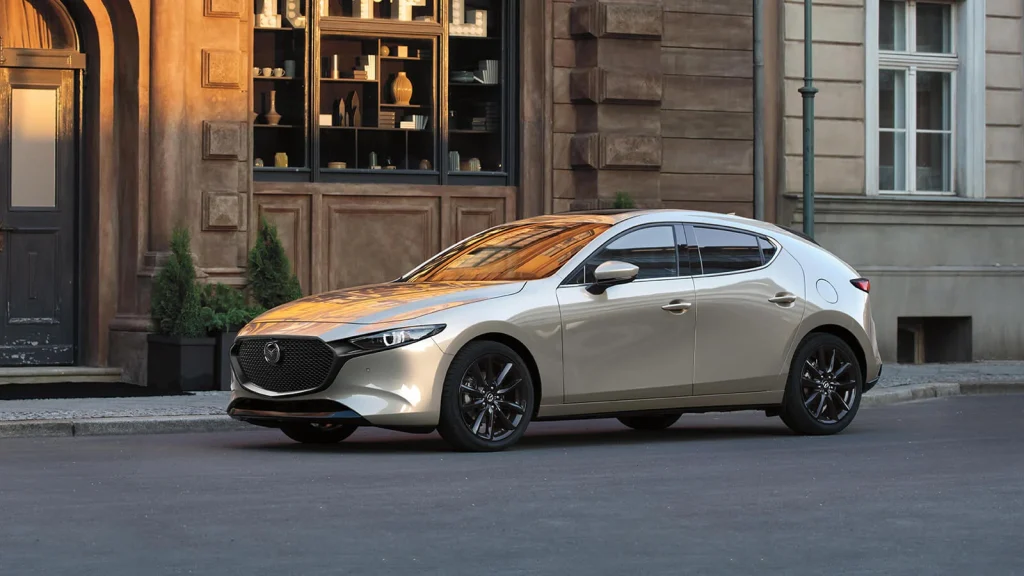
That is strange, because the Mazda3 has quietly built one of the most convincing reputations in the class. It is dependable, refined, comfortable, and far more upscale than many compact rivals. It also avoids one of the biggest traps in the modern car market: being technically impressive on paper but frustrating to own once the warranty excitement wears off.
The Mazda3 is not perfect. No honest reliability review should pretend otherwise. Some model years are stronger than others, some owners have dealt with electrical annoyances or brake-related complaints, and like every modern vehicle it still requires proper maintenance. But if the question is whether the Mazda3 is generally a reliable car worth owning, the answer is yes. In fact, it is one of the smartest compact cars for buyers who want something practical without settling for something dull.
And if you want a broader overview of the vehicle beyond dependability alone, this detailed Mazda3 sedan and hatchback review does a great job explaining why the model continues to stand out in the segment.
Is the Mazda3 Reliable?
In real-world ownership terms, yes, the Mazda3 is widely considered reliable.
That does not mean every single model year is flawless or that every used Mazda3 on the market is automatically a smart buy. Reliability is always more nuanced than that. A car can have a good long-term reputation and still have weak years, neglected examples, or a few recurring issues that buyers should know about. The Mazda3 fits that pattern. It is generally strong, but you still need to understand where it shines and where caution makes sense.
What makes the Mazda3 appealing is that its reliability is paired with quality. Many reliable compact cars are bought because they are logical. The Mazda3 is bought because it is logical and still feels desirable. It looks premium, drives with more personality than most competitors, and has an interior that often feels closer to an entry-level luxury car than a budget commuter.
That matters. Reliability is not just about whether the engine starts in the morning. It is also about whether the car continues to feel solid, quiet, and confidence-inspiring after years of ownership. The Mazda3 tends to do well in that respect.
Why the Mazda3 Has a Strong Reliability Reputation
Mazda has taken a more disciplined approach than many mainstream brands. While other manufacturers have often chased complexity for the sake of marketing headlines, Mazda has usually focused on refining proven hardware.
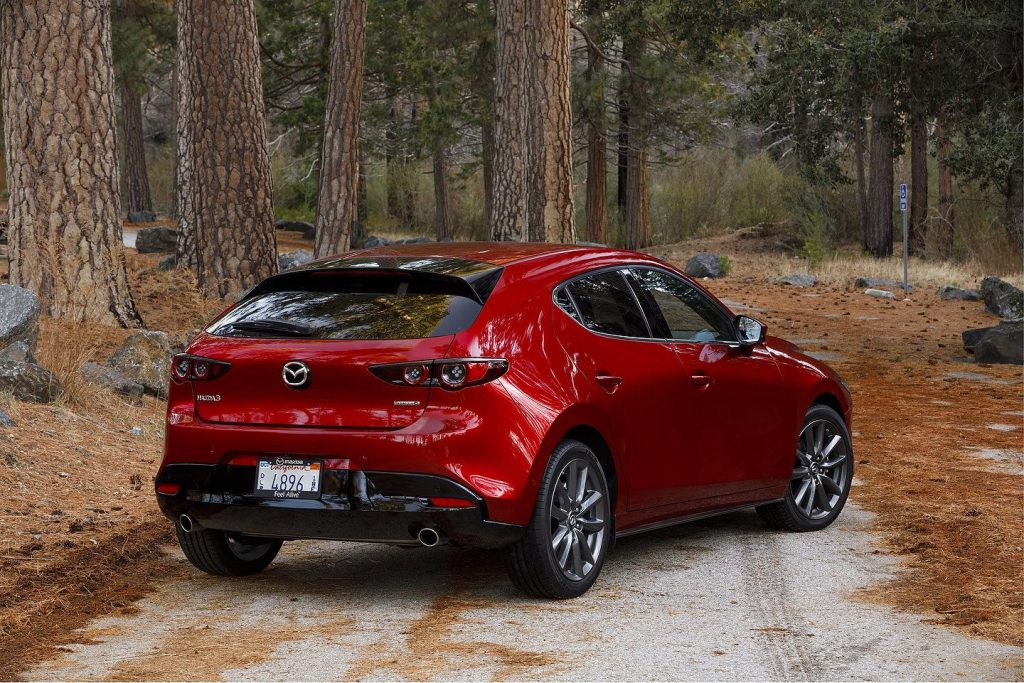
That strategy helps the Mazda3.
Instead of overloading the car with gimmicky engineering, Mazda has generally kept the formula clean. The engines are well understood. The automatic transmissions are conventional rather than overly experimental. The chassis is mature. The steering and suspension tuning are designed to feel engaging without making the car fragile or overly complicated to maintain.
This is one of the biggest reasons why the Mazda3 has aged well as a product line. Mazda tends to improve things incrementally rather than tossing out a formula every few years just to claim something is new. Buyers benefit from that restraint.
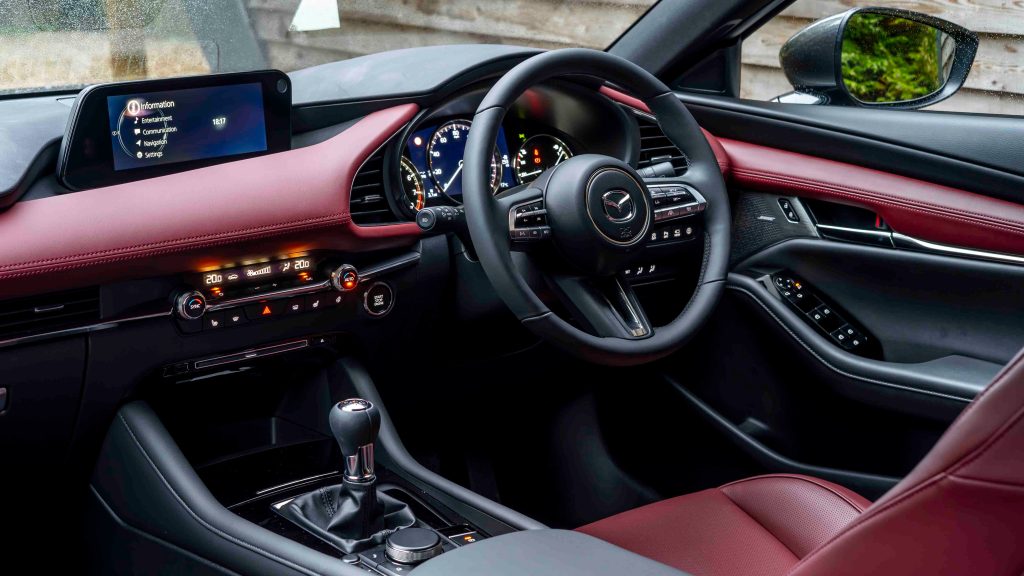
For long-term ownership, boring engineering choices are often the best engineering choices. That may not sound exciting in an advertisement, but it is excellent news for anyone planning to keep a car for many years or buy one used with confidence.
The Mazda3 Feels Better Built Than Many Rivals
One of the reasons the Mazda3 gets so much respect from owners is that it tends to feel substantial. Some compact cars feel like appliances. They function, but they are not especially satisfying. You notice cheap plastics, road noise, weak insulation, and a general sense that cost-cutting shaped too many decisions.
The Mazda3 usually avoids that impression.
Close the door and it feels heavier and more deliberate. Sit inside and the dashboard layout feels mature. Drive it for a week and the steering, seating position, and cabin finish start to separate it from many other cars in the class. These qualities do not show up neatly in a reliability chart, but they matter a lot in real ownership. Cars that feel well made often earn stronger owner satisfaction, and the Mazda3 has been good at delivering that kind of confidence.
That is also why many buyers researching dependability eventually end up reading a full Mazda3 sedan and hatchback review, because reliability is only part of the story. The Mazda3 is attractive because it combines dependability with genuine quality.
Mazda3 Engines and Powertrains: A Big Reason It Holds Up Well
The Mazda3’s reliability story becomes easier to understand once you look at the hardware. Mazda has largely avoided the most problematic kinds of powertrain experimentation that have burned other brands.
Naturally aspirated Mazda3 models are often the safest long-term bet. These versions typically offer a smooth, predictable ownership experience. They do not chase extreme output numbers, and that tends to work in their favor over time. Less stress on the engine often means fewer unpleasant surprises later.
Turbocharged Mazda3 models can also be solid, but they naturally bring more complexity. More power is usually more fun, but it can also mean higher ownership sensitivity. That does not make the turbo models bad choices. It just means maintenance becomes even more important, and buyers should be stricter about service records, oil changes, and overall condition.
The transmission side of the equation also helps. Mazda has not leaned as heavily on some of the more controversial transmission solutions that have hurt other compact cars. That restraint has contributed to a steadier reputation.
In simple terms, the Mazda3 benefits from a proven formula: well-developed engines, conventional transmission behavior, and a platform that has been refined rather than constantly reinvented.
Model Year Differences Matter
A big mistake buyers make is assuming a reliable nameplate means every model year is equally safe. That is never true, and it is not true for the Mazda3 either.
Some Mazda3 years have stronger reputations than others. In general, later years within a generation tend to be safer bets than first-year redesigns. That pattern is common across the auto industry. The launch year of a new generation often brings early bugs, software annoyances, trim-specific issues, or quality inconsistencies that get cleaned up later.
For the Mazda3, that means buyers should be especially careful with older problem-prone years and more thoughtful with first-year redesign examples. This does not mean those cars are automatically bad. It means they deserve more scrutiny.
If you are shopping used and your priority is long-term dependability, later examples from a mature generation are often the sweet spot. You get the benefit of improved engineering refinement without paying brand-new car prices.
Best Mazda3 Years for Reliability
If the goal is to find a used Mazda3 with the fewest headaches possible, buyers should usually focus on these kinds of examples:
2021 and newer current-generation models
These tend to benefit from Mazda having more time to refine the latest generation. Early launch bugs are less of a concern, cabin technology is more settled, and overall quality tends to feel more polished.
Clean 2017 to 2018 models
These can be very attractive used buys if they have been maintained properly. By this stage, the prior generation was mature and well understood, which is often good news for reliability.
Well-documented one-owner cars
A well-kept Mazda3 from a slightly weaker year can still be a better buy than a neglected Mazda3 from a stronger year. Service history matters more than internet rankings once you are looking at a specific used vehicle.
The best used Mazda3 is almost always the one with the cleanest maintenance record, no unresolved recalls, smooth driving behavior, and clear signs of careful ownership.
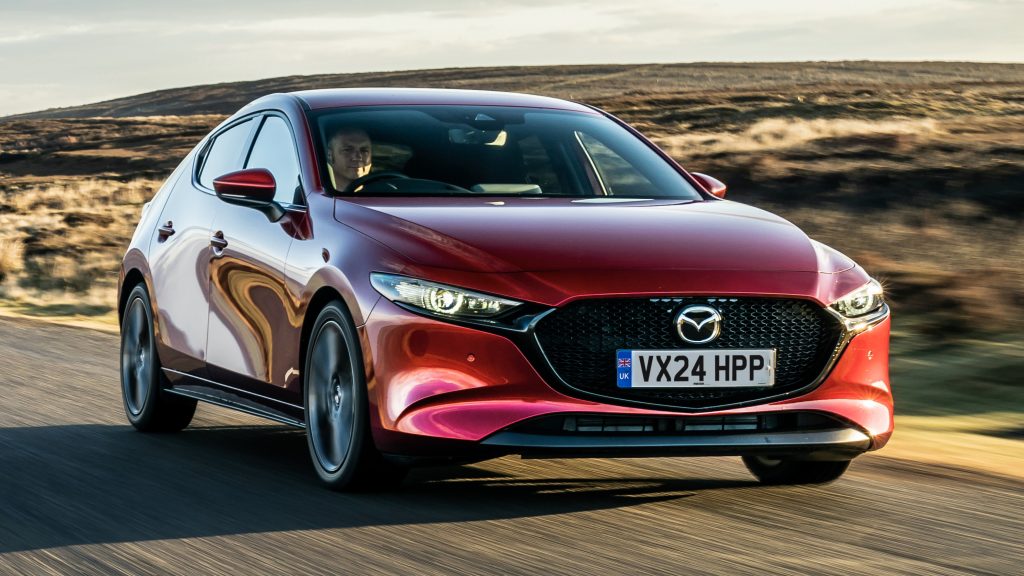
Mazda3 Years to Approach More Carefully
Not every Mazda3 year inspires the same confidence.
Older versions, especially those with heavy mileage, limited records, or visible wear, deserve extra caution. Some years have seen more owner complaints related to brakes, interior accessories, electrical quirks, and HVAC issues. None of that automatically disqualifies the car, but it changes the buying strategy. If you are looking at one of these examples, a pre-purchase inspection becomes essential.
This is especially true if the car looks suspiciously cheap compared to the market. A bargain Mazda3 can be a smart purchase, but it can also be a warning sign. Deferred maintenance, accident repairs, neglected fluid service, and unresolved warning lights can turn a cheap compact car into a very expensive lesson.
Common Mazda3 Problems Owners Should Know About
Again, the Mazda3 is reliable overall, but not flawless. There are a few areas that tend to come up more often in owner discussions and complaint histories.
Electrical annoyances
Some owners have reported smaller electrical issues rather than catastrophic failures. These can include infotainment glitches, warning messages, sensor behavior, or minor electronic frustrations. These are rarely as financially destructive as an engine or transmission failure, but they can still be irritating.
Brake-related complaints
Certain older Mazda3 years have generated notable brake complaints. In many used cars, brakes are more a condition issue than a design issue, but it is still worth checking for uneven wear, vibration, pulling, or noisy operation.
HVAC and AC concerns
Air conditioning and heater performance have appeared in owner complaint trends for some years. If you are buying used, test climate performance carefully and do not treat AC weakness as a minor inconvenience. It can become a costly repair.
Interior wear and accessories
Mazda interiors often feel upscale, but older examples can still develop trim wear, rattles, or accessory issues. These are not deal-breakers, but they affect ownership satisfaction and can hint at how well the previous owner treated the vehicle.
The key point is that the Mazda3’s common issues tend to be more manageable than the truly catastrophic failure patterns seen in some competitors. That difference is a big part of why the car still earns strong respect.
Maintenance Is the Difference Between a Good Mazda3 and a Bad One
A Mazda3 will usually treat you well if you treat it well.
That sounds obvious, but it matters more than many buyers realize. Reliable vehicles still need oil changes on time, brakes serviced properly, fluids checked, tires rotated, and suspension wear addressed before it becomes more serious. Skip those basics long enough and even a well-engineered car can feel unreliable.
If you are buying new, this means following the maintenance schedule closely and not treating routine service as optional.
If you are buying used, this means asking the right questions:
- Was the oil changed consistently?
- Are there full service records?
- Has the car had any accident damage?
- Are recalls completed?
- Does it drive smoothly when cold and warm?
- Is there any hesitation, clunking, vibration, or warning light activity?
The Mazda3 is the kind of car that rewards disciplined ownership. That is actually a positive sign. It means the vehicle is not inherently fragile, but it also will not magically overcome neglect.
Sedan vs Hatchback: Is One More Reliable?
From a reliability standpoint, the Mazda3 sedan and hatchback are close enough that most buyers should not treat body style as the deciding factor.
Mechanically, the two versions share the same basic DNA. That means reliability usually comes down to the specific car’s condition, powertrain, maintenance history, and mileage rather than whether it has a trunk or a liftgate.
The sedan is often the more conservative choice. It has a classic compact-car shape and may appeal more to shoppers who want a straightforward commuter.
The hatchback adds versatility and tends to attract buyers who care more about design and cargo flexibility. It often feels a little more distinctive and premium.
Reliability should not be what decides between them. Buy the one that fits your needs better and focus on the actual condition of the vehicle.
How the Mazda3 Compares to the Honda Civic and Toyota Corolla
This is where the Mazda3 becomes especially interesting.
The Civic and Corolla have stronger mainstream reputations for reliability, and that is not accidental. They have earned those reputations over decades. But the Mazda3 deserves to be part of the same conversation, especially for buyers who want a better overall driving and interior experience.
Here is the real distinction:
- Toyota Corolla: safest reputation, low drama, extremely rational
- Honda Civic: broad appeal, efficient, good packaging, strong market trust
- Mazda3: premium feel, engaging drive, strong dependability, more personality
The Mazda3 may not always be the absolute king of every reliability chart, but it is often the most satisfying all-around package for buyers who want dependability without the feeling of compromise.
That is why so many compact-car shoppers end up choosing it after reading not just a reliability article, but also a full Mazda3 sedan and hatchback review, because the model’s appeal is how well it balances the emotional side and the practical side.
Is the Mazda3 Expensive to Maintain?
Generally, no. The Mazda3 is not considered an expensive car to keep on the road compared with many competitors.
Routine ownership costs are usually manageable. Oil changes, brake service, tire replacements, and standard maintenance items tend to stay within normal compact-car territory. It is not the kind of vehicle that is notorious for constant high-dollar surprises.
That said, trim level and engine choice matter. A naturally aspirated front-wheel-drive Mazda3 will usually be simpler and cheaper to own long term than a turbocharged all-wheel-drive version. That does not make the higher-end trims bad choices. It just means buyers should be realistic. More features and more performance often bring slightly higher ownership sensitivity.
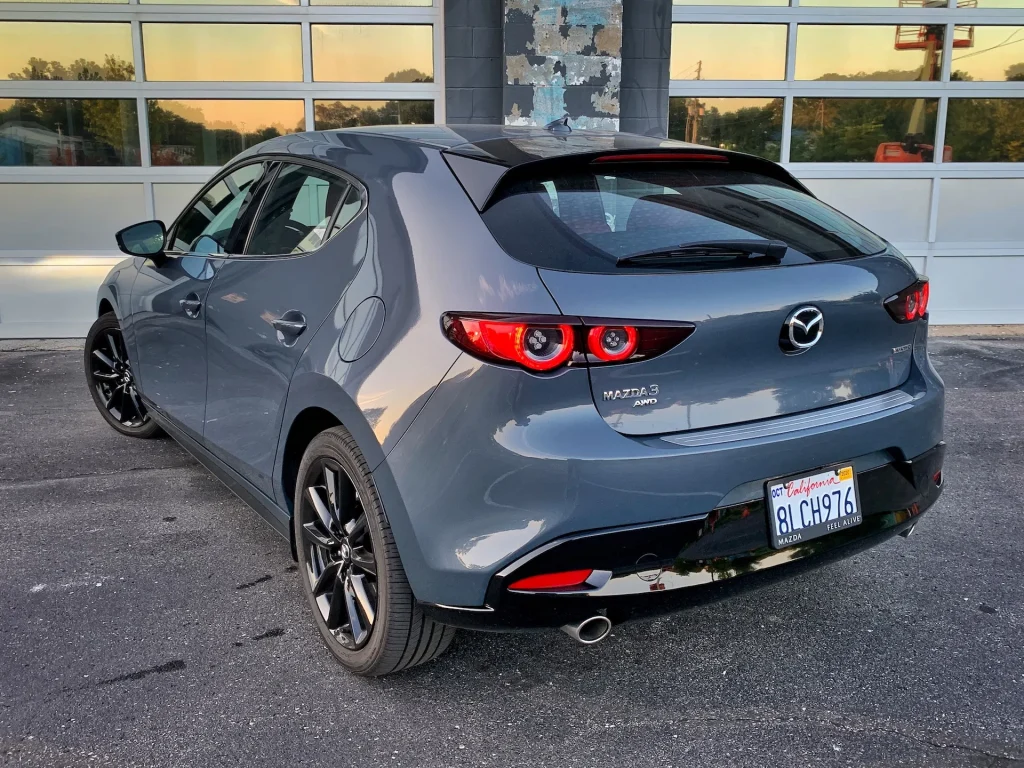
If maximum low-cost simplicity is your goal, choose a clean, non-turbo model with a strong service history. If you want more performance and premium features, the car can still be dependable, but maintenance discipline becomes even more important.
Should You Buy a High-Mileage Mazda3?
A high-mileage Mazda3 can absolutely be worth buying, but only if the condition supports it.
Mileage by itself does not tell the whole story. A well-maintained Mazda3 with higher mileage can be a better purchase than a lower-mileage example that has been neglected, driven hard, or poorly repaired after an accident.
When evaluating a high-mileage car, focus on these things:
- Cold start behavior
- Smooth transmission operation
- Brake feel
- Suspension noise
- Tire wear consistency
- Interior wear relative to mileage
- Service records
- Signs of leaks or rough repairs
The Mazda3 can age well, but it is still a modern car. Once maintenance has been ignored, problems can stack up. A good inspection matters much more than wishful thinking.
Who Is the Mazda3 Best For?
The Mazda3 is an excellent fit for buyers who want reliability but refuse to settle for an economy car that feels disposable.
It makes sense for:
- commuters who want something efficient and comfortable
- young professionals who want a premium-feeling compact without luxury-brand costs
- used-car shoppers looking for a well-rounded long-term vehicle
- buyers who care about handling, design, and cabin quality as much as dependability
It may be less ideal for:
- buyers who want the absolute cheapest possible maintenance path
- shoppers who need maximum rear-seat room
- people who treat servicing as optional and expect the car to tolerate neglect forever
The Mazda3 rewards owners who appreciate quality and stay on top of maintenance.
Final Verdict: Is the Mazda3 a Reliable Car?
Yes, the Mazda3 is a reliable car, and more importantly, it is a reliable car that still feels special.
That is what separates it from much of the compact segment. Plenty of small cars can get you from point A to point B. The Mazda3 manages to do that while offering a better cabin, sharper design, and a more refined driving experience than many direct rivals.
It is not perfect. Some years are better than others. Some owners have dealt with electrical quirks, HVAC complaints, or brake-related issues. Used buyers still need to pay attention to maintenance history, recall status, and overall condition. But those are normal realities of car ownership, not red flags that destroy the Mazda3’s credibility.
If you want one of the safest overall bets in the compact market, the Mazda3 deserves to be near the top of your list. And if you want a model that combines dependability with genuine quality, it may be one of the best choices in the entire class.
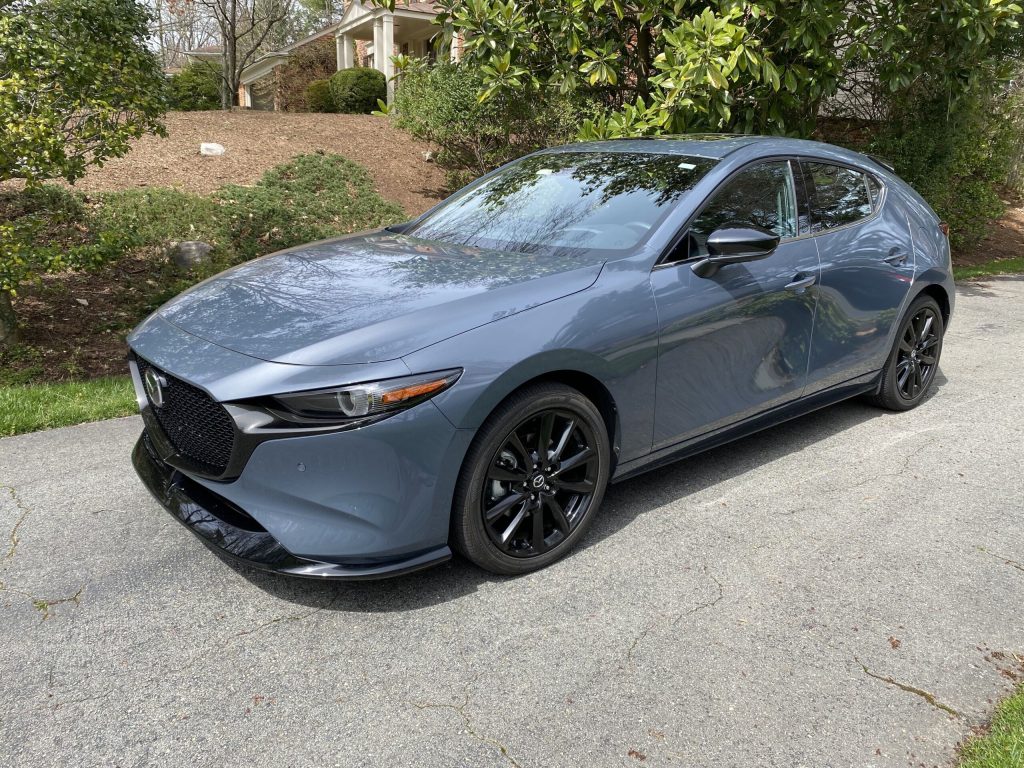
For buyers who want the full picture on why this model continues to earn praise, this in-depth Mazda3 sedan and hatchback review is a strong companion read and fits naturally alongside this reliability breakdown.
If you are researching the Mazda3, there is a good chance you are not looking for a generic compact car. You are probably trying to find something that still feels like it was designed for people who actually care about driving, design, and quality. That is what makes the Mazda3 different. In a market that has shifted hard toward SUVs, the Mazda3 has stayed relevant by refusing to become dull. It is still available as both a sedan and a hatchback, it still looks more expensive than most cars in its class, and it still offers combinations you rarely see anymore, including available AWD and an available manual transmission. (Mazda USA Newsroom)
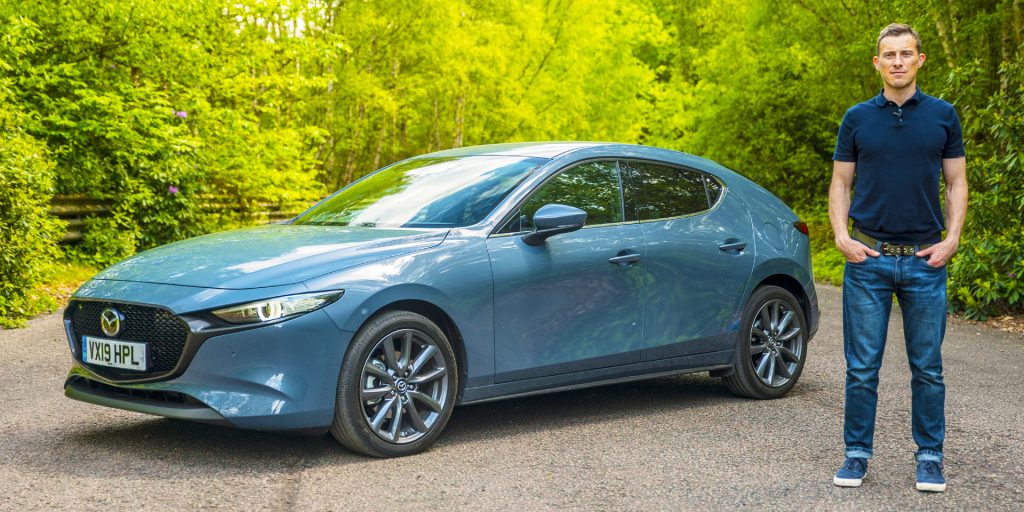
That matters because the compact-car segment is no longer crowded with exciting options. Many brands either walked away from the category or turned their compact cars into purely budget-minded appliances. Mazda took the opposite approach. It kept the Mazda3 Sedan and Mazda3 Hatchback alive as genuinely desirable cars. Instead of fighting only on price, it fought on design, cabin quality, refinement, and road feel.
That is why search demand around phrases like mazda3 hatchback, mazda3 sedan, mazda3 turbo, mazda3 awd, mazda3 reliability, and mazda3 interior keeps staying strong. People are not just asking whether the Mazda3 exists. They are asking whether it is still one of the best compact cars you can buy. The short answer is yes. The longer answer is below.
What the Mazda3 Actually Is
The Mazda3 is Mazda’s compact passenger car, sold in two body styles: the more traditional sedan and the more style-forward hatchback. That dual-body-style approach is a major part of its appeal. Buyers who want sleek, mature, classic proportions can choose the sedan. Buyers who want something more expressive, more youthful, and a bit more flexible can choose the hatchback.
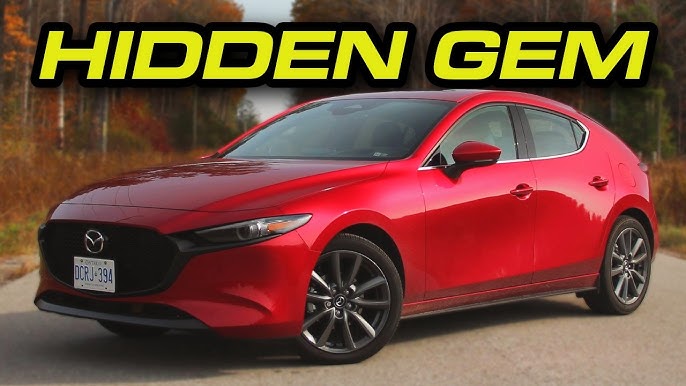
Mazda has positioned the Mazda3 as more than a simple entry-level product. It is intended to be the gateway into the brand, but it does not feel like a stripped-down compromise. Even on the official Mazda model pages, the emphasis is not just on economy or practicality. Mazda pushes design, craftsmanship, cockpit layout, premium materials, and refined details. The brand is clearly trying to make the Mazda3 feel like a small car with a premium mindset rather than a cheap commuter with a fancy badge. (Mazda USA)
That distinction matters. Plenty of buyers still want a car that is easy to park, efficient, and less bulky than an SUV, but they do not want something that feels disposable. The Mazda3 answers that perfectly. It is compact without feeling flimsy. It is efficient without feeling soulless. It is refined without being overpriced.
Why the Mazda3 Still Matters in an SUV-Dominated Market
The modern market has pushed a lot of buyers into crossovers whether they really wanted one or not. The problem is that many shoppers do not actually need the extra size, weight, or ride height of an SUV. What they really need is something efficient, comfortable, stylish, and practical enough for daily life. That is where the Mazda3 remains so relevant.
A good compact car still has major advantages. It is easier to maneuver in traffic. It is easier to park in cities and tight lots. It typically weighs less, which helps both responsiveness and efficiency. It can also feel more connected to the road, which is something a lot of drivers miss once they get into taller, softer crossovers. Mazda has leaned into those benefits rather than apologizing for them.
The Mazda3 feels like a car built for people who enjoy precision. The steering, the seating position, the cockpit layout, and the way controls are placed all reinforce that impression. Mazda’s own gallery and model pages repeatedly emphasize driver focus, symmetry, craftsmanship, and the idea that the cabin was designed around the human body. That is not just marketing fluff. It is part of why the Mazda3 consistently punches above its class in perceived quality. (Mazda USA)
The other reason it still matters is that it offers things many rivals have stopped offering. Available AWD is a huge one. An available manual transmission is another. Those features help the Mazda3 stand out to both practical buyers and enthusiasts.
Mazda3 Sedan vs Mazda3 Hatchback: Which Body Style Makes More Sense?
One of the first major decisions any Mazda3 shopper faces is sedan or hatchback. The answer depends less on mechanical differences and more on personality, design preference, and how you plan to use the car.
The Mazda3 Sedan is the more understated and elegant choice. It has a smooth, clean profile and a classic silhouette that tends to appeal to people who want a compact car with a mature, polished appearance. The sedan looks expensive in a way many compact sedans do not. It does not scream for attention. It just looks resolved and well designed.
The Mazda3 Hatchback, on the other hand, is the enthusiast and style statement version. It is bolder, more sculpted, and more distinctive. The rear design is more dramatic, and the overall impression is more emotional. It also brings the practical advantage of a large rear opening, which helps when loading cargo that would be awkward in a sedan trunk.
Mazda’s current pricing keeps the two close enough that this choice is usually not about money. Mazda says the 2026 Mazda3 Sedan starts at $24,550, while the 2026 Mazda3 Hatchback starts at $25,550. That $1,000 gap is not large enough to dictate the decision for most buyers. It comes down to what kind of car you want to look at and live with every day. (Mazda USA Newsroom)
If you want the cleanest, most traditional design, the sedan is hard to beat. If you want the more expressive version with added cargo versatility and the available manual transmission, the hatchback is the obvious answer.
2025 and 2026 Mazda3: What Changed and What Stayed Important
One of the strengths of the Mazda3 is that Mazda has not tried to reinvent it every year just for the sake of headlines. Instead, the company has kept improving details and packaging while preserving the car’s core identity.
For 2026, Mazda’s official newsroom says the car received small packaging upgrades and improved standard equipment, including the Mazda Harmonic Acoustics eight-speaker stereo system now standard. Mazda also continues to position the Mazda3 as a compact car with premium aspirations, not just an economy offering. The 2026 trim structure still gives buyers a spread from basic front-wheel-drive 2.5 S models up to the 2.5 Turbo Premium Plus AWD, which is the most premium and most performance-oriented Mazda3 available. (Mazda USA Newsroom)
The broad takeaway is that Mazda knows what the Mazda3’s audience wants. This is not a car people buy because it is simply the cheapest thing on the lot. Buyers shop the Mazda3 because they want a compact car that feels special. That means improving standard equipment, preserving key enthusiast-friendly configurations, and keeping the overall design fresh matters more than some flashy full redesign.
For shoppers comparing 2025 and 2026, the real appeal is that the Mazda3 remains consistent. The strengths that made it desirable before, design, cabin quality, available AWD, optional turbo power, and overall refinement, are still here.
Mazda3 Pricing: Where It Sits in the Market
Price is one of the most important parts of the Mazda3 story because Mazda is trying to thread a narrow line. The car needs to feel more premium than most mainstream compact cars, but it also needs to stay affordable enough that buyers do not simply jump into entry luxury territory or abandon the segment entirely.
Mazda’s 2026 pricing structure makes that strategy clear. According to Mazda’s newsroom, the lineup starts as follows:
Mazda3 Sedan
- 2.5 S FWD — $24,550
- 2.5 S Select Sport FWD — $25,440
- 2.5 S Preferred FWD — $27,090
- 2.5 S Carbon Edition AWD — $30,210
- 2.5 Turbo Premium Plus AWD — $36,740
Mazda3 Hatchback
- 2.5 S FWD — $25,550
- 2.5 S Select Sport FWD — $26,740
- 2.5 S Preferred FWD — $28,440
- 2.5 S Carbon Edition AWD — $31,450
- 2.5 S Premium 6MT FWD — $31,360
- 2.5 Turbo Premium Plus AWD — $37,890 (Mazda USA Newsroom)
This tells you a lot about how Mazda views the car. At the low end, the Mazda3 is still accessible. At the high end, it becomes a near-premium compact car with features, materials, and performance that justify its higher price. In other words, the Mazda3 is not just one thing. It can be a smart commuter, a stylish near-luxury daily driver, or a more enthusiast-oriented hatchback depending on how you spec it.
Mazda3 Turbo: Why It Changes the Character of the Car
A lot of compact cars are easy to understand because there is essentially one version of them: economical and sensible. The Mazda3 is more interesting because of the turbocharged variant.
Mazda’s 2026 lineup includes the 2.5 Turbo Premium Plus AWD in both sedan and hatchback form. This trim sits at the top of the range and combines turbocharged power, all-wheel drive, premium features, a larger infotainment display, Bose audio, and a more upscale appearance package. Mazda specifically notes features like a 10.25-inch center display, wireless Apple CarPlay and Android Auto, Bose 12-speaker audio, 360° View Monitor, and additional driver-assistance technologies on this trim. (Mazda USA Newsroom)
That makes the Mazda3 Turbo far more than a normal compact commuter. It becomes a compact car for buyers who want real passing power, a more substantial highway feel, and a near-luxury experience without stepping into a German badge. It also makes the Mazda3 one of the few mainstream compact cars that can legitimately feel upscale and quick at the same time.
Is it worth it? For the right buyer, yes. If your priority is maximizing value at the lowest cost, the base trims make more sense. But if you want the Mazda3 at its most complete and most distinctive, the Turbo Premium Plus is the version that fully expresses what this car can be.
Does the Mazda3 Have AWD?
Yes, and this is one of the Mazda3’s biggest competitive advantages.
Mazda says the Mazda3 comes standard with front-wheel drive, but i-Activ AWD is available on select trims. For 2026, that includes the Carbon Edition AWD and the Turbo Premium Plus AWD. This is significant because AWD is still relatively uncommon in compact sedans and hatchbacks, especially in a car that is also trying to be stylish and refined. (Mazda USA Newsroom)
For buyers in colder climates or regions with a lot of rain, snow, or changing road conditions, that can be a major reason to choose the Mazda3 over a front-drive-only competitor. It adds confidence without forcing someone into an SUV.
This is also why search phrases like mazda3 awd, is mazda3 awd, and does the mazda3 have awd are so common. Shoppers know this is a differentiator. In a class where many choices feel interchangeable, AWD gives the Mazda3 a clear edge.
Is There Still a Manual Mazda3 Hatchback?
Yes, and that matters more than it might seem.
Mazda says the 2026 Mazda3 Hatchback 2.5 S Premium continues to offer a Skyactiv-MT six-speed manual transmission. That is rare. The industry has steadily eliminated manual-transmission options, especially in mainstream cars that are also well-designed and reasonably practical. (Mazda USA Newsroom)
This makes the Mazda3 Hatchback especially appealing to enthusiasts who want a modern compact car with real visual appeal and a more engaging driving experience. The manual version is not just a niche curiosity. It reinforces Mazda’s broader identity as a brand that still values driver connection.
Even buyers who never choose the manual benefit from its existence. It signals that the Mazda3 was developed by a company that still cares about how a car feels, not just how it looks in a brochure.
Mazda3 Interior: Why It Feels More Premium Than Most Compact Cars
One of the most consistent reasons the Mazda3 earns praise is the cabin. Mazda has managed to create an interior that looks restrained, expensive, and intentional without falling into the trap of clutter or gimmicks.
Mazda’s gallery and model pages show the same pattern: simple surfaces, horizontal flow, carefully placed controls, and a driver-focused cockpit. On the official model pages, Mazda highlights elements like leather seating on upper trims, the larger 10.25-inch display on premium models, and the way the interior emphasizes comfort and design rather than flashy overload. (Mazda USA)
What makes the Mazda3 interior stand out is that it avoids the cheap look that often defines the compact segment. Many rivals chase attention with oversized trim pieces, busy dashboards, or too many visual elements fighting each other. The Mazda3 instead feels clean and mature. That gives it a sense of calm and quality that drivers notice every day.
Mazda also says even the entry-level car includes an 8.8-inch center display, Apple CarPlay, Android Auto, USB-C inputs, and a rearview camera, while higher trims add Bose audio, larger screens, wireless smartphone integration, and richer materials. That means even base Mazda3 buyers are not getting a stripped shell, while upper-trim buyers get something that edges surprisingly close to premium-brand expectations. (Mazda USA Newsroom)
Mazda3 Technology and Infotainment
The Mazda3’s tech story is not about being the flashiest. It is about being polished and useful.
On lower trims, Mazda provides the essentials with a standard 8.8-inch center display, smartphone connectivity, and core convenience features. As you move up, the car becomes far more premium. Mazda says the Turbo Premium Plus includes a 10.25-inch infotainment screen, wireless Apple CarPlay and Android Auto, a Bose 12-speaker audio system, and additional convenience and safety technologies. (Mazda USA Newsroom)
This is important because compact-car shoppers increasingly expect more than just transportation. They want the car to feel current. They want good sound, clean interfaces, and technology that works without frustration. The Mazda3 may not try to overwhelm you with gimmicks, but it gives you enough of the right features, especially in upper trims, to feel thoroughly modern.
The new standard Mazda Harmonic Acoustics eight-speaker system for 2026 is a good example of Mazda refining the ownership experience in ways drivers will actually notice. It is not headline-grabbing in the same way horsepower is, but better standard audio improves every commute.
Mazda3 Driving Experience: Why Enthusiasts Still Respect It
One of the biggest reasons the Mazda3 has such a loyal following is that it still feels like a driver’s car, even when configured as a mainstream commuter.
Mazda has long focused on steering feel, chassis balance, seating position, and the relationship between driver and machine. The Mazda3 reflects that philosophy. It feels more deliberate than many rivals. Instead of being soft and vague, it tends to feel composed and coherent. Instead of isolating the driver from the act of driving, it invites a bit more connection.
This is hard to communicate with a simple feature list, but it is one of the reasons the Mazda3 gets recommended so often. Plenty of cars in this segment can move you from point A to point B. Fewer do it with a sense of precision and design integrity.
The availability of turbo power and a manual hatchback only strengthens that reputation. Mazda has not turned the Mazda3 into a pure sports sedan or hot hatch, but it has preserved enough engagement that the car feels rewarding in normal driving, not just efficient.
Mazda3 Reliability: Is It a Good Long-Term Car?
Reliability is always one of the biggest search themes for compact cars because buyers in this segment are often trying to balance emotion and practicality. They want something stylish and enjoyable, but they also want something they can keep.
Mazda as a brand generally holds a solid reputation for dependability, and the Mazda3 benefits from that broader perception. While official Mazda pages naturally focus more on features than long-term reliability forecasting, the Mazda3’s continued popularity is partly rooted in the fact that buyers do not view it as fragile or overcomplicated. It is a mature product with well-established engineering and a clear identity. That tends to support confidence among buyers looking for a daily driver they can live with for years.
The more important point is that the Mazda3 is often recommended not just as a fun compact car, but as a smart one. Search intent around mazda3 reliability, is mazda3 reliable, is a mazda3 a good car, and how long do mazda3 last reflects that. Buyers do not want a beautiful compact car if it becomes a headache. The Mazda3 generally avoids that reputation.
No vehicle is flawless, and any used-car shopper should still evaluate individual model years, maintenance history, and inspection results carefully. But as a nameplate, the Mazda3 has built a strong identity as one of the better all-around compact-car choices.
Mazda3 vs Honda Civic
The Honda Civic is the unavoidable benchmark in this class, and for good reason. It is spacious, efficient, and extremely well established. But the Mazda3 approaches the segment from a different angle.
Where the Civic often emphasizes practicality, roomy packaging, and all-around competence, the Mazda3 leans harder into design, premium feel, and a more intimate driving experience. The Civic is often the safer, broader recommendation. The Mazda3 is often the more emotionally satisfying one.
Buyers who prioritize rear-seat space above everything may lean Civic. Buyers who care more about how the car looks, how the interior feels, and how the controls and cockpit come together often lean Mazda3.
Mazda3 vs Toyota Corolla
The Toyota Corolla has a reputation for reliability and value, which makes it a common comparison point. But the Mazda3 typically feels more upscale and more deliberate.
The Corolla usually wins with shoppers who want the most straightforward ownership proposition. The Mazda3 wins with people who want a compact car that feels like somebody cared about the details. Interior presentation, design drama, and road feel all tend to favor the Mazda3.
If your only priority is keeping things basic and conservative, the Corolla is easy to understand. If you want a compact car that feels a step above ordinary, the Mazda3 makes the stronger case.
Who Should Buy the Mazda3?
The Mazda3 is a strong fit for a surprisingly wide group of buyers.
It is excellent for commuters who want a compact car that feels more refined than average. It works well for young professionals who want something stylish without paying luxury-brand money. It makes sense for empty nesters who do not need SUV space anymore but still want comfort and quality. It also remains a smart choice for enthusiasts who want something tasteful, usable, and more engaging than the average compact car.
The sedan is best for buyers who want a classic, elegant shape and a more understated image. The hatchback is best for those who want more personality, more cargo flexibility, and the option of a manual transmission. AWD trims make sense for drivers in rough-weather regions. The Turbo Premium Plus makes sense for those who want the most complete, premium-feeling Mazda3 experience possible.
Is the Mazda3 Still Worth Buying in 2026?
Yes, and more importantly, it is still worth wanting.
That is the key distinction. Many compact cars remain sensible purchases, but very few remain genuinely desirable. The Mazda3 is one of the rare ones that still feels like an intentional choice rather than a compromise. It gives buyers beauty, refinement, useful modern tech, available AWD, an available manual, and upper trims that feel surprisingly upscale.
Mazda’s 2026 pricing and packaging make clear that the company still takes this car seriously. The lineup still spans from affordable entry trims to richly equipped turbo models. The hatchback remains available. The manual remains available. Standard equipment improves rather than erodes. That is not the behavior of a company phoning it in. (Mazda USA Newsroom)
For buyers who still want a true compact car, not just the smallest crossover they can tolerate, the Mazda3 remains one of the smartest and most satisfying choices on the market.
Final Verdict: Why the Mazda3 Sedan and Mazda3 Hatchback Still Stand Above the Segment
The Mazda3 succeeds because it understands something many competitors forgot: compact cars do not have to feel cheap to be accessible, and they do not have to feel boring to be practical.
The Mazda3 Sedan is elegant, composed, and mature. The Mazda3 Hatchback is bolder, more expressive, and more enthusiast-friendly. The Carbon Edition AWD proves the car can deliver four-season confidence without losing style. The Turbo Premium Plus AWD proves a compact car can feel premium and powerful. The 2.5 S Premium 6MT hatchback proves Mazda still cares about people who enjoy driving. (Mazda USA Newsroom)
That combination is what keeps the Mazda3 relevant. It is not the biggest compact car. It is not the cheapest. It is not trying to be. It is trying to be the one you actually want to own, and for a lot of buyers, it succeeds.
Helpful Links
Browse new Mazda inventory at Marin Mazda
Shop the Mazda3 Sedan at Marin Mazda
Shop the Mazda3 Hatchback at Marin Mazda
Contact Marin Mazda
Official Mazda3 Sedan page
Official Mazda3 Hatchback page (Marin Mazda)
FAQ
Is the Mazda3 available as both a sedan and hatchback?
Yes. Mazda currently offers the Mazda3 as both a sedan and a hatchback. (Mazda USA)
Does the Mazda3 have AWD?
Yes, but not on every trim. Mazda says front-wheel drive is standard and AWD is available on select trims including the Carbon Edition AWD and Turbo Premium Plus AWD. (Mazda USA Newsroom)
Is there still a manual Mazda3 Hatchback?
Yes. Mazda says the 2026 Mazda3 Hatchback 2.5 S Premium continues to offer a Skyactiv-MT six-speed manual transmission. (Mazda USA Newsroom)
How much does the 2026 Mazda3 Sedan cost?
Mazda lists the 2026 Mazda3 Sedan starting at $24,550. The 2026 Mazda3 Hatchback starts at $25,550. (Mazda USA Newsroom)
Where can I find a Mazda3 for sale?
You can browse new Mazda inventory at Marin Mazda, view the Mazda3 Sedan at Marin Mazda, or explore the Mazda3 Hatchback at Marin Mazda. (Marin Mazda)
Is the Mazda3 a good car?
For buyers who want a compact car with upscale design, strong cabin quality, available AWD, and a more engaging driving experience than most mainstream rivals, yes, the Mazda3 remains a very good car. That conclusion is strongly supported by Mazda’s current packaging, feature set, and trim structure. (Mazda USA Newsroom)
Mazda CX-50 Review: Hybrid, Specs, Price, Interior, MPG, and Whether It’s Better Than the CX-5
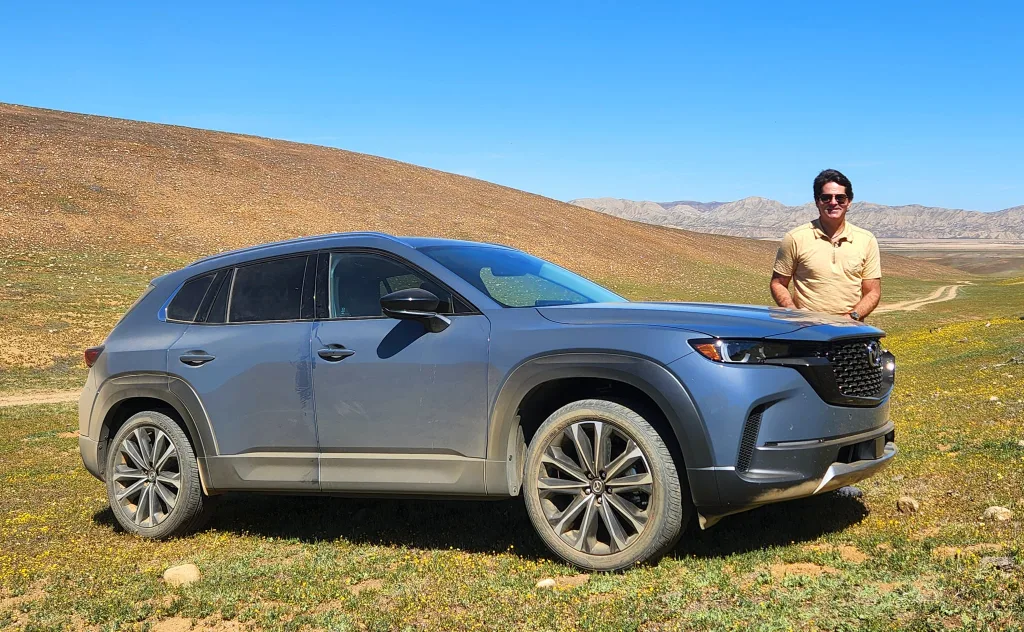
If you have been researching the Mazda CX-50, you are probably not looking for just another compact SUV. You want something stylish, practical, comfortable, and capable enough for daily commuting, family use, long highway drives, and even the occasional weekend escape. That is exactly why the CX-50 has become one of the most searched Mazda SUVs in recent years. (Mazda USA)
Search interest around terms like 2025 Mazda CX-50, 2026 Mazda CX-50, Mazda CX-50 Hybrid, Mazda CX-50 interior, Mazda CX-50 price, and Mazda CX-50 vs CX-5 shows that buyers want more than basic specs. They want to know whether the CX-50 is actually worth buying, how it compares to competitors, and whether the hybrid version changes the equation.
The answer is yes, the Mazda CX-50 occupies a very smart position in the market. It blends premium styling, confident road manners, strong available power, useful utility, and a more adventurous image than the CX-5. For many buyers, it hits the sweet spot between comfort, capability, and value.
What Is the Mazda CX-50?
The Mazda CX-50 is a compact crossover SUV designed for drivers who want something more rugged and more visually distinctive than the average vehicle in this class. While it shares Mazda’s upscale design language and refined driving feel, the CX-50 was developed with a wider stance, more assertive proportions, and stronger lifestyle appeal than the Mazda CX-5.
It is meant to feel at home both in the city and beyond it. That does not mean it is a hardcore off-roader, but it does mean Mazda engineered it with standard i-Activ AWD and drive-mode functionality intended for changing road and weather conditions. Mazda also lists ground clearance of roughly 8.3 to 8.6 inches depending on configuration. (Mazda USA)
One of the biggest reasons the CX-50 stands out is that it does not feel cheap or generic. Many compact SUVs are practical, but they lack character. The CX-50 feels different. It looks more expensive than many rivals, the cabin feels more refined, and the driving experience remains one of the strongest in the segment.
Why the Mazda CX-50 Is So Popular
The Mazda CX-50 has gained traction because it answers a very specific market need. A lot of buyers want an SUV that is practical, but they do not want something dull. They want all-wheel drive, cargo space, decent fuel economy, modern tech, premium-looking materials, and a design that does not disappear in a parking lot.
That is where the CX-50 delivers. It gives buyers a more elevated design than many mainstream competitors while still staying within reach on price. Mazda’s official 2026 pricing puts the standard CX-50 at a starting MSRP of $29,990, which helps explain why it is drawing attention from shoppers comparing value, style, and long-term usability. (Mazda USA Newsroom)
The addition of the Mazda CX-50 Hybrid has made the model even more relevant. Buyers who like the styling and positioning of the standard CX-50 but want better fuel economy now have another reason to keep it at the top of their list. Mazda lists the Hybrid with a starting price of $34,750 and an EPA-estimated 38 combined mpg. (Mazda USA)
2025 and 2026 Mazda CX-50: What Buyers Should Know
If you are comparing the latest CX-50 models, the biggest story is that buyers now have a more meaningful choice between gas and hybrid power. The standard CX-50 remains the better fit for shoppers who want a traditional driving feel, available turbo performance, and stronger towing confidence. The CX-50 Hybrid is more attractive for commuters and efficiency-focused drivers.
Mazda’s official figures show the 2026 CX-50 2.5 S at an EPA-estimated 24 city / 30 highway / 26 combined mpg, while the 2026 CX-50 2.5 Turbo Premium Plus is listed at 23 city / 29 highway / 25 combined mpg. That means the standard gas model is already competitive, but the hybrid clearly changes the efficiency conversation. (Mazda USA)
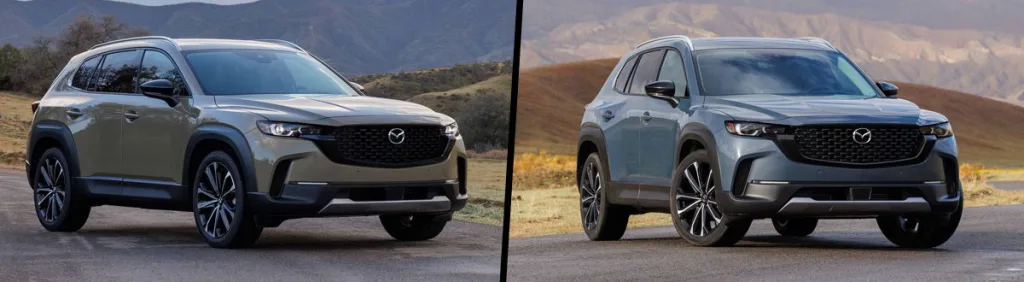
For many buyers, the real decision is not whether the CX-50 is good. It is which version of the CX-50 fits their driving style best.
Is the Mazda CX-50 Hybrid Worth It?
The Mazda CX-50 Hybrid is one of the most important developments in the lineup. Mazda positions it as delivering increased fuel efficiency and greater driving range while maintaining the driving dynamics the brand is known for. (Mazda USA)
For buyers who spend a lot of time in traffic, suburban commuting, or mixed daily driving, the hybrid makes a lot of sense. Better fuel economy can make a meaningful difference over the course of ownership, especially when fuel prices rise. The hybrid also gives the CX-50 a stronger answer to competitors that have long benefited from hybrid demand.
That said, the hybrid is not automatically the best choice for everyone. Some buyers will still prefer the feel of the gas engines, especially the turbo model. If you regularly drive at highway speeds, carry heavier loads, or care more about punchy acceleration than fuel savings, the standard CX-50 may still be the better fit.
Mazda CX-50 Engine Choices
The CX-50 is appealing in part because it offers buyers multiple personalities.
The standard naturally aspirated engine is the sensible choice. It gives the vehicle solid everyday usability, respectable efficiency, and lower entry pricing. For many drivers, this will be more than enough.
The available turbocharged version is where the CX-50 becomes more interesting. This is the setup for buyers who want stronger passing power, more effortless highway performance, and meaningful towing capability. Mazda states that properly equipped 2.5 S models can tow up to 2,000 lb, while properly equipped 2.5 Turbo models can tow up to 3,500 lb when Towing Mode is engaged. (Mazda USA)
Then there is the CX-50 Hybrid, which prioritizes efficiency and broader everyday savings.
Mazda CX-50 MPG and Efficiency
Fuel economy is one of the biggest reasons shoppers compare the CX-50 powertrains so carefully.
The standard gas model offers a solid balance between performance and efficiency. The turbo model gives up a little efficiency in exchange for stronger real-world performance. The hybrid is the clear mpg leader and the most logical choice for buyers who put efficiency first.
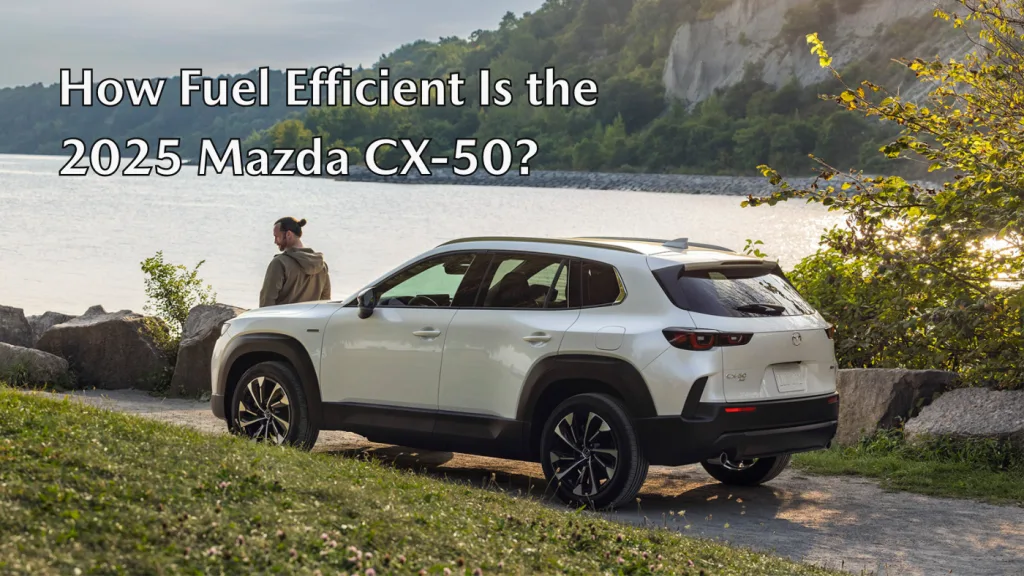
That is why search terms like Mazda CX-50 mpg, Mazda CX-50 Hybrid review, and 2026 Mazda CX-50 fuel economy keep growing. Buyers want a vehicle that looks premium without punishing them at the pump.
Mazda CX-50 interior: Premium Without the Luxury Price
One of the strongest selling points of the Mazda CX-50 is the cabin. The interior feels more upscale than many mainstream compact SUVs, and that matters because buyers spend most of their time interacting with the inside of the vehicle, not just the badge on the hood.
The dashboard design is clean and horizontal, which helps the cabin feel wide and organized. Controls generally feel intentional rather than cluttered. Depending on trim, the CX-50 can feel surprisingly close to entry-level luxury models in ambiance and finish.
The seating is another advantage. Mazda tends to design seats with long-distance comfort in mind, and the CX-50 benefits from that approach. Front-seat comfort is strong, and upper trims offer a richer environment that makes the SUV feel more expensive than it is.
Cargo Space and Practicality
The Mazda CX-50 is not just about style. It also has the practicality buyers expect from a compact SUV.
Mazda says the CX-50 offers 31.4 cubic feet of cargo room behind the second row and up to 56.3 cubic feet with the rear seats folded. That is enough to handle groceries, luggage, sports gear, strollers, and the usual mix of family or weekend cargo without needing to step up into a much larger SUV. (Mazda USA)
This is one of the reasons the CX-50 works so well for buyers who want one vehicle to do almost everything.
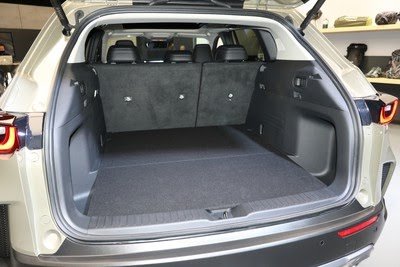
Mazda CX-50 Price: Is It a Good Value?
The Mazda CX-50 is not always the cheapest compact SUV, but value is not just about the lowest price. It is about what you get for the money.
This is where the CX-50 does well. Buyers get standout styling, an upscale interior, available turbo performance, real utility, and standard AWD. That creates a value equation that feels stronger than the sticker alone might suggest. The fact that Mazda starts the 2026 CX-50 below $30,000 while still offering this level of design and equipment helps its case considerably. (Mazda USA Newsroom)
The hybrid may cost more up front, but the improved efficiency can offset that over time for the right owner.
Mazda CX-50 vs CX-5: Which One Should You Buy?
The Mazda CX-50 vs CX-5 question is one of the most important comparisons for Mazda shoppers.
The CX-5 is still a great SUV. It is refined, comfortable, and familiar. If you want a more traditional compact crossover with premium touches, the CX-5 remains an easy recommendation.
The CX-50, however, feels more modern in its positioning. It has a wider stance, a more rugged design language, standard AWD, and stronger lifestyle appeal. It is the better choice for buyers who want something bolder and more visually distinctive.
If you prioritize proven familiarity and a classic compact-SUV feel, the CX-5 may still fit you better. If you want the more adventurous and more contemporary take, the CX-50 usually makes the stronger impression.
Who Should Buy the Mazda CX-50?
The Mazda CX-50 is a strong choice for commuters who want something nicer than the average compact SUV, for small families who need cargo space and comfort without moving up to a larger model, and for buyers who want AWD confidence in rain, snow, or rougher road conditions.
The CX-50 Hybrid is ideal for drivers who spend a lot of time in urban or suburban traffic and want better long-term efficiency. The turbocharged CX-50 is better for people who want stronger performance and more meaningful towing ability.
Final Verdict: Is the Mazda CX-50 Worth Buying?
Yes, the Mazda CX-50 is worth buying, especially if you want a compact SUV that does more than just check the basics.
The standard gas model is a smart choice for buyers who want strong value, premium styling, and everyday practicality. The turbocharged version is the better pick for drivers who want stronger performance and towing confidence. The Mazda CX-50 Hybrid is the best fit for shoppers who care most about fuel economy.
What makes the CX-50 stand out is that it feels more special than many rivals without becoming impractical or overpriced. It gives buyers a premium look, a high-quality cabin, useful flexibility, and one of the more engaging driving experiences in the segment.
Helpful Links
Browse new Mazda inventory at Marin Mazda
Contact Marin Mazda
Explore Mazda models at Marin Mazda
Official Mazda CX-50 page
Official Mazda CX-50 Hybrid page
FAQ
Is the Mazda CX-50 bigger than the CX-5?
The CX-50 has a wider, more rugged stance and is positioned as the more adventure-oriented option in Mazda’s compact SUV lineup.
Is the Mazda CX-50 Hybrid worth it?
Yes, especially for buyers who want better fuel economy for commuting and daily driving. Mazda lists the 2026 CX-50 Hybrid at an EPA-estimated 38 combined mpg. (Mazda USA)
How much can the Mazda CX-50 tow?
Mazda states that properly equipped 2.5 S models can tow up to 2,000 lb, while properly equipped 2.5 Turbo models can tow up to 3,500 lb with Towing Mode engaged. (Mazda USA)
How much cargo space does the Mazda CX-50 have?
Mazda lists 31.4 cubic feet behind the second row and 56.3 cubic feet with the rear seats folded. (Mazda USA)
Where can I find a Mazda CX-50 for sale?
You can start with Marin Mazda’s new inventory page or the official Mazda CX-50 model page. (Marin Mazda)
Best Auto Paint Remover: Expert Review
There is a big difference between a car that is dirty and a car whose paint is genuinely contaminated, stained, scuffed, oxidized, or damaged. A wash can remove loose grime. It cannot reliably fix bonded fallout, adhesive residue, mild paint transfer, stubborn tree sap, hard water spotting, surface scuffs, or the chalky fade that comes with neglected oxidation. That is why so many drivers end up searching for the best auto paint remover, the right auto paint scratch remover, or a trusted auto paint oxidation remover instead of another basic car shampoo.
The problem is that “paint remover” means very different things depending on what you are trying to remove. Sometimes you want to remove foreign material sitting on top of the clear coat, like tree sap, glue, tar, iron particles, overspray, or water spots. Sometimes you want to reduce the appearance of scratches, swirls, and scuffs without damaging the finish. And sometimes you need to restore clarity and gloss to paint that has lost its depth because of oxidation. Those are not the same job, and using the wrong product for the wrong problem is one of the fastest ways to waste money or make the finish look worse.
This guide is built for readers who want a magazine-grade, actually useful answer. If you are trying to find an auto paint remover that makes sense for real-world detailing and paint correction work, this article will walk you through what these products do, when they work, when they do not, and how to choose the right approach for scratches, scuffs, oxidation, adhesive residue, tree sap, tar, overspray, and water spots. More importantly, it explains why the best result often depends less on marketing language and more on understanding the type of defect you are dealing with.
What “Auto Paint Remover” Really Means
The phrase “auto paint remover” sounds straightforward, but in practice it covers several categories.
In one sense, an auto paint remover can mean a product that removes unwanted material from the paint surface. That could include sap, glue residue, tar, hard water mineral deposits, iron contamination, scuff transfer, or overspray. In another sense, people use the term to describe a product that removes or reduces visible defects in the paint itself, such as scratches, swirls, oxidation, haze, and dullness.
That distinction matters. If you are looking for an auto paint scratch remover, you are usually dealing with light surface-level defects in the clear coat. If you are looking for an auto paint iron remover, you are targeting embedded iron particles and fallout. If your issue is chalky, faded paint, what you really need may be an oxidation remover for auto paint, not a scratch product or a glue remover.
A good product in this space is not just a bottle with aggressive chemicals. The best ones are designed to solve a specific class of problem while minimizing risk to the finish.
Why Paint Problems Build Up Faster Than Most Owners Realize
Modern automotive paint systems are tougher than older single-stage finishes, but they are not invincible. The top layer on most vehicles is the clear coat, and that clear coat takes constant abuse from UV exposure, water spotting, airborne contamination, bird droppings, industrial fallout, light contact, roadside grime, and improper washing.
This is why so many people eventually end up researching auto paint scuff removal, auto paint water spot remover, or even auto paint overspray removal. What begins as a few tiny marks or a little roughness can turn into visible dullness, uneven gloss, stubborn stains, and a finish that looks tired even after washing.
The biggest mistake many owners make is assuming every problem needs the most aggressive possible solution. In reality, paint care rewards precision. The best detailers remove only what they need to remove, with the least aggressive method that still works.
The Main Types of Paint Contamination and Damage
Light scratches and swirls
These are among the most common reasons people shop for an auto paint scratch remover or search how to remove scratches from auto paint. They usually sit in the clear coat and are often caused by poor washing techniques, automatic car washes, dirty towels, or contact with debris.
Scuff marks and paint transfer
Scuffs are different from scratches. In many cases, a visible scuff is not actually deep paint damage. It may be another material transferred onto the surface, which is why auto paint scuff remover products can sometimes work surprisingly well.
Oxidation
Oxidation is the slow breakdown of the paint surface from sun, air, and neglect. It often appears as fading, chalkiness, dullness, or a washed-out look. This is where an auto paint oxidation remover or a dedicated oxidation remover for auto paint becomes more relevant than a simple scratch remover.
Tree sap and tar
Tree sap hardens, bakes into the surface, and becomes extremely stubborn if ignored. Tar behaves similarly. This is why many owners specifically look up how to remove tree sap from auto paint or remove tar from auto paint.
Glue and adhesive residue
Stickers, old trim tape, badge adhesive, and decal residue can leave behind a sticky mess that attracts dirt and becomes increasingly difficult to remove over time. Searches like how to remove glue from auto paint and remove adhesive from auto paint are common because people are rightly afraid of damaging the finish while trying to clean it.
Overspray
Paint overspray is one of the more frustrating problems because it changes the feel of the surface as much as the appearance. It can leave paint feeling rough and gritty even after washing. This is why how to remove auto paint overspray is such a high-intent search.
Water spots and mineral staining
Hard water deposits can etch into the finish if left untreated. If you are looking up how to remove water spots from auto paint or how to remove hard water stains from auto paint, you are dealing with one of the most underestimated causes of permanent-looking paint dullness.
What the Best Auto Paint Remover Should Actually Do
A quality best auto paint remover should not promise miracles. It should do three things well.
First, it should match the problem. A scratch remover should actually help refine light paint defects. A scuff remover should target transferred material and surface blemishes. An oxidation remover should restore color and gloss in a controlled way.
Second, it should be predictable. The best detailing products are not only effective; they are consistent. They give the user a clear sense of what to expect and how to work the product.
Third, it should be safe when used correctly. An effective chemical auto paint remover or correction product should solve the problem without causing unnecessary damage, staining, or haze.
That is why a lot of experienced enthusiasts do not just ask what removes the problem. They ask what removes the problem safely.
Scratch Removal vs Scuff Removal: Not the Same Job
One of the most common detailing misconceptions is treating scratches and scuffs as if they are identical.
A true scratch is damage into the clear coat. A product marketed as an auto paint scratch remover typically works by refining or leveling the edges of the defect so it becomes less visible. Depending on severity, that can range from mild hand-applied correction to machine polishing.
A scuff, by contrast, may simply be foreign material dragged across the paint. That means a proper auto paint scuff removal product can sometimes restore the finish far more easily than you would expect. If the mark is transfer rather than true gouging, the correction may be surprisingly dramatic.
This is why choosing the right best auto paint scratch remover starts with correctly diagnosing the mark.
Oxidation Removal: The Difference Between Dead Paint and Revived Paint
Oxidation is one of the most satisfying paint issues to correct because the visual transformation can be dramatic. Dull panels regain gloss. Faded paint regains depth. Metallic finishes start to sparkle again. But oxidation also requires realism.
A proper auto paint oxidation removal product can improve neglected paint significantly, especially when the problem is in the upper layer of the finish. But if the paint has gone too far, no bottle is going to reverse severe failure.
Still, for many vehicles, the right auto paint oxidation remover can be the difference between a flat, tired look and a finish that suddenly looks cared for again. That is why removing oxidation from auto paint remains one of the most practical high-impact detailing jobs.
Adhesive, Glue, and Decal Residue: Where Patience Matters Most
Some of the most dangerous DIY paint mistakes happen during decal and adhesive removal. People scrape too aggressively, use harsh solvents, or attack the finish with the wrong towel and create damage that was worse than the original residue.
If you are dealing with this problem, the goal is controlled softening and lift. That is why readers search for best adhesive remover for auto paint, removing adhesive from auto paint, and how to remove auto decals from paint. The issue is not just whether the residue comes off. It is whether it comes off without marring the surrounding finish.
A well-chosen auto paint remover for this task should help break down residue while giving you enough working time to remove it safely.
Tree Sap, Tar, and Environmental Fallout
Tree sap is one of those contaminants people underestimate until it hardens. Fresh sap is annoying. Baked-on sap can feel permanent. The same goes for tar specks on lower panels and behind wheels. These are classic cases where a wash alone is not enough.
This is why how to remove tree sap from auto paint remains such a strong keyword. Sap bonds, hardens, and can stain if neglected. Tar embeds, smears, and tends to laugh at basic soap. In these cases, the right paint remover auto product is less about brute force and more about chemistry and dwell time.
Likewise, bonded contamination such as iron fallout can create roughness and staining that needs a dedicated auto paint iron remover, especially on light-colored vehicles.
Overspray Removal: A Different Kind of Correction
Overspray is one of the most specific paint issues in detailing. The finish may look dusty, rough, or grainy. The surface no longer feels smooth, even if the original paint underneath is still intact. That is why auto paint overspray removal usually requires a more deliberate process than a quick polish.
When people search how to remove auto paint overspray, they are often looking for a product that can restore smoothness without eating into the original finish. In many cases, success comes from using the right contaminant-removal chemistry and mechanical decontamination approach in the correct order.
The key is restraint. Overspray removal is one of those jobs where rushing can create more marring than the overspray itself.
Water Spots, Hard Water Stains, and Mineral Etching
Water spots are deceptive because they often look mild at first. But once minerals etch into the clear coat, they can become much harder to remove. This is why auto paint water spot remover products matter, and why people search how to remove stains from auto paint and how to remove hard water stains from auto paint so often.
A good remover in this category should either neutralize and dissolve the deposits or help polish away the staining before it becomes permanent. Once again, the least aggressive working method is usually the smartest route.
How to Choose the Best Auto Paint Remover for Your Use Case
If your main issue is swirls, haze, and light clear-coat defects, you want an auto paint swirl remover or scratch-focused product.
If your paint looks faded and chalky, focus on an auto paint oxidation remover.
If you are dealing with sticky residue from badges, decals, or glue, prioritize a product suited for remove adhesive from auto paint.
If the contamination is environmental, such as sap, tar, iron particles, overspray, or mineral spots, choose a remover that fits that contaminant rather than a generic polish.
That is really the heart of the buying decision. The best auto paint remover is not the most aggressive product. It is the one that best matches the problem in front of you.
Common Mistakes That Ruin Otherwise Good Paint
The biggest mistake is using too much force too soon. A scratch does not become easier to fix because you rubbed harder. Glue does not become safer to remove because you grabbed a harsher solvent. Water spots do not disappear because you scrubbed them with a dirty towel.
Other common mistakes include:
Using a scratch remover on contamination that should have been chemically removed first.
Using adhesive removers without testing on a small area.
Attacking oxidation without cleaning and decontaminating the surface first.
Trying to remove overspray with brute-force rubbing.
Expecting one product to solve every kind of paint problem.
Paint correction rewards process, not impatience.
Final Verdict
The search for the best auto paint remover only gets easier when you stop treating all paint problems as the same thing. Scratches, scuffs, oxidation, water spots, overspray, sap, tar, glue, and fallout all demand slightly different solutions. The right product is the one that solves the specific problem without creating a new one.
If your goal is to improve light defects, a strong auto paint scratch remover or auto paint swirl remover makes sense. If your finish looks faded and lifeless, an oxidation remover for auto paint is the smarter path. If your paint feels rough from contamination, then you are better served by the right remover for sap, glue, iron, overspray, or water spots.
The best detailing results come from correct diagnosis, controlled correction, and a product that fits the defect. That is what separates a genuinely useful auto paint remover from just another bottle on the shelf.
FAQ
What is the best auto paint remover?
The best option depends on what you are trying to remove. Scratches, oxidation, glue, overspray, and water spots each need slightly different solutions.
Does auto paint scratch remover really work?
Yes, on light surface-level defects. A good auto paint scratch remover can reduce or refine many minor clear-coat marks, though it will not erase deep damage.
How do you remove oxidation from auto paint?
The usual approach involves cleaning the surface, decontaminating it, and using an auto paint oxidation remover or correction product designed to restore clarity and gloss.
How do you remove glue from auto paint?
Use a product suited for how to remove glue from auto paint safely, work slowly, and avoid harsh scraping that can mar the finish.
How do you remove tree sap from auto paint?
A proper remover combined with patience is usually the best answer for how to remove tree sap from auto paint, especially before the sap hardens further.
Can overspray be removed without repainting?
Often, yes. Auto paint overspray removal is possible in many cases if the original finish underneath remains intact and the removal process is done carefully.
Best Trickle Charger: Expert Review
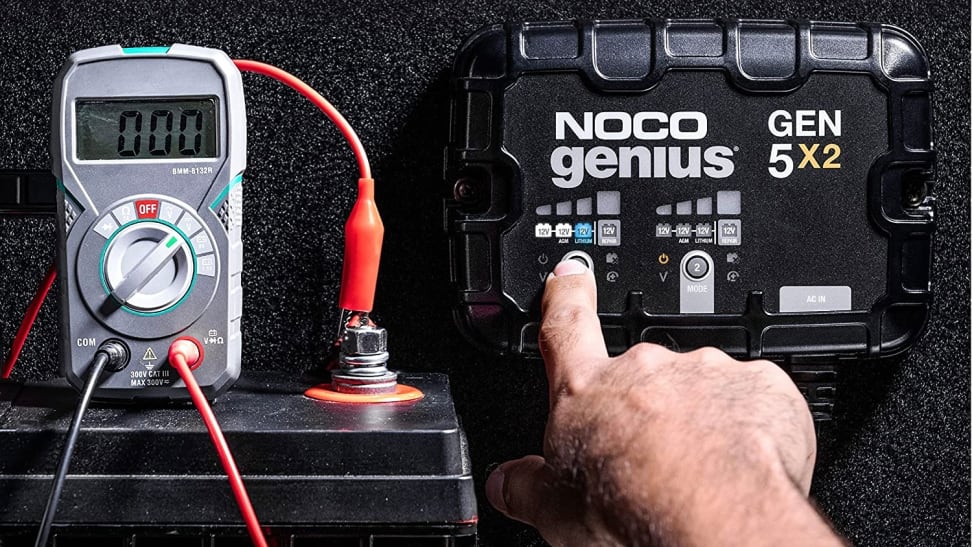
A dead battery is one of those problems that feels small until it ruins your morning. The car will not start, the motorcycle has gone flat after sitting, the boat battery is weak before a weekend trip, or the lawn mower suddenly clicks instead of cranking. This is exactly why so many people search for the best trickle charger, the best battery trickle charger, or the best trickle charger for car battery.
A proper charger-maintainer does more than just feed a battery a little current. The best modern units monitor battery condition, switch automatically into maintenance mode, protect against overcharging, compensate for temperature, and in some cases even help recover neglected batteries through desulfation or repair modes. That is a major difference from the old cheap chargers that simply kept pushing power whether the battery needed it or not.
If you are trying to find the best auto battery trickle charger or the best automotive trickle charger, the real answer depends on what you own, how long it sits, what battery chemistry you use, and whether you need maintenance only or actual charging power. A charger that is perfect for a motorcycle stored all winter may be too weak for a truck battery that is deeply discharged. Likewise, a powerful multi-bank shop charger may be overkill for someone who just wants to keep a weekend car topped off.
This guide breaks it all down in depth. It explains what a trickle charger really is, what features matter, which products from your list stand out, and how to choose the right charger for cars, trucks, motorcycles, ATVs, boats, RVs, generators, lawn equipment, AGM batteries, and lithium batteries. If you are serious about buying the best car battery trickle charger instead of wasting money on the wrong one, this is where to start.
What Is a Trickle Charger, Really?
People often use the term “trickle charger” for almost everything in this category, but there are important differences.
A traditional trickle charger supplies a low, steady current to a battery over time. It is slow by design and meant to offset natural self-discharge. The issue with old-school trickle chargers is that many of them are not very smart. Leave them on too long and they can overcharge a battery, shorten its life, or create unnecessary heat.
Modern smart chargers are better described as maintainers or automatic battery chargers. They still serve the function people mean when they search for the best battery trickle charger, but they do it more intelligently. They monitor voltage, adjust charging stages, taper current as needed, and switch to float or maintenance mode when the battery is full.
That distinction matters. The best trickle charger for car today is usually not a dumb constant-output unit. It is a smart maintainer-charger that protects the battery while keeping it ready to go.
Why You Might Need the Best Trickle Charger
A battery slowly loses charge even when nothing is obviously wrong. Modern vehicles draw small amounts of power for alarm systems, clocks, modules, and memory functions. Seasonal vehicles sit for weeks or months. Cold weather hurts battery performance. Heat accelerates battery aging. Short trips can leave a battery undercharged. All of that adds up.
That is why there is such strong demand for the best trickle charger for car battery and the best auto trickle charger. A good charger-maintainer helps with:
- Preventing battery drain during storage
- Extending battery life
- Keeping infrequently used vehicles ready to start
- Maintaining motorcycles, ATVs, and powersports batteries
- Preserving boat, RV, and generator batteries
- Supporting AGM, gel, flooded lead-acid, and sometimes lithium batteries
- Reducing the chances of a no-start situation
The cost of a good charger is usually far less than replacing a prematurely dead battery.
What Makes the Best Battery Trickle Charger?
Not all chargers are built the same. If you are evaluating the best trickle charger options, here are the most important factors.
1. Charging Amperage
This is one of the biggest differentiators. A 1A charger is great for maintenance and small batteries, but it will charge a dead automotive battery very slowly. A 5A or 10A charger is more versatile because it can maintain and also recharge with reasonable speed.
In general:
- 0.8A to 1.25A is ideal for small batteries, motorcycles, and maintenance
- 2A is a good entry point for light automotive maintenance
- 5A is a strong all-around sweet spot
- 10A is better for faster charging and broader vehicle coverage
- 50A is more shop-grade or heavy-duty territory
That is why one person’s best car trickle charger may be someone else’s underpowered frustration.
2. Battery Compatibility
Some chargers only work well with standard lead-acid batteries. Better models support:
- Flooded lead-acid
- AGM
- Gel
- Deep-cycle
- Lithium
If you are shopping for the best trickle charger for AGM battery or the best lithium battery trickle charger, this is absolutely critical. The charger must support the chemistry you are using.
3. Automatic Float or Maintenance Mode
This is what separates a useful modern unit from old cheap chargers. When a battery reaches full charge, the charger should reduce output and maintain the battery safely rather than continue forcing current into it.
If you are leaving a charger connected over time, automatic maintenance mode is non-negotiable.
4. Safety Features
The best automotive battery trickle charger should include strong protections such as:
- Overcharge protection
- Reverse polarity protection
- Spark-proof connections
- Short-circuit protection
- Thermal or temperature compensation
These features are not marketing fluff. They help protect the battery, the charger, and the user.
5. Ease of Use
A charger should not require guesswork every time you connect it. Clear indicator lights, logical modes, and straightforward cables matter more than many buyers realize.
6. Desulfation or Recovery Modes
Some higher-end chargers include repair or desulfation modes designed to help restore neglected batteries. These features are not miracles, but they can be useful for batteries that have been sitting too long.
Best Trickle Charger Options from the Product Set
Based on the lineup you provided, the market is dominated by NOCO, Battery Tender, and CTEK, with several models aimed at very different users.
NOCO GENIUS10
Best Overall Trickle Charger for Most Users
For many buyers, the NOCO GENIUS10 is the best answer to best trickle charger and best battery trickle charger. It offers 10A output, supports 6V and 12V batteries, works with lead-acid and lithium batteries, and combines charger, maintainer, trickle charger, and desulfator functions in one unit.
That combination makes it highly versatile. It is powerful enough to be useful when a battery actually needs charging, yet smart enough to serve as a long-term maintainer. For drivers who want one charger that can cover a car, truck, motorcycle, ATV, or seasonal vehicle, this is the kind of product that makes sense.
Why it stands out:
- Strong all-around 10A output
- Supports multiple battery types
- Smart automatic charging and maintenance
- Useful for both maintenance and recharge duties
- Better versatility than very low-amperage units
For many households, this is the true best trickle charger for car battery because it does not box you into a maintenance-only role.
NOCO GENIUS5
Best Balance of Power and Practicality
The NOCO GENIUS5 hits a very appealing middle ground. At 5A, it is more capable than small maintenance chargers but not as large or aggressive as a 10A unit. For many owners, that makes it the best everyday choice.
This is especially strong if you want the best auto battery trickle charger for a passenger vehicle that occasionally sits, or if you maintain a couple of different vehicles and want something compact but still genuinely useful.
It offers:
- Enough power for real recharging
- Smart maintenance capability
- Compatibility with multiple battery types
- Strong balance of speed and safety
If the GENIUS10 feels like more charger than you need, the GENIUS5 may be the better fit.
NOCO GENIUS1
Best Small Maintainer for Long-Term Battery Care
The NOCO GENIUS1 is a 1A charger-maintainer and a very strong candidate for the best battery trickle charger maintainer category. It is not meant for quickly bringing a deeply discharged full-size battery back to life. It is meant to maintain batteries properly over time.
This makes it a great option for:
- Stored cars
- Weekend vehicles
- Motorcycles
- ATVs
- Small engine equipment
- Batteries that do not need fast charging
For true maintenance duty, a lower-amperage unit is often all you need. In that context, the GENIUS1 is a smart and efficient answer to best car trickle battery charger searches when maintenance is the priority rather than fast recharge.
NOCO GENIUS2
Best Step-Up Choice for Mixed Use
The NOCO GENIUS2 sits between the GENIUS1 and the more powerful models. It is a solid answer for buyers who want more than a basic maintainer but do not need 5A or 10A output.
This is a strong fit for users searching for the best 12 volt trickle charger or the best 12v battery trickle charger for lighter-duty use. It adds flexibility without becoming bulky or expensive.
Battery Tender Plus 12V 1.25A
Best Classic Choice for Motorcycles and Stored Vehicles
Battery Tender has been one of the best-known names in this category for years, and the Battery Tender Plus 12V 1.25 AMP remains highly relevant. It is often associated with motorcycles, powersports, and seasonal storage, and for good reason.
This is one of the clearest picks for the best trickle charger for motorcycle and the best motorcycle trickle charger. It is designed around maintenance and float charging, which is exactly what many motorcycle and ATV owners need.
Its strengths include:
- Proven reputation
- Simplicity
- Solid maintenance logic
- Good fit for small batteries and stored equipment
For bikes, ATVs, and infrequently used vehicles, it remains one of the most sensible purchases in the category.
Battery Tender Junior 12V 800mA
Best Budget-Friendly Maintainer for Small Batteries
If all you need is a lightweight maintenance charger for a motorcycle, powersports battery, or small seasonal application, the Battery Tender Junior deserves attention. It is not an all-purpose solution for every automotive battery scenario, but for simple maintenance it is very effective.
It is one of the strongest answers to best cheap trickle charger when the job is straightforward battery upkeep rather than fast charging.
Battery Tender 3 AMP
Best Battery Tender Option for Broader Vehicle Use
The Battery Tender 3 AMP is a more flexible option than the smaller Tender models. It supports 6V or 12V systems and works across lead-acid, AGM, gel, and lithium battery types, making it much more versatile.
For buyers who like the Battery Tender name but want something more capable for cars, SUVs, and trucks, this is a strong contender for the best automotive trickle charger.
CTEK MXS 5.0
Best Premium Maintenance-Focused European-Style Charger
CTEK has a strong reputation, especially among enthusiasts who value refined battery care and premium charger logic. The CTEK MXS 5.0 is often seen as a serious battery maintainer rather than just a budget charger.
For users searching for the best trickle charger for car with a premium feel and a long-standing enthusiast reputation, CTEK remains relevant. It is particularly appealing for people who care about battery health over the long run rather than simply keeping costs low.
NOCO GENIUSPRO50
Best Heavy-Duty Professional Option
The NOCO GENIUSPRO50 is in a different class. At 50A and with support for 6V, 12V, and 24V batteries, this is far beyond what most casual users need. It is more of a professional-grade, shop-style unit for heavy-duty use, multiple battery types, and larger applications.
This is not the average answer to best trickle charger, but for commercial garages, boat owners, RV users, or people maintaining larger fleets, it can absolutely be the right tool.
Which Trickle Charger Is Best for Different Vehicles?
Best trickle charger for car
For most drivers, the NOCO GENIUS5 or NOCO GENIUS10 is the strongest choice. They are capable enough to recharge and smart enough to maintain.
Best trickle charger for car battery in storage
The NOCO GENIUS1 or Battery Tender Plus makes a lot of sense for long-term maintenance.
Best trickle charger for motorcycle
The Battery Tender Plus is one of the best-known and most sensible picks, with the Battery Tender Junior as a cheaper alternative.
Best trickle charger for ATV
A lower-amperage smart maintainer such as the Battery Tender Plus or NOCO GENIUS1 is often ideal.
Best trickle charger for lawn mower
A compact smart charger-maintainer is usually all you need, particularly for 12V mower batteries that sit between seasons.
Best trickle charger for RV battery
This depends on battery size and chemistry. Many RV owners will be better served by something like the NOCO GENIUS5 or GENIUS10, especially if the battery bank is larger or more deeply cycled.
Best trickle charger for generator battery
A small smart maintainer is usually appropriate, especially when the generator sits unused for long periods.
Best trickle charger for boat battery
Marine batteries often benefit from a smart charger with compatibility for deep-cycle applications. NOCO’s higher-capability models stand out here.
AGM, Lithium, and Specialty Battery Considerations
If you are searching for the best agm trickle charger or the best lithium battery trickle charger, you need to stop thinking in generic terms. Battery chemistry matters.
AGM batteries prefer charging profiles suited to their design. Lithium batteries may require specific modes and protections. Not every charger can do both properly. This is one reason modern smart chargers from NOCO and select Battery Tender models have become so popular: they bring chemistry flexibility that older maintainers often lacked.
For mixed garages with cars, motorcycles, ATVs, or specialty vehicles, versatility is a major advantage. That is exactly why products like the best battery trickle charger USA shoppers often choose tend to be multi-chemistry smart chargers rather than old fixed-output boxes.
What About Solar Trickle Chargers?
Search demand clearly shows interest in the best solar battery trickle charger maintainer and best solar trickle charger. Solar trickle charging can work, but it is a different category. Solar maintainers are helpful where there is no outlet and the current draw is low, but they are not always the best solution if you need reliable, controlled indoor maintenance or actual charging power. In many real-world cases, a plug-in smart charger remains the safer and more effective option.
Common Mistakes When Buying a Trickle Charger
Buying too little charger
A tiny 0.8A or 1A maintainer is fine for storage duty, but it can feel painfully slow on a larger drained battery.
Buying too much charger
A heavy-duty 50A shop charger is unnecessary for someone who just wants to maintain one motorcycle battery.
Ignoring chemistry compatibility
This is a major mistake with AGM and lithium batteries.
Using an old dumb charger
Modern smart chargers are simply better for battery health and convenience.
Confusing maintenance with recovery
Some chargers maintain beautifully but are not ideal for reviving deeply discharged batteries. Others do both.
Final Verdict
The best trickle charger is not the same for every user, but the strongest all-around answer for most people from your product list is the NOCO GENIUS10. It combines real charging power, smart maintenance logic, chemistry flexibility, and broad vehicle compatibility in a way that makes it useful for far more than one narrow task.
For buyers who want the best balance of value and capability, the NOCO GENIUS5 is arguably the sweet spot. For storage-focused maintenance and smaller batteries, the NOCO GENIUS1 and Battery Tender Plus remain standout choices. For motorcycles and powersports, Battery Tender still holds its ground very well. For enthusiasts who want a premium maintainer feel, CTEK remains a respected option. For heavy-duty or shop-level work, the NOCO GENIUSPRO50 sits in a class above ordinary consumer maintainers.
The most important takeaway is simple: the best trickle charger for car battery is the one that matches your actual battery type, vehicle size, usage pattern, and charging needs. Buy for your use case, not just for a generic label, and you will get longer battery life, fewer surprises, and a much better overall result.
FAQ
What is the best trickle charger?
For most users, a smart charger-maintainer with automatic float mode, battery chemistry support, and enough amperage for real charging is the best choice. In this group, NOCO’s GENIUS line stands out strongly.
What is the best battery trickle charger for cars?
For most car owners, a 5A or 10A smart charger is more useful than a tiny maintenance-only unit because it can both charge and maintain.
What is the best trickle charger for motorcycle batteries?
A lower-amperage smart maintainer such as the Battery Tender Plus or a small NOCO unit is usually ideal.
What is the best trickle charger for AGM batteries?
The charger must specifically support AGM mode or AGM-compatible charging logic. Many modern smart chargers do.
Can a trickle charger stay connected all the time?
A modern smart maintainer with float mode can usually remain connected safely for maintenance. An old dumb charger should not be treated the same way.
Is a battery maintainer better than a traditional trickle charger?
For most modern users, yes. A smart maintainer is generally safer, more automatic, and better for long-term battery care.
If you are searching for the best automotive spray gun, you are probably not looking for a toy-grade paint sprayer that works fine on patio furniture but falls apart when it is time to lay down basecoat, clear coat, or primer on an actual vehicle. Automotive paint work is unforgiving. The wrong gun can leave you fighting orange peel, poor atomization, uneven metallic laydown, dry spray, wasted paint, and frustrating rework.
That is why choosing the best automotive paint spray gun matters so much. Whether you are a professional collision painter, a restoration enthusiast, a body shop owner, or a serious DIY garage user, the right spray gun can completely change the quality of your finish and the efficiency of your workflow.
The challenge is that the market is crowded. Some guns are built for premium refinish work. Some are better for primer. Others are designed around production speed, lightweight ergonomics, or pressure-pot setups. Then there are portable options that offer convenience but may not be ideal for a true show-quality finish. If you search for the best automotive HVLP spray gun or the best spray gun for automotive finishes, you will find endless generic roundups that do not actually explain what matters.
This guide is different. It is written from scratch to help you understand what separates a good automotive spray gun from a bad one, what features matter most, and what type of gun best fits your painting needs. It is also built around the products you referenced, with the focus kept on serious options available through Amazon.com.
Why the Right Automotive Spray Gun Matters
A spray gun is not just another tool. In automotive paint work, it is one of the biggest variables between an average finish and a finish that looks professional. Even high-quality paint materials can perform poorly if the gun does not atomize correctly or does not suit the job.
A top-tier automotive spray paint gun affects:
- Atomization quality
- Paint transfer efficiency
- Overspray control
- Finish smoothness
- Metallic orientation
- Clear coat flow
- Painter fatigue
- Material waste
- Cleanup time
- Overall consistency across panels
That is why people ask questions like what is the best automotive spray gun, what is the best automotive spray paint gun, and what is the best spray gun for automotive finishes. They are not really asking for one magic product. They are asking how to avoid expensive mistakes.
What Makes the Best Automotive Spray Gun?
Not every painter wants the same thing from a spray gun. Some want absolute finish quality. Some want lighter weight and easier cleanup. Some want a gun that works better with a smaller compressor. Others need a setup that can handle longer, more continuous spraying sessions.
Here is what actually matters when shopping for the best HVLP spray gun automotive buyers should consider.
1. Atomization Quality
Atomization is the way the gun breaks paint into fine droplets. Better atomization generally means a more even finish, smoother clear coat, and less texture. This is one of the reasons premium guns from brands like SATA, Iwata, 3M, Binks, DeVilbiss, and Graco draw so much attention.
2. Spray Pattern Consistency
A good automotive gun should deliver a predictable fan pattern. Uneven patterns create inconsistent coverage and can make blending or panel matching much harder.
3. Transfer Efficiency
One major reason so many painters search for the best automotive HVLP spray gun is because HVLP systems are usually better at reducing overspray and improving paint transfer efficiency compared with older conventional designs.
4. Nozzle Size
Nozzle size changes the way materials flow. In general:
- 1.2 to 1.3 mm works well for many basecoats and clear coats
- 1.4 mm is a flexible all-around size
- 1.7 mm and above is often better for primer or thicker materials
If you are focused on refinishing rather than heavy primer work, a 1.3 or 1.4 setup is often the sweet spot.
5. Ergonomics
Weight matters more than many buyers think. A gun that feels balanced and light during a ten-minute test can feel dramatically different during a long painting session. This is especially important if you paint often.
6. Cleanup and Workflow
Some spray gun systems are much easier to clean than others. In a busy shop, time lost to cleanup adds up fast. Systems that simplify cup changes and reduce maintenance can save real money.
7. Air Requirements
The best automotive paint spray gun on paper may still be the wrong choice if your compressor cannot support it. Many serious HVLP guns need a stable air supply to perform correctly.
HVLP vs Pressure Pot vs Airless for Automotive Painting
When buyers look for the best automotive spray gun, they often assume all paint guns work the same way. They do not.
HVLP Spray Guns
HVLP stands for High Volume Low Pressure. This is the category most people mean when they search for the best automotive HVLP spray gun. HVLP guns are popular because they typically offer strong control, lower overspray, and solid efficiency for basecoat and clear coat work.
Pressure Pot Spray Guns
Pressure pot systems feed paint from a pressurized external container rather than a small gravity cup. These setups are useful when you need longer spray time without refilling or when working on larger jobs.
Airless Sprayers
Airless systems are fast and convenient for certain coatings and applications, but they are not always the first choice for high-end automotive refinishing. They can still be useful for specific users and certain workflows.
Who Needs the Best Automotive Paint Spray Gun?
You do not have to be a full-time body shop technician to justify a high-quality spray gun. The right tool makes sense for:
- Collision repair shops
- Vehicle restoration projects
- Custom paint work
- Panel repainting
- Touch-up and blend work
- Serious garage painters
- Fleet or shop maintenance work
The difference is that each type of user may want a different type of gun. That is why there is no single universal answer to what is the best automotive spray gun. There is only the best choice for your specific use case.
Best Automotive Spray Gun Brands to Watch
If you are narrowing down the best spray gun for automotive finishes, brand reputation still matters. In the list you shared, several names stand out immediately.
SATA
SATA is one of the most respected names in premium automotive refinishing. The brand is closely associated with professional-level finish quality, precise atomization, and high-end shop use.
3M
3M brings a modern systems-based approach to paint application, especially with cup systems and lightweight spray guns designed to improve workflow efficiency.
ANEST IWATA
Iwata has a loyal following in the automotive refinish world, especially for guns that excel at clear coat and fine finish work.
Binks
Binks remains a trusted name for traditional professional spray equipment and pressure pot systems.
DeVilbiss
DeVilbiss is a major name in automotive refinish, particularly for basecoat and professional shop work.
Graco
Graco is best known for sprayers that emphasize durability, speed, and convenience, especially in handheld and airless applications.
Best Automotive Spray Gun Options from the Product Set
Now let’s break down the type of buyers each major option suits best.
SATA X5500 HVLP 1.3
For many professionals, this is the benchmark answer to the best automotive HVLP spray gun question. It is aimed at painters who care about atomization, finish control, and overall refinement. A gun like this makes the most sense for users who already know what they are doing and want a premium result.
This is the kind of gun that belongs in conversations about the best automotive paint spray gun for serious basecoat-clearcoat work. It is not cheap, and it is not built for casual hobby use. It is built for people who expect top-level performance.
3M Performance Industrial Spray Gun Starter Kit
The 3M system is one of the smartest choices for painters who value lightweight handling, quick cleanup, and a more modern spray workflow. Instead of feeling like a traditional heavy metal spray gun, it is designed around efficiency and reduced fatigue.
For many users, especially those who want something practical and versatile, this is one of the most compelling answers to what is the best spray gun for automotive finishes. It may not carry the same prestige as some old-school names, but in day-to-day use it can be an excellent choice.
Iwata WS400 Series S2 Clear 1.3
If your priority is clear coat performance, the Iwata deserves serious attention. Clear coat is where a paint job either looks refined or exposes every weakness in the process. A strong clear gun can improve atomization, reduce texture, and help produce a finish that needs less correction afterward.
For painters specifically chasing the best automotive spray paint gun for clear work, this is one of the most attractive options in the premium category.
Binks Paint Pressure Pot Spray Gun Outfit Kit
This type of setup is ideal for painters who need longer uninterrupted spray sessions and a more production-oriented workflow. Pressure pot systems are not as convenient for small spot repairs, but they can be very effective for medium- to high-volume work.
If your priority is less refilling and a more shop-style workflow, this kind of setup has real advantages over a simple gravity gun.
TCP Global 2 Quart Pressure Pot Spray Paint Tank
TCP Global offers a more accessible route into pressure-pot spraying. If you want to explore continuous-feed style automotive painting without spending at the highest level, this can be a practical option.
It is not necessarily the elite answer to best automotive spray gun for high-end clear and base work, but it can fit certain autobody workflows well.
Graco Ultra Cordless Airless Handheld Paint Sprayer
This is the outlier in the group. It is portable, convenient, and useful in situations where hoses and compressor limitations are a headache. That said, it is not the first thing most painters would choose for traditional show-quality automotive finishing.
Still, for certain specialty jobs, quick applications, and mobile work, it offers real value. If convenience matters more than classic HVLP refinement, it can absolutely make sense.
DeVilbiss DV1-B
DeVilbiss has strong credibility in professional paint environments, especially for basecoat applications. If you care about metallic control, blend quality, and color consistency, a basecoat-focused gun from DeVilbiss can be a serious asset.
For users who care more about color application than all-around generality, this type of gun belongs high on the shortlist.
Best Automotive Spray Gun for Beginners
A lot of first-time buyers think the solution is to buy the most expensive gun they can afford. That is not always smart. The best beginner gun is not necessarily the one with the highest prestige. It is the one that gives you a manageable learning curve, good control, and easier maintenance.
For many beginners, a lighter, more user-friendly system can make far more sense than a high-end gun that demands perfect setup and technique. That is one reason the 3M system stands out. It offers serious capability while also making daily use less punishing.
So if you are asking what is the best automotive spray gun for a newer user, the answer may be a practical workflow-driven option rather than the most elite professional gun.
Best HVLP Spray Gun Automotive Buyers Should Choose
If you specifically want an HVLP gun for automotive refinishing, your shortlist usually comes down to three types of buyers:
For premium finish quality
Choose a SATA or Iwata-level gun.
For modern convenience and efficiency
Choose a 3M Performance system.
For specialized basecoat work
Look closely at DeVilbiss.
That is the real answer behind searches like best hvlp spray gun automotive and best automotive hvlp spray gun. It depends on whether you prioritize finish, speed, comfort, or material-specific performance.
Common Buying Mistakes
Buying the wrong gun for your compressor
A premium gun will not perform like a premium gun if your air system cannot support it.
Using one nozzle for everything
Basecoat, clear, and primer do not always belong on the same setup.
Prioritizing hype over workflow
A famous gun is not automatically the smartest buy for your shop.
Ignoring cleanup time
A gun that saves time after every use can be a much better investment than one that only feels impressive at purchase.
Assuming all automotive spray guns are equal
They are not. Material delivery, ergonomics, pattern control, and finish behavior vary significantly.
How to Choose the Best Automotive Spray Paint Gun for Your Needs
Here is a simple way to think about it.
If you are a professional shop painter who wants elite finish quality, start with premium HVLP options and work from there.
If you want easier cleanup, lighter weight, and better daily efficiency, consider a modern system-focused design.
If your jobs are larger or more production-oriented, pressure pot setups deserve attention.
If mobility matters more than conventional refinishing, portable options may be worth considering.
That is why the phrase best automotive paint spray gun means different things to different buyers. It is not only about quality. It is about fit.
Final Verdict
The search for the best automotive spray gun only becomes easy once you stop asking for one universal winner and start asking the right question: what type of painting do you actually do?
If your priority is premium professional refinish quality, top-tier HVLP guns like SATA and Iwata are where the serious conversation begins.
If you want a highly practical, modern option that improves comfort and cleanup, 3M is one of the smartest choices on the board.
If you need a production-style setup for longer spray sessions, Binks and TCP Global pressure systems make much more sense.
If portability matters, Graco offers a different type of value.
The best purchase is the one that matches your paint materials, compressor, workflow, skill level, and finish expectations. That is the real key to choosing the best spray gun for automotive finishes instead of wasting money on the wrong tool.
FAQ
What is the best automotive spray gun?
The best option depends on your use case, but for premium automotive refinishing, high-end HVLP guns from brands like SATA, Iwata, 3M, and DeVilbiss are usually the strongest contenders.
What is the best automotive paint spray gun?
The best automotive paint spray gun is the one that matches your material type, desired finish quality, compressor setup, and skill level. Premium HVLP guns are usually the top choice for basecoat and clear coat work.
What is the best automotive HVLP spray gun?
If you want premium finish quality, a professional-grade HVLP gun from the high-end category is usually the best route. Many painters prioritize SATA, Iwata, 3M, or DeVilbiss depending on their workflow.
What is the best spray gun for automotive finishes?
For automotive finishes, especially basecoat and clear, a high-quality HVLP gun with good atomization and a stable fan pattern is usually the best choice.
Is a pressure pot better than a gravity-feed spray gun?
Not always. Pressure pot systems are better for longer spray sessions and higher-volume work, while gravity-feed guns are often more convenient for general refinishing and smaller jobs.
Is airless good for automotive painting?
Airless systems can be useful for certain specialty situations, but most traditional automotive refinishing work still relies on HVLP or comparable spray-gun systems for maximum finish control.
The best fuel injector cleaners are usually the ones built around a strong deposit-control detergent chemistry, most commonly PEA (polyether amine), and used in the right situation. When deposits are the problem, a PEA-based cleaner can make a noticeable difference. When deposits are not the problem, no cleaner will rescue you.
The short answer
If you want the most defensible “works the best” answer for gasoline engines in 2026:
- Use TOP TIER gasoline as your baseline. It is literally designed to minimize deposits on injectors, intake valves, and combustion chambers. (TOP TIER™ Fuel Standards)
- If you still have symptoms or you suspect deposit buildup, choose a PEA-based complete fuel system cleaner with clear technical documentation, such as Chevron Techron Concentrate Plus. (Chevron CGL Apps)
- If your vehicle is direct-injected (GDI), understand the limitation: in-tank cleaners can help injectors and combustion deposits, but may not fully address intake valve carbon on their own.
If you want a single bottle name that is well documented and widely used, Techron Concentrate Plus is one of the cleanest choices to justify in writing because Chevron explicitly documents its PEA detergent technology and its intended cleaning targets. (Chevron CGL Apps)
Why most “injector cleaner” advice online is noisy
The injector cleaner aisle is full of products that do very different things. Some are true deposit-control detergents. Some are mostly solvents. Some focus on water control. Some try to be “all of the above” but are too weak in the one area you actually need.
That is why two people can use “fuel injector cleaner” and have opposite experiences. They might be using:
- different chemistries
- different concentrations
- different treatment ratios
- different engine types
- different problems in the first place
So before you ask “which brand works best,” you have to ask a more adult question:
What is the deposit problem I am trying to solve, and can an in-tank cleaner realistically reach it?
What cleans fuel injectors the best: the chemistry that matters (PEA)
PEA, polyether amine, is the ingredient class most consistently associated with strong deposit-control performance in gasoline deposit-control additives. This is not a social media claim. It is literally written into high-quality product documentation for major cleaners.
Chevron’s product data sheet for Techron Concentrate Plus states it is formulated with Chevron’s advanced polyether amine (PEA) technology and is designed as a premium gasoline fuel system cleaner. (Chevron CGL Apps)
Chevron’s more detailed Techron document also explicitly lists benefits such as removing harmful fuel injector and intake valve deposits and notes compatibility with ethanol blends. (Chevron CGL Apps)
Why that matters in plain language
Deposit problems are chemical problems. You need a detergent that can break down and remove deposit structures without harming the fuel system. PEA-based formulations are typically built for that job.
This is why many “best fuel injector cleaner” discussions converge on PEA-based cleaners as the strongest category.
Fuel matters as much as bottles: TOP TIER is the quiet cheat code
If you want the most cost-effective long-term deposit control, the best “injector cleaner” is often the gasoline you put in every week.
TOP TIER’s deposit control performance standard is explicitly defined as a gasoline that minimizes carbon deposits on fuel injectors, intake valves, and combustion chambers across spark-ignited engine technologies. (TOP TIER™ Fuel Standards)
AAA’s fuel quality testing found a massive difference in intake valve deposits between TOP TIER and non-TOP TIER gasolines. In the full report, the TOP TIER group average was roughly nineteen times fewer deposits than non-TOP TIER in their testing protocol. (AAA)
Consumer Reports also highlighted this deposit delta, reporting that non-TOP TIER gasoline left far more carbon deposits compared with TOP TIER fuel in their coverage. (Consumer Reports)
Editorial takeaway
If you are not consistently using TOP TIER fuel, switching to TOP TIER may deliver more real-world deposit control than repeatedly buying random injector-cleaner bottles.
Use additive cleaners as an occasional corrective tool or periodic maintenance, not as a substitute for good fuel.
The engine type trap: port injection vs GDI changes what “works best”
This is the single most important nuance for 2026 vehicles.
Port fuel injection (PFI)
PFI sprays fuel into the intake port. Fuel flows over the injector tip and can wash the intake valve area. In-tank detergent cleaners are generally most effective here because they can influence:
- injector spray pattern deposits
- intake valve cleanliness over time
- some combustion chamber deposits
For PFI engines, a PEA-based in-tank cleaner is often the simplest “works best” answer.
Gasoline direct injection (GDI)
GDI injects fuel directly into the cylinder. It can still benefit from in-tank detergents for injector and combustion deposits, but intake valve deposits are the famous weakness because fuel does not wash the back of the intake valves the same way as PFI. That is why many GDI maintenance conversations include intake-side cleaning strategies when deposits get severe.
This does not mean in-tank cleaners are useless in GDI. It means you should be realistic about what they can fix.
So which fuel injector cleaner works the best?
Here is the editor’s ranking, not based on vibes, but on documentation quality, detergent positioning, and usability.
1) Chevron Techron Concentrate Plus (Complete Fuel System Cleaner)
Why it ranks
- Chevron explicitly documents PEA technology in the product data sheet. (Chevron CGL Apps)
- Chevron documents cleaning benefits including injector and intake valve deposit removal and ethanol compatibility. (Chevron CGL Apps)
- Chevron provides a clear recommended cadence: use every season or right before an oil change, with limits on treatments between oil changes. (Chevron Lubricants)
Best for
- Most drivers who want a proven, mainstream, well-documented choice
- High mileage vehicles that feel slightly sluggish or rough
- Preventative maintenance when you want a clean plan, not guesswork
2) Red Line SI-1 Complete Fuel System Cleaner
Red Line positions SI-1 as a concentrated cleaner for injectors and deposits in the fuel system and combustion areas. (Red Line Oil)
Best for
- Drivers who want a “strong one-treatment” approach
- Enthusiast applications
- Situations where you suspect meaningful deposit buildup
A fair note: some sources and retailers make strong claims about PEA concentration for SI-1, but the most solid stance is to rely on Red Line’s own technical documents and product positioning rather than retailer hype. (Red Line Oil)
3) BG Platinum 44K (shop-favorite category)
BG’s Platinum 44K is widely used in service contexts and marketed as a fuel system cleaner.
I’m intentionally not ranking it above Techron in an evidence-first blog because PEA documentation is not as clearly disclosed in the same straightforward way in the sources above, while Techron explicitly documents PEA.
If you want a bottle with the cleanest “show your work” documentation, Techron is easier to defend.
What about “high mileage” specifically?
When someone types best fuel injector cleaner for high mileage, they are usually dealing with a car that has:
- a long history of variable fuel quality
- more short-trip operation
- gradual loss of crisp response
- some deposit accumulation that is finally noticeable
The best high mileage strategy is not “more bottles”
It is a sequence:
- Run TOP TIER fuel for 2 to 3 tanks
Deposits can often be reduced by switching to fuel that meets TOP TIER standards, per AAA’s findings. (AAA) - If symptoms persist, run one PEA-based cleaner treatment
A documented PEA cleaner like Techron is the most defensible choice. (Chevron CGL Apps) - Reassess honestly
If the vehicle feels better, you learned something: deposits were part of the issue. If nothing changes, stop buying bottles and diagnose.
Why this works
High mileage vehicles have more opportunities for non-deposit problems to masquerade as “dirty injectors”:
- worn spark plugs
- weak coils
- vacuum leaks
- PCV issues
- dirty throttle body
- MAF sensor drift
- fuel pressure issues
- failing injectors mechanically
Deposit cleaners can improve a deposit-related problem. They do not fix mechanical wear.
How to use fuel injector cleaner correctly (so it actually works)
You do not need a ritual. You need correct dosing and realistic expectations.
The simple best practice
- Add the cleaner when the tank level matches the product’s treatment ratio
- Fill immediately after so it mixes well
- Drive the treated tank normally, ideally including some steady-speed driving
For Techron, Chevron provides usage guidance and suggests seasonal use or prior to oil changes, with limits on treatments. (Chevron Lubricants)
Do not do these common mistakes
- Do not stack multiple cleaners in one tank
- Do not overdose casually
- Do not keep repeating treatments if you see no improvement
- Do not try to “fix” a check engine light with additive roulette
How to tell if injector deposits are actually your problem
Deposit-related symptoms tend to be gradual and subtle at first:
- slightly rough idle that comes and goes
- hesitation that feels worse after extended idling
- small MPG decline without obvious mechanical noise
- mild surging at light throttle
Symptoms that often indicate something else:
- flashing check engine light
- strong misfire under load
- stalling that is worsening
- fuel smell or obvious leak
- hard start that persists across tanks
If you are in that second category, cleaner is not your first move.
The 2026 “best” answer depends on your goal
Let’s be precise. People search “best fuel injector cleaner” but mean different things.
If your goal is maximum deposit control over time
Use TOP TIER fuel consistently. It is designed for deposit control on injectors, intake valves, and combustion chambers. (TOP TIER™ Fuel Standards)
If your goal is a corrective “clean-up” treatment
Use a PEA-based complete fuel system cleaner with explicit documentation, such as Techron Concentrate Plus. (Chevron CGL Apps)
If your goal is high mileage drivability improvement
Start with TOP TIER fuel, then one PEA-based treatment, then diagnose if symptoms persist. AAA’s data supports that deposit outcomes differ dramatically with detergent levels in gasoline. (AAA)
FAQ: quick answers that hit the keywords
What is the best fuel injector cleaner?
A PEA-based complete fuel system cleaner is typically the best category, and Techron Concentrate Plus is one of the easiest to justify because Chevron explicitly documents PEA technology and deposit targets. (Chevron CGL Apps)
What fuel injector cleaner works the best?
The ones that combine strong detergent chemistry with correct use and realistic targets. For documented PEA, Techron is a top pick. (Chevron CGL Apps)
What cleans fuel injectors the best?
Consistent high-detergent fuel (TOP TIER) prevents deposits, and PEA-based cleaners can remove existing deposits in many cases. (TOP TIER™ Fuel Standards)
Best fuel injector cleaner for high mileage?
Use TOP TIER fuel as baseline, then a PEA-based cleaner if symptoms suggest deposits. High mileage cars often respond well if deposits are the root cause. (AAA)
When you should stop DIY and get it inspected
If you have repeated drivability issues, or you want a clean diagnosis rather than throwing products at the tank, that is where a service department earns its keep: scan data, fuel trims, misfire counters, vacuum leak checks, and fuel pressure testing get you the right answer fast.
Bottom line, editor’s verdict
If you want the most defensible answer to what fuel injector cleaner works the best in 2026:
- Use TOP TIER fuel as your everyday deposit-control strategy. (TOP TIER™ Fuel Standards)
- For a cleaner, pick a PEA-based complete fuel system cleaner with transparent documentation.
- Techron Concentrate Plus is one of the cleanest “best” picks because Chevron explicitly documents PEA technology and deposit-cleaning intent, plus provides usage guidance that is easy to follow. (Chevron CGL Apps)
- If one treatment does nothing, stop buying bottles and diagnose the vehicle.
What fuel injector cleaner works the best for high mileage
When people ask “what fuel injector cleaner works the best,” they are typically asking which detergent chemistry actually removes deposits. In most gasoline applications, the most defensible answer is:
Look for a cleaner that uses PEA detergent chemistry
PEA stands for polyether amine. Chevron’s technical product documentation for Techron Concentrate Plus explicitly says it is formulated with Chevron’s advanced PEA technology. (Chevron CGL Apps)
PEA-based detergents are widely regarded as effective at removing deposit types seen in modern gasoline engines. This is why many “best fuel injector cleaner” discussions converge on PEA-based products as top choices, rather than light solvent blends.
Why high mileage engines benefit differently
High mileage vehicles often have two overlapping realities:
- They have had more time to accumulate deposits, especially if they were run on lower detergent fuel.
- Their drivability issues are more likely to be multi-factor, meaning deposits might be only one piece of the puzzle.
This matters because fuel injector cleaner is best used as a targeted tool, not a routine habit.
A high mileage strategy that actually works uses fuel quality first, then additive treatment, then diagnosis if symptoms persist.
Step 1: Use TOP TIER fuel as the baseline before buying any cleaner
Before you spend on additives, fix the biggest controllable variable: the detergent level in your gasoline.
AAA’s fuel quality research found that non-TOP TIER gasoline can create dramatically more deposits than TOP TIER gasoline in controlled testing. AAA’s consumer-facing summary states non-TOP TIER gasolines caused 19 times more engine deposits than TOP TIER brands after a standardized test cycle. (AAA Fuel Prices)
In 2026, Consumer Reports also referenced testing where non-TOP TIER gasoline left far more deposits on injectors and intake valves compared with TOP TIER fuel. (Consumer Reports)
TOP TIER’s own performance standard is explicitly designed to minimize carbon deposits on fuel injectors, intake valves, and combustion chambers across spark-ignited engine technologies. (TOP TIER™ Fuel Standards)
Practical takeaway for high mileage owners
If you are not consistently using TOP TIER fuel, do this first:
- Run 2 to 3 full tanks of TOP TIER gasoline
- Track whether idle smoothness and fuel economy improve
- If symptoms persist, then step up to a PEA-based cleaner
This alone solves a lot of “my car feels tired” complaints, especially when the vehicle has been on low-detergent fuel for years.
Step 2: Match the cleaner to your engine type (PFI vs GDI)
This is where high mileage owners often waste money.
Port fuel injection (PFI)
Fuel washes across the intake valves and injectors in a way that makes in-tank cleaners more helpful for:
- injector deposits
- intake valve deposits
- combustion chamber deposits
For PFI engines, a PEA-based in-tank cleaner is often the most straightforward “best fuel injector cleaner for high mileage” solution.
Gasoline direct injection (GDI)
GDI injects fuel directly into the combustion chamber. One major downside is that fuel does not wash the back of the intake valves, which can allow intake valve deposits to build up over time.
So in-tank injector cleaners can still help with:
- GDI injector tip deposits
- combustion chamber deposits
But they are often not a complete solution for heavy intake valve carbon. This is why many GDI-focused maintenance approaches include separate intake-side cleaning strategies, depending on severity.
The best fuel injector cleaner for high mileage (2026 shortlist)
There is no single bottle that is “best for everyone,” but there is a very clear shortlist that fits the criteria of:
- strong detergent chemistry
- credible product documentation
- compatibility with modern engines
- sensible usage guidance
1) Techron Concentrate Plus (PEA-based)
Techron’s product documentation states it is formulated with Chevron’s advanced PEA technology and is designed as a premium gasoline fuel system cleaner. (Chevron CGL Apps)
Chevron’s application guidance also provides a clear cadence recommendation for keeping the fuel system clean, including use every 3,000 miles (4,800 km) or at scheduled oil change intervals, with limits on frequency. (Chevron CGL Apps)
Why it is strong for high mileage:
- PEA-based cleaning that targets injector and system deposits
- clear usage guidance rather than vague marketing
- designed for modern fuel injected engines, including direct injection according to the product document (Chevron CGL Apps)
2) Techron High Mileage Fuel System Cleaner
Chevron also sells a High Mileage formulation positioned specifically for high mileage gasoline vehicles and provides usage guidance including “every 1,000 miles or as needed” for high mileage use. (Chevron Lubricants)
Why it can be a good pick:
- designed and marketed specifically for high mileage engines
- a simple option when your goal is “best injector cleaner for high mileage” rather than general performance
3) Red Line SI-1 Complete Fuel System Cleaner
Red Line positions SI-1 as a concentrated cleaner for injectors, intake valves, and combustion deposits, and provides product information documents supporting its use as a powerful detergent-based cleaner. (Red Line Oil)
Why high mileage owners choose it:
- often used when a stronger “one treatment” approach is desired
- known for concentrated detergent focus in enthusiast and maintenance circles
Quick ranking by scenario
- Most high mileage daily drivers: Techron Concentrate Plus or Techron High Mileage (Chevron CGL Apps)
- High mileage with heavier deposit suspicion: Red Line SI-1 (Red Line Oil)
- If you already run TOP TIER fuel and have no symptoms: you may not need any cleaner, or only occasional use, because detergent fuel already targets deposit control (TOP TIER™ Fuel Standards)
What cleans fuel injectors the best for high mileage: a decision table
| Your high mileage situation | What is usually best | Why |
|---|---|---|
| Vehicle runs OK, you want prevention | TOP TIER fuel, occasional PEA cleaner | Fuel detergent standards reduce deposits over time (TOP TIER™ Fuel Standards) |
| Mild rough idle, hesitation, MPG drop | One PEA-based treatment | PEA targets stubborn deposits (Chevron CGL Apps) |
| Unknown fuel history, lots of short trips | TOP TIER fuel for 2 to 3 tanks, then PEA cleaner | Addresses ongoing deposit formation first (AAA Fuel Prices) |
| GDI engine, suspected intake valve carbon | In-tank cleaner plus intake-side plan if needed | In-tank helps injectors, not always intake valves |
| Check engine light or misfire codes | Diagnose first | Cleaner is not a substitute for repairs |
How to use fuel injector cleaner correctly on a high mileage engine
High mileage vehicles benefit most from a controlled approach.
Best practice method
- Add the cleaner when the tank level matches the label’s treatment range
- Fill up with the correct volume of gasoline
- Drive normally for that tank, including some steady driving if possible
- Evaluate changes in idle smoothness, throttle response, and fuel economy
- Do not keep repeating bottles if nothing changes
How often should you use it on high mileage
Follow the product guidance rather than guessing. For example, Techron Concentrate Plus documentation includes recommendations tied to oil change intervals and a mileage cadence. (Chevron CGL Apps)
The key is moderation. If you need constant additive use to keep the car running, you likely have an underlying issue that needs diagnosis.
Red flags that mean cleaner will not fix it
If any of these are true, focus on diagnosis instead of additives:
- flashing check engine light
- consistent misfire under load
- fuel pressure related trouble codes
- strong fuel smell
- stalling that is getting worse
- hard starts that persist tank after tank
- noticeable power loss that is sudden
Fuel injector cleaner is most effective for deposit-related, gradual degradation, not hard failures.
The high mileage maintenance stack that beats any single bottle
If you want the most cost-effective 2026 plan, use this sequence:
- Run TOP TIER fuel consistently (TOP TIER™ Fuel Standards)
- Ensure basic maintenance is current:
- spark plugs (if due)
- air filter
- PCV system condition
- If symptoms remain, use a PEA-based cleaner (Chevron CGL Apps)
- If symptoms remain, diagnose:
- fuel trims, misfire counters
- intake leaks
- injector balance testing if needed
This approach prevents you from spending money on multiple bottles when the real issue is not deposits.
FAQ for SEO
What is the best fuel injector cleaner for high mileage?
In 2026, the best fuel injector cleaner for high mileage vehicles is typically a PEA-based complete fuel system cleaner, because PEA detergent chemistry is explicitly used in premium cleaners like Techron Concentrate Plus. (Chevron CGL Apps)
What fuel injector cleaner works the best?
For most gasoline applications, products that clearly document PEA detergent technology tend to be the strongest candidates. Techron product documentation explicitly references PEA technology. (Chevron CGL Apps)
Do fuel injector cleaners work on high mileage cars?
They can, especially when symptoms are caused by injector or combustion deposits. However, if the issue is mechanical, ignition-related, or sensor-related, cleaner will not solve it.
Is TOP TIER gas better than fuel injector cleaner?
TOP TIER fuel is a baseline deposit-control strategy and has testing support showing lower deposit formation compared with non-TOP TIER fuel. (AAA Fuel Prices) A cleaner can be useful as a corrective step, but fuel quality is the long-term lever.
How often should I use injector cleaner on a high mileage engine?
Use the product’s published guidance. For example, Techron Concentrate Plus includes a mileage and oil-change interval recommendation in its documentation. (Chevron CGL Apps)


