

A tire gauge is one of the cheapest tools you can own, yet it directly affects safety, fuel economy, tire life, and how your car feels on the road. Despite that, most drivers either do not own one or use the first cheap gauge they find at a gas station without understanding what makes a gauge accurate or reliable.
This guide explains what the best tire gauge really is, how different types work, which ones professionals trust, and how to avoid the most common mistakes people make when buying or using one.
If you want a tire gauge that actually gives you correct readings instead of false confidence, this article is for you.
Why a Tire Gauge Matters More Than Most People Think
Tire pressure affects more than just ride comfort.
Incorrect pressure can cause:
- Uneven tire wear
- Reduced braking performance
- Poor fuel economy
- Sluggish steering
- Increased risk of blowouts
- Compromised traction in wet conditions
Even modern vehicles with tire pressure monitoring systems are not a replacement for a manual gauge. TPMS systems often:
- Trigger only when pressure is dangerously low
- Measure relative pressure, not exact PSI
- Drift over time
- Lag behind actual pressure changes
A tire gauge gives you exact numbers, not warnings after the damage has already started.
What Makes a Tire Gauge “Good” vs “Bad”
Not all tire gauges are equal. Accuracy, durability, and consistency matter far more than brand names or fancy designs.
A good tire gauge should:
- Give repeatable readings
- Read within 1 PSI accuracy
- Work in cold and hot conditions
- Seal properly on the valve stem
- Be easy to read without guesswork
A bad tire gauge:
- Gives inconsistent readings
- Loses calibration quickly
- Leaks air during measurement
- Is hard to read or ambiguous
- Breaks after minor drops
Price alone does not determine quality, but extremely cheap gauges often sacrifice accuracy and durability.
The Main Types of Tire Gauges (And What They’re Good At)
Pencil-Style Tire Gauges
These are the classic stick gauges many people grew up with.
How they work:
- Air pressure pushes a calibrated rod outward
- PSI markings are printed on the rod
Pros:
- Simple
- No batteries
- Compact
- Inexpensive
Cons:
- Can stick or jam over time
- Hard to read in low light
- Less precise at higher PSI ranges
Best for:
- Emergency use
- Glove box backup
- Basic checks on standard passenger cars
A quality pencil gauge is still better than guessing, but it should not be your only gauge.
Dial Tire Gauges
Dial gauges use a mechanical needle and internal spring mechanism.
How they work:
- Air pressure moves a needle across a numbered dial
- Pressure is held until manually released
Pros:
- Easier to read than pencil gauges
- More accurate when well-made
- Durable metal construction available
- Often used in professional settings
Cons:
- Can lose calibration if dropped
- Larger than pencil gauges
- Cheaper versions may drift over time
Best for:
- Enthusiasts
- Home garages
- Drivers who want reliable readings without batteries
A high-quality dial gauge is one of the best all-around options.
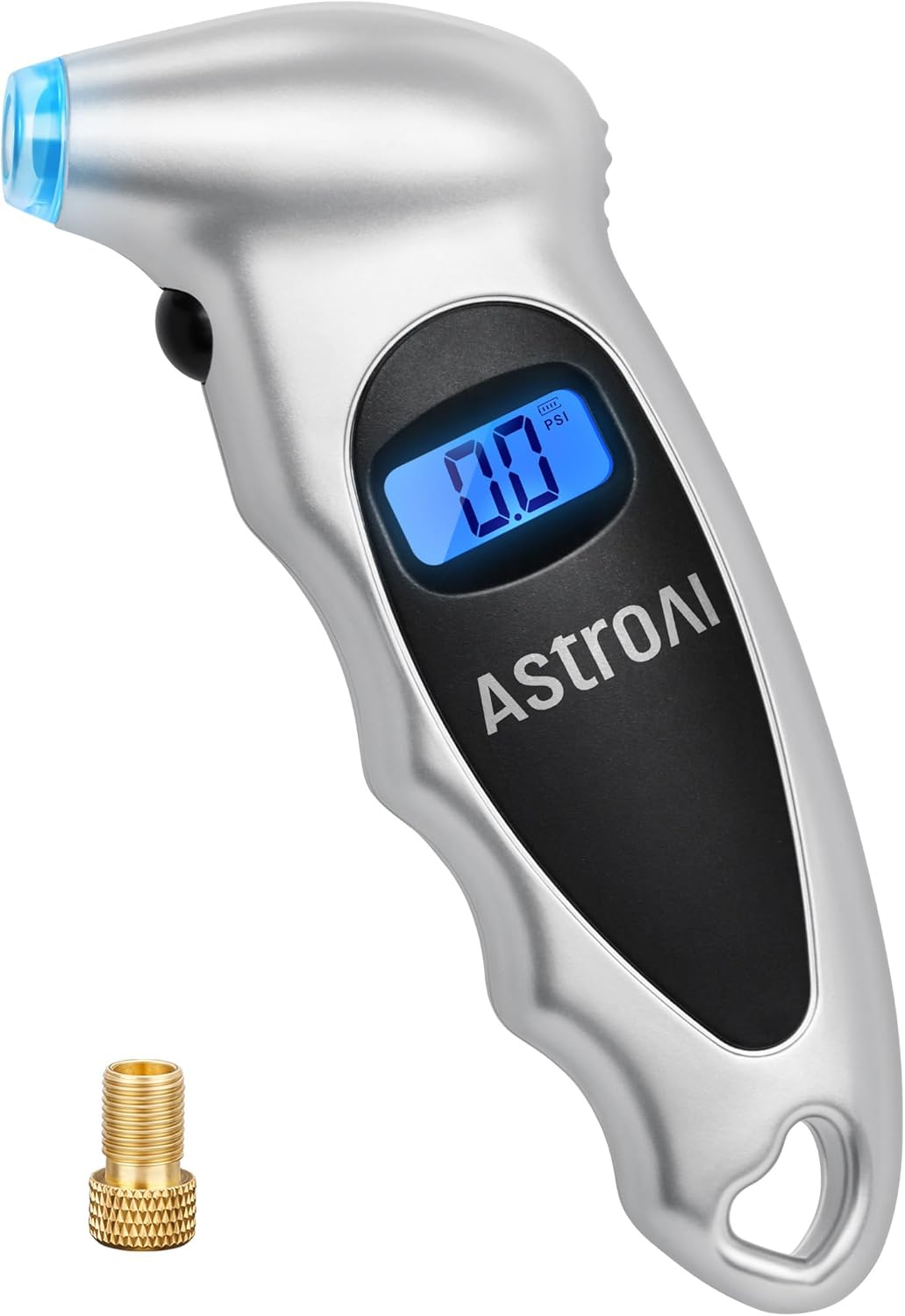
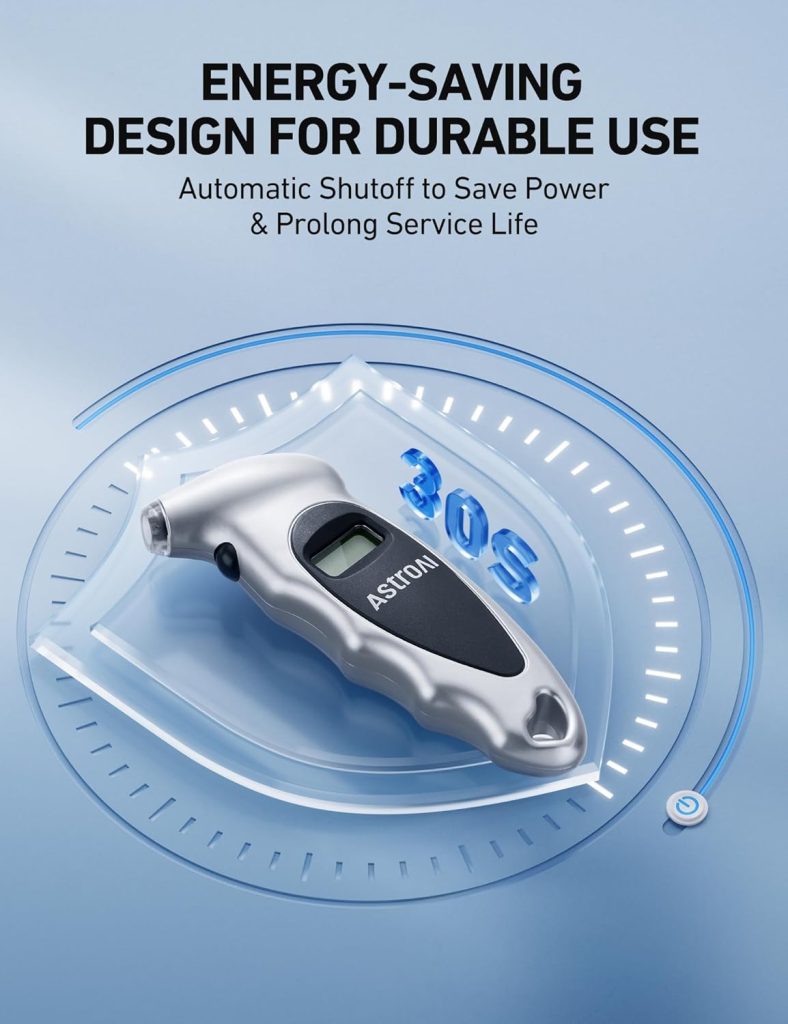
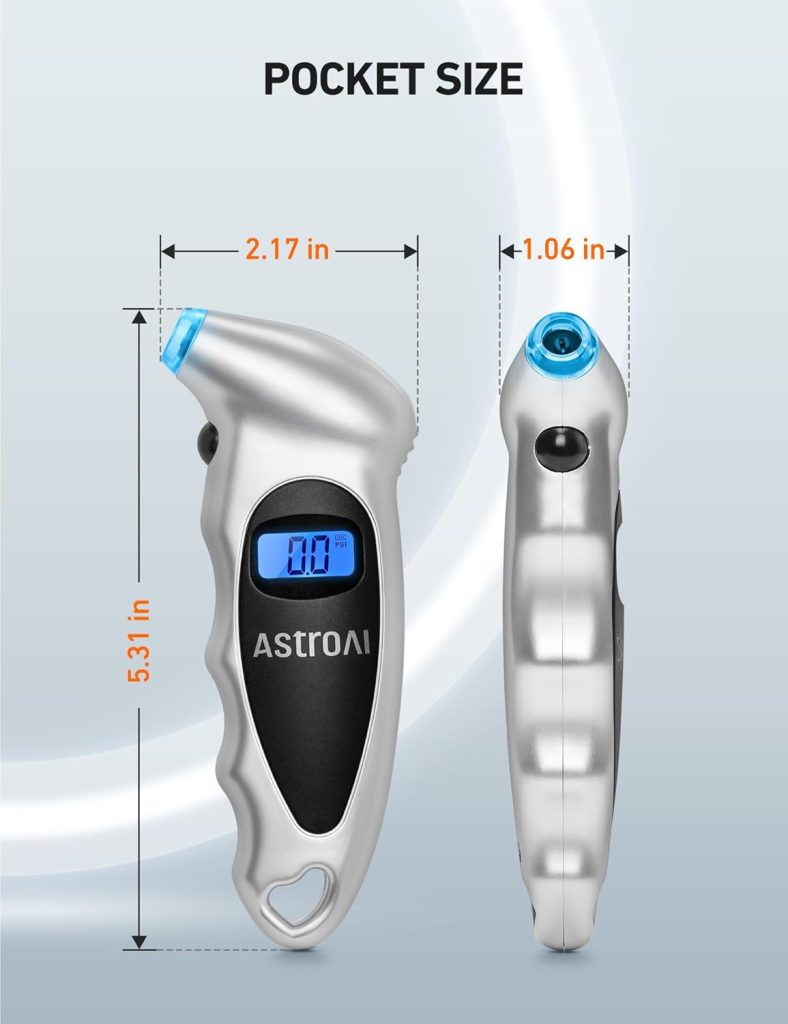
Digital Tire Gauges
Digital gauges display pressure on an electronic screen.
How they work:
- Electronic pressure sensors convert air pressure into digital readings
Pros:
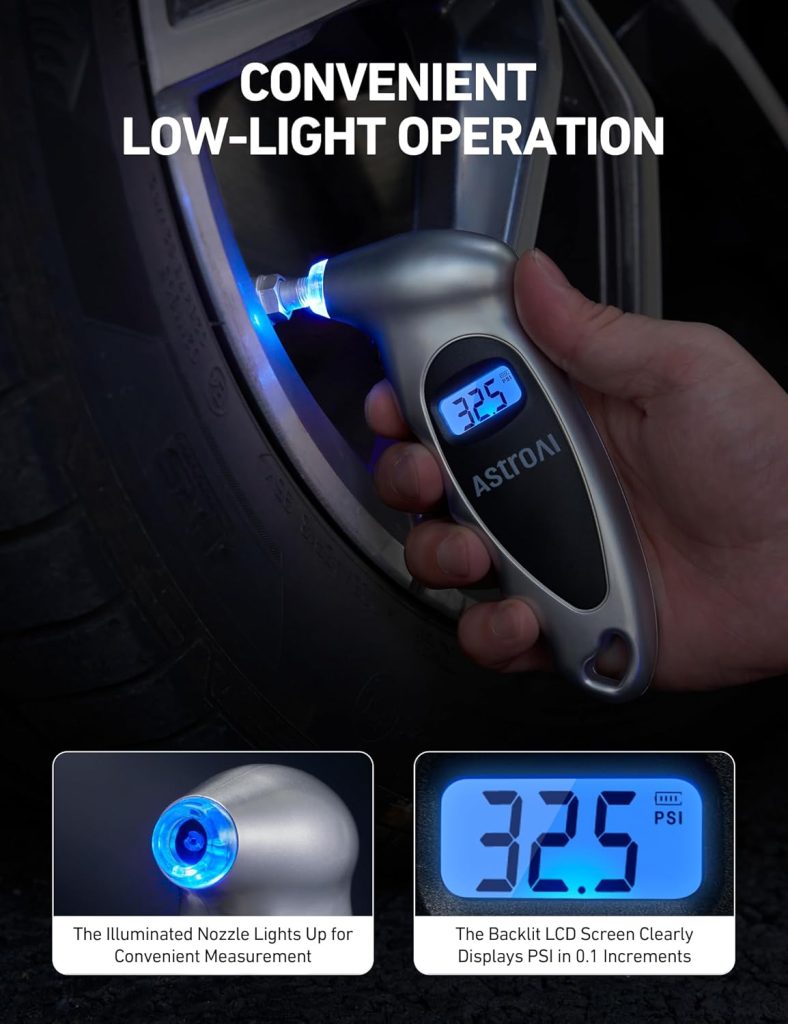
- Very easy to read
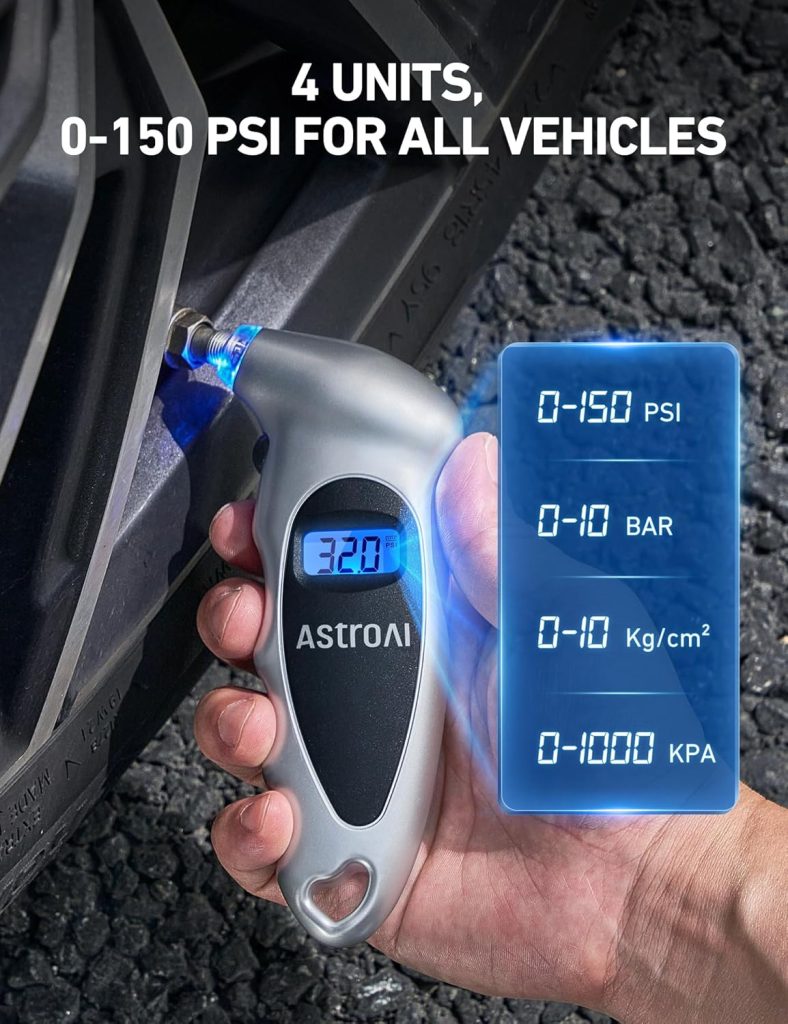
- Often precise to 0.1 PSI
- Useful in low light
- Can switch between PSI, BAR, and kPa
Cons:
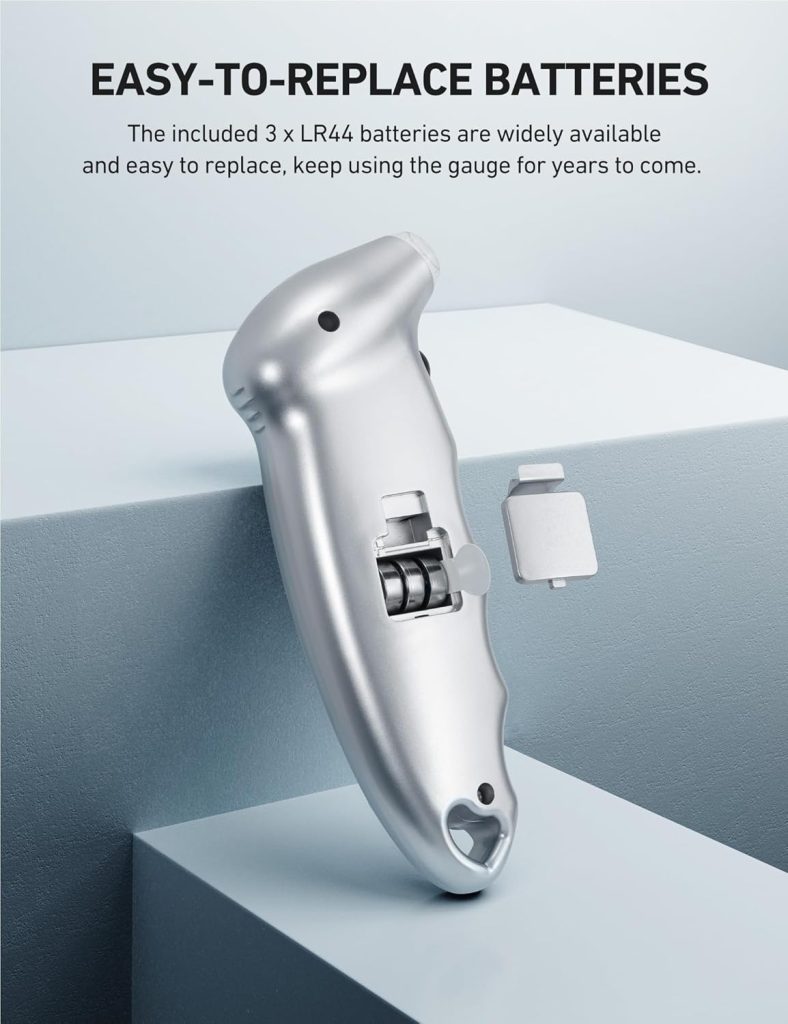
- Requires batteries
- Electronics can fail
- Cheap models can be inaccurate
- Slower response in extreme cold
Best for:
- Drivers who want clarity
- Modern vehicles with specific PSI requirements
- People who prefer digital readouts
A well-made digital gauge can be excellent, but quality matters more here than with mechanical gauges.
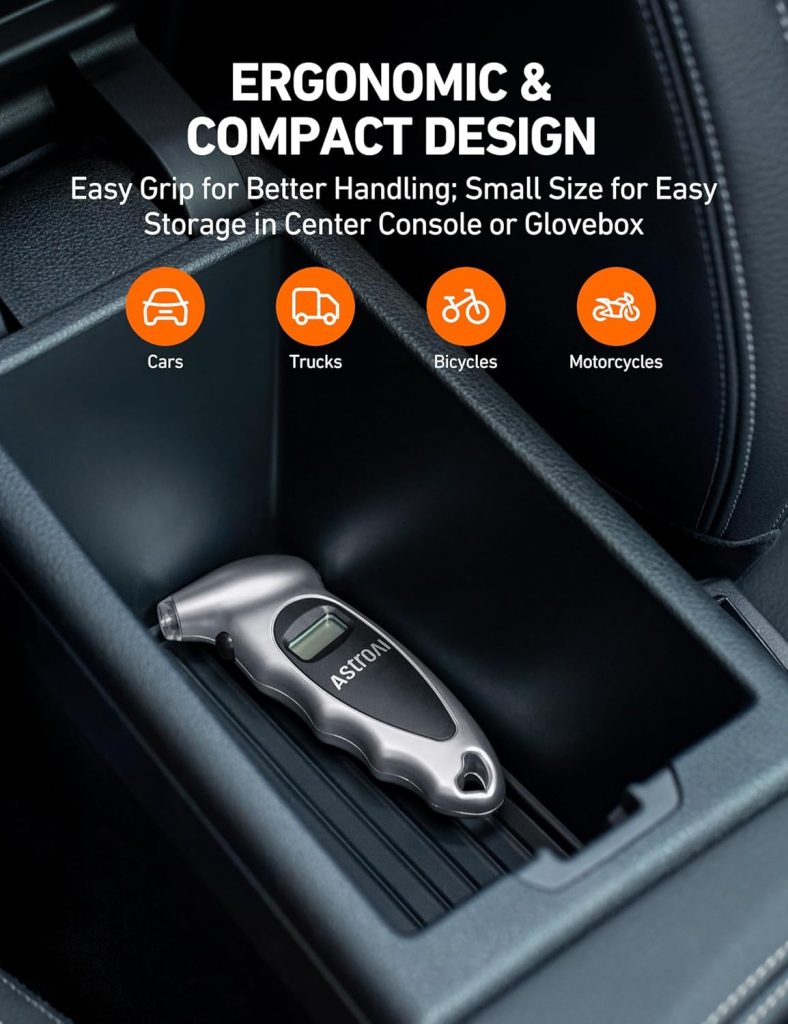
Combination Inflator Gauges
These are gauges built into air hoses or inflators.
Pros:
- Convenient
- One-tool solution
- Common in garages and shops
Cons:
- Accuracy varies widely
- Can be affected by hose pressure loss
- Often less precise than standalone gauges
Best for:
- Quick adjustments
- Shop environments
- Not ideal as a primary measuring tool
Many professionals use a standalone gauge to verify readings from inflator gauges.
Accuracy: The One Thing Most Buyers Ignore
The biggest mistake people make when buying a tire gauge is assuming all gauges are accurate.
They are not.
Even brand-new gauges can be off by 2 to 5 PSI. That may not sound like much, but it is enough to:
- Accelerate tire wear
- Reduce fuel economy
- Alter handling
- Trigger or suppress TPMS warnings incorrectly
Professional-grade gauges are often tested and calibrated. Cheap gauges usually are not.
If accuracy matters, buy a gauge designed for automotive use, not a novelty keychain tool.
PSI Range Matters More Than You Think
Many cheap gauges are designed for wide PSI ranges, such as 0 to 100 PSI. That reduces precision where you actually need it.
Passenger vehicles typically require:
- 30 to 40 PSI
A gauge optimized for:
- 0 to 60 PSI
will be more accurate in that range than one stretching to 100 PSI.
This is why professional gauges are often range-specific.
How to Use a Tire Gauge Correctly (Most People Don’t)
Even the best gauge will give bad readings if used incorrectly.
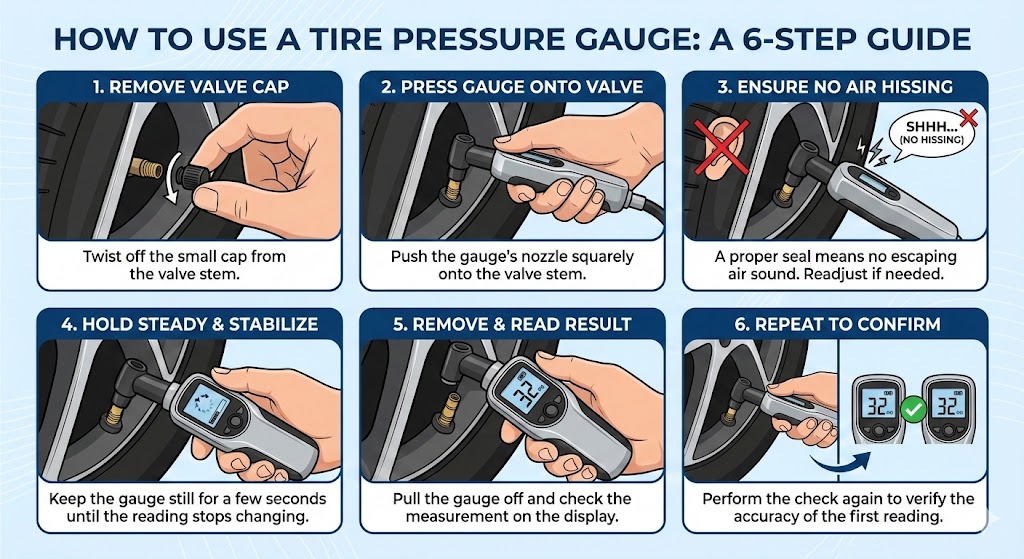
Always measure tire pressure:
- When tires are cold
- Before driving or after sitting for several hours
- On level ground
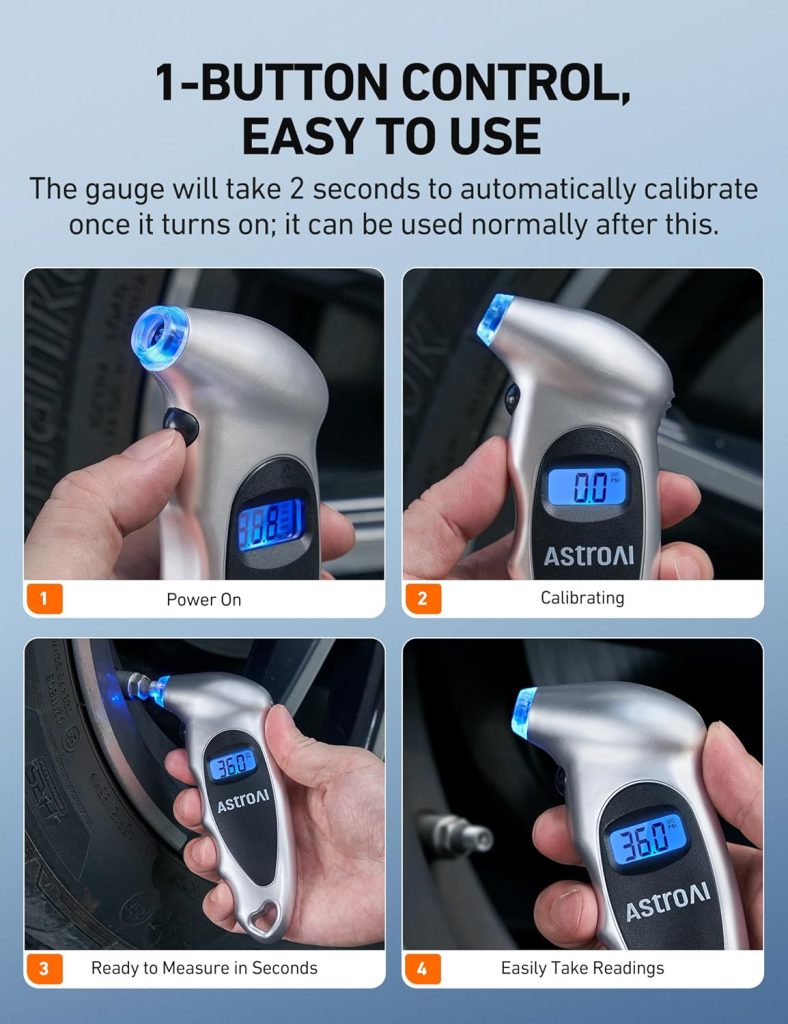
Steps:
- Remove the valve cap
- Press the gauge straight onto the valve stem
- Ensure no air hissing occurs
- Hold steady until the reading stabilizes
- Remove and read the result
- Repeat once to confirm
If readings differ, use the second reading.
Never trust a single rushed measurement.
Common Tire Gauge Myths
“Gas station gauges are accurate”
Most are abused, dropped, and never calibrated. Treat them as rough estimates only.
“Digital is always better”
Only if the sensor is high quality. Cheap digital gauges can be worse than good mechanical ones.
“One gauge is enough forever”
Gauges can drift. Periodic comparison with another gauge is smart.
“TPMS replaces a gauge”
TPMS is a warning system, not a measuring tool.
How Often Should You Check Tire Pressure?
Best practice:
- Once a month
- Before long trips
- With seasonal temperature changes
- After hitting potholes or curbs
Temperature changes alone can alter pressure by several PSI.
Signs Your Tire Gauge Is No Longer Reliable
Replace or verify your gauge if:
- Readings vary wildly
- The needle sticks
- Digital display flickers
- Air leaks during measurement
- Results differ drastically from known-good gauges
A faulty gauge is worse than no gauge because it creates false confidence.
Professional Advice on Choosing the Best Tire Gauge
If you want a simple rule:
- For everyday drivers: high-quality dial gauge
- For clarity and convenience: reputable digital gauge
- For backup use: pencil gauge only
Avoid ultra-cheap novelty gauges. Accuracy is more important than design.
Final Verdict: What Is the Best Tire Gauge?
The best tire gauge is not the most expensive or flashy. It is the one that:
- Gives consistent readings
- Matches your vehicle’s PSI range
- Is easy to use correctly
- Holds accuracy over time
A good tire gauge costs less than a tank of gas but protects thousands of dollars in tires and improves safety every time you drive.
That makes it one of the smartest tools you can own.
Connect with us


