

Ask any car owner how long their vehicle will last and you’ll usually get a vague answer: “It depends.”
But if you’re specifically wondering how long a Mazda CX-5 lasts, the answer is more concrete and more interesting than you might expect.
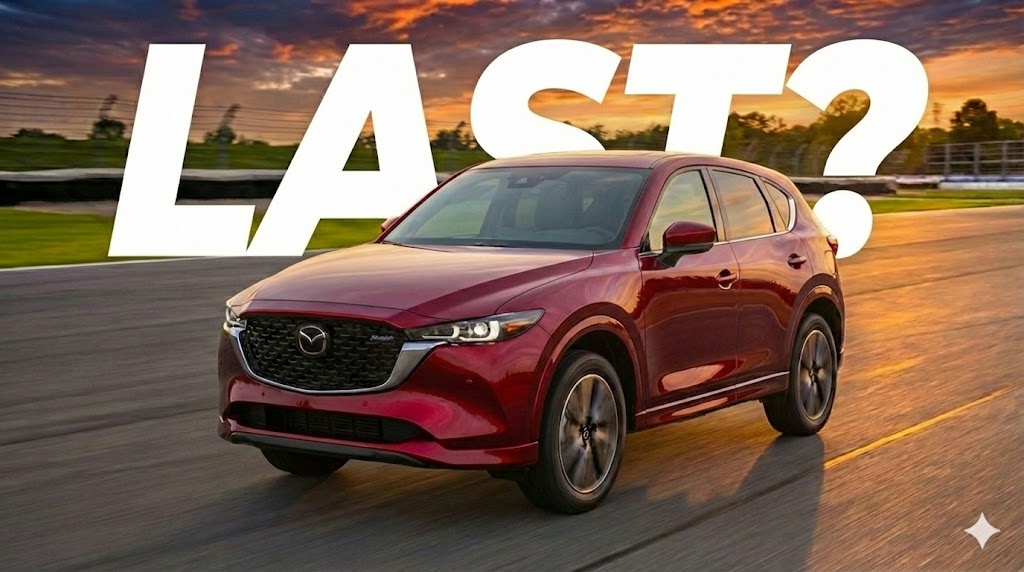
The Mazda CX-5 has quietly earned a reputation for longevity, not because it’s flashy, but because it’s engineered to age well. This article breaks down what owners actually experience over time, what typically fails (and what doesn’t), and how long you can realistically expect a CX-5 to stay on the road.
The Short Answer (Then We’ll Go Deeper)
A well-maintained Mazda CX-5 typically lasts 200,000 to 250,000 miles (320,000 to 400,000 km).
Many owners report going well beyond that with routine maintenance.
But mileage alone doesn’t tell the full story.
Why the Mazda CX-5 Ages Better Than Most Compact SUVs
Longevity isn’t accidental. The CX-5 benefits from several engineering decisions that favor durability over short-term trends.
1. No CVT Transmission
One of the biggest reasons many SUVs don’t age well is the CVT. Mazda avoided that trap.
The CX-5 uses a traditional 6-speed automatic transmission, which:
- Handles heat better over time
- Is easier to service
- Has a proven long-term reliability record
This alone adds years to a vehicle’s usable life.
2. Naturally Aspirated Engines That Aren’t Overstressed
Most CX-5 models use Mazda’s 2.5-liter four-cylinder engine, which is known for:
- Conservative tuning
- Strong internal components
- Lower long-term stress
Even turbocharged CX-5 models tend to hold up well when maintained properly, because Mazda didn’t chase extreme output numbers.
3. Mazda’s “Understated” Reliability Philosophy
Mazda doesn’t chase the newest tech for headlines. Instead, it focuses on refining systems over time. That means:
- Fewer first-generation failures
- Better real-world reliability
- Less electronic complexity compared to some competitors
This pays dividends after 8–10 years of ownership.
What Mazda CX-5 Owners Actually Experience Over Time
Let’s break longevity into realistic stages.
0–100,000 Miles: Almost Boring (In a Good Way)
Most CX-5s experience very few issues in this phase. Typical maintenance includes:
- Oil changes
- Brake pads and rotors
- Tires
- Battery replacement
Major mechanical failures are uncommon.
100,000–200,000 Miles: The True Test
This is where weaker vehicles start to fall apart — and where the CX-5 usually keeps going.
Common maintenance items may include:
- Suspension components (shocks, bushings)
- Wheel bearings
- Cooling system service
- Spark plugs and coils
Engines and transmissions typically remain solid if fluids were serviced on time.
200,000+ Miles: Still Alive With Care
Reaching this milestone isn’t rare for the CX-5. Vehicles that make it here usually:
- Had consistent oil changes
- Avoided overheating
- Received transmission and brake service
At this point, age-related wear becomes more about economics than capability. Many CX-5s are still mechanically sound but retired due to cosmetic wear or owner upgrades.
What Usually Doesn’t Fail on a CX-5
This matters just as much as what does fail.
Owners consistently report:
- Few engine failures
- Minimal transmission issues
- Strong AWD system reliability
- Fewer electrical gremlins than competitors
These are the big-ticket items that determine whether a car lasts 10 years or 20.
How Maintenance Affects CX-5 Lifespan (A Lot)
Two identical Mazda CX-5s can have wildly different lifespans depending on maintenance habits.
CX-5s That Die Early Usually Have:
- Skipped oil changes
- Overheated engines
- Ignored warning lights
- Never-serviced transmissions
CX-5s That Last Forever Usually Have:
- Oil changes every 6,000–8,000 miles
- Transmission fluid service (even if “lifetime”)
- Brake and suspension maintenance
- Quality tires and alignments
Maintenance doesn’t just prevent failure — it extends life dramatically.
How the Mazda CX-5 Compares to Other SUVs for Longevity
In the compact SUV segment, the CX-5 regularly outlasts:
- Many CVT-equipped competitors
- SUVs with smaller, highly boosted engines
- Vehicles overloaded with fragile electronics
It competes closely with brands known for long life, but often at a lower long-term ownership cost.
Is the Mazda CX-5 a Good Long-Term Buy?
If your goal is to buy a vehicle and keep it for 10–15 years, the CX-5 is one of the safest bets in its class.
It’s especially appealing for:
- Families planning long ownership
- Buyers who value reliability over trends
- Drivers who want fewer surprises after 100,000 miles
The Real Question Isn’t “How Long Will It Last?”
The better question is:
How long do you want it to last?
Because with basic care, a Mazda CX-5 will often outlast:
- Your loan
- Your warranty
- Your expectations
That’s why so many owners replace their CX-5 not because it failed — but because they simply wanted something new.
Final Verdict
So, how long do Mazda CX-5s last?
With proper maintenance:
- 200,000 miles is normal
- 250,000 miles is common
- 300,000+ miles is achievable
In a market full of short-lived complexity, the Mazda CX-5 stands out by quietly doing what matters most: lasting.
Can a Mazda CX-5 really last over 200,000 miles?
Yes, and many do. A properly maintained Mazda CX-5 commonly reaches 200,000 to 250,000 miles, and some owners report exceeding that. The key factors are regular oil changes, cooling system care, and not ignoring warning signs.
What usually ends the life of a Mazda CX-5?
Surprisingly, it’s rarely the engine or transmission. Most CX-5s are retired due to neglected maintenance, accident damage, or repair costs outweighing vehicle value, not because the drivetrain fails.
Do turbocharged Mazda CX-5s last as long as non-turbo models?
They can, but maintenance matters more. Turbo CX-5s require more frequent oil changes and careful warm-up habits. Owners who follow service intervals closely often see similar longevity to non-turbo models.
At what mileage do Mazda CX-5s start needing “real” repairs?
For most owners, notable wear begins around 120,000 to 150,000 miles. This usually involves suspension components, wheel bearings, or cooling parts — not catastrophic failures.
Is the Mazda CX-5 more durable than other compact SUVs?
In many cases, yes. The CX-5 avoids CVT transmissions and overly complex electronics, which helps it age more gracefully than many competitors in the compact SUV class.
Can poor maintenance cut a CX-5’s lifespan in half?
Absolutely. Skipping oil changes, ignoring transmission service, or allowing the engine to overheat can reduce a CX-5’s life dramatically. Maintenance habits matter more than model year.
Why do so many owners replace their CX-5 even though it still runs fine?
Most replacements happen for lifestyle reasons, not reliability. Owners upgrade for new tech, safety features, or personal preference — not because the CX-5 has reached the end of its usable life.
Connect with us


