

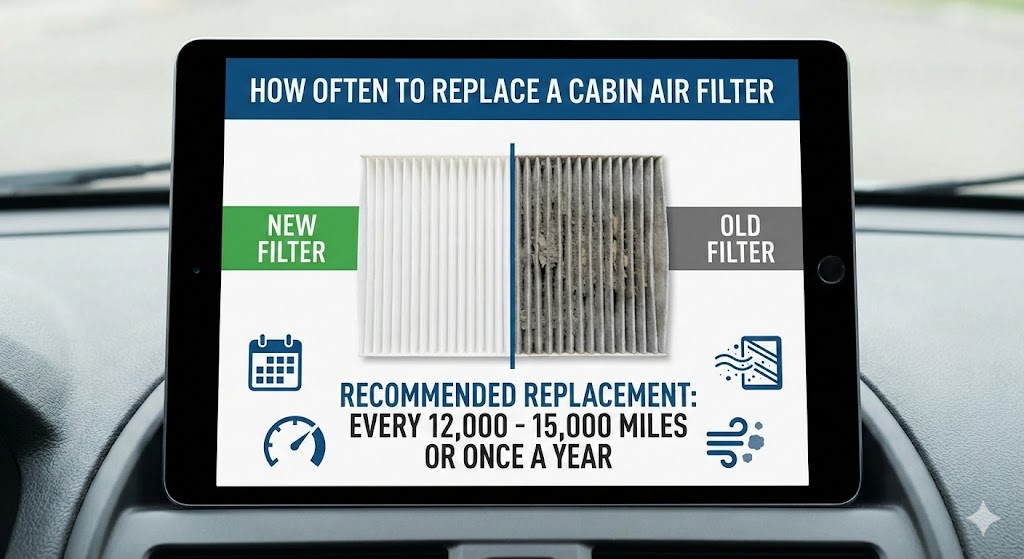
The Overlooked Maintenance Item That Quietly Affects Your Health, Comfort, and Car
Most drivers obsess over oil changes, tire rotations, and brake pads. But there’s one small, cheap component in your car that impacts your health more than almost anything else you maintain — the cabin air filter.
And most people ignore it completely.
The cabin air filter controls the quality of the air you breathe inside your vehicle. Every time you turn on your AC, heater, or defroster, the air passes through this filter before it reaches your lungs. Dust, pollen, exhaust particles, mold spores, bacteria, and road pollution all get trapped here.
If that filter is clogged, dirty, or overdue, you’re not just hurting your HVAC system — you’re breathing contaminated air.
So how often should you actually replace it?
The real answer is: more often than most people do.
The Simple Rule Most Mechanics Agree On
Every 12,000 to 15,000 miles (19,000 to 24,000 km)
or
Once every 12 months
That’s the standard baseline recommendation.
But that’s only the starting point, not the full story.
Why That Interval Exists
Cabin air filters are passive filters. They don’t regenerate, self-clean, or shake debris loose. Once they trap contaminants, those particles stay there. Over time, three things happen:
- Airflow decreases
- HVAC efficiency drops
- Air quality inside the cabin degrades
A clogged filter forces your blower motor to work harder, reduces cooling and heating performance, and increases moisture retention — which leads to odor, mold growth, and bacteria buildup.
It’s not just about airflow. It’s about air quality and system health.
Real-World Replacement Timing (Not the Generic Answer)
Here’s the realistic replacement schedule based on actual driving conditions:
Normal city/highway driving
Every 12 months or 15,000 miles
Urban environments with heavy traffic and pollution
Every 6 to 9 months
Allergy sufferers or asthma-sensitive drivers
Every 6 months
Rural roads, construction zones, dirt roads
Every 6 to 9 months
Cold climates with heavy heater usage
Every 9 months
Hot climates with constant AC use
Every 6 to 9 months
Ride-share drivers, delivery drivers, fleet vehicles
Every 4 to 6 months
If you live in a city, drive daily, or use climate control regularly, once a year is usually too long.
Signs Your Cabin Air Filter Is Overdue
This is where most people miss the warning signs because they assume something else is wrong.
1. Weak airflow from vents
Even on high fan settings, airflow feels restricted
2. Musty or sour smell when AC turns on
Often caused by moisture trapped in a dirty filter
3. Foggy windows that take longer to clear
Poor airflow reduces defogging efficiency
4. Increased dust inside the cabin
Dashboard dust builds faster than normal
5. Allergy symptoms while driving
Sneezing, watery eyes, irritated throat
6. AC or heater feels less effective
System works harder, performs worse
These are not HVAC failures — they’re airflow restriction symptoms.
What Happens If You Never Replace It
People assume ignoring the cabin filter just means “dirty air.” The reality is worse:
- Mold growth inside the HVAC box
- Bacteria accumulation
- Blower motor strain
- Evaporator core contamination
- Persistent interior odors
- Reduced AC efficiency
- Higher repair costs later
A $15 to $40 filter can prevent hundreds in HVAC repairs.
Standard vs Carbon Cabin Filters
Not all cabin air filters are the same.
Standard paper filter
- Traps dust, pollen, debris
- Basic air filtration
- Cheapest option
Activated carbon filter
- Traps odors and gases
- Filters exhaust fumes
- Better for cities and pollution
- Better for allergies
- Better air quality overall
If you drive in traffic-heavy areas, carbon filters are worth it.
Why Most People Replace It Too Late
Three reasons:
- It’s out of sight
- No warning lights
- No dashboard reminders
Unlike oil or brakes, the car doesn’t tell you it’s dirty. So people forget it exists.
Most cabin filters that get removed at shops are black, clogged, and falling apart.
Cost vs Value
Cabin air filter cost:
- DIY: $10 to $35
- Shop replacement: $30 to $70
That’s one of the cheapest maintenance items on any car — yet one of the most ignored.
DIY vs Shop Replacement
DIY
Most cabin air filters take 2 to 5 minutes to change.
Usually located:
- Behind glove box
- Under dashboard
- Under hood (some models)
No tools needed in most cars.
Shop
Convenient, but often overpriced for labor time.
If you can open a glove box, you can change a cabin filter.
The Truth Most Owners Manuals Don’t Tell You
Manufacturers often list long replacement intervals because they assume:
- Ideal driving conditions
- Low pollution
- Clean environments
- Light HVAC use
Real-world driving is not ideal conditions.
Traffic, construction dust, pollution, pollen, wildfire smoke, and urban air quality shorten filter life drastically.
Health Aspect Most People Ignore
You’re not just filtering air for comfort — you’re filtering air for your lungs.
Dirty cabin filters:
- Circulate allergens
- Recirculate mold spores
- Trap bacteria
- Increase respiratory irritation
- Worsen asthma symptoms
- Increase sinus issues
For people with allergies, this filter matters more than your engine air filter.
Bottom Line Recommendation
Replace your cabin air filter every 6 to 12 months.
Not because the manual says so — but because real-world driving conditions demand it.
If you:
- Live in a city
- Drive daily
- Use AC or heat often
- Have allergies
- Sit in traffic
- Drive in polluted areas
Then every 6 to 9 months is the smart interval.
It’s cheap, easy, and directly affects your health and comfort.
FAQ Section
How often should I replace my cabin air filter exactly?
For most drivers, every 12 months or 15,000 miles. For city drivers, allergy sufferers, and high AC use, every 6 to 9 months is more realistic.
Can a dirty cabin filter damage my AC system?
Yes. Restricted airflow strains the blower motor and increases moisture buildup, which can lead to mold and HVAC contamination.
Is it dangerous to drive with a dirty cabin air filter?
Not immediately dangerous, but it degrades air quality, increases allergen exposure, and can cause respiratory irritation over time.
Does a cabin air filter affect fuel economy?
Indirectly. A restricted filter forces the HVAC system to work harder, increasing electrical load, which slightly increases fuel consumption.
How do I know if my cabin air filter needs replacing?
Weak airflow, musty smells, foggy windows, dust buildup, and allergy symptoms are common signs.
Can I clean a cabin air filter instead of replacing it?
Not properly. Most are paper or carbon filters and are not designed to be cleaned. Cleaning only removes surface dust, not trapped particles or bacteria.
Is a carbon cabin filter worth it?
Yes, especially in cities. Carbon filters remove odors, pollution, and exhaust gases better than standard filters.
Does winter or summer affect replacement timing?
Yes. Heavy heater or AC usage increases filter contamination. Seasonal use shortens lifespan.
Is cabin air filter replacement a scam upsell?
No. It’s one of the most legitimate maintenance items shops recommend. It’s just often overpriced for labor.
Can a dirty cabin filter cause bad smells in the car?
Yes. Mold, bacteria, and moisture buildup in dirty filters are a primary cause of musty AC odors.
Connect with us


