

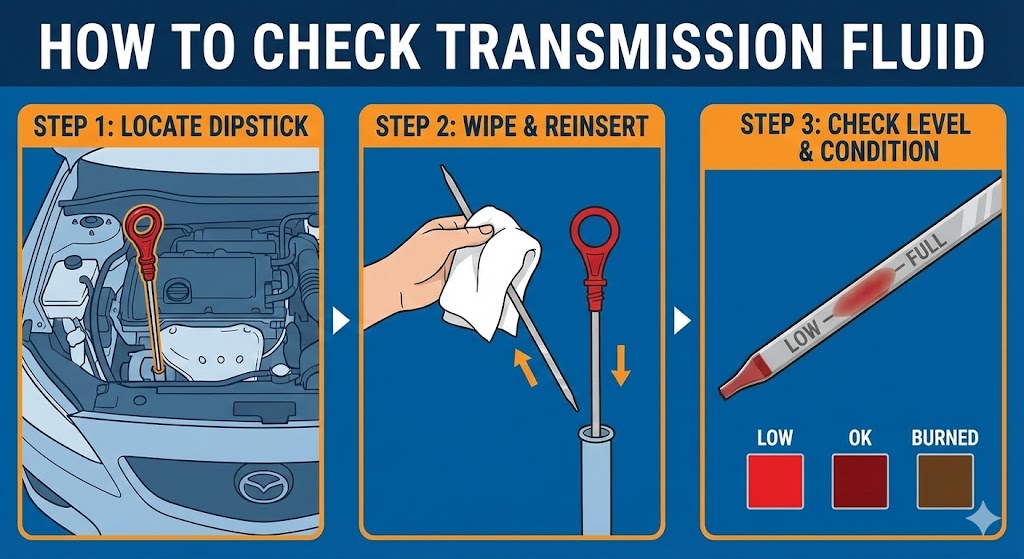
One Simple Check That Can Save You Thousands in Repairs
Most drivers know how to check engine oil. Almost no one knows how to check transmission fluid properly. And that’s a problem — because transmission failure is one of the most expensive repairs a car can need.
A bad transmission doesn’t fail suddenly. It fails slowly. Heat, low fluid, dirty fluid, and poor lubrication quietly destroy internal components over time. By the time symptoms show up, the damage is often already done.
Checking your transmission fluid is one of the simplest preventative steps you can take — but only if you do it correctly. And most people don’t.
Why Transmission Fluid Matters So Much
Transmission fluid is not just “oil.” It does four critical jobs at once:
- Lubrication of internal components
- Cooling of transmission internals
- Hydraulic pressure for gear changes
- Cleaning of contaminants and debris
If the fluid is low, dirty, burnt, or degraded:
- Shifting becomes rough
- Internal wear accelerates
- Heat builds up
- Seals harden
- Clutches slip
- Valves stick
- Gear engagement weakens
This is how small problems turn into $3,000 to $7,000 rebuilds.
First Important Truth: Not All Cars Are the Same
Before checking anything, you need to know this:
Some cars have a transmission dipstick
Many modern cars do not
Newer vehicles often use:
- Sealed transmissions
- Check plugs instead of dipsticks
- Electronic level monitoring
- Dealer-only service procedures
So the process depends on your vehicle type.
If Your Car Has a Transmission Dipstick
This is the traditional method, and it’s still common in older vehicles and many trucks.
Step-by-Step Proper Method
- Warm the vehicle
Drive for 10 to 15 minutes so the transmission reaches operating temperature. - Park on level ground
This matters. A slope gives false readings. - Leave the engine running
Transmission fluid expands when warm. Checking it cold gives false low readings. - Cycle through gears
With foot on brake:
Park → Reverse → Neutral → Drive → Low → back to Park
This circulates fluid through the system. - Locate the transmission dipstick
Usually:
- Red handle
- Near firewall
- Different from engine oil dipstick
- Pull dipstick and wipe clean
- Reinsert fully
- Pull again and read level
Fluid should be in the HOT range (not cold range).
Reading the Dipstick Correctly
You are checking two things, not one.
Fluid level
- Too low = poor lubrication and pressure
- Too high = foaming and overheating
Fluid condition
Color and smell matter more than people realize:
Healthy fluid:
- Bright red or pink
- Clean
- Slight oil smell
Bad fluid:
- Dark brown or black
- Burnt smell
- Cloudy appearance
- Metal particles
- Milky color (water contamination)
If it smells burnt, the transmission has already been overheating.
If Your Car Does NOT Have a Dipstick
Many modern cars use sealed systems.
These require:
- Lift or jack stands
- Level check plugs
- Temperature-based checking
- Scan tools for fluid temperature
- Specific fill procedures
General method (simplified):
- Vehicle must be level
- Transmission at specific temperature range
- Engine running
- Check plug removed
- Fluid should lightly trickle out
No trickle = low
Heavy flow = overfilled
This is why many sealed transmissions are not DIY-friendly.
Common Mistakes People Make
Checking when cold
Gives false low reading
Checking with engine off
Gives false reading
Confusing oil dipstick with transmission dipstick
Happens more than people admit
Overfilling
Overfill causes:
- Foaming
- Pressure issues
- Seal damage
- Shifting problems
Using wrong fluid type
Wrong ATF can destroy a transmission
When You Should Check Transmission Fluid
Best timing:
- Before long trips
- When noticing rough shifts
- When feeling hesitation
- After fluid service
- When smelling burning odor
- During regular maintenance
- When buying a used car
Warning Signs of Low or Bad Transmission Fluid
- Hard shifting
- Slipping gears
- Delayed engagement
- Jerking between gears
- Whining noise
- Burning smell
- Shuddering
- Overheating warnings
- Poor acceleration
- RPM spikes without speed increase
These are not “normal aging” symptoms. They are fluid-related signs.
Why Low Fluid Is So Dangerous
Low fluid causes:
- Loss of hydraulic pressure
- Internal clutch slippage
- Overheating
- Metal-on-metal wear
- Seal breakdown
- Valve body damage
Heat is the #1 killer of transmissions.
The Cost Reality
Checking transmission fluid:
Free
Transmission fluid top-up:
$10 to $40
Transmission service:
$150 to $400
Transmission rebuild:
$3,000 to $7,000+
Transmission replacement:
$4,000 to $10,000+
This is why fluid checks matter.
Manual Transmissions
Manual transmissions are different:
- No dipstick usually
- Use check/fill plugs
- Thicker gear oil
- Different service intervals
They still need fluid checks — but procedures differ.
CVT Transmissions
CVTs are even more sensitive:
- Precise fluid levels required
- Special fluid types
- Temperature-based checking
- Overfilling is dangerous
- Underfilling causes belt damage
CVTs fail fast when fluid maintenance is poor.
Bottom Line Truth
Checking your transmission fluid is one of the simplest things you can do to protect your car — but it must be done correctly.
Not checking it doesn’t save money.
It only delays the bill until it’s much larger.
If your car allows manual checking, do it every few months.
If it’s sealed, have it checked during service intervals.
Transmission problems don’t start loud.
They start quietly.
FAQ Section
How often should I check my transmission fluid?
Every 2 to 3 months, or at every oil change interval.
Should the engine be running when I check it?
Yes, for dipstick-equipped vehicles. Always check warm and running unless the manual says otherwise.
Can low transmission fluid cause slipping?
Yes. Low fluid directly causes clutch slippage and gear engagement issues.
Can I drive with low transmission fluid?
You can, but it causes rapid internal damage. Every mile increases wear.
What color should transmission fluid be?
Healthy fluid is red or pink and clean. Dark brown or black means it is degraded.
What does burnt transmission fluid smell like?
Strong burnt odor, similar to burned plastic or overheated oil.
Can I add transmission fluid myself?
Yes, if your vehicle has a dipstick and you use the correct fluid type.
What happens if I overfill transmission fluid?
Foaming, pressure issues, seal damage, poor shifting, and overheating.
Do sealed transmissions really not need checking?
They still need checking, just with special procedures and tools.
Is transmission fluid lifetime fluid?
No. “Lifetime fluid” is a marketing term, not a mechanical reality.
Connect with us


