

For many buyers in snowy climates, traction control and drivetrain settings are critical. Winter roads demand predictable power delivery, stable handling, and systems that help maintain momentum without spin. Among compact SUVs, one frequently asked question is:
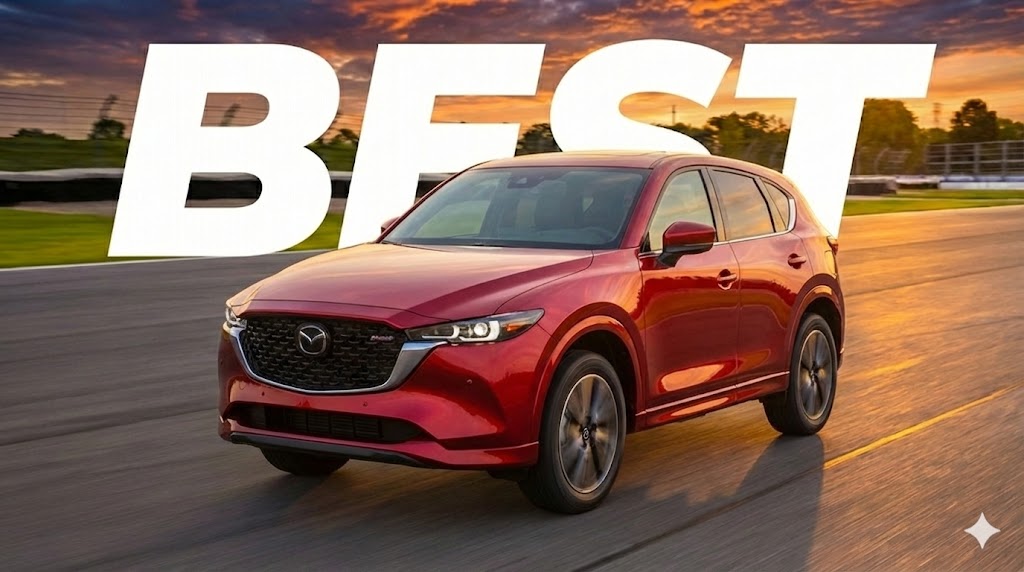
Does the Mazda CX-5 have a Snow Mode?
The answer is yes — but with important nuances. The CX-5 does not have a dedicated “Snow Mode” button that you might find in some competitor vehicles, but it does include systems and features designed specifically to improve traction and stability in snow and slippery conditions. Understanding how these work will help you maximize confidence and control in winter driving.
What “Snow Mode” Typically Means
In many modern vehicles, a Snow Mode setting does three things:
- Modifies throttle response for smoother, gentler power delivery
- Adjusts transmission shift logic to start in higher gears and avoid wheel spin
- Changes traction control and AWD logic to prioritize grip over acceleration
Some systems also automatically adjust ABS (antilock braking) thresholds or torque vectoring behavior. The goal is consistent: reduce wheelspin and maintain stability on low-friction surfaces.
So the real question for the Mazda CX-5 is:
Does it deliver these same winter-optimized behaviors?
How Mazda CX-5 Handles Snow Without a Dedicated Button
Mazda prioritizes mechanical simplicity and intuitive control. Instead of labeling a mode “Snow,” Mazda’s system blends traction logic into the vehicle’s standard driving dynamics systems. Key elements include:
1. i-Activ AWD (All-Wheel Drive)
Mazda’s i-Activ All-Wheel Drive system is designed to constantly monitor traction conditions and adjust torque distribution proactively. Rather than reacting only after a slip is detected, i-Activ AWD uses input from multiple sensors — wheel speed, steering angle, throttle position, outside temperature, and more — to anticipate traction loss and distribute torque to the wheels with the most grip.
In slippery conditions such as snow or ice, this system functions similar to what a labeled “Snow Mode” setting would do: it limits wheel spin and maximizes stability and forward momentum.
2. Traction Control (TCS) and Stability Control (DSC)
The CX-5’s traction and stability control systems are calibrated to enhance grip in low-traction situations. Traction control limits power to wheels that begin to spin, and stability control selectively brakes individual wheels to maintain direction and control.
The combined effect is reduced wheelspin and enhanced stability — the same end goal that a “Snow Mode” button delivers on vehicles that offer one.
3. Transmission and Throttle Management
While the CX-5 does not have a labeled Snow Mode, its transmission control logic and throttle mapping are inherently conservative in low-traction situations. When the system detects wheelspin, throttle response is automatically softened and shift points are adjusted to help maintain traction and forward momentum.
This happens without driver input — a design choice Mazda makes to keep the system seamless and intuitive.
So What Does the Driver Actually Do in Snow?
In a Mazda CX-5 equipped with AWD, winter driving control is managed largely by the vehicle’s integrated systems. The driver’s job is to:
– Leave traction control enabled
Turning off traction control in snow is counterproductive; keep it engaged so the vehicle can intervene quickly and appropriately.
– Use AWD models for winter conditions
Front-wheel drive versions offer traction control but do not have the torque distribution benefits of i-Activ AWD. For consistent snow performance, AWD is strongly recommended.
– Use appropriate winter tires
Even the best AWD and traction control systems cannot overcome inadequate tire grip. Quality winter tires dramatically improve braking, cornering, and overall control in snow and on ice.
Mazda CX-5 vs Named Snow Mode Competitors
Some compact SUVs such as certain trims of the Honda CR-V, Ford Escape, Subaru Crosstrek, and Toyota RAV4 have a labeled Snow Mode or Terrain Management System that lets the driver manually select a setting optimized for snow.
Here is how the CX-5’s approach compares:
| Feature | Mazda CX-5 | Vehicles With Named Snow Mode |
|---|---|---|
| Dedicated Snow Button | No | Yes |
| Adaptive Traction Control | Yes | Yes |
| AWD Torque Distribution | Yes (i-Activ AWD) | Yes |
| Manual Drive-Mode Selection for Snow | No | Yes |
| Automatic Low-Traction Optimization | Yes | Yes |
| Driver Overrides | No specific setting | Yes |
Key takeaway: Although Mazda does not use a “Snow” button, the CX-5 implements very similar behavior automatically through its AWD and traction systems. For many drivers, the result in snow is effectively the same as a labeled Snow Mode.
When Driving in Snow, What Actually Changes?
When snow and slippery surfaces are encountered, the CX-5’s control systems:
Throttle Response
Automatically softens to reduce wheelspin.
Torque Distribution
Shifts torque proactively through i-Activ AWD to maximize grip.
Torque Reduction
Instantly reduces torque at the first sign of wheelspin to regain traction.
Shifting Behavior
Transmission shifts are modulated to prevent sudden torque spikes that could cause spin.
These behaviors combine to create a smoother, more predictable drive in snow without requiring any driver action.
Real-World Performance in Snow
In real-world winter scenarios, Mazda CX-5 owners report:
- Better acceleration from stops in snow compared to FWD competitors
- Confidence through turns with less torque steer
- Predictable AWD engagement when conditions change
- Minimal need to manually intervene unless tires are inappropriate
Owner feedback also consistently notes that i-Activ AWD engages earlier and more smoothly than some competitors’ torque vectoring systems.
Winter Driving Tips for Mazda CX-5 Owners
Even with strong traction systems, snow driving requires good technique.
Recommended best practices:
1. Use winter tires
This is the single most effective way to improve traction, reduce stopping distance, and maintain stability. Quality winter tires significantly outperform all-season tires in snowy and icy conditions.
2. Start in second gear on slippery surfaces
On very slick surfaces, starting in a higher gear can reduce torque to the wheels and minimize spin.
3. Avoid abrupt inputs
Steady throttle and smooth steering help the CX-5’s traction systems work most effectively.
4. Allow AWD systems to do their job
Do not turn traction control off unless vehicle is stuck and directed to by owner’s manual procedures.
Conclusion
The Mazda CX-5 does not have a labeled Snow Mode button, but it delivers the practical effects of a Snow Mode through integrated systems:
- Intelligent AWD (i-Activ)
- Proactive traction and stability control
- Throttle and transmission management
These systems work automatically to optimize performance in snow and low-traction conditions. For most drivers, this yields the same benefits as a dedicated Snow Mode system — without requiring manual mode selection.
For winter reliability, the recipe is:
i-Activ AWD + traction control + good winter tires = confident snow performance.
Connect with us


