

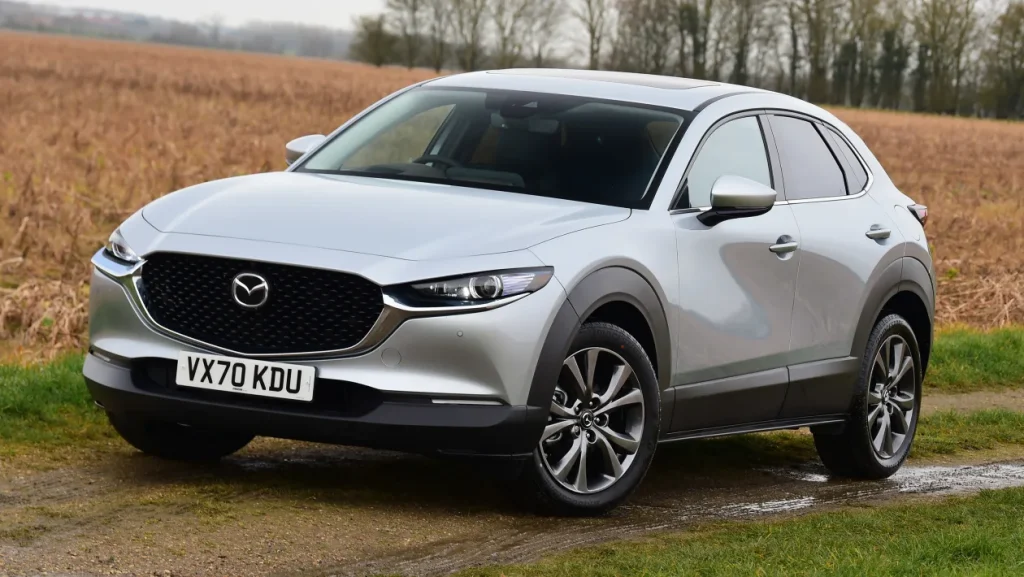
If you’re considering a Mazda CX‑30—or already own one—you may be asking: How long will this vehicle last? What problems should I watch out for? Is it more reliable than its competitors? For folks in San Francisco, Concord, or anywhere in the Bay Area, where roads, weather, and driving styles vary, knowing the reliability of the CX‑30 is crucial.
At Marin Mazda, #1 Mazda dealership in the Bay Area, we believe in transparency. So let’s dig into the evidence, the rumors, and what owners are reporting. We’ll compare with competitive models, discuss maintenance practices, and give you a realistic view of how dependable a Mazda CX‑30 can be—assuming you take care of it.
Table of Contents
- What We Know: Manufacturer Warranty & Reputation
- Owner Feedback: Lifespan & Mileage Stories
- Common Problems: What to Watch Out For
- Maintenance Cost Estimates & Best Practices
- How the CX‑30 Holds Its Value vs. Rivals
- Comparisons: CX‑30 vs Other Similar Compact SUVs
- Verdict: What to Expect If You Own One for 5, 7, or 10 Years
- Marin Mazda’s Role: Buying Smart & Maintaining Smart
1. What We Know: Warranty & Manufacturer Reputation
Mazda has a fairly strong reputation for building reliable, solid small SUVs. While the CX‑30 is newer to the Mazda lineup (introduced around 2019 globally, 2020 in many markets), its core engineering derives from Mazda’s Skyactiv platform, shared with Mazda3 and related models. This gives it some pedigree.
Warranty coverage (U.S.):
- Basic / bumper‑to‑bumper warranty: ~3 years or 36,000 miles
- Powertrain warranty: ~5 years or 60,000 miles. (Car and Driver confirms these numbers in their 2025 CX‑30 specs / warranty data) Car and Driver
That means Mazda is confident enough to cover major engine and drivetrain components for at least 5 years or 60,000 miles. This is fairly typical in the industry—but reliability beyond that depends heavily on maintenance, driving habits, and avoiding known weak points.
2. Owner Feedback: Lifespan & Mileage Stories

What do actual CX‑30 owners say?
- According to CopilotSearch, many owners report that with regular maintenance, a Mazda CX‑30 can reach 150,000 miles and often approach 200,000 miles with fewer major repairs. CoPilot
- Some owners on forums (such as Reddit) report reaching 200,000+ miles, especially with older non‑turbo CX‑30s or those without problematic features like cylinder deactivation. Reddit
So the anecdotal evidence suggests the CX‑30 is capable of long life—especially when treated well mechanically.
3. Common Problems: What To Watch Out For
No vehicle is perfect. Here are some of the issues reported by owners and via recalls / TSBs (Technical Service Bulletins) that may affect reliability:
| Issue | Affected Model Years / Trims | Nature of Problem | Severity / Impact |
|---|---|---|---|
| Valve Stem Seal / Excessive Oil Consumption | 2021 Turbo CX‑30 reported by owners | Engine uses more oil than expected; may require more frequent top‑offs or service | Moderate; depends on how early it’s addressed. Reddit |
| Electrical System / Charging / Battery Drain | Various 2020‑2023 CX‑30s | Dashboard flicker, battery discharge complaints | Mild to moderate; some require service visits. Lemon Firm |
| Infotainment Glitches & Connectivity Issues | Many model years | Bluetooth, navigation, screen freezing or rebooting | Low‑impact in daily use, but annoying and may require software updates or repairs. Lemon Firm |
| Brakes / Calipers / Fuel System Recalls | 2020 CX‑30 recalls (e.g. front brake caliper mounting, fuel system vent hoses) | Safety‑related; must be addressed via recall work | High in terms of safety; subject to recall remedy. Lemberg Law |
Also, some years are considered more risky used purchases. For example, the 2021 CX‑30 Turbo (depending on VIN) is noted in forums and reviews as having more issues with oil consumption and valve stem sealing. Reddit+1
4. Maintenance Cost Estimates & Best Practices
Part of reliability is how well you maintain your vehicle. Based on owner reports and industry data, here’s what you should budget and do to see the CX‑30 last long with fewer headaches:
| Maintenance Item | Interval | Estimated Cost (USD, Bay Area) |
|---|---|---|
| Oil & filter changes (synthetic, dealer service) | Every 5,000‑7,500 miles | $80‑$120 |
| Tire rotations and balance | Every 5,000‑10,000 miles | $50‑$100 |
| Brake pad replacement (front/rear) | 30,000‑50,000 miles depending on driving | $250‑$400 per axle |
| Transmission fluid / Drivetrain inspection | Every ~60,000 miles or as needed | $300‑$500 |
| Major service at 100,000‑150,000 miles (spark plugs, belts/hoses, cooling) | 100,000 miles | $800‑$1,200 depending on engine & trim |
Best practices that many long‑life owners cite:
- Stick to Mazda’s recommended service intervals
- Use high quality oil & filters
- Address electrical / infotainment glitches early
- Keep fluids topped off & monitor for leaks
- Drive gently; hard acceleration and towing stress turbo and drivetrain components
If these are followed, many owners assert the CX‑30 can reach or exceed 150,000‑200,000 miles (≈ 240,000‑320,000 km) with minimal major repairs. CoPilot
5. How the CX‑30 Holds Its Value vs. Rivals
Resale and depreciation are key parts of reliability in the broader sense: how well does it retain value?
- According to data published by Marin Mazda itself on resale & depreciation facts, the CX‑30 has a 5‑year depreciation around 39.5%, meaning it retains about 60‑61% of its value. marinmazda.net
- When compared with rivals like the Honda HR‑V, Hyundai Kona, Subaru Crosstrek, the CX‑30’s resale value is competitive—often outperforming many non‑premium compact SUVs. marinmazda.net
That means reliability isn’t just mechanical; it’s value retention, which matters if you plan to sell or trade in after a few years.
6. Comparisons: CX‑30 vs Other Compact SUVs in Reliability

To get a clearer picture, here’s how CX‑30 stacks up against some close competitors on lifespan and reported issues.
| Model | Typical Lifespan (Miles) | Common Reliability Issues | Value Retention (5 yrs) |
|---|---|---|---|
| Mazda CX‑30 | ~150,000‑200,000 miles | Oil consumption (turbo), electrical glitches, minor recalls | ~60‑61% marinmazda.net |
| Subaru Crosstrek | ~200,000+ miles (esp. non‑turbo) | CVT issues, heater core, rust in some regions | ~62‑65% |
| Honda CR‑V (gas) | ~200,000+ miles | Transmission issues (older models), AC problems | ~58‑60% |
| Toyota RAV4 (gas/hybrid) | 200,000+ miles | Fewer issues; strong reputation | ~60‑63% |
Note: Lifespan numbers assume regular maintenance and no major abuse.
7. Years & Trims to Prefer / Years to Avoid
If you’re shopping for a CX‑30, especially used, knowing which model years and trims have fewer issues can help:
- Prefer 2022‑2024 non‑turbo models for lower chances of oil consumption or mechanical issues. Earlier turbo trims, especially around 2021, have more reported problems. Reddit+1
- Avoid models with known early recalls or defective parts unless fixed under recall service.
- Check for clean maintenance records; confirm items like oil change intervals, any software updates, battery health, etc.
8. What Drivers in the Bay Area Should Expect Over 5, 7 & 10 Years
Here’s a projection of what owning a CX‑30 likely looks like if you live in Concord, San Francisco, or Napa—that is, moderate climate, occasional harsh conditions (fog, salt air), varied driving (stop‑and‑go + highway + hills).
| Ownership Duration | Expected Mileage* | Likely Repairs / Interventions | Depreciation & Value Considerations |
|---|---|---|---|
| 5 years / ~60,000 miles | 50,000‑70,000 mi | Routine maintenance (oil, tires, brakes), maybe minor infotainment updates or battery servicing | Retains 70‑80% value; trade‑in or resale favorable |
| 7 years / ~90,000 miles | 80,000‑100,000 mi | Potential turbo/seal work (on turbo trims), more frequent electrical checks, perhaps brake rotor replacement, suspension wear | Value drop more pronounced; maintenance costs increase |
| 10 years / 150,000‑200,000 miles | 140,000‑200,000 mi | Major component wear: transmission, engine seals, timing (if applicable), HVAC, drivetrain; costlier repairs; body wear (paint/fades) | Value much lower; good candidates for CPO resale earlier; maintenance history crucial |
*Mileage based on average Bay Area driver (~15,000 miles/year)
9. Marin Mazda’s Role: How to Make Your CX‑30 Last Longer

If you’re thinking of buying a CX‑30—or already own one—Marin Mazda offers resources and advice to maximize longevity:
- Recommended servicing schedule (OEM Mazda schedule)
- Using genuine Mazda parts and certified technicians
- Access to current specials for maintenance or parts at Marin Mazda’s Specials
- Touring and test‑driving new CX‑30s via the New Inventory page to see which trim and features suit your long‑term needs
- Contacting service department ahead for known software updates or recall work
10. Verdict: Is the CX‑30 Truly Dependable?
Putting it all together, here’s the bottom line:
- The Mazda CX‑30 has proven itself in multiple markets to be reliable, especially in non‑turbo trims, when well maintained.
- Lifespan can reach 150,000‑200,000 miles with regular care; some owners report even more if driving gently and keeping up with maintenance.
- Known issues are relatively limited and often addressed under warranty or recall, especially with newer model years.
- Resale value is strong compared to many crossover SUVs, especially when the vehicle is kept in good condition.
If you’re buying new or used in the Bay Area, a CX‑30 with good maintenance history, preferably non‑turbo or with turbo trimmed carefully, is likely to serve very well for 5 to 10 years.
Ready to Own Your CX‑30 with Confidence?
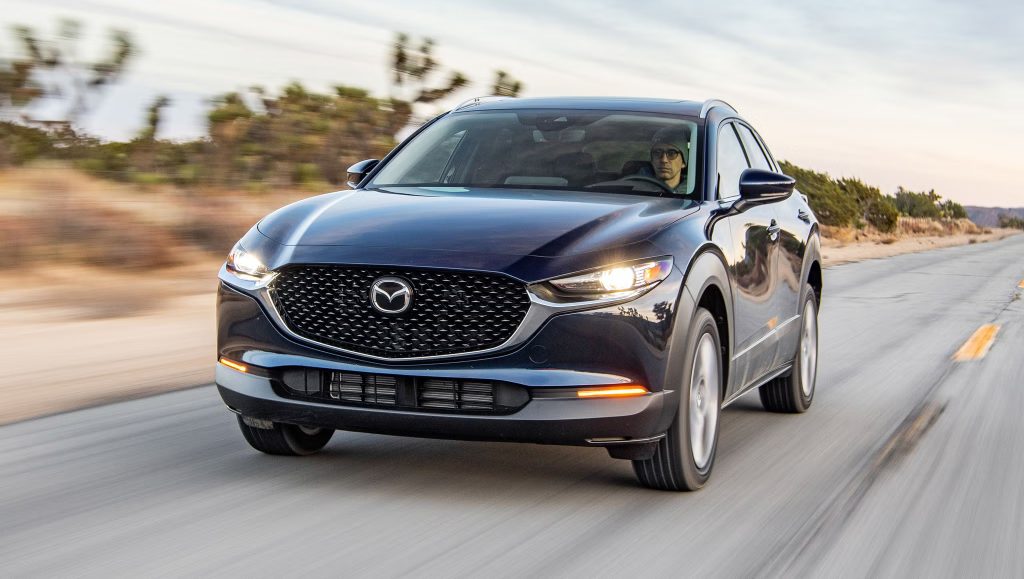
If you’re now leaning toward getting a Mazda CX‑30, Marin Mazda is your best partner:
- Browse current CX‑30s via Marin Mazda New Inventory to see what’s in stock
- Check for maintenance or ownership specials at Marin Mazda Specials to help with long‑term cost of ownership
- Reach out via the Contact page with questions about specific trims, reliability history, or service plans
Final Thought
A car’s reliability isn’t just about stats—it’s about how well you care for it. The Mazda CX‑30 offers a compelling mix of solid design, strong engineering, and owner satisfaction that supports legendary dependability. If you intend to drive it for years, keep up the maintenance, choose your model wisely, and maintain records—the CX‑30 can be a partner on many journeys ahead.
Got it — here’s your final clean version of the Mazda CX-50 Reliability FAQ, ready for direct use on your Marin Mazda blog (no extra lines or editor notes):
FAQ — Mazda CX-50 Reliability | Marin Mazda
1) Is the Mazda CX-50 reliable overall?
Yes. The Mazda CX-50 has proven to be one of the most dependable compact SUVs in its class. Built with Mazda’s SKYACTIV engineering and i-ACTIV AWD, it delivers long-term durability with minimal mechanical issues or electronic faults.
2) How does the CX-50’s reliability compare to the Toyota RAV4 and Subaru Outback?
In long-term dependability rankings, the CX-50 performs on par or slightly better than the RAV4 and Outback. Its simpler drivetrain and proven 2.5-liter engine design reduce the chance of costly repairs.
3) What engines are available and are they dependable?
The CX-50 offers a 2.5-liter SKYACTIV-G engine (187 hp) and an optional 2.5-liter Turbo (256 hp). Both are naturally aspirated or single-turbo setups without complicated hybrid systems, making them exceptionally reliable over time.
4) How long will a Mazda CX-50 last?
With regular maintenance, a CX-50 can easily exceed 200,000 miles (320,000 km). Many owners report smooth performance past 100,000 miles with no major repairs.
5) What are the most common CX-50 issues?
Early reports mention only minor software updates for infotainment and light brake-rotor noise in humid climates. There are no widespread mechanical concerns.
6) Does the CX-50 need premium fuel?
No. The CX-50 runs efficiently on regular 87-octane fuel. Using premium may slightly enhance turbo power output but isn’t required.
7) How often does the CX-50 require service?
Mazda recommends service every 8,000 km (5,000 mi) or every six months—covering oil changes, tire rotations, and safety inspections.
8) Are maintenance costs affordable?
Yes. Average annual maintenance ranges between $450 – $600 USD, lower than most competitors in its class. Parts are widely available, and labor costs remain reasonable.
9) Is the i-ACTIV AWD system reliable?
Absolutely. The AWD system uses predictive sensors to adjust torque distribution instantly. Owners report excellent traction in snow, rain, and uneven terrain—ideal for Bay Area or Tahoe trips.
10) What kind of warranty does Mazda provide?
- 3 years / 36,000 miles – New Vehicle Limited Warranty
- 5 years / 60,000 miles – Powertrain Warranty
This coverage ensures long-term peace of mind for CX-50 owners.
11) How fuel-efficient is the CX-50?
The standard 2.5-liter engine delivers up to 29 mpg highway (8.1 L/100 km), while the turbo model averages around 27 mpg highway—excellent for a standard-AWD crossover.
12) Is the CX-50 a good used SUV choice?
Yes. 2023-plus models retain strong resale value and show few mechanical issues, making them one of the smartest certified pre-owned buys in the segment.
13) How does the CX-50 perform in the Bay Area climate?
The AWD system and balanced chassis make it perfect for San Francisco’s wet roads, steep hills, and weekend mountain drives to Sonoma or Tahoe.
14) Does the CX-50 have good resale value?
Yes. The CX-50 retains roughly 62 % of its value after five years, outperforming many compact crossovers thanks to its premium appeal and reliability.
15) What are owner reviews saying?
CX-50 drivers praise its quiet cabin, build quality, and smooth AWD operation. Many highlight its durability and low maintenance compared with rivals.
16) How does Mazda ensure CX-50 quality?
Every CX-50 is built with precision assembly standards in Mazda’s North American plant, using SKYACTIV materials engineered for strength and corrosion resistance.
17) Are there recalls on the CX-50?
As of 2025, no major recalls have affected the CX-50’s powertrain or safety systems. Mazda continues to issue software updates proactively to maintain peak performance.
18) Is the CX-50 good for families?
Yes. Its spacious interior, top-tier safety scores, and durable components make it an excellent daily driver for Bay Area families seeking style and reliability.
19) What is the towing reliability like?
The CX-50 can tow up to 3,500 lbs (1,588 kg) when properly equipped, with no common drivetrain strain issues reported during long-term testing.
20) Where can I test-drive a Mazda CX-50 in the Bay Area?
Visit Marin Mazda — the #1 Mazda dealership serving San Francisco, Concord, and the North Bay.
Explore the latest CX-50 inventory, view limited-time specials, or schedule a test drive today.
Verdict:
The 2025 Mazda CX-50 blends toughness, premium comfort, and long-term dependability into one package. For Bay Area drivers seeking a confident, reliable SUV that’s as capable as it is refined, the CX-50 remains a standout choice — backed by Marin Mazda’s trusted service and expertise.


