

If you’ve ever searched “Mazda CX-5 oil change interval” online, you already know the problem. One Reddit thread says 3,000 miles or your engine explodes. Another claims 15,000 miles is totally fine because “modern oil is magic.” Both confidently upvote each other. Both are wrong in different ways.
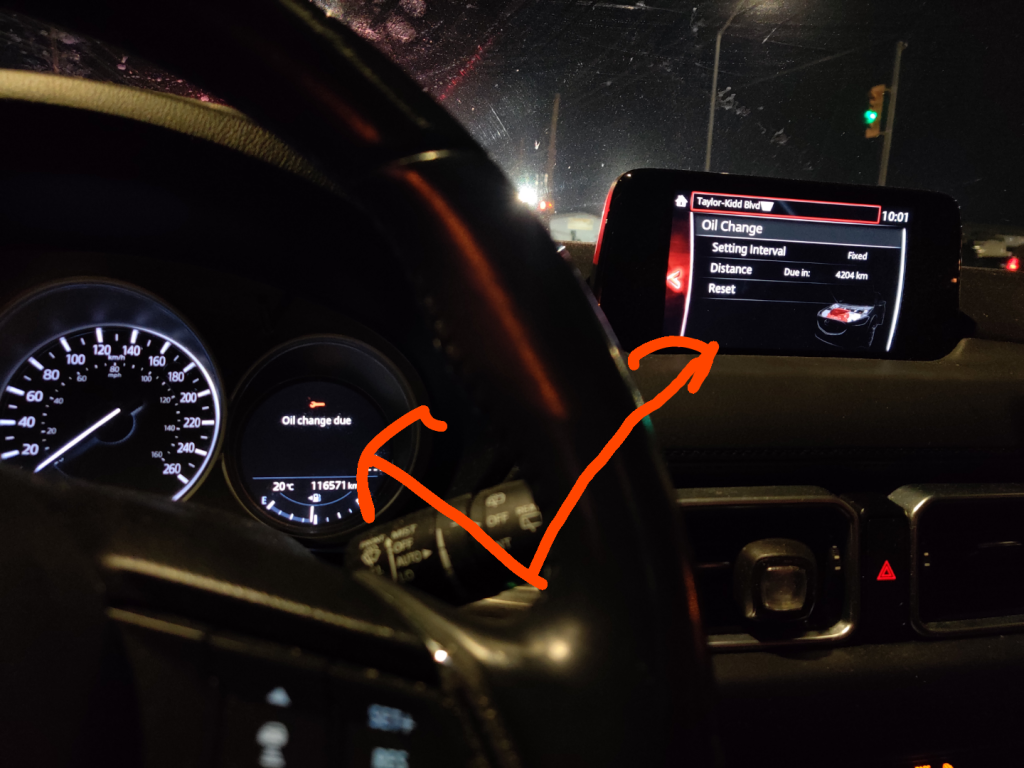
The truth sits in the boring middle, backed by engineering, not anecdotes.
This guide explains the real Mazda CX-5 oil change interval, why Reddit advice is unreliable, how Mazda actually determines service schedules, and how to choose the correct interval based on how you drive, not how loud someone is online.
Why Reddit Is the Worst Place for Oil Advice
Reddit is useful for experiences, not engineering standards. Oil change advice on forums fails for three big reasons:
- No two drivers use their CX-5 the same way
A highway commuter in Arizona and a short-trip city driver in Canada are not comparable. - People confuse “survived” with “optimal”
An engine lasting 120,000 miles on neglected oil doesn’t mean it wasn’t damaged internally. - Most advice ignores time-based oil degradation
Oil degrades by age, not just mileage. Reddit almost never accounts for this.
Mazda does. That’s the difference.
Mazda’s Official Oil Change Interval (The Real Baseline)
For most gasoline Mazda CX-5 models using full synthetic oil, Mazda specifies:
Every 7,500 to 10,000 miles OR 12 months, whichever comes first
That is not a suggestion. It’s a boundary set by Mazda’s engineering team based on:
- Oil chemistry breakdown
- Contaminant loading
- Engine operating temperatures
- Emissions system protection
This interval assumes normal driving conditions and correct oil viscosity, usually full synthetic 0W-20 for most model years.
What Mazda Means by “Normal” vs “Severe” Driving
This is where Reddit advice completely falls apart.
Normal Driving (Longer Interval Applies)
- Regular highway trips
- Steady speeds
- Engine reaches full operating temperature
- Minimal idling
- Mild climate
If this describes your driving, the 7,500–10,000 mile interval is valid.
Severe Driving (Shorter Interval Required)
Mazda explicitly classifies the following as severe service:
- Frequent trips under 10 miles
- Stop-and-go city driving
- Long idling periods
- Very hot or very cold climates
- Towing or heavy loading
- Driving that rarely warms the engine fully
If this describes your use, Mazda expects oil changes closer to:
Every 5,000–7,500 miles OR every 6 months
This is not optional. Severe driving accelerates oil contamination and breakdown.
Why Time Matters as Much as Mileage
This is the part Reddit ignores almost entirely.
Oil degrades even if the vehicle barely moves. Moisture, fuel dilution, and acid buildup occur simply from:
- Cold starts
- Short trips
- Sitting unused
That’s why Mazda includes 12 months as a hard limit, even if mileage is low.
If you drive:
- 3,000 miles per year
- Mostly short trips
You still need at least one oil change per year.
Low mileage does not mean low wear.
Turbo CX-5 Models: Be More Conservative
The Mazda CX-5 turbo engine operates under:
- Higher oil temperatures
- Higher pressure loads
- Greater shear stress
While Mazda still allows extended intervals, many experienced technicians recommend staying toward the lower end of the range for turbo models.
Smart interval for turbo CX-5 owners:
- 5,000–7,500 miles
- Or once per year, whichever comes first
This is not fear-mongering. Turbochargers rely entirely on clean, stable oil.
Why “3,000 Miles” Is Outdated (But Not Totally Wrong)
The 3,000-mile rule came from:
- Conventional oil
- Carbureted engines
- Loose tolerances
- Poor filtration
Modern CX-5 engines use:
- Full synthetic oil
- Tight tolerances
- Advanced engine management
- High-efficiency filters
Changing oil every 3,000 miles won’t hurt your CX-5, but it does not provide proportional benefit unless you operate in extreme conditions.
It’s safe, not necessary.
Why “15,000 Miles Is Fine” Is Dangerous
This advice usually comes from:
- European interval confusion
- Lease return logic
- Oil brand marketing
- Survivorship bias
Yes, some engines survive long intervals. That doesn’t mean:
- Bearings aren’t wearing faster
- Rings aren’t accumulating deposits
- Oil control isn’t compromised over time
Mazda did not design the CX-5 for 15,000-mile oil intervals in North American conditions.
The Mazda Maintenance Monitor Is Smarter Than Reddit
Many CX-5 models use a calculated oil life monitoring system. It does not just count miles.
It tracks:
- Engine temperature cycles
- RPM behavior
- Load patterns
- Cold starts
- Driving duration
When it tells you to change oil early, it’s because your usage pattern demands it.
Ignoring it because Reddit says “you’re fine” is how engines quietly wear out.
Real-World Oil Change Interval Scenarios
City Driver, Short Trips, Cold Climate
- Oil change every 5,000–6,000 miles
- Or every 6 months
Highway Commuter, Moderate Climate
- Oil change every 7,500–10,000 miles
- Or once per year
Low Mileage Retiree or Second Vehicle
- Oil change once per year minimum
- Even if mileage is low
Turbo CX-5 with Mixed Driving
- Oil change every 5,000–7,500 miles
- Conservative, engine-friendly approach
What Happens If You Stretch the Interval Too Far
Damage from long oil intervals is slow and silent:
- Sludge and varnish buildup
- Ring sticking
- Timing chain wear
- Turbo bearing stress
- Reduced fuel economy
- Oil consumption increase
You won’t notice it at 30,000 miles. You will at 120,000.
Reddit won’t be paying for that repair.
The Oil Filter Is Part of the Interval Equation
Every oil change must include a new oil filter.
Why:
- Filters load with contaminants
- Bypass valves open more often as filters clog
- Old filters undo the benefit of fresh oil
Changing oil without changing the filter shortens the effective interval immediately.
Warranty, Resale, and Documentation
Following Mazda’s recommended interval protects:
- Warranty claims
- Service records
- Resale value
If engine issues arise, documented maintenance at Mazda-approved intervals matters. Reddit comments do not.
The Bottom Line: The Interval You Should Actually Use
Forget Reddit. Use this instead:
- Normal driving: 7,500–10,000 miles or 12 months
- Severe driving: 5,000–7,500 miles or 6 months
- Turbo models: Lean conservative
- Low mileage: Time still matters
Oil changes are cheap insurance. Engines are not.
Final Thought
Reddit advice is loud, emotional, and inconsistent. Mazda’s oil change interval is quiet, boring, and engineered.
Trust the people who built the engine, not the people who happened to still be driving one.
1) What is the correct oil change interval for a Mazda CX-5?
For most gasoline CX-5 models using full synthetic oil, Mazda recommends every 7,500–10,000 miles or 12 months, whichever comes first. This assumes normal driving conditions and the correct oil viscosity.
2) Why does Mazda list both mileage and time for oil changes?
Because oil degrades with age as well as mileage. Moisture, fuel dilution, and acids build up even if you drive very little. That’s why Mazda sets a 12-month maximum, even for low-mileage vehicles.
3) What counts as “severe driving” for the Mazda CX-5?
Mazda classifies driving as severe if you:
- Take frequent short trips (under 10 miles)
- Drive mostly in stop-and-go traffic
- Idle for long periods
- Drive in very hot or very cold climates
- Tow or carry heavy loads
Under these conditions, oil should be changed every 5,000–7,500 miles or 6 months.
4) Is the Mazda CX-5 oil life monitor reliable?
Yes. The oil life monitoring system does not simply count miles. It factors in engine temperature, RPM, load, driving patterns, and cold starts. If it calls for an early oil change, it’s responding to your actual usage, not guessing.
5) Should turbo Mazda CX-5 models follow a shorter oil change interval?
Yes, it’s wise to be more conservative. Turbo engines run hotter and stress oil more. Many technicians recommend 5,000–7,500 miles for turbo CX-5 models, even though Mazda allows longer intervals under normal conditions.
6) Is changing oil every 3,000 miles better for my CX-5?
Not usually. That interval comes from older engines and conventional oil. With modern synthetic oil and Skyactiv engines, 3,000 miles is safe but unnecessary unless you operate under extreme conditions.
7) Is it safe to go 12,000–15,000 miles between oil changes?
No. While some engines may survive it, Mazda does not recommend intervals that long for the CX-5. Extended intervals increase the risk of sludge, timing wear, and oil breakdown, especially in North American driving conditions.
8) What happens if I delay oil changes beyond Mazda’s recommendations?
Delaying oil changes can lead to:
- Increased engine wear
- Sludge and varnish buildup
- Reduced fuel economy
- Higher oil consumption
- Potential warranty issues
Damage develops gradually and may not be obvious until it’s expensive.
9) What is the safest oil change strategy for long engine life?
Use Mazda-recommended synthetic oil, replace the oil filter at every change, follow the oil life monitor, and shorten intervals if your driving is mostly city, short-trip, or in extreme climates. Consistency matters more than chasing the longest possible interval.
Connect with us


