

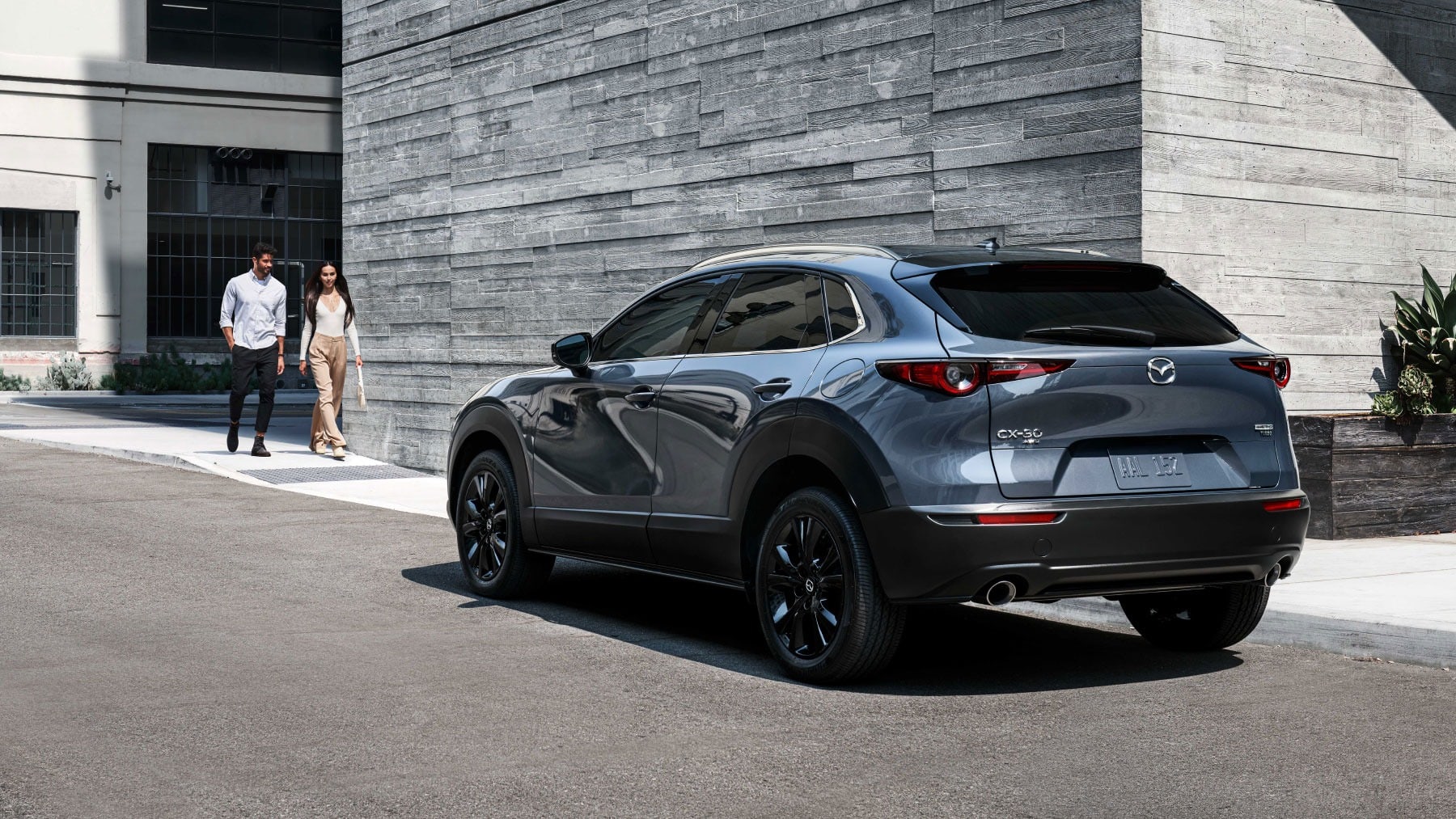
For growing families, the 2025 Mazda CX‑30 offers more than just stylish design and an engaging drive—it brings top-tier safety, smart space utilization, and real-world usability that matters to parents and everyday drivers alike. Let’s explore why the CX‑30 might be the right choice for Bay Area households.
Advanced Safety to Protect What Matters
IIHS Top Safety Pick+
The 2025 CX‑30 earned the prestigious IIHS Top Safety Pick+, achieving top “Good” ratings in all crashworthiness categories, including small overlap front, side impact, and roof strength. It also earned strong ratings for pedestrian crash prevention and headlight performance.
Five-Star NHTSA Rating
Mazda’s CX‑30 receives an overall 5-star safety rating from the National Highway Traffic Safety Administration (NHTSA), providing peace of mind for families who prioritize crash protection in their buying decision.
Family-Friendly Safety Features
The CX‑30 comes standard with an impressive suite of driver assistance technologies:
- Blind Spot Monitoring
- Rear Cross-Traffic Alert
- Lane Keep Assist
- Smart Brake Support (forward collision mitigation)
- Rear emergency braking (available on upper trims)
- 360-degree view monitor and Traffic Jam Assist (available on Premium Plus)
Car seat installation is also made easy thanks to the highly rated LATCH system, which scored well in ease-of-use evaluations by the IIHS.
Interior Space and Cargo Flexibility
Rear Seat Comfort
The CX‑30 comfortably seats five, but it’s best suited for four adults or two parents and two children. Rear seat legroom is adequate for kids and shorter passengers, though taller adults may find it tight on long rides. That said, the cabin is quiet, refined, and offers impressive fit and finish for the price.
Cargo Volume
With the rear seats up, the 2025 CX‑30 provides 20.2 cubic feet of cargo space—enough for a stroller, groceries, or sports gear. Folding the rear seats expands capacity to approximately 45.2 cubic feet, which is competitive for the subcompact crossover class.
The liftgate height and relatively low cargo floor also make it easier to load heavy or bulky items, an appreciated feature when juggling kids and bags.
Real-World Practicality
The CX‑30’s compact footprint makes it ideal for urban parking, tight driveways, and maneuvering through traffic. Mazda also includes thoughtful interior storage options, including cup holders, door bins, and a decently sized center console.
Additionally, the CX‑30’s optional power liftgate adds convenience for families who need quick and easy cargo access.
Summary: Is the CX‑30 Right for Your Family?
What the CX‑30 Gets Right:
- Outstanding safety ratings and features
- Easy-to-use LATCH system
- Solid cargo flexibility
- Premium materials and intuitive layout
- Great for urban environments and daily commutes
What to Consider:
- Rear seat legroom is best for smaller passengers
- Less cargo space than larger crossovers, though sufficient for most family use
Visit Marin Mazda to See the CX‑30 in Person
The 2025 Mazda CX‑30 blends compact SUV agility with thoughtful family-first features. If you’re looking for a safe, efficient, and well-designed SUV that’s just the right size for Northern California driving, the CX‑30 deserves a closer look.
Marin Mazda
807 Francisco Blvd E, San Rafael, CA 94901
Phone: (415) 454‑7000
Explore our inventory at: www.marinmazda.net
Come test drive the 2025 CX‑30 and discover how it fits your family lifestyle.
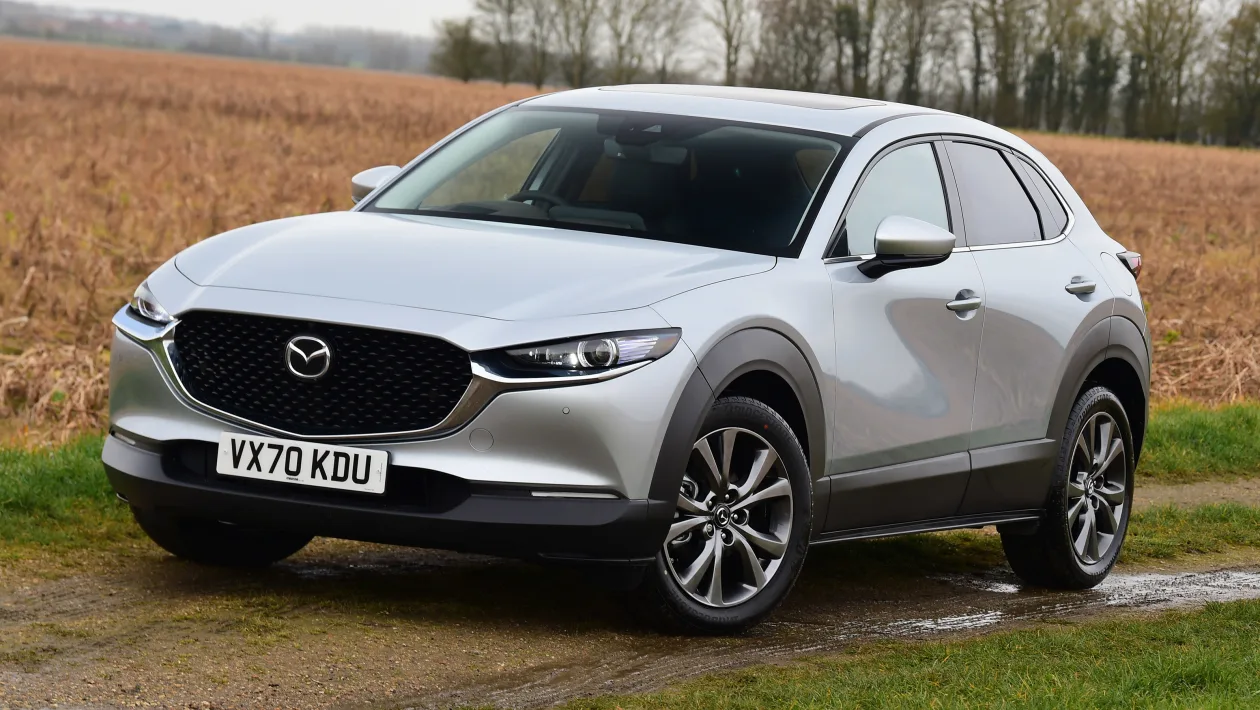
For buyers in the Bay Area eyeing a refined driving experience under $35,000, the choice often comes down to one critical question: Do you buy a brand-new mainstream vehicle like the 2025 Mazda CX‑30—or stretch for a used luxury SUV?
At first glance, a gently used Audi Q3, BMW X1, or Mercedes-Benz GLA might seem tempting. But dig deeper, and the CX‑30 makes a surprisingly strong case with its premium feel, cutting-edge safety tech, and hassle-free ownership—straight off the lot.
Let’s explore how the 2025 CX‑30 stacks up against used luxury crossovers in design, performance, tech, and overall value.
Design and Build Quality
Mazda CX‑30 (2025):
- Kodo design language with coupe-like silhouette
- Elegant minimalist interior with available leather and contrasting materials
- Feels more upscale than most non-luxury compact SUVs
Used Luxury SUVs (~2021–2022 models):
- Classy exterior styling, but often more conservative
- Real leather seats and wood/aluminum trim (depending on trim)
- Some wear-and-tear depending on mileage and care
Verdict:
While luxury SUVs may offer slightly more premium finishes, the CX‑30’s cabin is genuinely upscale—especially in the Turbo Premium Plus trim. And it’s all brand new, with zero prior wear.
Performance and Driving Feel
| Model | Engine | Horsepower | Drivetrain | Transmission |
|---|---|---|---|---|
| 2025 Mazda CX‑30 Turbo | 2.5L Turbo I4 | 250 hp | AWD | 6-speed automatic |
| 2021 Audi Q3 | 2.0L Turbo I4 | 228 hp | AWD | 8-speed automatic |
| 2021 BMW X1 | 2.0L Turbo I4 | 228 hp | AWD | 8-speed automatic |
| 2021 Mercedes GLA 250 | 2.0L Turbo I4 | 221 hp | AWD | 8-speed dual-clutch |
Verdict:
The CX‑30 Turbo keeps up with—if not surpasses—these used German luxury SUVs in terms of raw horsepower and torque. It also features Mazda’s precise steering and excellent handling, making it a joy to drive on twisty California roads.
Technology and Features
2025 Mazda CX‑30 (New):
- 10.25″ infotainment display
- Wireless Apple CarPlay & Android Auto
- Head-up display
- Full i-Activsense safety suite
- Optional 12-speaker Bose audio
Used Luxury SUVs (2021–2022):
- May require wired smartphone connectivity
- Some missing newer ADAS safety features
- Infotainment interfaces may feel dated
- Premium sound often extra-cost or missing
Verdict:
The CX‑30 wins for those who want latest-gen tech and safety. Luxury brands tend to pace slower in infotainment updates, and older models can feel outdated—even if they wear a luxury badge.
Cost of Ownership
| Category | Mazda CX‑30 (New) | Used Luxury SUV |
|---|---|---|
| Initial Price | ~$26K–$35K | ~$30K–$40K |
| Warranty Coverage | 3yr/36K mi basic | Often expired |
| Maintenance Costs | Low | Higher |
| Insurance Costs (avg.) | Lower | Higher |
| Reliability (long-term) | High | Varies by brand |
Verdict:
With full warranty, lower maintenance, and more predictable repair costs, the CX‑30 is far easier to budget for. Used German crossovers are known for higher repair bills as they age.
The X-Factor: Peace of Mind
Buying a used luxury vehicle means trusting someone else’s driving habits. Even if it looks pristine, you’re inheriting any prior mechanical or accident history. With the CX‑30, you get a clean slate with zero surprises.
Plus, Mazda has one of the best reputations for long-term reliability, competing closely with Toyota and Honda—and well ahead of most European brands.
Final Verdict
| Category | Winner |
|---|---|
| Driving Dynamics | Mazda CX‑30 Turbo |
| Interior Fit & Finish | Tie |
| Tech & Safety | Mazda CX‑30 |
| Reliability | Mazda CX‑30 |
| Overall Value | Mazda CX‑30 |
Test Drive the 2025 Mazda CX‑30 in San Rafael
If you’re weighing a used luxury SUV against the CX‑30, the best way to decide is to drive both. Spoiler alert: you may be surprised by how premium Mazda truly feels.
Marin Mazda
807 Francisco Blvd E, San Rafael, CA 94901
(415) 454‑7000
Browse inventory: www.marinmazda.net
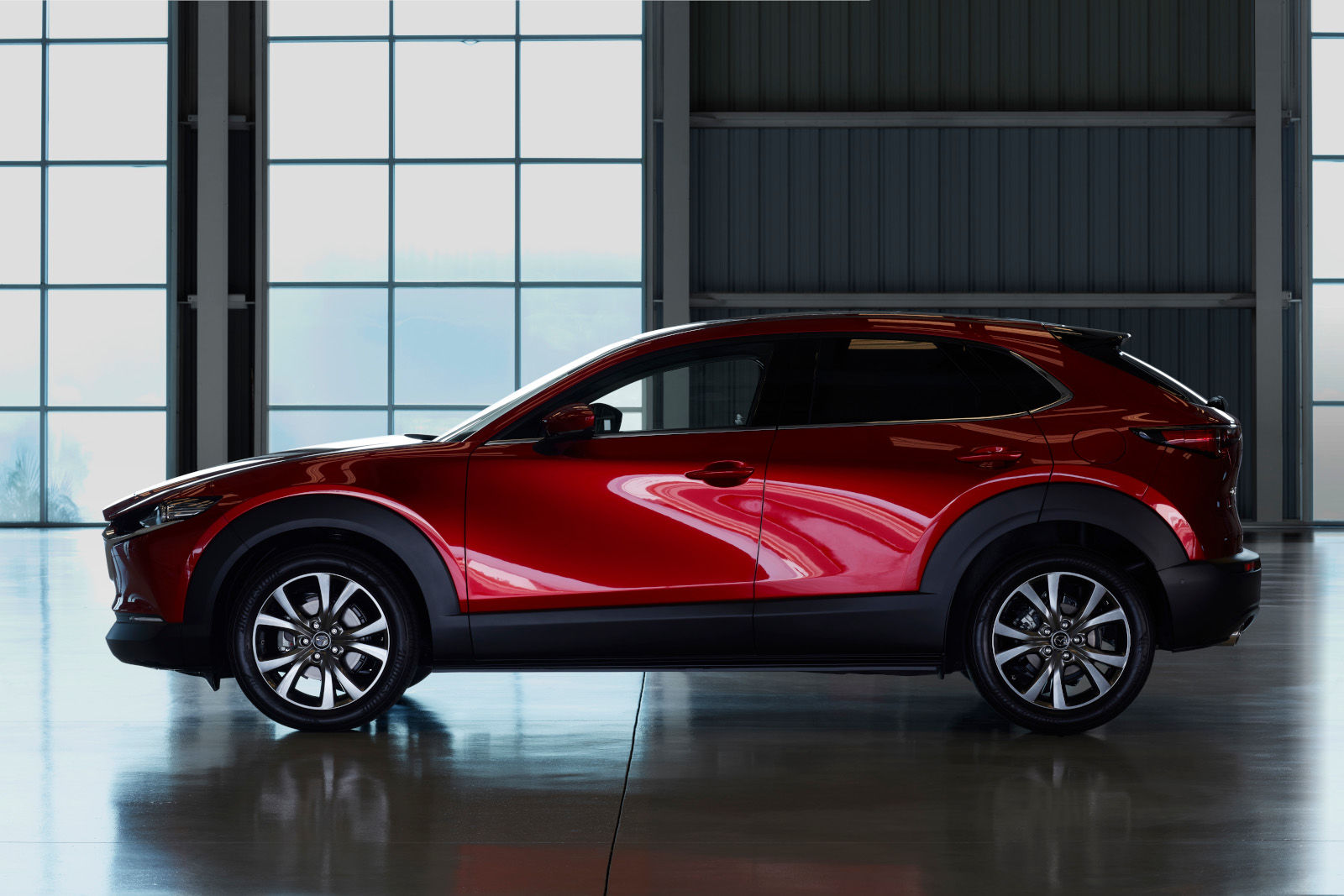
The 2025 Mazda CX‑30 is packed with surprises that go beyond what shows up in the brochure. Sure, its Kodo design and Skyactiv-G engine grab attention—but it’s the little, thoughtful details that truly elevate the ownership experience. Here’s a look at the top hidden gems you might’ve missed.
1. Remote Window Roll‑Down Shortcut
Press the unlock button on your key fob four times in quick succession, and all the windows will roll down. This is perfect for airing out the cabin on a hot day before you step in. Just note—there’s no “roll-up” version, so don’t try it in the rain!
2. Auto‑Tilt Side Mirrors in Reverse
Select the left or right mirror control as you normally would—but when you shift into reverse, that mirror automatically tilts downward. It gives an enhanced view of the curb or parking lines. Simply switching back to neutral or drive returns the mirror position to normal.
3. Subtle Cabin Touches Uncovered
A Reddit owner noted Mazda’s blend of simplicity and thoughtful design in the CX‑30’s interior—especially the intuitive dial, tactile buttons, and customizable blinkers and adaptive cruise settings. These small conveniences make a real difference in daily driving, and once you discover them, it’s hard to go back.
4. Hidden Storage Spots
While some Mazda models are known for secret compartments, the CX‑30 continues this trend. Look for clever cubbies—like under the center console armrest or within smaller door pockets—perfect for stashing sunglasses, snacks, or charging cables. TikTok users have praised the CX‑30’s knack for discrete yet useful storage solutions.
5. Night‑Override Safety Systems
Some owners report that features like lane-keep assist and adaptive cruise control may temporarily deactivate during low-light conditions (e.g., early morning or late at night), then reactivate once daytime conditions return . This illustrates how the i‑Activsense system adapts to maintain reliability—but it also highlights a behavior you might notice during nighttime driving.
Bonus: Premium Yet Practical Upgrades
- Owners say the Bose sound system is worth opting for—especially on longer drives.
- The optional heated steering wheel (Turbo Premium trims) is a real winter game-changer.
- A few Reddit discussions mention the CX‑30’s relatively small 40L fuel tank, which can result in more frequent stops—something to keep in mind for road trips.
Final Takeaway
The 2025 Mazda CX‑30 isn’t just another pretty face in the SUV segment—it’s filled with thoughtful features that improve comfort, convenience, and safety. From remote window control and mirror tilt to cleverly hidden storage and intelligent safety deactivation, Mazda has created a crossover that keeps surprising you long after the test drive.
Curious What You’re Missing?
Stop by Marin Mazda to explore these clever touches up close—our team loves showing them off. Whether you test drive a CX‑30 or have us help customize one for you, you’ll discover why it’s more than just looks behind the wheel.
Marin Mazda
807 Francisco Blvd E, San Rafael, CA 94901
📞 (415) 454‑7000
Browse inventory: www.marinmazda.net
Drive smart. Discover the details.
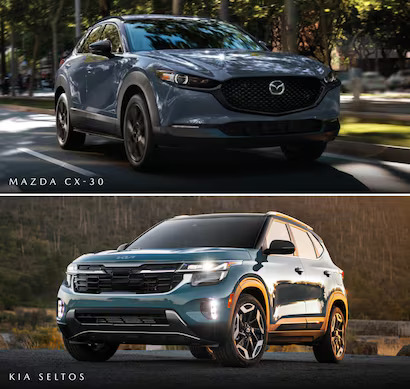
In a crowded segment filled with smart, affordable, and stylish small SUVs, two names have risen to the top for 2025: the Mazda CX‑30 and the Kia Seltos. Both vehicles bring serious value to the table, offering AWD capability, impressive fuel efficiency, and advanced tech. But when it comes to premium feel — both inside and out — one of these subcompact SUVs clearly sets itself apart.
So which one delivers a more refined driving experience for shoppers in California and beyond? Let’s dive into the details.
Exterior Design: Bold vs. Sophisticated
Mazda CX‑30 continues Mazda’s KODO design language with clean, flowing lines, a wide stance, and minimalistic touches. Its upscale look is closer to a luxury SUV than a budget commuter.
Kia Seltos, by contrast, leans into a rugged urban design with sharp body creases, angular accents, and aggressive lighting. It looks more playful and youthful, but arguably less refined.
Verdict:
If you prefer elegant, upscale styling, the CX‑30 feels more premium. The Seltos will appeal to those who like bold and modern aesthetics.
Interior Quality: Mazda Wins on Fit and Finish
| Category | Mazda CX‑30 | Kia Seltos |
|---|---|---|
| Upholstery | Available leather, soft-touch | Softer materials only on top trims |
| Infotainment | 10.25” display (standard) | 10.25” available on upper trims |
| Sound System | 12-speaker Bose (Premium+) | 8-speaker Bose (available) |
| Ambient Lighting | Yes (select trims) | Yes (X-Line and SX trims) |
| Display Integration | Rotary controller | Touchscreen-only |
Mazda’s interior philosophy focuses on minimalism, symmetry, and upscale materials — even in the base trims. The layout feels more like a luxury sedan than a subcompact crossover. Kia has made significant strides with the Seltos interior, but some areas still use harder plastics and busy design elements.
Verdict:
Mazda CX‑30 takes this category with ease. Everything from the steering wheel stitching to the placement of the infotainment screen feels curated and premium.
Performance and Handling
| Engine Options | Mazda CX‑30 | Kia Seltos |
|---|---|---|
| Standard Engine | 2.5L I4 – 191 hp | 2.0L I4 – 147 hp |
| Optional Turbo | 2.5L Turbo I4 – 250 hp (Premium+) | 1.6L Turbo I4 – 195 hp (SX) |
| Transmission | 6-speed automatic | CVT / 8-speed automatic (turbo) |
| Drivetrain | AWD standard | FWD standard, AWD optional |
Mazda leans heavily into its driving DNA. The CX‑30 delivers responsive steering, composed handling, and linear power delivery — especially in the turbo trims. Kia’s Seltos is solid and capable, but the steering is lighter and CVT response isn’t as refined.
Verdict:
Drivers who care about dynamics, road feel, and acceleration will prefer the CX‑30, especially in its turbocharged form.
Technology and Infotainment
Both models are tech-savvy, offering Apple CarPlay, Android Auto, and a wide range of driver assistance features.
| Feature | Mazda CX‑30 | Kia Seltos |
|---|---|---|
| Wireless Apple CarPlay | Standard | Standard |
| Driver Attention Alert | Standard | Standard |
| Head-Up Display | Available | Not available |
| Adaptive Cruise w/ Stop & Go | Available (Turbo trims) | Standard on EX Premium / SX |
| Surround View Monitor | Available | Available |
Verdict:
While both vehicles are strong in the tech category, Mazda’s execution feels more premium, particularly with features like the Active Driving Display and high-quality Bose audio system.
Cargo and Space
| Cargo Volume (Behind Seats) | CX‑30: ~20.2 cu ft | Seltos: ~26.6 cu ft |
| Max Cargo Volume | CX‑30: ~45.2 cu ft | Seltos: ~62.8 cu ft |
Verdict:
If cargo space is a top priority, the Kia Seltos offers more room — especially with rear seats folded. Families and weekend haulers will appreciate the flexibility.
Fuel Efficiency (Gas Models)
| Model | City / Hwy / Combined MPG |
|---|---|
| CX‑30 2.5L NA | 26 / 33 / 29 |
| CX‑30 2.5L Turbo | 22 / 30 / 25 |
| Seltos 2.0L | 28 / 34 / 31 |
| Seltos 1.6L Turbo AWD | 25 / 27 / 26 |
Verdict:
The Seltos holds a slight edge in standard fuel economy, but the CX‑30 Turbo’s fuel figures remain competitive considering its power advantage.
Price and Value
| Model | Starting MSRP (USD) |
|---|---|
| Mazda CX‑30 | ~$25,700 |
| Kia Seltos | ~$24,500 |
Both models are well-priced for the segment. Mazda’s standard AWD gives it more value upfront, while Kia allows for lower-cost front-wheel drive options.
Final Verdict: Which SUV Feels More Premium?
| Category | Winner |
|---|---|
| Interior Design | CX‑30 |
| Ride Comfort | CX‑30 |
| Handling | CX‑30 |
| Cargo Space | Seltos |
| Fuel Efficiency | Seltos |
| Tech Features | Tie |
| Powertrain Options | CX‑30 |
Conclusion
If you’re looking for a fun-to-drive SUV with a refined interior and standard AWD, the 2025 Mazda CX‑30 easily earns its premium badge. The Kia Seltos remains a practical and well-equipped contender, but it can’t quite match Mazda’s level of craftsmanship, handling, or design sophistication.
Visit Marin Mazda to Test Drive the 2025 Mazda CX‑30
Explore the full lineup, compare trims, and experience the premium difference for yourself.
Marin Mazda
807 Francisco Blvd E, San Rafael, CA 94901
Call: (415) 454‑7000
Browse Inventory: www.marinmazda.net
Drive the difference. Drive Mazda.
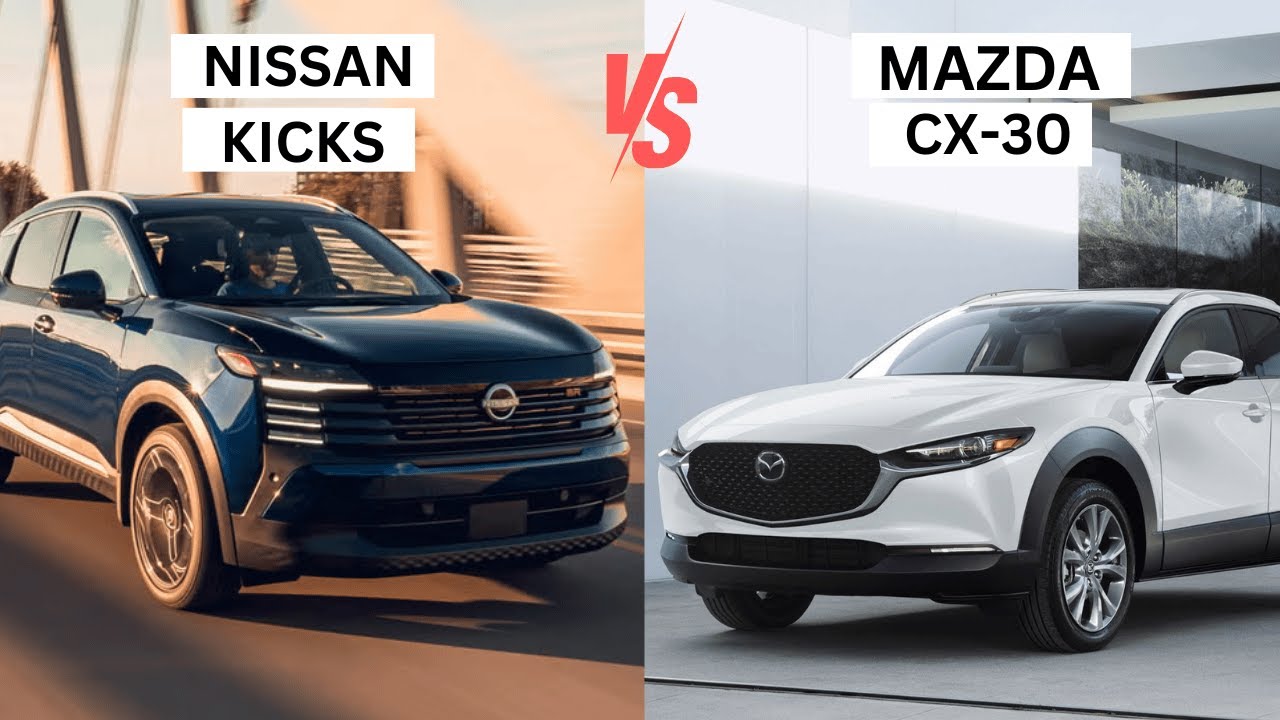
For Northern California drivers looking for a subcompact SUV that blends efficiency, smart tech, and everyday comfort, two names come up frequently — the 2025 Mazda CX‑30 and the 2025 Nissan Kicks. Both compete in the same segment, but their approach to performance, interior technology, and premium feel are noticeably different.
In this detailed comparison, Marin Mazda breaks down the CX‑30 and Kicks to help you decide which one is a better fit for your lifestyle.
Performance: Power vs. Practicality
The biggest contrast between the CX‑30 and the Kicks lies under the hood.
| Model | Engine | Horsepower | Drivetrain | Transmission |
|---|---|---|---|---|
| Mazda CX‑30 | 2.5L I4 (Standard) | 191 hp | AWD standard | 6-speed automatic |
| Mazda CX‑30 | 2.5L Turbo I4 (Optional) | Up to 250 hp | AWD standard | 6-speed automatic |
| Nissan Kicks | 1.6L I4 | 122 hp | FWD only | CVT |
Key takeaway:
The CX‑30 is significantly more powerful and comes standard with all-wheel drive, which is especially important for California drivers navigating wet roads, hilly terrain, or weekend trips to Lake Tahoe or Yosemite.
The Kicks is more conservative, built strictly for city driving with front-wheel drive only and much lower horsepower.
Fuel Efficiency
| Model | City / Hwy / Combined MPG |
|---|---|
| CX‑30 (2.5L NA) | 26 / 33 / 29 |
| CX‑30 (2.5L Turbo) | 22 / 30 / 25 |
| Nissan Kicks | 31 / 36 / 33 |
Key takeaway:
The Kicks offers better fuel economy, especially for daily urban commutes. But for those wanting more driving engagement and versatility, the CX‑30 offers a balanced mix of power and efficiency — especially with the base engine.
Interior Quality and Features
| Feature | Mazda CX‑30 | Nissan Kicks |
|---|---|---|
| Display | 10.25″ center display (standard) | 8″ touchscreen (standard) |
| Sound System (Top Trim) | 12-speaker Bose | 8-speaker Bose |
| Upholstery | Leather available | Synthetic leather only |
| Head-Up Display | Available | Not available |
| Digital Gauge Cluster | Available | Partial digital cluster |
| Wireless Apple CarPlay | Standard | Standard (wired in lower trims) |
Key takeaway:
The CX‑30 delivers a more premium cabin experience with better materials, advanced driver tech (like a head-up display), and a more refined layout. While the Kicks has good tech for its price point, it lacks the sophistication and upscale feel of the Mazda.
Safety & Driver Assistance
Both SUVs offer a full suite of standard safety features, but execution differs.
Mazda CX‑30 Standard i-Activsense:
- Adaptive Cruise Control
- Lane Keep Assist
- Blind Spot Monitoring
- Rear Cross-Traffic Alert
- Automatic Emergency Braking with Pedestrian Detection
Nissan Kicks Safety Shield 360:
- Forward Collision Warning
- Blind Spot Warning
- Rear Cross Traffic Alert
- Lane Departure Warning
- Rear Automatic Braking
Key takeaway:
Both SUVs score well in safety, but Mazda’s systems feel more refined in practice — especially when paired with available Traffic Jam Assist and a 360° View Monitor on top trims.
Cargo Space
| Model | Rear Cargo Volume | Max Cargo (Seats Down) |
|---|---|---|
| Mazda CX‑30 | 20.2 cu ft | 45.2 cu ft |
| Nissan Kicks | 25.3 cu ft | 32.3 cu ft |
Key takeaway:
The Kicks wins on trunk space behind the seats, but the CX‑30 offers more usable space overall when the rear seats are folded — plus easier access with its higher-quality interior layout.
Pricing
| Model | Starting MSRP (USD) |
|---|---|
| Mazda CX‑30 | ~$25,700 |
| Nissan Kicks | ~$22,500 |
Key takeaway:
The Kicks is more affordable upfront, but it lacks AWD, real performance, and premium interior finishes. The CX‑30 delivers better value long-term — especially for drivers seeking confidence and comfort.
Final Verdict
| Category | Winner |
|---|---|
| Power & Acceleration | Mazda CX‑30 |
| Interior Quality | Mazda CX‑30 |
| Fuel Economy | Nissan Kicks |
| Tech Features | Mazda CX‑30 |
| Cargo Volume | Nissan Kicks |
| Ride Comfort | Mazda CX‑30 |
| AWD Availability | Mazda CX‑30 |
| Price | Nissan Kicks |
Conclusion
The 2025 Mazda CX‑30 is the better all-around SUV for California drivers who value performance, all-weather handling, and premium design. While the Nissan Kicks is an affordable urban commuter, it simply can’t match the refinement, capability, and upscale features of the CX‑30 — especially in turbocharged trims.
Explore the Mazda CX‑30 at Marin Mazda
See why more drivers across the Bay Area are choosing the CX‑30. Test drive one today at:
Marin Mazda
807 Francisco Blvd E, San Rafael, CA 94901
Call: (415) 454‑7000
Browse Inventory: www.marinmazda.net
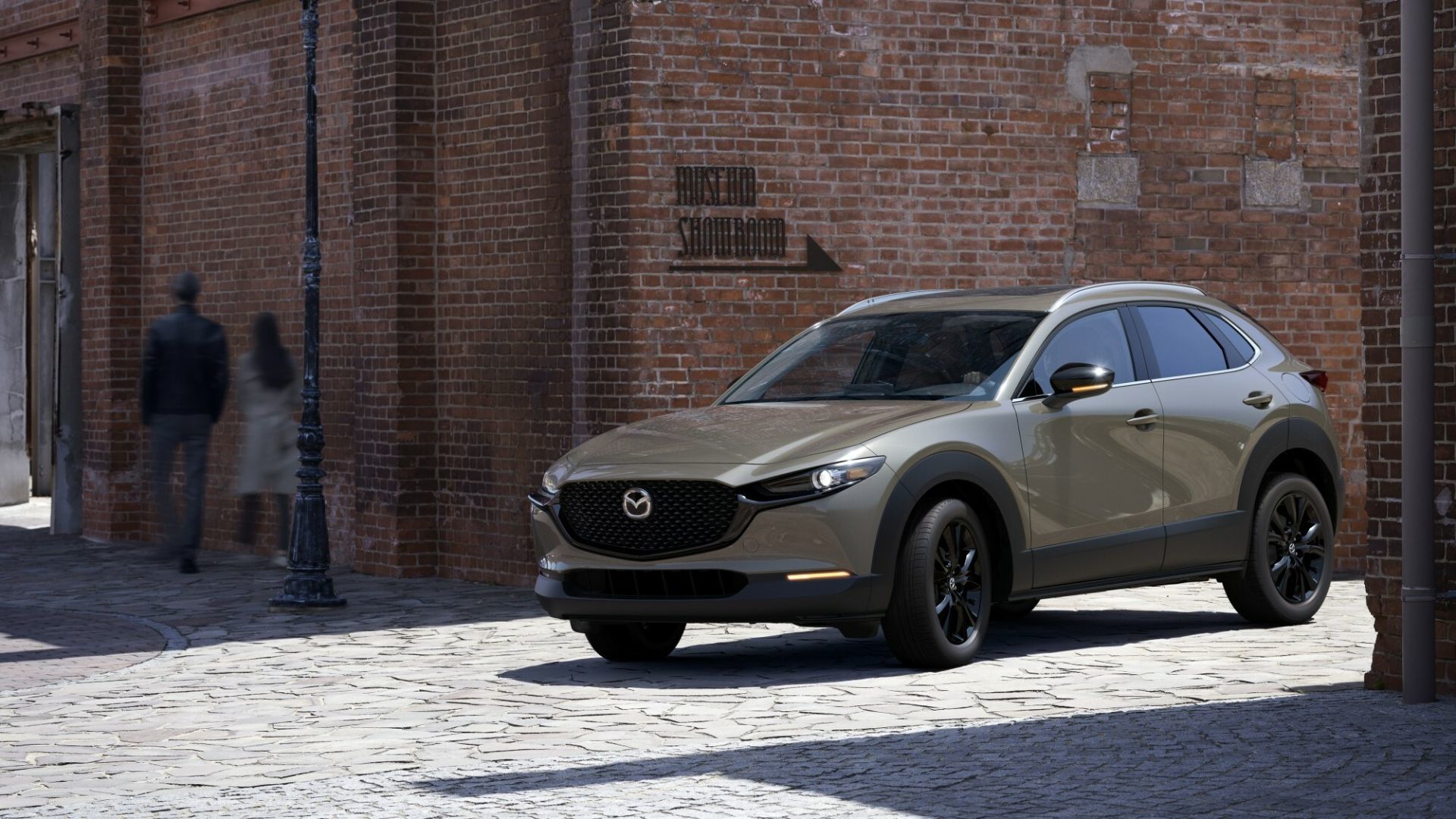
For many drivers across California, owning a reliable and stylish subcompact SUV like the Mazda CX‑30 is a smart choice. But how much does it really cost to insure the CX‑30 in the Golden State? Whether you’re budgeting for a new car or comparing options, understanding your insurance premiums is a key part of total cost of ownership.
Let’s break down what you should know about insuring the 2025 Mazda CX‑30 in California — including average rates, what affects those rates, and how the CX‑30 compares to its rivals.
Average Insurance Cost for the Mazda CX‑30 in California
As of 2025, the average annual insurance premium for a 2025 Mazda CX‑30 in California typically ranges from $1,300 to $1,700 per year, depending on several factors such as driver history, ZIP code, and coverage type.
That breaks down to about $110 to $145 per month, which is considered average for the subcompact SUV class.
Factors That Influence CX‑30 Insurance Rates
1. Trim Level & Engine Type
The CX‑30 comes in various trims, from the base 2.5 S Select Sport to the more powerful 2.5 Turbo Premium Plus. Insurance companies often charge more for higher trims due to:
- Increased repair/replacement costs (especially for turbocharged models)
- Additional features like panoramic moonroofs or premium audio that are more expensive to fix
2. Driver Profile
Your age, driving record, and years of experience heavily influence insurance pricing. For example:
- A 40-year-old driver with a clean record in San Rafael will pay significantly less than a 22-year-old with one prior accident.
- Urban drivers in cities like Los Angeles or Oakland typically see higher premiums than those in smaller towns.
3. Coverage Level
- Basic liability only: ~$1,100/year
- Full coverage with collision & comprehensive: ~$1,500–$1,700/year
Opting for higher deductibles can reduce your monthly cost but increases out-of-pocket expenses in the event of a claim.
4. Location in California
Here’s how rates can vary by city (estimated annual full coverage):
| City | Estimated Cost |
|---|---|
| San Diego | $1,320 |
| San Francisco | $1,500 |
| Sacramento | $1,410 |
| San Jose | $1,350 |
| Los Angeles | $1,690 |
Is the CX‑30 Cheaper to Insure Than Other SUVs?
Yes — generally. The Mazda CX‑30 is often more affordable to insure than many of its subcompact SUV competitors.
| Model | Average Annual Insurance (CA) |
|---|---|
| Mazda CX‑30 | $1,500 |
| Honda HR‑V | $1,580 |
| Hyundai Kona | $1,620 |
| Toyota Corolla Cross | $1,540 |
| Subaru Crosstrek | $1,530 |
The CX‑30 strikes a balance between sporty design, safety ratings, and affordable repair costs, helping to keep insurance prices reasonable.
How to Lower Your CX‑30 Insurance Premium
- Bundle your policies (home + auto) with the same provider
- Install anti-theft devices or use built-in GPS tracking
- Maintain a clean driving record
- Ask about good student or low-mileage discounts
- Compare multiple quotes every 6–12 months
Is It Worth Getting Full Coverage on a CX‑30?
For a newer model like the 2025 Mazda CX‑30, full coverage is typically recommended. It protects you from not only liability, but also damage from collisions, theft, weather, and vandalism — especially important if you’re financing or leasing.
Bottom Line
The 2025 Mazda CX‑30 is not considered expensive to insure in California. With average annual premiums in the $1,300–$1,700 range, it holds a competitive edge over many rivals in its class. Its strong safety ratings, reliability, and moderate repair costs contribute to a well-rounded insurance profile.
If you’re shopping for a stylish, reliable, and budget-friendly SUV in Northern California, the CX‑30 continues to be a smart choice — both on the road and on your balance sheet.
Explore the Mazda CX‑30 at Marin Mazda
Looking to take the next step? Visit Marin Mazda to browse our latest inventory, compare trim options, or get a personalized quote on your next CX‑30.
Marin Mazda
807 Francisco Blvd E, San Rafael, CA 94901
Call: (415) 454‑7000
Browse Online: www.marinmazda.net
Discover the Mazda CX‑30 — where style meets value.
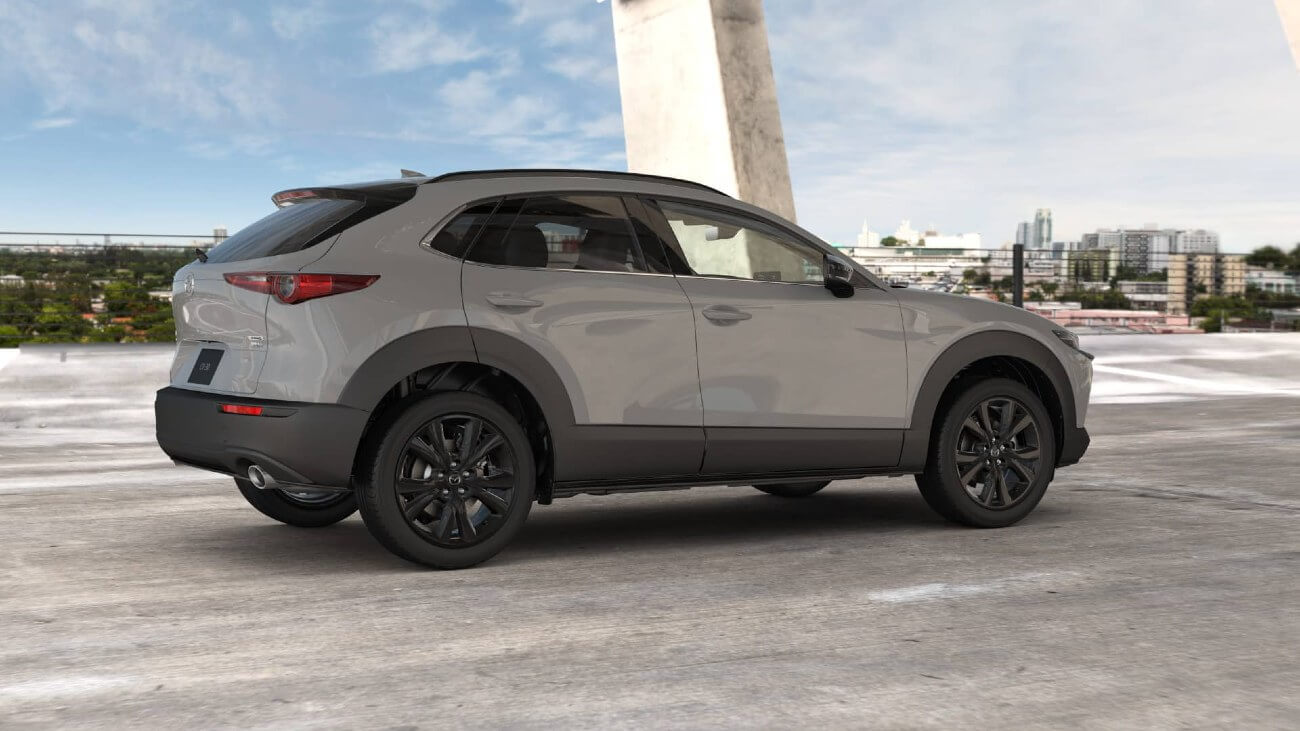
Choosing between two standout subcompact crossovers? Let’s dive into how the Mazda CX‑30 and Hyundai Kona compare in appearance, safety performance, and in-cabin technology—so you can make a well-informed decision.
1. Distinct Design & Interior Quality
Mazda CX‑30
- Featuring Mazda’s elegant “Kodo” design language, the CX‑30 presents sleek curves and a premium stance that catches the eye.
- Inside, the cabin is refined and driver-focused, with tactile materials, minimalist design, and optional top-tier touches like Bose sound and leather upholstery .
- Drivability is complemented by a well-balanced steering feel and chassis cooling tailored for springtime Bay Area drives.
Hyundai Kona
- Bold and sporty styling gives the Kona a youthful curb appeal, especially in its N-Line trims.
- The interior is functional with a modern layout, but it lacks the upscale feel and material refinement of the CX‑30.
2. Safety Ratings & Driver Assist Tech
Crash Test Results
- Both models earn top safety honors: 5‑star NHTSA ratings and IIHS Top Safety Pick+ status (CX‑30 confirmed, Kona legacy).
- The CX‑30 consistently receives Superior assessment in automatic emergency braking, while the Kona earns “Advanced”.
Driver Assistance Systems
- Mazda’s i‑Activsense® suite includes: Blind Spot Monitoring, Lane Keep Assist, Smart Brake Support, Adaptive Cruise with Stop & Go, and optional 360° View Monitor—providing a robust safety package.
- Kona also offers similar features including Blind Spot View Monitor and Highway Driving Assist, with the benefit of a strong 10‑year/100k‑mile powertrain warranty .
3. Interior Tech & Usability
Mazda CX‑30
- Features an 8.8″ (or 10.25″) non-touchscreen controlled by a dial—a system designed to minimize driver distraction.
- Standard Apple CarPlay and Android Auto (wired or wireless), plus premium options like Bose audio and Active Driving Display .
Honda Kona
- Offers larger 7″ or 9″ touchscreens with intuitive menus and navigation options.
- Though user-friendly, it doesn’t match Mazda’s overall refinement and tactile controls.
4. Space, Cargo, and Practicality
| Feature | Mazda CX‑30 | Hyundai Kona |
|---|---|---|
| Cargo (rear seats) | 20.2 cu ft | 25.5 cu ft |
| Max Cargo Volume | 45.2 cu ft | 63.7 cu ft |
| Second-Row Legroom | ~36.3 in | ~38.2 in |
- Kona offers more passenger space and maximum cargo capacity—ideal for families or frequent gear use.
- CX‑30 focuses on delivering a refined, driver-centric interior, yielding compromise in rear space.
5. Fuel Economy & Efficiency
- Hyundai Kona FWD: up to 29 city / 34 highway MPG; AWD models slightly less.
- Mazda CX‑30: approximately 26 city / 33 highway MPG.
Verdict: Kona edges out CG‑30 on pure fuel efficiency, though the CX‑30 remains competitive while offering a more engaging driving experience.
Overall Comparison
| Category | Mazda CX‑30 | Hyundai Kona |
|---|---|---|
| Design & Quality | Premium design & materials | Bold styling, functional cabin |
| Safety | Top-tier crash & AEB ratings | Excellent safety, strong tech |
| Interior Tech | Dial-controlled refinement | Larger touchscreens, easy-to-use |
| Cargo & Space | Compact with less space | More cargo, more passenger room |
| Fuel Economy | Very good | Slightly better |
| Warranty | Standard 5-year/60k mile | Best-in-class 10/100k powertrain |
Final Recommendation
Choose the Mazda CX‑30 if you value:
- Premium cabin ambiance and driving precision
- A cohesive and minimized infotainment experience
- Best-in-class safety feel and brake response
Choose the Hyundai Kona if you prefer:
- More cargo and passenger space
- Better fuel efficiency
- A robust factory warranty
Visit Marin Mazda to Compare Them In Person
Curious how each one fits your California lifestyle? Stop by Marin Mazda in San Rafael to test drive both models and explore current lease or finance offers.
Marin Mazda
807 Francisco Blvd E, San Rafael, CA 94901
(415) 454‑7000
www.marinmazda.net
See which crossover truly suits your style, safety needs, and the way you drive.
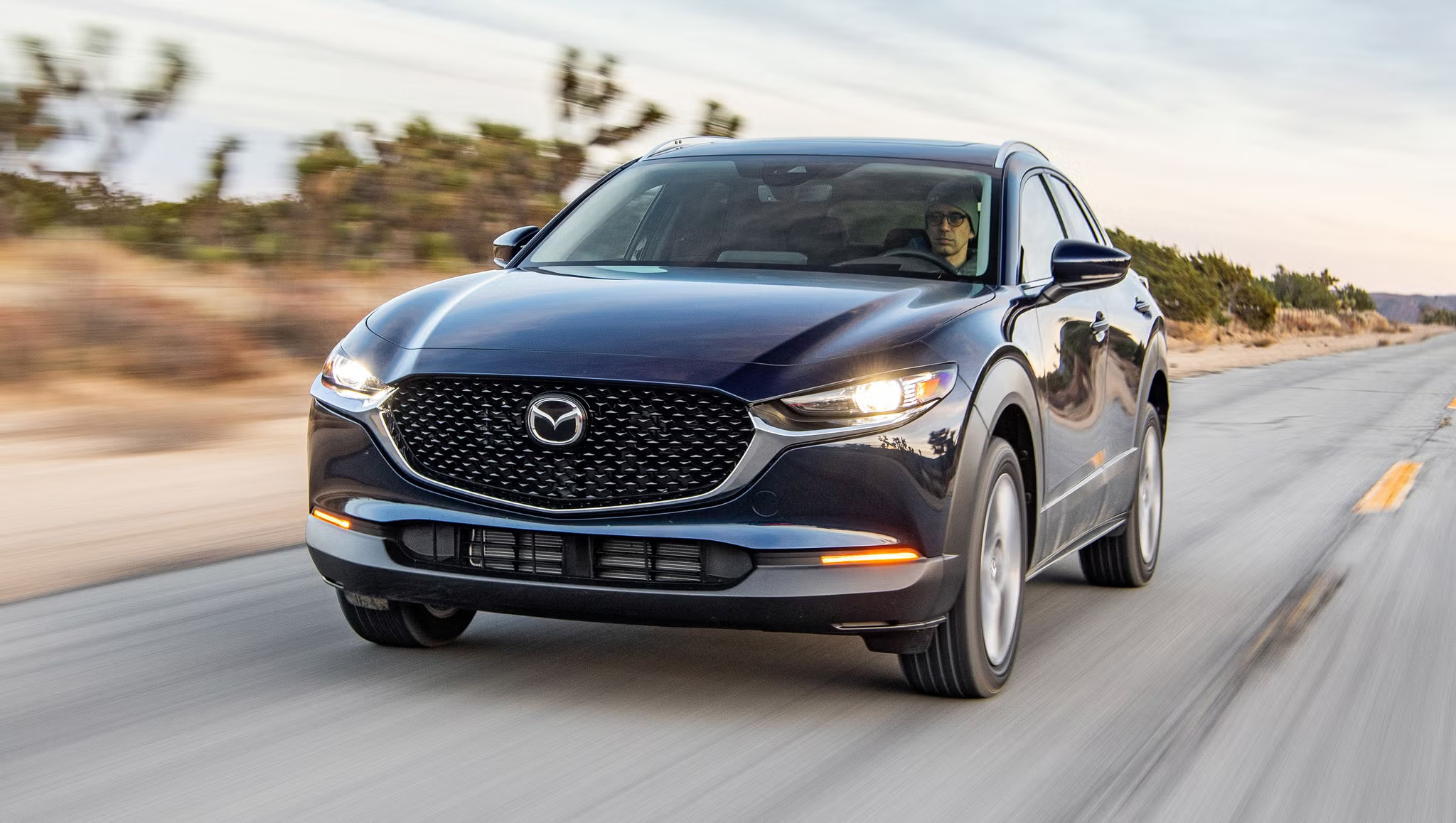
In a region where city streets meet coastal highways, Bay Area drivers need a compact SUV that’s just as comfortable navigating tight urban neighborhoods as it is heading out for weekend getaways. Enter the 2025 Mazda CX‑30—a subcompact crossover that blends upscale refinement, dynamic performance, and everyday practicality.
At Marin Mazda, we’ve seen a surge in interest for the CX‑30, especially among young professionals, first-time buyers, and downsizing families. Here are the top five reasons why this smart, stylish SUV is becoming one of the most popular choices across San Rafael and beyond.
1. Standard All-Wheel Drive for Every Season
Whether you’re headed over the Golden Gate Bridge or up to Tahoe for a snowy weekend, standard i-ACTIV AWD on every 2025 CX‑30 trim ensures peace of mind in all conditions.
Unlike competitors that make AWD optional (and pricey), Mazda includes it across the board. Combine that with Mi‑Drive modes—like Off-Road and Sport—and you have an SUV that’s equally ready for slippery mornings and spirited highway drives.
Bay Area Benefit: AWD traction for Marin’s hills and mountain trips without paying extra.
2. Upscale Interior Without the Luxury Price Tag
Step inside the CX‑30 and you’ll immediately notice the difference. Mazda has carved out a niche as a near-luxury brand, and the 2025 model is no exception. Expect:
- Soft-touch surfaces and available leather trim
- Minimalist design with intuitive controls
- Available Bose® 12-speaker audio system
- Active Driving Display (head-up display) on Premium trims
Even entry-level trims feel more refined than rivals like the Honda HR-V or Toyota Corolla Cross.
Bay Area Benefit: Drive something that feels premium without blowing your budget.
3. City-Sized with Big Capability
With a tight turning radius (~34.8 feet) and compact 173-inch length, the CX‑30 is made for cities like San Francisco. But don’t let its size fool you—it’s got the muscle to go farther.
| Metric | CX‑30 2.5L NA | CX‑30 Turbo |
|---|---|---|
| Horsepower | 191 hp | 250 hp (with 93 octane) |
| Towing Capacity | 1,500 lbs | 1,500 lbs |
| Ground Clearance | 8.0 in | 8.0 in |
Add roof rails and you’re ready for bike racks, gear boxes, or weekend luggage.
Bay Area Benefit: Park easily in tight neighborhoods but still head out of town with ease.
4. Strong Fuel Economy with Two Engine Options
Gas prices in California remain some of the highest in the U.S., so efficiency matters. The CX‑30 delivers both performance and economy:
- 2.5L Non-Turbo: ~26 MPG city / 33 MPG highway
- 2.5L Turbo: ~22 MPG city / 30 MPG highway
Whether you choose the base engine or go all-in on turbocharged performance, you’ll spend less time at the pump than with most AWD SUVs in this class.
Bay Area Benefit: Fewer fill-ups, more time for weekend drives along Highway 1.
5. Advanced Safety Comes Standard
The 2025 Mazda CX‑30 includes i-Activsense® safety features on every trim level:
- Blind Spot Monitoring
- Rear Cross Traffic Alert
- Lane Departure Warning
- Smart Brake Support
- Adaptive Cruise Control with Stop & Go
Add available features like Traffic Jam Assist and 360° View Monitor, and you’ve got one of the safest compact SUVs in its class.
Bay Area Benefit: Navigate I‑580 traffic or Marin backroads with peace of mind.
Final Thoughts
From urban commutes in Oakland and San Francisco to scenic weekend escapes in Sonoma and Big Sur, the 2025 Mazda CX‑30 delivers everything Bay Area drivers are asking for:
Compact agility, all-weather confidence, premium feel, and real-world efficiency.
If you’re shopping for a small SUV that stands out in traffic and delivers long-term value, the CX‑30 belongs on your shortlist.
Explore the 2025 Mazda CX‑30 at Marin Mazda
Ready to see what the hype is about? Visit Marin Mazda in San Rafael to test drive the CX‑30, compare trims, and explore exclusive local offers.
Marin Mazda
807 Francisco Blvd E, San Rafael, CA 94901
(415) 454‑7000
www.marinmazda.net
Your next great drive starts here.

The 2025 Mazda CX‑30 continues to set the bar in the subcompact SUV segment by blending luxury, performance, and affordability. But with so many trim levels available, which CX‑30 model gives you the most value for your money?
At Marin Mazda, we’ve broken down all seven 2025 Mazda CX‑30 trims—from the well-equipped base model to the fully loaded Turbo Premium Plus—so you can find the best fit for your lifestyle and budget.
2025 Mazda CX‑30 Trim Overview
There are seven trim levels for the 2025 Mazda CX‑30 in the U.S., split between naturally aspirated (2.5 S) and turbocharged (2.5 Turbo) models:
- 2.5 S Select Sport
- 2.5 S Preferred
- 2.5 S Premium
- 2.5 S Carbon Edition
- 2.5 Turbo Premium
- 2.5 Turbo Premium Plus
- 2.5 Carbon Turbo
CX‑30 2.5 S Select Sport
- Engine: 2.5L I4, 191 hp
- Drivetrain: Standard AWD
- Key Features: 18″ alloy wheels, Apple CarPlay & Android Auto, dual-zone climate control, push-button start
- MSRP: ~$25,700 USD
Best for: Budget-conscious buyers who want standard AWD and core tech features in a stylish crossover.
CX‑30 2.5 S Preferred
- Adds to Select Sport: Heated front seats, power driver’s seat with lumbar support, rear privacy glass, and roof rails
- MSRP: ~$28,000 USD
Best for: Drivers looking for added comfort and daily usability without breaking the bank.
CX‑30 2.5 S Premium
- Adds to Preferred: Leather upholstery, full-color Active Driving Display (HUD), navigation, power liftgate, paddle shifters
- MSRP: ~$30,500 USD
Best for: Those who want a more premium interior and upgraded tech without stepping into turbo territory.
CX‑30 2.5 S Carbon Edition
- Unique Features: Polymetal Gray exterior, red leather interior, 18″ black alloy wheels, Bose 12-speaker audio system
- MSRP: ~$30,300 USD
Best for: Style-conscious buyers who want bold design and upgraded sound without needing more power.
CX‑30 2.5 Turbo Premium
- Engine: 2.5L Turbo I4, 227 hp (87 octane) / 250 hp (93 octane)
- Adds to S Premium: Turbo engine, larger exhaust outlets, signature LED lighting, black gloss accents
- MSRP: ~$33,900 USD
Best for: Drivers who prioritize performance and upscale details.
CX‑30 2.5 Turbo Premium Plus
- Adds to Turbo Premium: 360º View Monitor, front and rear parking sensors, Traffic Jam Assist, Smart Brake Support (rear)
- MSRP: ~$36,600 USD
Best for: Buyers who want every safety and tech upgrade available in the CX‑30 lineup.
CX‑30 2.5 Carbon Turbo
- Features: Same turbocharged performance as other turbo trims, but with the Carbon Edition’s Polymetal Gray paint, black wheels, and red leather
- MSRP: ~$33,700 USD
Best for: Those who want unique styling and turbo power in a standout package.
Which 2025 CX‑30 Trim Is the Best Value?
Here’s a quick breakdown:
| Category | Trim Recommendation |
|---|---|
| Best for Budget | 2.5 S Select Sport |
| Best for Comfort | 2.5 S Preferred |
| Best for Luxury | 2.5 S Premium or Turbo Premium |
| Best for Performance | 2.5 Turbo Premium |
| Best for Tech & Safety | 2.5 Turbo Premium Plus |
| Best Styling | 2.5 Carbon Turbo |
Overall Best Value:
The 2.5 S Preferred offers an ideal mix of comfort, price, and features. If you’re performance-minded, the 2.5 Turbo Premium delivers excellent power and premium touches without the full Premium Plus price tag.
Final Thoughts
The 2025 Mazda CX‑30 lineup is one of the most diverse in the subcompact SUV market. Whether you’re focused on luxury, performance, or smart pricing, there’s a CX‑30 trim tailored to your needs.
Test Drive the 2025 Mazda CX‑30 Today at Marin Mazda
Get behind the wheel and discover which CX‑30 trim feels right for you.
Marin Mazda
807 Francisco Blvd E, San Rafael, CA 94901
Call: (415) 454‑7000
Browse Inventory: www.marinmazda.net
Refined, powerful, and built for real drivers—the 2025 CX‑30 awaits.
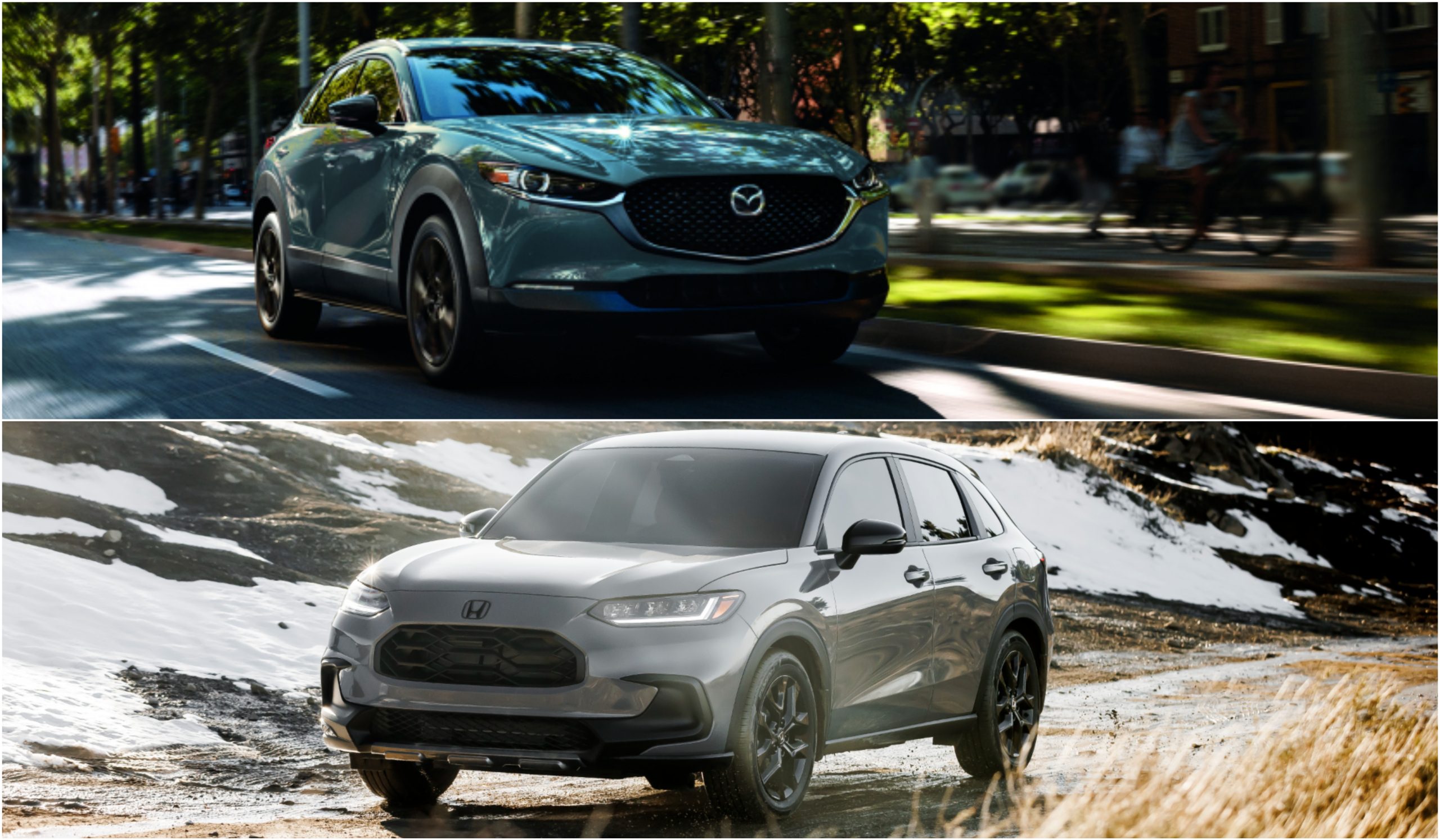
In the battle of subcompact crossovers, two models consistently rise to the top: the 2025 Mazda CX‑30 and the 2025 Honda HR-V. Both offer everyday practicality, smart fuel economy, and crossover styling—but only one brings refined performance, standout design, and near-premium features at an affordable price point.
At Marin Mazda, we’re taking a closer look at how these two crossovers stack up across key categories so you can decide which one fits your lifestyle best.
Performance and Engine Specs
| Specification | 2025 Mazda CX‑30 | 2025 Honda HR-V |
|---|---|---|
| Engine Options | 2.5L I4 (191 hp) or Turbo (up to 250 hp) | 2.0L I4 (158 hp) |
| Transmission | 6-speed automatic | CVT (Continuously Variable) |
| Drivetrain | Standard AWD | FWD standard, AWD optional |
| 0–60 mph Time | 5.8–8.1 seconds (est.) | 9.4 seconds (approx.) |
Verdict:
The CX‑30 offers significantly more horsepower—especially in its turbocharged trims—and standard all-wheel drive across all models. In contrast, the HR-V feels underpowered and lacks the engaging driving feel Mazda is known for.
Interior Design and Comfort
- Mazda CX‑30: A more refined, premium interior with high-quality materials, minimalist design, and a driver-focused cockpit. Upper trims feature leather seats, a panoramic moonroof, and a Bose 12-speaker sound system.
- Honda HR-V: Functional and clean, but more utilitarian. You get a larger touchscreen (9″), but the layout and materials feel more basic even in top trims.
Verdict:
If comfort, elegance, and cabin quality matter to you, the CX‑30 easily wins this round. It feels closer to a luxury SUV than a budget crossover.
Technology and Infotainment
| Feature | CX‑30 (Select Trims) | HR-V (Select Trims) |
|---|---|---|
| Screen Size | 8.8″ or 10.25″ (updated) | 7″ or 9″ |
| Apple CarPlay/Android Auto | Standard (wired/wireless) | Standard (wired/wireless) |
| Navigation | Available | Available |
| Bose Premium Audio | Available (12 speakers) | Not available |
| Heads-Up Display | Available | Not available |
Verdict:
Mazda’s infotainment may not have the largest screens, but it provides a more elegant, distraction-free experience. Honda’s new infotainment is a step up, but lacks premium options like the Bose system or a head-up display.
Cargo and Practicality
| Measurement | Mazda CX‑30 | Honda HR-V |
|---|---|---|
| Cargo (rear seats up) | 20.2 cu ft | 24.4 cu ft |
| Max Cargo (rear seats folded) | 45.2 cu ft | 55.1 cu ft |
| Rear Legroom | 36.3 in | 39.3 in |
Verdict:
The HR-V wins this round for practicality. It offers more rear seat space and larger cargo capacity. If hauling gear or passengers is your top priority, the HR-V delivers.
Fuel Economy (Gas Models)
| Model | City MPG | Hwy MPG | Combined |
|---|---|---|---|
| CX‑30 2.5L NA | 26 | 33 | 29 |
| CX‑30 2.5L Turbo | 22 | 30 | 25 |
| HR-V 2.0L FWD | 26 | 32 | 28 |
| HR-V 2.0L AWD | 25 | 30 | 27 |
Verdict:
Both vehicles offer good efficiency, but the CX‑30 offers a compelling combination of performance and respectable MPG—especially with the non-turbo engine. The HR-V edges out the Turbo CX‑30 slightly in overall economy.
Safety and Driver Assistance
Both vehicles include advanced safety features as standard:
- Forward Collision Warning
- Automatic Emergency Braking
- Lane Keep Assist
- Blind Spot Monitoring
- Adaptive Cruise Control
However, Mazda’s i-Activsense system includes optional features like a 360º view monitor, rear smart brake support, and Traffic Jam Assist on higher trims—features not currently available on the HR-V.
Verdict:
Both are safe crossovers, but Mazda offers a more advanced suite of driver aids at the top end.
Pricing and Value
| Trim Level | Starting MSRP (USD) |
|---|---|
| Mazda CX‑30 2.5 S Select Sport | ~$25,700 |
| Mazda CX‑30 Turbo Premium | ~$33,900 |
| Honda HR-V LX (FWD) | ~$25,100 |
| Honda HR-V EX-L (AWD) | ~$29,900 |
Verdict:
Price-wise, both models are similar at the entry-level, but the CX‑30’s upper trims deliver significantly more premium features, power, and design for a few thousand more. The HR-V is a value option, but Mazda offers more for your money.
Final Thoughts: Which SUV Should You Choose?
| Category | Winner |
|---|---|
| Driving Performance | Mazda CX‑30 |
| Cabin Quality | Mazda CX‑30 |
| Cargo & Practicality | Honda HR-V |
| Fuel Efficiency | Slight edge to HR-V |
| Technology Features | Mazda CX‑30 |
| Safety Equipment | Tie |
| Value | Mazda CX‑30 |
Bottom Line:
If you value engaging performance, premium design, and advanced features, the 2025 Mazda CX‑30 is a better-rounded crossover and delivers real value for drivers who want more than just a basic commuter.
Test Drive the 2025 Mazda CX‑30 at Marin Mazda
Explore trims, interior finishes, and turbocharged performance today at Marin Mazda.
Marin Mazda
807 Francisco Blvd E, San Rafael, CA 94901
(415) 454‑7000
www.marinmazda.net
Let’s help you discover the SUV that checks all your boxes.
Connect with us


