

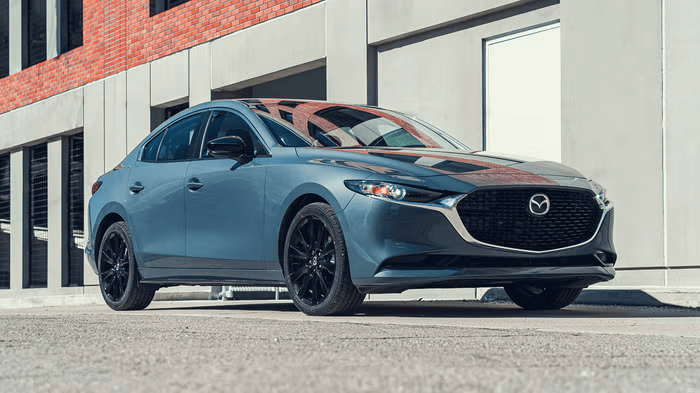
Mazda has quietly become one of the most respected automotive brands on the road today. While it may not carry the prestige of luxury badges like BMW or Lexus, or the mass-market dominance of Toyota and Honda, Mazda has carved out a space for itself by focusing on refinement, driver engagement, and long-term reliability.
But are Mazdas actually good cars? If you’re considering a new or used vehicle, this article breaks down the reasons Mazda consistently ranks among the top choices in automotive reviews, owner satisfaction surveys, and safety evaluations.
1. Long-Term Reliability and Durability
Mazdas are often praised for their mechanical reliability. This is especially important for buyers who plan to keep their car beyond the warranty period or want strong resale value.
Proven Track Record
- Consumer Reports ranked Mazda the most reliable automaker in 2020, beating out traditional leaders like Toyota and Lexus.
- The Mazda3, Mazda6, and CX-5 frequently score high for long-term dependability, often lasting beyond 250,000 km (155,000 miles) with minimal major repairs.
- Mazda’s decision to avoid overcomplicated systems — such as dual-clutch gearboxes or overly complex infotainment — contributes to its vehicles’ longevity.
Routine maintenance is generally straightforward, and Mazda’s naturally aspirated Skyactiv engines have fewer moving parts than turbocharged or hybrid systems, reducing the likelihood of costly failures.
2. Engaging Driving Dynamics
Mazda has made driving enjoyment a key priority across its lineup — not just in performance models like the MX-5 Miata, but also in everyday cars and crossovers.
Why They’re Fun to Drive:
- Precise steering and well-tuned suspension systems offer a more engaging feel than most mainstream competitors.
- Technologies like G-Vectoring Control Plus subtly enhance vehicle stability during cornering and lane changes.
- Even compact models like the Mazda3 or CX-30 handle like much more expensive European cars.
Most automakers design cars to be neutral and inoffensive. Mazda takes a different path — its engineers focus on “Jinba Ittai,” a Japanese philosophy meaning “horse and rider as one.” The result is a more connected, responsive feel behind the wheel.
3. High-Quality Interiors Without Luxury Pricing
Mazda vehicles, especially from model year 2017 onward, are known for interiors that punch well above their weight class. Step inside a Mazda3 GT or CX-5 Signature, and you’ll find materials, stitching, and finishes that would feel at home in a German luxury car.
Notable Interior Features:
- Nappa leather seating available on upper trims
- Real wood or aluminum trim on Signature models
- Heads-up displays, heated/ventilated seats, and dual-zone climate control
- Excellent insulation from road noise, especially in newer generations
The minimalist layout and tactile controls reflect Mazda’s focus on driver-centric design. Unlike some competitors that prioritize screen size over function, Mazda puts usability and ergonomics first.
4. Excellent Safety Ratings Across the Lineup
Safety is another strong point for Mazda. Nearly every vehicle in its lineup receives high scores in crash testing and includes a long list of active safety technologies.
Standard or Available i-Activsense Features:
- Forward Collision Warning with Automatic Emergency Braking
- Lane Departure Warning and Lane Keep Assist
- Blind Spot Monitoring and Rear Cross Traffic Alert
- Adaptive Cruise Control with Stop & Go
- Traffic Sign Recognition (on higher trims)
In Canada and the U.S., most Mazda vehicles are Top Safety Pick or Top Safety Pick+ award winners according to the Insurance Institute for Highway Safety (IIHS). Structural rigidity, smart safety systems, and braking performance all contribute to these top-tier results.
5. Ownership Costs and Warranty Coverage
Mazdas offer strong value retention and lower-than-average repair costs, especially when compared to European rivals. Mazda’s decision to focus on naturally aspirated engines (with the exception of the 2.5L turbo in select trims) keeps running costs lower, while still offering strong performance.
Warranty Coverage (Canada):
- Basic Coverage: 3 years / unlimited km
- Powertrain: 5 years / unlimited km
- Anti-Perforation (Rust): 7 years / unlimited km
- Roadside Assistance: 3 years / unlimited km
The unlimited mileage warranty is unique among non-luxury automakers and is especially attractive to long-distance drivers, rideshare drivers, or those who plan to drive well beyond 20,000 km/year.
6. Resale Value and Market Perception
Mazda vehicles hold their value well, particularly the Mazda3, CX-5, and MX-5 Miata. While they may not reach Toyota’s resale levels, they often outperform brands like Hyundai, Nissan, and Ford.
Several factors contribute to strong resale value:
- Positive brand perception among informed buyers
- Reliability and durability
- Timeless design that doesn’t age quickly
- Lower fleet sales, which help preserve resale pricing
For example, a well-maintained 5-year-old Mazda3 still commands a strong asking price in the used market — even with higher mileage.
7. Drawbacks to Consider
Mazdas are not without flaws. Depending on your priorities, these factors may be worth keeping in mind:
- Infotainment systems in models from 2014 to 2020 use a rotary dial and are not touchscreen while driving. Some users find this less intuitive.
- Rear seat and cargo space in the Mazda3 and CX-5 are slightly tighter than class leaders like the Honda CR-V or Toyota RAV4.
- No full EVs or widespread hybrid options (until recent CX-90 PHEV and upcoming EVs) may be a downside for eco-conscious buyers.
These limitations are relatively minor but worth evaluating during a test drive.
8. Standout Models Worth Mentioning
Mazda’s lineup is tight and well-curated, with no filler vehicles. Each model serves a clear purpose and is engineered with care.
| Model | Highlights |
|---|---|
| Mazda3 | Compact sedan/hatch with AWD option, premium design |
| CX-5 | Compact SUV with available turbo engine, refined ride |
| CX-50 | Newer SUV with off-road capability and premium trims |
| MX-5 Miata | Iconic roadster known for lightweight fun |
| CX-90 PHEV | Plug-in hybrid with 323 hp and 42 km electric range |
Mazda has also introduced inline-6 engines and rear-wheel drive platforms in newer models like the CX-90, signaling its move further into the premium segment.
Conclusion: Are Mazdas Good Cars? Absolutely.
Mazdas combine reliability, driving enjoyment, upscale design, and long-term value in a way few automakers in their price range can match. Whether you’re buying your first vehicle, upgrading to something sportier, or downsizing from a luxury brand, Mazda delivers across the board.
They may not shout for attention, but once you drive one — and own one — it becomes clear why Mazda earns such loyal fans. For many drivers, it’s not just a good car — it’s the smartest choice in its class.
Connect with us


