

Fuel injector cleaners are one of those automotive products that people either swear by or call snake oil. The truth is more technical and more useful: some injector cleaners absolutely work, but only when the chemistry matches the deposits you’re trying to remove, the engine design allows the cleaner to reach the problem area, and the product is used correctly.
You’ll also get a clear buying framework so you can choose a product confidently without guessing.
If you drive a Chrysler, Dodge, Jeep, or Ram and you’d rather have the fuel and drivability issue diagnosed properly (misfire, hesitation, rough idle, poor MPG), a shop can determine whether you’re dealing with injector deposits, ignition issues, a vacuum leak, a sensor fault, or a mechanical problem. Service entry points for Simi Valley CDJR are here:
1) What cleans fuel injectors the best: the chemistry that matters (PEA)
If you take only one concept from this guide, make it this:
The best fuel injector cleaners are typically PEA-based.
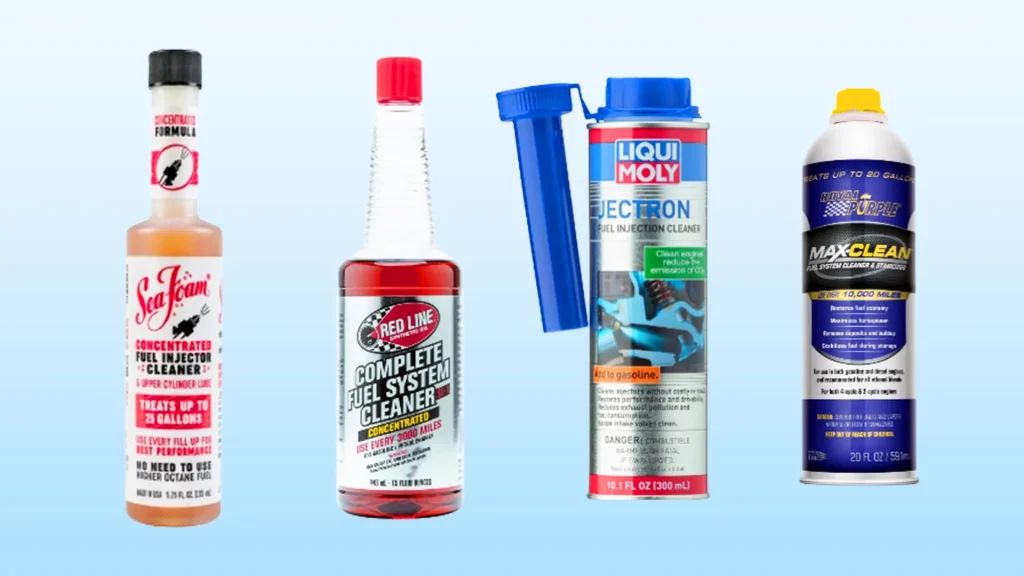
PEA stands for polyether amine. It is widely used in high-quality deposit control additives because it can help remove stubborn combustion and injector deposits. Chevron’s own product documentation for Techron Concentrate Plus explicitly states it is formulated with PEA technology. (Chevron CGL Apps)
That matters because many “injector cleaners” on the shelf are not built around strong deposit-control detergents. Some are more solvent-heavy, some focus on water removal, and some function more like light upper-cylinder lubricants. They might do something, but they often do not deliver the same deposit removal behavior people expect when they ask “what fuel injector cleaner works the best.”
Why PEA is the usual benchmark
Modern gasoline and engines create deposit types that often respond best to detergent additives designed for deposit control. Independent coverage in automotive media has highlighted PEA-based cleaners specifically as meaningful for deposit reduction in modern engines. (Motor1.com)
2) When a fuel injector cleaner will actually help (and when it will not)
Fuel injector cleaner is most likely to help when the root problem is deposit-related, not mechanical.
Good use cases
- Mild to moderate drivability issues consistent with deposit buildup: hesitation, rough idle, reduced throttle response
- Vehicles that have been run on low-detergent fuel for extended periods
- Preventative maintenance on port-injected engines
- Restoring spray pattern quality when injectors are dirty but not mechanically failing
Not good use cases
- A dead injector solenoid
- A clogged injector screen from debris that needs physical service
- Misfires caused by ignition coils, plugs, vacuum leaks, compression issues
- Modern GDI intake valve deposits (more on this below)
The AAA Fuel Quality report points out that deposit control can be improved by using higher detergent gasoline and that deposits can be reduced by switching to fuels that meet TOP TIER standards. (AAA) That’s important because if you already consistently use TOP TIER fuel, the marginal benefit of frequent aftermarket cleaner use may be smaller.
3) The best fuel injector cleaner depends on your engine type
Before picking a bottle, identify your injection system:
A) Port fuel injection (PFI)
Fuel sprays into the intake port behind the intake valve. In this setup, in-tank cleaners can help keep:
- injectors cleaner
- intake valves cleaner (because fuel contacts the valve)
B) Gasoline direct injection (GDI)
Fuel sprays directly into the combustion chamber. Many GDI engines are more prone to intake valve deposits because the fuel does not wash the back of the valves. This is widely discussed as a design reality: in traditional port injection, fuel helps clean oil deposits on intake valves; in direct injection, that cleaning action is absent. (Grassroots Motorsports)
Implication: In-tank injector cleaners can still help GDI injectors and combustion chamber deposits, but they often cannot fully solve intake valve carbon on their own. For intake valves in GDI engines, you may need an intake-side cleaner or mechanical cleaning if deposits are severe. (CRC Industries)
C) Diesel
Diesel injectors and fuel systems are a different topic because lubricity, water management, and injection pressures differ. This guide focuses on gasoline injector cleaners, because your keyword set is gasoline-centric.
4) What is the best fuel injector cleaner in 2026?
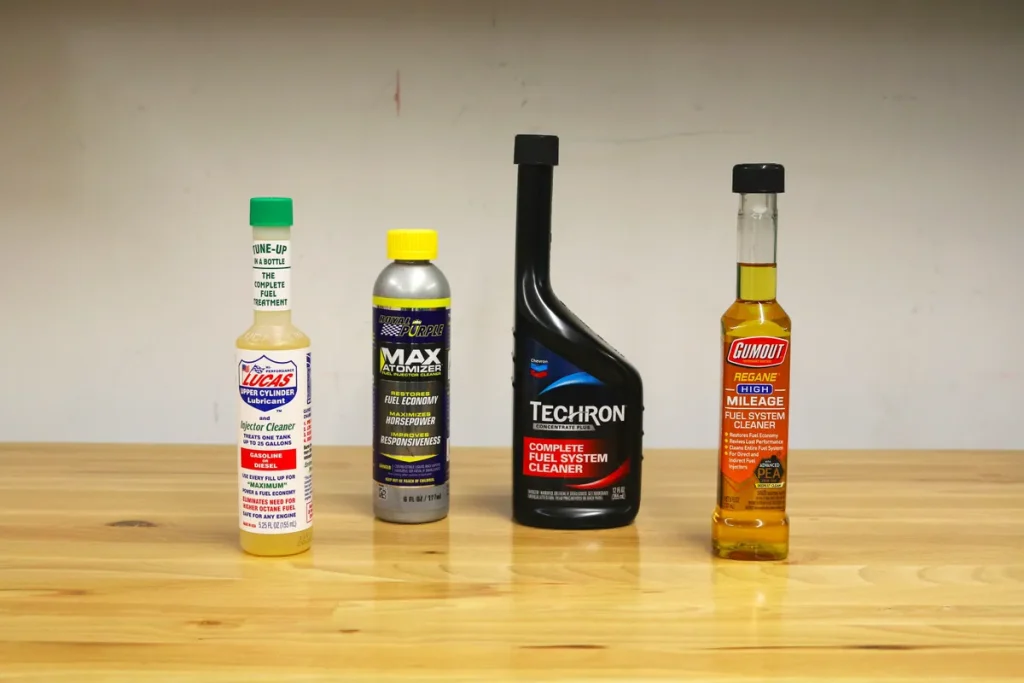
Instead of naming one product as “best for everyone,” the honest answer is a shortlist of PEA-based cleaners that have strong documentation and widespread professional acceptance, then matching them to your use case.
Top picks that consistently fit the “works the best” criteria
These stand out because the manufacturer documentation explicitly positions them as high-performance fuel system cleaners with strong detergent chemistry.
1) Chevron Techron Concentrate Plus / Complete Fuel System Cleaner
Chevron’s product documentation describes Techron Concentrate Plus as a premium gasoline fuel system cleaner formulated with PEA technology. (Chevron CGL Apps)
Chevron also provides a practical usage cadence, commonly recommending periodic treatment such as every season or before oil changes on some Techron pages. (Chevron Lubricants)
Who it’s best for:
- Most daily drivers wanting a proven, mainstream PEA-based cleaner
- Preventative maintenance and mild drivability cleanup
- People who want an easy interval-based product choice
2) Red Line SI-1 Complete Fuel System Cleaner
Red Line positions SI-1 as a complete fuel system cleaner designed to clean injectors and deposits across the fuel system and combustion areas. (Red Line Oil)
Who it’s best for:
- Drivers looking for a strong “one-bottle treatment” approach
- Performance or enthusiast use cases
- Situations where you suspect meaningful injector deposit buildup
3) Royal Purple Max Atomizer
Retailer listings for Max Atomizer highlight highly concentrated PEA detergents and positioning for modern direct injection engines. (Partsource)
Who it’s best for:
- People specifically shopping “best injector cleaner for GDI” style use cases
- Those wanting a PEA-stated cleaner targeted at modern fuel injection
Important reality check: product marketing claims can be aggressive. The best way to stay grounded is to prioritize products whose technical or product documents clearly describe the detergent basis (PEA) and intended use, like Techron’s PDS referencing PEA technology. (Chevron CGL Apps)
5) Best fuel injector cleaner for high mileage vehicles
High mileage engines tend to have a few overlapping issues:
- higher deposit risk from longer service life
- possible injector spray pattern degradation over time
- combustion chamber deposits contributing to roughness or knock sensitivity
- sometimes lower-quality fueling habits across the car’s history
A high-mileage strategy should be conservative, methodical, and realistic:
High mileage approach that actually makes sense
- Fix basics first: air filter, spark plugs (if due), fuel quality, PCV issues
- Run a TOP TIER detergent gasoline consistently for a few tanks (AAA)
- If symptoms persist, use a PEA-based complete fuel system cleaner per label instructions (one full treatment) (Chevron CGL Apps)
- Reassess drivability. If there is no improvement, do not keep pouring bottles. Diagnose.
Why TOP TIER fuel matters more than people think
TOP TIER’s performance standard is explicitly designed to minimize deposits on fuel injectors, intake valves, and combustion chambers. (TOP TIER™ Fuel Standards)
AAA’s fuel quality report similarly notes that switching to gasoline meeting TOP TIER standards can reduce or remove carbon deposits from critical engine components in many cases. (AAA)
For many high-mileage drivers, the most cost-effective improvement is:
- consistent high detergent fuel
- one periodic PEA treatment when needed, not constant additive use
6) How to use fuel injector cleaner correctly (so it can actually work)
Even the best fuel injector cleaner will disappoint if it’s used incorrectly.
The correct method, generally
- Add the cleaner to the tank at the time specified on the label, often before filling so it mixes well.
- Fill with the amount of fuel the product is designed to treat.
- Drive normally, and include some steady-state driving where possible.
For frequency, follow label guidance. Chevron’s Techron page notes recurring seasonal or oil-change timing as a typical cadence recommendation. (Chevron Lubricants)
Do not stack cleaners
Do not pour multiple cleaners together. It does not scale linearly and can create unexpected solvent load or drivability issues.
Do not use cleaner to “fix” a check engine light blindly
If you have a misfire code or lean condition, you need diagnosis. Additives are not substitutes for troubleshooting.
7) What fuel injector cleaner works the best for GDI engines?
This is where expectations need to be calibrated.
What in-tank cleaners can do for GDI
They can help clean:
- GDI injectors
- combustion chamber deposits
- some fuel system varnish or gum
What in-tank cleaners cannot reliably do for GDI
They typically cannot fully clean heavy intake valve deposits because fuel does not wash the back of the valves in a GDI layout. (Grassroots Motorsports)
If your GDI engine has symptoms consistent with intake valve carbon (rough idle, cold start misfires, airflow restriction), you may need a different approach:
- intake valve cleaner applied through intake tract (product-specific and procedure-specific)
- professional service such as walnut blasting in severe cases
CRC, for example, markets an intake valve and turbo cleaner sprayed through the air intake specifically for GDI valve deposit concerns, reflecting the reality that the cleaner must reach the valve backs directly. (CRC Industries)
General technical coverage on GDI deposit problems also explains how valve deposits can restrict airflow and cause drivability symptoms. (AA1Car)
8) A practical “best fuel injector cleaner” selection matrix
Use this table to pick what fits your situation.
| Your situation | What cleans fuel injectors the best here | Why |
|---|---|---|
| Normal daily driving, preventative maintenance | A PEA-based complete fuel system cleaner like Techron | PEA-based detergent chemistry, easy periodic use (Chevron CGL Apps) |
| Rough idle or hesitation that feels deposit-related | Strong PEA-based cleaner, one proper treatment | Higher detergent action, designed for injector and combustion deposits (Red Line Oil) |
| High mileage engine, unknown fuel quality history | Start with TOP TIER fuel, then a PEA treatment if needed | Fuel detergent standards directly target deposit control (AAA) |
| Modern GDI engine, concern about intake valve carbon | In-tank cleaner for injectors plus an intake-side strategy if needed | GDI valves are not washed by fuel, so deposits persist (Grassroots Motorsports) |
| You already use TOP TIER fuel consistently and have no symptoms | Often nothing, or occasional periodic treatment only | High detergent fuel already addresses deposit control (TOP TIER™ Fuel Standards) |
9) Myths and mistakes that waste money
Myth: “Any injector cleaner is the same”
No. The detergent chemistry and concentration vary widely. If you care about “works the best,” prioritize documented PEA-based cleaners. (Chevron CGL Apps)
Myth: “More detergent is always better”
More additive is not automatically better. TOP TIER and fuel detergent discussions emphasize that higher additive concentration and better detergent packages help, but it does not mean unlimited additive stacking is smart. (TOP TIER™ Fuel Standards)
Mistake: Using cleaner to avoid diagnosis
If you have a hard misfire, fuel pressure issue, ignition problem, vacuum leak, or failing injector, cleaner will not save you.
Mistake: Expecting an in-tank cleaner to fully solve GDI intake valve carbon
GDI intake valves are not exposed to fuel wash. Heavy valve deposits often need intake-side cleaning approaches. (Grassroots Motorsports)
10) The real 2026 best practice: fuel quality first, cleaner second
A lot of people chase the “best fuel injector cleaner” while ignoring the bigger lever: what fuel you run every week.
TOP TIER’s deposit control standard exists because automakers wanted higher detergent performance than minimum regulatory requirements, with the explicit goal of minimizing deposits on injectors, intake valves, and combustion chambers. (TOP TIER™ Fuel Standards)
AAA’s report similarly frames higher-quality detergent gasoline as a meaningful lever for deposit reduction and drivability over time. (AAA)
Practical takeaway:
- If you do not use TOP TIER fuel, start there.
- If you do use TOP TIER fuel and have symptoms, then consider a PEA cleaner.
- If symptoms persist, diagnose the vehicle.
11) How often should you use a fuel injector cleaner?
There is no universal schedule that applies to every engine and every fuel quality regime.
A sensible framework:
- If you regularly run TOP TIER fuel and your vehicle runs well, use cleaner only occasionally.
- If you have unknown fuel history, lots of short trips, or mild symptoms, use a PEA cleaner at a periodic interval aligned with product guidance.
For example, Chevron’s Techron guidance commonly references seasonal or oil-change timing for periodic use. (Chevron Lubricants)
12) When to skip the bottle and book service
If you have any of the following, you should diagnose rather than experiment:
- check engine light
- flashing misfire warning
- hard starts or stalling
- fuel smell
- significant MPG drop
- persistent hesitation under load
- repeated injector-related trouble codes
At that point, a proper diagnostic path beats additive roulette. If you’re local and drive CDJR, you can route it through:
- https://www.simivalleychryslerdodgejeepram.com/service.aspx
- https://www.simivalleychryslerdodgejeepram.com/book-your-service.html
Bottom line: What is the best fuel injector cleaner?
If your question is “what cleans fuel injectors the best,” the most defensible answer in 2026 is:
- Prioritize PEA-based complete fuel system cleaners (PEA is a key deposit-control detergent chemistry). (Chevron CGL Apps)
- Match the product to your engine type, especially if you have GDI where intake valve deposits may require a different strategy. (Grassroots Motorsports)
- Use TOP TIER detergent gasoline as your baseline, because fuel quality itself is a major deposit-control factor. (TOP TIER™ Fuel Standards)
Connect with us


