

There’s a strange phenomenon happening in the compact SUV market right now.
Buyers keep saying they want the newest thing. Bigger screens. New platforms. Hybrid badges. Radical redesigns. But when it comes time to actually sign the paperwork, a surprising number of them walk straight past the flashy newcomers and buy the same vehicle they’ve been told is “due for replacement.”
That vehicle is the Mazda CX-5.
The 2025 Mazda CX-5 shouldn’t still be this relevant. On paper, it lacks the buzzwords dominating automotive headlines. Yet in the real world, it keeps winning buyers who care less about novelty and more about how a vehicle actually behaves after the first six months of ownership.
This isn’t an accident. It’s a quiet correction to where the SUV market went wrong.
The Compact SUV Market Has a Problem — and the CX-5 Isn’t Part of It
Modern compact SUVs suffer from an identity crisis.
They’re taller than cars but don’t drive like SUVs. They’re packed with technology that ages quickly. They promise “sporty” handling but feel numb. And many rely on complex powertrains that look great in marketing slides but introduce long-term ownership risk.
The 2025 CX-5 goes against all of that.
Instead of asking, “What will look impressive on launch day?” Mazda asked a more dangerous question:
“What will still feel good after five years?”
That mindset explains nearly every decision baked into this vehicle.
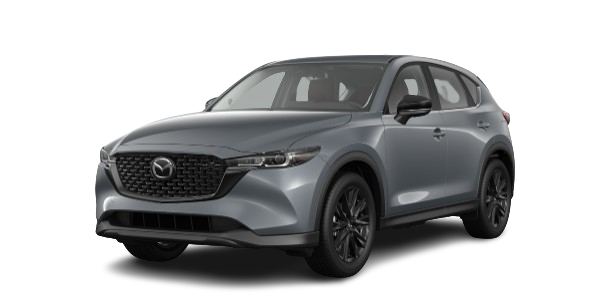
Design That Doesn’t Beg for Attention (and That’s the Point)
While competitors pile on styling elements to signal “newness,” the CX-5’s design philosophy is restraint.
The proportions are balanced.
The surfaces are clean.
The detailing is subtle.
For 2025, Mazda didn’t chase shock value. It refined what already worked:
- Cleaner lighting signatures
- Improved wheel designs
- Minor trim-level visual distinctions
- Paint finishes that highlight body curvature instead of sharp creases
This is a vehicle that looks more expensive than it is — not because it’s loud, but because it’s confident.
And confidence ages far better than trends.
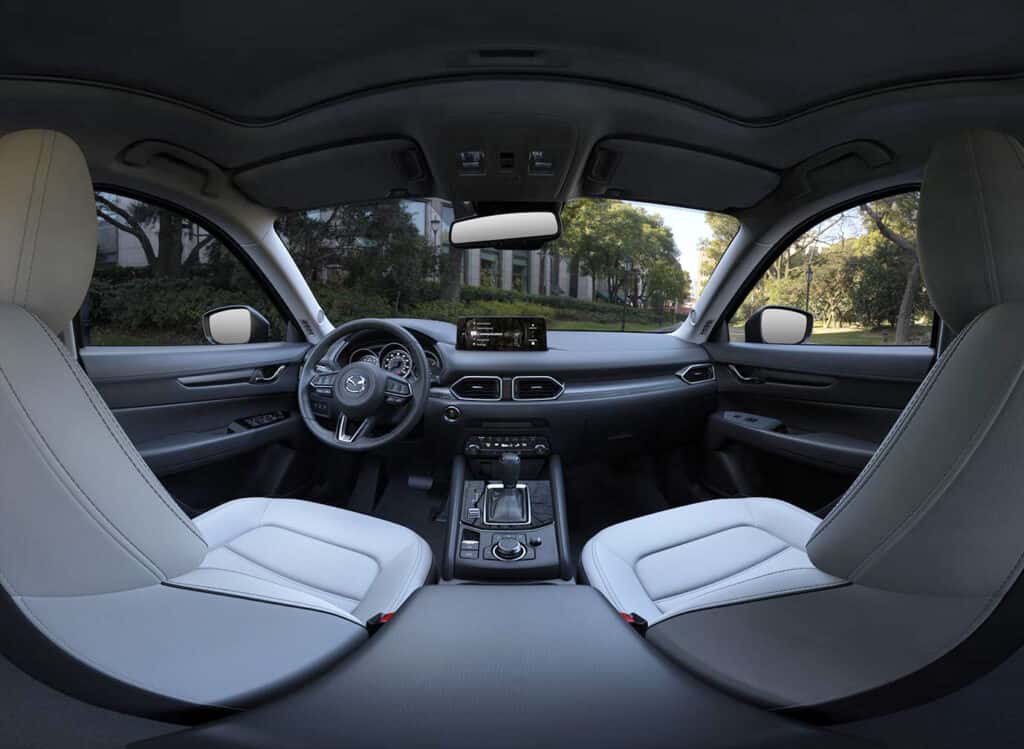
Why the Interior Feels Better Than SUVs That Cost More
Sit inside the CX-5 after driving newer competitors and something becomes obvious very quickly.
This cabin wasn’t designed around a screen.
It was designed around a human.
Mazda’s interior execution prioritizes:
- Natural hand placement
- Logical button spacing
- Minimal visual clutter
- Material quality where you touch it most
Soft-touch surfaces dominate the dash and door panels. Stitching is genuine. The seats are shaped for long-distance comfort, not just showroom appeal.
Most importantly, the driving position feels right. Not artificially tall. Not car-low. Just balanced.
This is one of the few compact SUVs where you don’t need time to “adjust” to the cockpit. It feels intuitive immediately.
The Anti-Trend Infotainment Decision That Paid Off
Mazda’s refusal to fully embrace touchscreen-only infotainment has aged better than anyone expected.
In the 2025 CX-5, the rotary controller still handles most functions. Critics once called it outdated. Owners call it sensible.
Why?
- You don’t have to lean forward while driving
- You don’t hunt through menus mid-turn
- You don’t smudge the display constantly
- You can operate it by feel alone
Wireless smartphone integration is available, but Mazda keeps the screen as a tool, not the centerpiece of the cabin.
This is infotainment designed for driving — not for showing passengers how modern you are.
Powertrains Built for Ownership, Not Headlines
The CX-5 doesn’t try to win spec-sheet wars.
Instead, it wins trust.
Naturally Aspirated Engine: The Long Game
Mazda’s base engine choice prioritizes predictability and longevity. No sudden torque spikes. No artificial throttle mapping. Just smooth, linear response.
This matters because:
- Power delivery stays consistent over time
- Maintenance complexity remains low
- Real-world fuel economy is dependable
Turbocharged Option: Real Performance, Not Drama
The turbo CX-5 doesn’t shout about speed, but the moment you merge onto a highway, you feel the difference.
Strong mid-range torque. Effortless passing. No frantic downshifts.
And crucially, it pairs with a traditional automatic transmission — not a CVT pretending to be sporty.
That decision alone makes the CX-5 feel mechanically honest in a segment full of compromises.

AWD That Works Before You Need It
Mazda’s i-Activ AWD system is predictive, not reactive.
Instead of waiting for wheel slip, it constantly analyzes:
- Steering angle
- Throttle input
- Wheel speed
- Temperature
- Road conditions
It distributes torque before traction loss occurs.
That’s why the CX-5 feels composed in bad weather without advertising itself as an off-road machine.
This isn’t lifestyle AWD.
It’s functional AWD.
The Driving Experience Everyone Else Forgot About
Here’s the uncomfortable truth for the segment:
Most compact SUVs are engineered to isolate drivers, not engage them.
The CX-5 refuses to do that.
Steering feedback is present.
Body control is disciplined.
Weight transfer feels predictable.
You don’t drive around this SUV.
You drive with it.
Mazda’s suspension tuning avoids the floaty softness common in competitors. The result is confidence at speed without sacrificing comfort on rough roads.
It’s the difference between “comfortable” and “controlled.”
Why Real-World Fuel Economy Beats Brochure Numbers
Some rivals advertise slightly better ratings.
Owners often report the opposite experience.
The CX-5 delivers consistency:
- Predictable highway efficiency
- Minimal winter penalties
- No dramatic AWD fuel loss
- Stable long-term averages
This matters because fuel economy isn’t about best-case scenarios. It’s about what happens when traffic, weather, and real driving intervene.
Safety That Doesn’t Fight the Driver
Mazda’s safety systems feel like a co-pilot, not a supervisor.
Lane assistance nudges, not yanks.
Alerts inform, not panic.
Interventions feel deliberate, not aggressive.
This tuning philosophy prevents driver fatigue — something many overactive systems unintentionally cause.
Safety should reduce stress.
The CX-5 actually does.
Practicality Without Overpromising
Cargo space is well-shaped and usable.
Rear seats fold flat.
Lift-over height is low.
Is it the biggest in the class?
No.
Is it intelligently designed?
Absolutely.
Mazda didn’t sacrifice driving dynamics just to inflate cubic-foot numbers, and most owners never miss what they don’t use.
Why Reliability Is the CX-5’s Hidden Weapon
The 2025 CX-5 benefits from something rare in today’s market: platform maturity.
That means:
- Known service intervals
- Established repair data
- Proven components
- Fewer experimental systems
While others rush new tech to market, Mazda refines what already works.
Over time, that restraint saves money, frustration, and resale value.
Who the 2025 CX-5 Is Actually For
This SUV isn’t for buyers chasing trends.
It isn’t for those who replace vehicles every two years.
It isn’t for people who value screens over steering feel.
It’s for:
- Long-term owners
- Drivers who care about feel
- Buyers who value build quality
- People who plan to keep their vehicle past the warranty
That audience may be quieter, but it’s growing.
Final Verdict: The CX-5 Isn’t Old — the Market Just Grew Up
The 2025 Mazda CX-5 exposes an uncomfortable truth:
New doesn’t always mean better.
While others chase reinvention, Mazda refined execution. While competitors added complexity, Mazda added polish. While the segment chased hype, the CX-5 focused on ownership reality.
It doesn’t need a redesign to stay relevant.
It needs drivers who know what actually matters after the excitement fades.
And that’s why, despite everything the market says should have replaced it, the CX-5 continues to win where it counts: real people, real roads, real ownership.
Connect with us


