Few modern automotive technologies have generated as much debate among owners, mechanics, and engineers as Active Fuel Management, better known as AFM. Introduced by General Motors as a fuel-saving innovation, AFM promised better efficiency without sacrificing V8 performance. On paper, it sounded brilliant.
In practice, it became one of the most polarizing engine technologies of the last two decades.
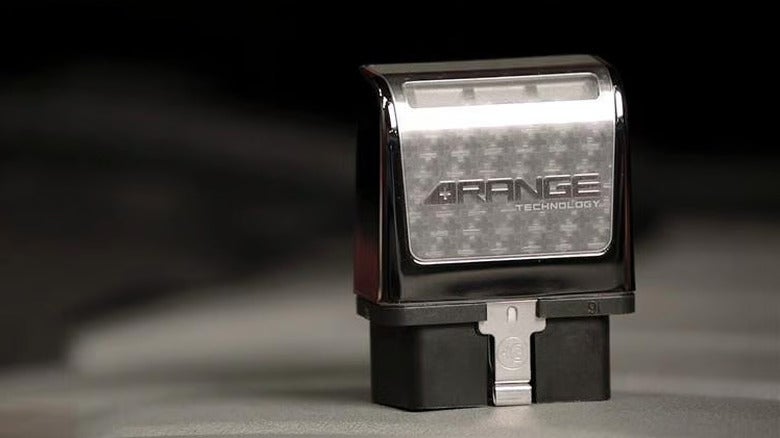
As a result, an entire aftermarket industry emerged around one deceptively simple device: https://amzn.to/4bu3c2g. But what exactly is an AFM disabler? How does it work? Why do so many owners install one? And does disabling AFM actually solve the problems associated with GM’s cylinder-deactivation engines?
This article answers all of those questions—properly, in depth, and without marketing fluff.
Understanding AFM: What Is Active Fuel Management?
To understand an AFM disabler, you first need to understand AFM itself.
Active Fuel Management is GM’s cylinder deactivation system, designed to improve fuel economy by temporarily shutting down half of the engine’s cylinders during light-load driving. In most applications, this means a V8 engine operates as a V4 when cruising at steady speeds.
AFM was primarily deployed in:
- GM V8 engines (5.3L, 6.0L, 6.2L variants)
- Chevrolet Silverado and Tahoe
- GMC Sierra and Yukon
- Cadillac Escalade
- Chevrolet Camaro (V8 models)
- Some GM SUVs and performance vehicles
The goal was simple: reduce pumping losses, improve highway fuel economy, and meet tightening emissions standards.

How AFM Works Inside the Engine
AFM is not a software trick. It is a mechanical system integrated deeply into the engine’s valvetrain.
Key components include:
- AFM lifters (special collapsible lifters)
- Oil pressure control solenoids
- An AFM valley cover with oil passages
- ECU logic to command cylinder deactivation
When AFM activates:
- The ECU detects light engine load.
- Oil pressure is routed to specific lifters.
- Those lifters collapse internally.
- Intake and exhaust valves stop opening on selected cylinders.
- Fuel injection and spark are disabled for those cylinders.
The engine now runs on fewer cylinders until load increases again.
Why AFM Became So Controversial
AFM works—until it doesn’t.
While many vehicles operate for years without issues, a significant number experience serious long-term problems. These issues are not minor inconveniences; they often involve catastrophic engine damage.
Common AFM-related problems include:
- Collapsed AFM lifters
- Stuck lifters that fail to re-engage
- Excessive oil consumption
- Camshaft lobe wear
- Misfires and rough running
- Complete engine failure in extreme cases
The root issue is that AFM lifters are more complex than standard lifters and rely heavily on oil quality, pressure, and cleanliness. Any deviation—sludge, pressure loss, delayed oil changes—accelerates wear.
Once an AFM lifter fails, metal debris often spreads through the engine, turning a single component failure into a full rebuild.
What Is an AFM Disabler?
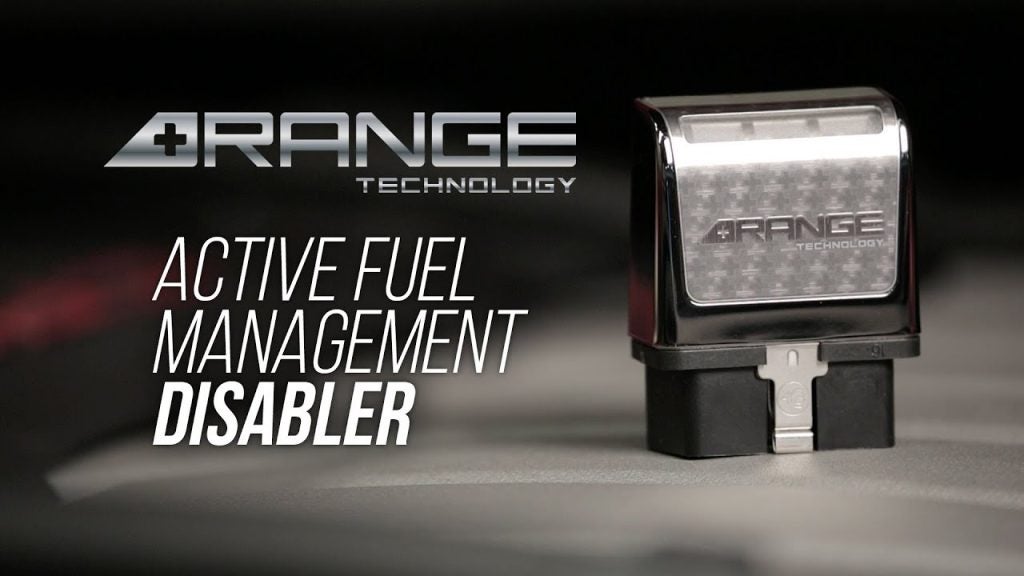
An AFM disabler is an electronic device designed to prevent Active Fuel Management from engaging, while leaving the engine and ECU otherwise stock.
It does not:
- Reprogram the ECU
- Permanently alter engine hardware
- Delete emissions systems
- Change engine tuning
Instead, it works by intercepting or modifying signals that tell the ECU when AFM conditions are met.
In simple terms: the engine always stays in full-cylinder mode.
How an AFM Disabler Works
Most AFM disablers are plug-and-play devices that connect to the vehicle’s OBD-II port or inline with specific engine sensors.
Their function is to:
- Override the AFM enable command
- Prevent the ECU from switching into cylinder-deactivation mode
- Maintain full V8 operation at all times
Crucially, the ECU still believes everything is operating normally. No warning lights appear. No diagnostic trouble codes are triggered. The vehicle remains emissions-compliant.
When the device is removed, the vehicle immediately returns to factory behavior.
Why Owners Use AFM Disablers
AFM disablers are rarely installed for performance reasons. They are installed for longevity and drivability.
1. Preventing Lifter Failure
By keeping all cylinders active:
- AFM lifters never collapse
- Oil pressure remains consistent
- Valvetrain stress is reduced
This significantly lowers the risk of lifter-related failures, especially in high-mileage engines.
2. Eliminating AFM “Feel”
Many drivers dislike how AFM feels:
- Subtle vibration changes
- Exhaust tone fluctuations
- Hesitation during transitions
- Unpredictable throttle response
With an AFM disabler installed, the engine behaves like a traditional V8 at all times.
3. Reducing Oil Consumption
AFM engines are notorious for oil consumption issues, particularly during cylinder deactivation cycles. Disabling AFM often stabilizes oil usage and reduces the need for constant top-offs.
AFM Disabler vs AFM Delete: Not the Same Thing
This distinction is critical.

AFM Disabler
- Electronic
- Reversible
- No engine teardown
- No tuning required
- Low cost
- Prevents AFM from activating
AFM Delete
- Mechanical modification
- Requires engine teardown
- Replaces AFM lifters with standard lifters
- Often includes camshaft replacement
- Requires ECU tuning
- Expensive but permanent
An AFM disabler is a preventative measure. An AFM delete is a long-term mechanical solution, usually performed after failure or during an engine rebuild.
Does an AFM Disabler Affect Fuel Economy?
Yes—but not as dramatically as many expect.
Since the engine remains in full-cylinder mode:
- Highway fuel economy typically drops slightly
- City driving is largely unaffected
Most owners report a reduction of 1–2 MPG, depending on driving style and vehicle weight. Many consider this a reasonable trade-off for improved reliability and drivability.
Does an AFM Disabler Increase Power?
Not in peak horsepower terms.
AFM does not reduce peak power when the engine is under load because it disengages automatically during acceleration. However, disabling AFM can improve:
- Throttle response
- Consistency of power delivery
- Exhaust sound quality
The engine feels more predictable, even if it is not technically more powerful.
Is an AFM Disabler Safe?
When properly designed and vehicle-specific, yes.
Quality AFM disablers:
- Do not interfere with emissions systems
- Do not trigger fault codes
- Do not modify ECU programming
- Do not void warranties outright (though manufacturers may dispute claims)
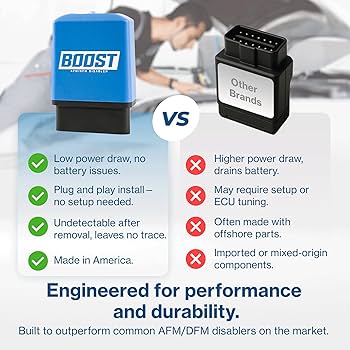
However, poor-quality or generic devices can cause electrical issues, so brand reputation and compatibility matter.
Vehicles That Benefit Most From an AFM Disabler
AFM disablers are most commonly used on:
- GM trucks and SUVs used for towing
- High-mileage V8 vehicles
- Vehicles with early signs of lifter noise
- Owners planning long-term ownership
- Drivers who prioritize smoothness over marginal fuel savings
They are less beneficial for:
- Low-mileage leased vehicles
- Owners planning to trade in soon
- Engines already mechanically deleted
Common Myths About AFM Disablers
“AFM disablers are illegal”
False. They do not remove emissions equipment or alter ECU calibration.
“They damage the engine”
False. They reduce mechanical complexity during operation.
“They’re just a gimmick”
False. They address a known mechanical stress point.
“They fix already damaged lifters”
False. They prevent future AFM activation but cannot repair existing mechanical damage.
Long-Term Reliability Perspective
An AFM disabler does not magically make an engine bulletproof. Oil quality, maintenance intervals, and driving habits still matter.
However, by eliminating one of the most failure-prone operational modes, an AFM disabler can significantly improve long-term reliability odds, especially for owners who plan to keep their vehicles past 150,000 miles.
Final Verdict: What Is an AFM Disabler, Really?
An AFM disabler is not a performance mod.
It is not a shortcut.
It is not a cure-all.
It is a risk-reduction tool for engines burdened with an overly complex fuel-saving system.
For many GM V8 owners, it represents a pragmatic decision: trade a small amount of fuel efficiency for smoother operation, greater consistency, and a lower chance of catastrophic failure.
In that context, the AFM disabler is not controversial at all. It is simply a response to engineering compromise—made by owners who prefer their V8s to behave like V8s.
Below is a comprehensive, publication-grade FAQ section designed to sit directly under the AFM Disabler article.
Tone is technical, neutral, and authoritative, suitable for SEO, enthusiasts, and editorial review.
AFM Disabler vs AFM Delete vs Doing Nothing: A Practical Comparison
Understanding the difference between using an AFM disabler, performing a full AFM delete, or leaving AFM untouched is essential. Each path has distinct costs, risks, and long-term implications.
High-Level Comparison Table
| Factor | AFM Disabler | AFM Delete | Do Nothing |
|---|---|---|---|
| Type | Electronic (plug-and-play) | Mechanical modification | Factory operation |
| Reversibility | Fully reversible | Permanent | N/A |
| Engine Teardown Required | No | Yes | No |
| ECU Tuning Required | No | Yes | No |
| Upfront Cost | Low | High | None |
| Labor Required | Minimal | Extensive | None |
| Prevents AFM Activation | Yes | Yes (removed entirely) | No |
| Fixes Existing AFM Damage | No | Yes (if rebuilt correctly) | No |
| Fuel Economy Impact | Slight decrease | Slight decrease | Best MPG |
| Long-Term Reliability Risk | Reduced | Lowest | Highest |
| Best For | Prevention & daily driving | Long-term ownership, rebuilds | Short-term ownership |
Option 1: AFM Disabler — Preventative and Reversible
An AFM disabler is best understood as risk management.
Pros
- Prevents AFM lifters from cycling
- Reduces likelihood of lifter collapse and cam damage
- Improves drivability and throttle consistency
- No tuning, no engine work, no permanent changes
- Ideal for owners planning to keep the vehicle
Cons
- Does not repair existing damage
- Slight reduction in highway fuel economy
- Still relies on AFM hardware being present (just inactive)
Best For
- Daily-driven GM trucks and SUVs
- Owners concerned about long-term reliability
- Vehicles with no current AFM-related damage
- Drivers who want a reversible solution
Option 2: AFM Delete — Permanent Mechanical Solution
An AFM delete is a complete removal of the system at the mechanical level.
What It Involves
- Removing AFM lifters
- Installing standard lifters
- Replacing the camshaft
- Blocking AFM oil passages
- ECU tuning to remove AFM logic
Pros
- Eliminates AFM hardware entirely
- Solves existing lifter and camshaft failures
- Longest-term reliability solution
- Preferred during engine rebuilds
Cons
- Very expensive
- Requires major engine teardown
- Not reversible
- Downtime during installation
Best For
- Engines with failed AFM lifters
- Performance builds
- Owners planning to keep the vehicle indefinitely
- Vehicles already undergoing engine work
Option 3: Doing Nothing — Factory Operation
Leaving AFM untouched means accepting the engine as designed.
Pros
- No upfront cost
- Maximum fuel economy
- No modifications or warranty concerns
Cons
- AFM lifters continue cycling
- Higher long-term risk of lifter failure
- Potential for catastrophic engine damage
- Inconsistent drivability and throttle response
Best For
- Short-term ownership or leases
- Low-mileage vehicles with planned resale
- Owners unconcerned with long-term reliability
Which Option Makes the Most Sense?
Choose an AFM Disabler if:
- Your engine is currently healthy
- You want to reduce future failure risk
- You prefer a low-cost, reversible solution
- You value smoother driving over peak MPG
Choose an AFM Delete if:
- AFM lifters have already failed
- You are rebuilding or modifying the engine
- Long-term reliability is the top priority
- Cost and downtime are acceptable
Do Nothing if:
- You plan to sell the vehicle soon
- The vehicle is leased
- Fuel economy matters more than longevity
- You accept the risk associated with AFM
Frequently Asked Questions: AFM Disablers
What is an AFM disabler?
An AFM disabler is an electronic device that prevents Active Fuel Management (AFM) from engaging in GM vehicles. It keeps the engine operating in full-cylinder mode at all times, without permanently modifying the ECU or engine hardware.
How does an AFM disabler work?
Most AFM disablers plug into the vehicle’s OBD-II port or interface with engine sensors. They prevent the ECU from entering cylinder-deactivation mode while allowing all other engine functions to operate normally. The system is reversible and does not require tuning.
Does an AFM disabler permanently delete AFM?
No. An AFM disabler does not permanently remove AFM. It only prevents AFM from activating while the device is installed. Once removed, the vehicle immediately returns to factory AFM operation.
Will an AFM disabler fix collapsed lifters?
No. An AFM disabler cannot repair existing mechanical damage. If AFM lifters are already collapsed or the camshaft is damaged, a mechanical repair or full AFM delete is required. The disabler is a preventative solution, not a repair.
Is an AFM disabler safe for the engine?
Yes, when using a high-quality, vehicle-specific disabler. By keeping all cylinders active, oil pressure remains consistent and lifter stress is reduced. Many owners install AFM disablers specifically to lower long-term failure risk.
Does an AFM disabler affect fuel economy?
Slightly. Most drivers report a decrease of 1–2 MPG on the highway, with little to no change in city driving. The trade-off is improved drivability and reduced mechanical stress.
Will an AFM disabler increase horsepower?
No measurable peak horsepower increase occurs. However, many drivers notice improved throttle response, smoother power delivery, and more consistent engine behavior—especially at cruising speeds.
Does an AFM disabler cause check engine lights?
A properly designed AFM disabler will not trigger warning lights or diagnostic trouble codes. Low-quality or incompatible devices, however, may cause electrical or communication issues.
Is an AFM disabler legal?
Yes. AFM disablers do not remove emissions equipment or alter ECU tuning. They simply prevent a fuel-saving mode from activating. Regulations may vary by region, but they are generally considered legal for on-road use.
Will an AFM disabler void my warranty?
An AFM disabler does not automatically void a warranty. However, manufacturers may deny specific claims if they believe the device contributed to a failure. Because AFM disablers are removable, many owners uninstall them before dealer service visits.
What vehicles use AFM?
AFM is commonly found in GM V8 engines, including:
- Chevrolet Silverado
- GMC Sierra
- Chevrolet Tahoe
- GMC Yukon
- Cadillac Escalade
- Chevrolet Camaro (V8 models)
Always verify engine compatibility before purchasing a disabler.
AFM disabler vs AFM delete: which is better?
They serve different purposes.
- AFM Disabler:
Electronic, reversible, inexpensive, preventative. - AFM Delete:
Mechanical, permanent, expensive, requires engine teardown and tuning.
A disabler is ideal for preventing problems before they occur. A delete is often chosen after failure or during a rebuild.
Can I install an AFM disabler myself?
Yes. Most AFM disablers are plug-and-play and require no tools. Installation typically takes less than five minutes.
Should I install an AFM disabler on a new vehicle?
Many owners do, especially if they plan long-term ownership. Installing a disabler early prevents AFM lifters from ever cycling, which may reduce wear over time.
Is an AFM disabler worth it?
For owners concerned about AFM reliability, drivability, or long-term ownership costs, the answer is often yes. It trades a small amount of fuel efficiency for smoother operation and reduced mechanical complexity.