

If you are searching for the best Mazda CX-5 oil filter, you are already ahead of most owners. Oil filters are not all the same, and on modern Skyactiv engines, the “close enough” approach can show up as noisy cold starts, faster oil contamination, or inconsistent oil pressure control during severe use.
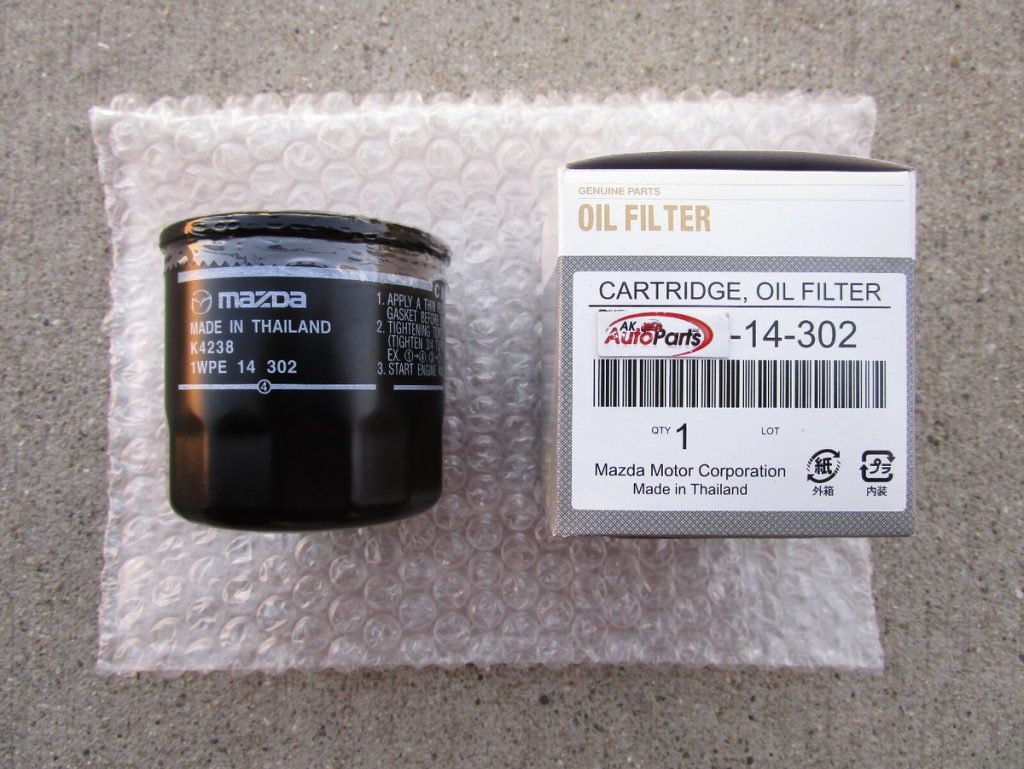
This in-depth guide explains what actually makes an oil filter “best” for the CX-5, identifies the correct OEM Mazda oil filters by engine, and then ranks the best aftermarket options for owners who want premium filtration or longer service intervals, without compromising the engineering Mazda designed into the lubrication system.
Why the Oil Filter Matters More Than People Think
Engine oil does two jobs at once: lubricate and clean. The filter is the gatekeeper. A high-quality filter:
- Captures wear metals, soot, and carbon deposits before they circulate
- Maintains stable oil flow in cold starts and high RPM operation
- Prevents oil drain-back (dry starts) when the engine sits
- Uses a bypass valve calibrated to protect the engine if the filter media becomes restrictive
On a CX-5, especially in stop and go driving or short-trip winter use, a strong filter can be the difference between clean internals and accelerated deposit formation.
The “Best” Oil Filter Starts With Correct Fitment
Before brand preferences, the “best” filter must match the engine configuration. On the Mazda CX-5, non-turbo and turbo applications use different OEM filters in many model years.
OEM Mazda CX-5 Oil Filter Part Numbers (Correct Baseline)
| CX-5 Engine | Correct OEM Mazda Oil Filter | Notes |
|---|---|---|
| SKYACTIV-G 2.0L (where equipped) | 1WPE-14-302 | Common non-turbo filter |
| SKYACTIV-G 2.5L non-turbo | 1WPE-14-302 | Replaces older PE01-series numbers |
| SKYACTIV-G 2.5L Turbo | 1WPY-14-302 | Turbo-specific OEM filter |
| SKYACTIV-D 2.2L diesel (markets where sold) | SH01-14-302A | Diesel application |
A key detail: Mazda’s parts catalog shows PE01-14-302A as a genuine Mazda oil filter cartridge number, and it cross-references to 1WPE-14-302 among replacements.
What Makes an Oil Filter “Best” for a CX-5?
1) Strong Filtration Media (Efficiency Without Restricting Flow)
Filters use cellulose, synthetic, or blended media. Higher efficiency is good, but only if oil flow remains strong at cold start and high load.
Practical takeaway: “Best” filters balance filtration efficiency with flow. This is particularly relevant for turbo engines that see higher heat and may demand more stable oil delivery.
2) Silicone Anti-Drainback Valve (ADBV)
The anti-drainback valve keeps oil from draining out of the filter and oil passages when the engine is off. A weak ADBV can contribute to:
- Brief lifter noise or timing chain rattle at start-up
- Extra wear during repeated cold starts
Premium filters often use silicone ADBVs because silicone resists heat better than nitrile.
3) Correct Bypass Valve Calibration
Every spin-on filter has a bypass valve. If oil is too thick (cold) or the filter is clogged, the bypass opens so the engine still receives oil. The “best” filter uses a bypass calibration consistent with the application.
This is one of the reasons many owners stay with OEM for turbos: turbo lubrication systems are less forgiving about oil delivery consistency during cold operation or hard driving.
4) Build Quality: End Caps, Seams, Base Plate, and Gasket
Oil filters are pressure vessels. Better build quality reduces the risk of:
- Media separation
- Internal leaks around end caps
- Gasket deformation leading to seepage
5) Avoiding Counterfeit and “Too Cheap” Filters
If the price looks unrealistically low online, treat it as a risk. Counterfeit filters exist and can look convincing. The best practice is to buy from a known retailer, a dealership parts counter, or a reputable parts distributor.
Best Mazda CX-5 Oil Filter: The Top Recommendation
Best Overall (Factory Correct, Lowest Risk): Genuine Mazda OEM Filter
For most CX-5 owners, the best answer is simple:
- Non-turbo CX-5: Mazda OEM 1WPE-14-302
- Turbo CX-5: Mazda OEM 1WPY-14-302
Why OEM is the safest “best” choice:
- Correct fitment and engineering baseline for Mazda’s lubrication system
- Correct application split between turbo and non-turbo
- Minimizes guesswork around bypass and flow characteristics
If you do not want to overthink it, OEM is the most consistently correct option.
Best Aftermarket Mazda CX-5 Oil Filters (When OEM Is Not Available)
Aftermarket filters can be excellent, but you should choose ones that are clearly engineered for modern synthetic oil intervals and that have credible published specs.
Premium Aftermarket Pick: FRAM Ultra Synthetic
FRAM’s Ultra Synthetic line is positioned for longer intervals and synthetic oil usage, and it highlights key features owners care about, including a silicone anti-drainback valve and high filtration efficiency claims.
This category generally makes sense if you:
- Run full synthetic oil
- Want a premium filter media design
- Prefer easy removal features and robust construction
Well-Known Equivalent Option: WIX (Example Fitment: WIX 57002)
WIX lists a CX-5 fitment with published specs including bypass range and thread size. For example, one listing for a CX-5 2.5L shows 20 x 1.5 mm threads and a bypass valve setting in the 11–14 range.
This is useful because it signals the product is not purely generic. It also illustrates why you must match the filter to the vehicle and not assume “any small Mazda filter” is correct.
Important note: listings and fitment charts are helpful, but for turbo applications many owners prefer sticking with the turbo-specific OEM filter to avoid spec ambiguity.
Turbo CX-5 Owners: Why Filter Choice Is More Sensitive
The 2.5L turbo CX-5 runs higher oil temperatures and can see different pressure and flow demands than the naturally aspirated engine. Mazda’s decision to specify a different OEM filter for turbo engines is a strong signal that they want a specific design baseline for that application.
If you own a turbo CX-5 and want the lowest-risk choice:
- Use the Mazda OEM 1WPY-14-302
- Pair it with the correct oil viscosity and change intervals
- Avoid “one part fits all” logic unless you have verified the bypass and ADBV details for your exact engine
Oil Capacity and Why It Relates to Filter Choice
Why talk about oil capacity in a filter article? Because the filter is part of the system volume, and accurate fill matters to both lubrication and oil life.
Mazda’s owner manual capacity guidance (approximate quantities) shows:
- SKYACTIV-G 2.5 with oil filter replacement: 4.5 L (4.8 US qt)
- SKYACTIV-G 2.0 with oil filter replacement: 4.2 L (4.4 US qt)
This reinforces the practical point: if you change the filter, your final fill is different than a drain-only top-up.
How Often Should You Replace the Oil Filter on a CX-5?
General best practice:
- Replace the oil filter every oil change, not every other oil change
Why:
- Filters are designed for a finite contaminant-holding capacity
- Modern engines generate fine particulates that can load media faster than you expect
- Filters are inexpensive insurance compared to engine repairs
If you stretch oil intervals, a premium filter becomes more relevant. If you follow conservative intervals, OEM is more than sufficient.
Installation Quality Matters as Much as Brand
Even the best filter can leak or cause issues if installed poorly.
Best practices:
- Lightly oil the rubber gasket before installation
- Spin on until gasket contact, then tighten per the filter instructions
- Do not over-tighten (over-tightening can deform the gasket)
- Always check for leaks after the first start
- Confirm the old gasket did not stick to the engine block (double-gasket mistakes cause major leaks)
Practical Recommendations by Owner Type
If You Want the Safest Choice
Buy OEM:
- 1WPE-14-302 (non-turbo)
- 1WPY-14-302 (turbo)
If You Want a Premium Aftermarket Filter
Choose a premium synthetic-rated filter line with clear features like a silicone ADBV and published efficiency claims, such as FRAM Ultra Synthetic.
If You Want a Recognized Equivalent With Published Specs
Use a reputable line with published bypass specs and correct thread fitment for the CX-5 application, verifying fitment by year and engine.
Final Verdict: Best Mazda CX-5 Oil Filter
For most drivers, the best Mazda CX-5 oil filter is the genuine Mazda OEM filter matched to your engine:
- Non-turbo CX-5: 1WPE-14-302
- Turbo CX-5: 1WPY-14-302
It is the most consistent way to preserve factory oil flow behavior, bypass characteristics, and start-up protection, especially on the turbo engine where the margin for error is smaller.
If you tell me your CX-5 model year and whether it is 2.5 non-turbo or 2.5 turbo, I will tailor the recommendation into a tight “buy this exact filter” answer and include a short shortlist of the best equivalent aftermarket options for your exact configuration.
FAQ: Best Mazda CX-5 Oil Filter
1) What is the best oil filter for a Mazda CX-5?
For most owners, the best oil filter is the genuine Mazda OEM filter matched to your engine. Mazda engineers the filter’s flow rate, bypass valve, and anti-drainback design specifically for Skyactiv engines, making it the safest and most consistent choice.
2) Does the Mazda CX-5 use a different oil filter for turbo models?
Yes. Turbo CX-5 models use a different OEM oil filter than non-turbo models. The turbo engine runs higher oil temperatures and pressures, so Mazda specifies a filter designed for those conditions. Always confirm turbo vs non-turbo before buying.
3) Are aftermarket oil filters safe for the Mazda CX-5?
High-quality aftermarket filters can be safe if they match OEM specifications for flow, bypass pressure, and anti-drainback performance. Cheap or generic filters may cause cold-start noise, reduced oil flow, or inconsistent pressure, especially in turbo engines.
4) Should I replace the oil filter at every oil change?
Yes. Mazda CX-5 oil filters are designed to be replaced at every oil change. Reusing a filter can reduce oil cleanliness and increase internal wear, even if the oil itself is fresh.
5) Can the wrong oil filter damage a Mazda CX-5 engine?
Over time, yes. An incorrect filter can:
- Restrict oil flow
- Open the bypass valve too early or too late
- Allow oil to drain back, causing dry starts
- Increase wear on timing components and turbo bearings
The damage is usually gradual but costly.
6) What matters more: oil brand or oil filter quality?
Both matter, but filter quality directly affects oil flow and cleanliness. A premium oil with a poor filter still circulates contaminants. For best results, pair Mazda-recommended synthetic oil with a high-quality OEM or OEM-equivalent filter.
Connect with us


