If you’ve been searching “Mazda CX-5 years to avoid,” you might expect a list of problem years, recalls, or horror stories. But here’s the surprise: there really aren’t any. Unlike many crossovers that stumbled through awkward early years or rushed redesigns, the Mazda CX-5 has maintained a reputation for exceptional reliability, refinement, and driver engagement since its debut in 2013.
Mazda’s consistency — powered by its Japanese engineering discipline and relentless focus on quality — means every CX-5 generation offers solid performance and long-term dependability. So instead of a warning list, this guide will show you why there’s no CX-5 year you need to avoid, and how each version has only built on the success of the one before it. And if you’re ready to see just how refined the current models have become, you can browse available offers at Marin Mazda or explore ongoing SUV specials through Marin Mazda’s offers page.
The CX-5 Legacy: Reliability Through Every Generation
Mazda introduced the CX-5 in 2013 as its first crossover to feature Skyactiv Technology — a holistic engineering approach focusing on lightweight design, efficient engines, and perfectly balanced handling. From day one, it was clear this wasn’t just another small SUV.
While many early compact SUVs from other brands suffered from transmission failures, oil leaks, or electrical gremlins, the CX-5 earned near-universal praise for mechanical stability. Consumer reliability scores, independent reviews, and long-term owner reports consistently placed it among the most dependable vehicles in its class.
And that pattern hasn’t changed — through the first-generation models (2013–2016), the second-generation redesign (2017–2021), and the refreshed modern lineup (2022–present), the CX-5 has remained one of the most reliable small SUVs you can buy.
2013–2016: The Beginning of a Benchmark
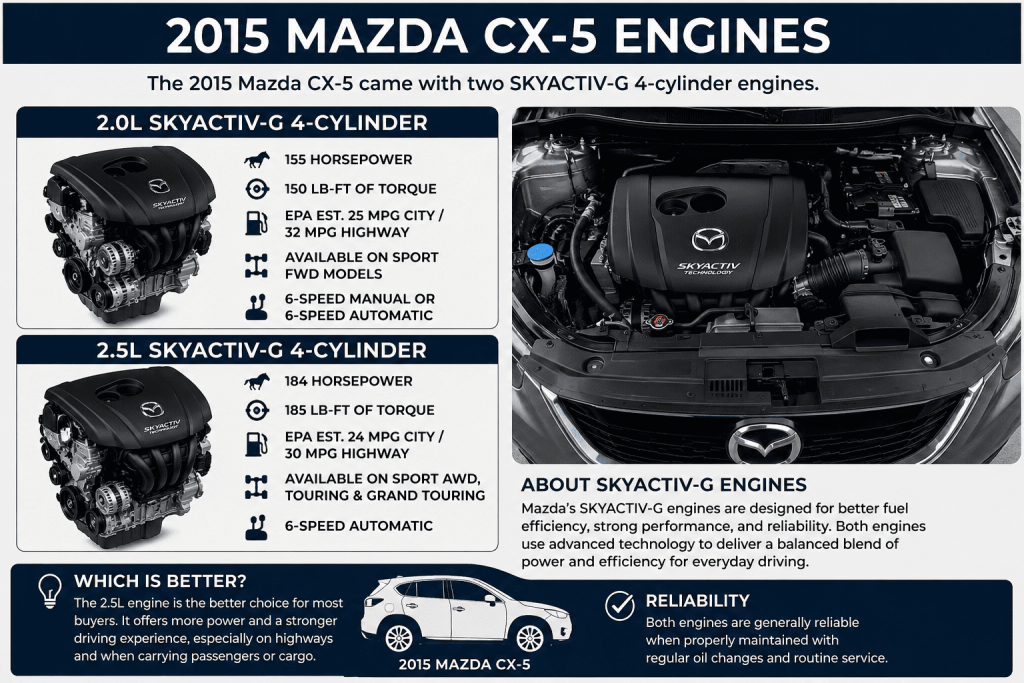
When the CX-5 launched in 2013, it immediately distinguished itself with crisp steering and surprisingly athletic handling for an SUV. The first models featured the 2.0-liter Skyactiv-G engine with 155 horsepower — not overly powerful, but extremely efficient and smooth.
By 2014, Mazda upgraded to a 2.5-liter engine offering more torque without sacrificing fuel economy. This was a turning point that kept owners satisfied and earned strong reliability scores.
Common owner feedback: The early CX-5s were praised for reliability, fuel economy, and precise handling. Minor issues like infotainment system updates or normal wear-and-tear items were easily addressed — nothing close to what would qualify as a “bad year.”
Mazda’s commitment to detail and rigorous Japanese quality testing prevented the typical early-production troubles seen in other first-gen crossovers.
Verdict: The early years (2013–2016) are safe, smart buys — the foundation of Mazda’s crossover success.
2017–2021: The Premium Leap
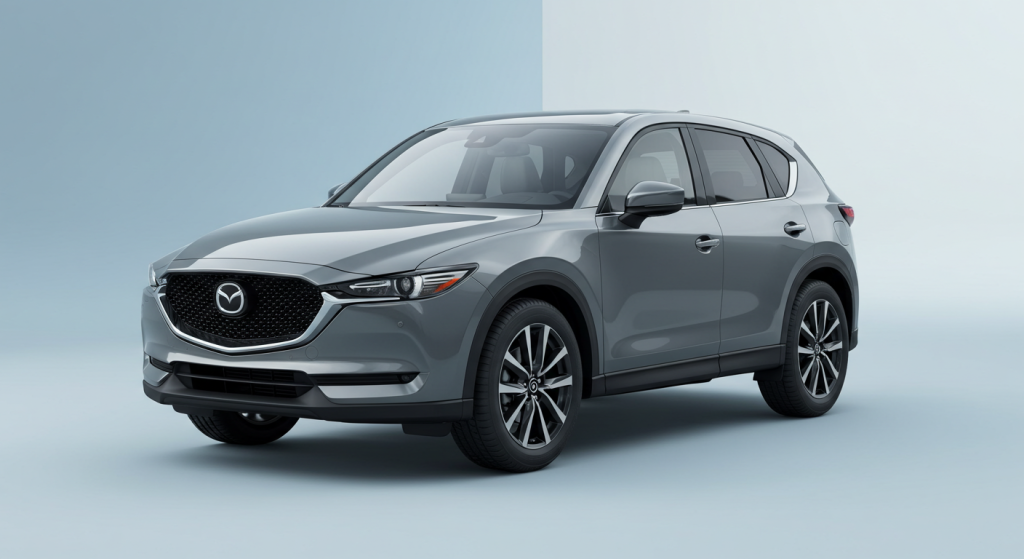
Mazda fully redesigned the CX-5 in 2017, and the changes were profound. The styling matured into a sleek, sculpted form under the KODO — Soul of Motion design language, while the interior jumped into near-luxury territory.
This generation also brought major improvements to ride comfort, noise insulation, and advanced safety tech. In 2019, Mazda introduced the 2.5-liter turbocharged engine, offering up to 250 horsepower — turning the CX-5 into one of the quickest and most engaging SUVs in its class.
Reliability record: Outstanding. The 2017–2021 CX-5 consistently achieved top-tier reliability ratings from industry surveys and publications. There were no chronic mechanical failures, and recalls were minimal.
Owners who maintained their vehicles routinely reported trouble-free experiences well past 100,000 miles. That’s a testament to Mazda’s manufacturing precision and its refusal to cut corners on materials or assembly.
Verdict: Every CX-5 from 2017 to 2021 remains a fantastic choice — whether you want value, power, or refinement.
2022–Present: Modern Excellence
The most recent CX-5 refinement (beginning with the 2022 model year) built upon Mazda’s award-winning platform with subtle but meaningful upgrades. The exterior design sharpened, the suspension was retuned for smoother ride comfort, and the cabin was further elevated with improved sound insulation and high-quality finishes.
Mazda also made all-wheel drive standard across every trim, underscoring its confidence in the CX-5’s capability and safety.
Current trims include:
- CX-5 2.5 S Select / Preferred / Carbon Edition — balance of value and sophistication
- CX-5 2.5 Turbo / Turbo Signature — refined performance with premium luxury touches
Safety-wise, the latest CX-5 models continue Mazda’s legacy of excellence, earning Top Safety Pick+ ratings year after year.
There are no systemic issues, no reliability warnings, and no red flags — just continuous refinement and durability.
If you’re ready to step into one of the most complete small SUVs on the market, see current CX-5 lease and finance offers on Marin Mazda’s specials page.
Addressing the “Years to Avoid” Myth
Online “years to avoid” lists often appear for SEO traffic rather than genuine data — and Mazda owners know it. The CX-5 simply doesn’t have a bad model year.
Unlike competitors who rushed redesigns or outsourced engineering, Mazda maintains a meticulous, centralized design and testing process in Japan. Every mechanical system is stress-tested under extreme conditions before reaching production.
So, what you’ll find across all CX-5 generations is consistency — not volatility. Even early models still run smoothly on the road, and later models only build on that foundation.
If you come across online claims about early infotainment quirks or cosmetic wear, those are normal for vehicles of that age and hardly justification for calling any year “one to avoid.”
Why Mazda Maintains Its Reliability Edge
The reason the CX-5 defies the “avoid” stereotype lies in Mazda’s company culture. Mazda treats every vehicle as an integrated system, not a collection of parts. That means:
- Holistic Design: Mazda engineers handle engines, transmissions, and chassis development together — ensuring harmony between components.
- In-House Manufacturing: Key parts like engines, transmissions, and control modules are made under Mazda’s direct supervision in Japan.
- Attention to Weight and Balance: Every CX-5 is tuned for ideal handling, reducing strain on mechanical components.
- Long Testing Cycles: Mazda’s validation process exceeds typical industry standards by thousands of hours.
In other words: reliability isn’t luck — it’s engineered into every CX-5 from the start.
Performance & Ownership Experience
Beyond reliability, the CX-5 continues to deliver something few crossovers can — genuine driving enjoyment. Whether equipped with the efficient 2.5-liter engine or the punchy turbocharged version, the CX-5 feels balanced, responsive, and composed in corners.
The cabin experience is also pure Mazda: quiet, refined, and intuitive. Materials rival entry-level luxury SUVs, while features like heated seats, Bose audio, and advanced driver assistance elevate everyday driving.
Owners often say they “still look forward to driving it” years later — a rare sentiment in the SUV segment.
And with Mazda’s straightforward maintenance schedule, owning a CX-5 is as simple as it is satisfying.
If you want to experience this level of craftsmanship firsthand, schedule a test drive or view current CX-5 incentives at Marin Mazda.
Comparison: CX-5 vs. the Competition
| Model | Reliability Trend | Driving Feel | Interior Quality |
|---|---|---|---|
| Mazda CX-5 | Consistently excellent | Engaging, balanced | Premium, near-luxury |
| Honda CR-V | Reliable but less fun | Comfortable, soft | Functional |
| Toyota RAV4 | Solid reliability | Competent but uninvolving | Practical |
| Hyundai Tucson | Improving | Smooth, but average handling | Tech-focused |
The CX-5 manages to blend Japanese reliability with genuine emotion — something rivals rarely achieve. That’s why many car reviewers continue to rank it the driver’s choice in its class, year after year.
Ownership Longevity
Well-maintained CX-5s regularly surpass 200,000 miles without major repairs. Mazda’s robust Skyactiv engines are built with forged internals, and their transmissions are tuned conservatively for durability.
Maintenance costs remain modest, with most service intervals focused on fluids and filters. And because Mazda parts share architecture across global models, replacements are readily available and affordable.
In short: if longevity and reliability are your priorities, any CX-5 — regardless of model year — is a safe bet.
The Truth: No CX-5 Years to Avoid
After more than a decade on the market, the verdict is clear. There are no bad Mazda CX-5 years.
From its debut in 2013 to the latest 2025 models, Mazda has maintained exceptional reliability, top safety scores, and one of the best reputations for build quality in its segment. It’s the rare SUV that has improved every year without ever taking a step backward.
The result: a crossover you can buy used or new with total confidence.
To see current deals, Certified Pre-Owned options, or limited-time offers, check out Marin Mazda’s specials page — where every CX-5, no matter the trim or year, reflects Mazda’s ongoing commitment to quality.
Final Thoughts: A Decade of Consistency
For a vehicle that’s been on the road for over ten years, the CX-5’s record is remarkable. While other automakers stumble with recalls or design missteps, Mazda keeps refining rather than reinventing.
The answer to “Mazda CX-5 years to avoid” is simple: none. Instead of worrying about what to skip, you can focus on choosing the trim, color, and engine that best match your lifestyle.
Every CX-5 embodies Mazda’s Japanese philosophy of craftsmanship and emotional connection to driving. It’s dependable, elegant, and designed for real people who love the road.
When you’re ready to bring that experience home, visit Marin Mazda’s specials page to find the perfect CX-5 — new, used, or Certified Pre-Owned — backed by a legacy that has nothing to avoid and everything to admire.
Mazda CX-5 Reliability FAQ | Marin Mazda
1) Are there any Mazda CX-5 years to avoid?
No. Unlike many compact SUVs that had rocky starts or redesign issues, every Mazda CX-5 model year from 2013 to today has proven dependable. There are no “bad years” — Mazda’s Japanese-engineered Skyactiv platform has delivered consistent quality across all generations.
2) Is the first-generation CX-5 (2013-2016) reliable?
Yes. The first-gen CX-5 earned high owner satisfaction and reliability ratings. The 2.5-liter engine introduced in 2014 added more power without compromising efficiency, and there were no recurring mechanical or transmission problems.
3) What changed in the second generation (2017-2021)?
The 2017 redesign brought premium styling, a quieter cabin, and improved suspension tuning. By 2019, the 2.5-liter turbo engine joined the lineup, offering up to 250 horsepower. Reliability remained top-tier, with minimal recalls and strong long-term durability.
4) How reliable are the 2022–present CX-5 models?
Outstanding. The latest CX-5 versions feature standard AWD, refined interiors, and enhanced sound insulation. There are no systemic issues — these models continue to earn IIHS Top Safety Pick+ and J.D. Power reliability awards.
5) What’s the most reliable Mazda CX-5 engine?
Both the 2.5-liter naturally aspirated and 2.5-liter turbocharged Skyactiv-G engines are highly dependable. The non-turbo version offers simplicity and longevity, while the turbo adds performance with no notable reliability trade-off.
6) Do older CX-5s have common issues?
Minor wear items only — such as infotainment software updates or suspension bushings after 100k miles. No major engine, transmission, or electrical failures have been widespread in any CX-5 generation.
7) How long can a Mazda CX-5 last?
With regular maintenance, most CX-5s easily surpass 200,000 miles. Many owners report trouble-free ownership for over a decade thanks to Mazda’s in-house engines and transmissions.
8) Are maintenance costs high?
No. Routine services like oil changes, brakes, and fluids are affordable and straightforward. Mazda’s reliability and shared parts network help keep long-term ownership costs low.
9) What safety features make the CX-5 stand out?
All trims include Mazda i-Activsense, featuring:
- Adaptive Cruise Control
- Blind-Spot Monitoring
- Lane-Keep Assist
- Smart Brake Support
- Rear Cross-Traffic Alert
This technology suite has helped every CX-5 earn elite safety ratings since 2017.
10) How does CX-5 reliability compare to rivals?
| Model | Reliability | Driving Feel | Interior Quality |
|---|---|---|---|
| Mazda CX-5 | Excellent | Engaging, balanced | Premium |
| Honda CR-V | Strong | Smooth, conservative | Functional |
| Toyota RAV4 | Solid | Predictable | Practical |
| Hyundai Tucson | Improving | Average | Tech-focused |
The CX-5 uniquely blends Japanese reliability with sporty driving dynamics, something competitors rarely match.
11) What’s the best CX-5 trim for value and dependability?
The CX-5 2.5 S Preferred and Carbon Edition trims balance luxury, reliability, and price perfectly. Higher trims like Turbo Signature add power and refinement without sacrificing longevity.
12) Do Certified Pre-Owned CX-5s hold up well?
Absolutely. Mazda’s CPO program includes a 160-point inspection, 7-year/100,000-mile powertrain warranty, and CARFAX® history report, making used CX-5s a top value pick at Marin Mazda.
13) Has the CX-5 ever had major recalls?
No. Only small-scale service campaigns (like infotainment or minor component updates) — none affecting safety or drivability.
14) What contributes to the CX-5’s long-term reliability?
- In-house engine and transmission manufacturing in Japan
- Rigorous testing and balanced chassis tuning
- Conservative engine mapping for durability
- Premium materials and tight build tolerances
15) Does the CX-5 have good resale value?
Yes. Thanks to reliability and design appeal, CX-5 resale values rival top brands like Toyota and Honda. Models with the 2.5 Turbo or Carbon Edition trims are especially strong performers.
16) How does the CX-5 perform over 100,000 miles?
Exceptionally. Owners consistently report smooth shifting, stable fuel economy, and minimal oil consumption — no major failures or costly repairs even past 150,000 miles.
17) What’s the most fuel-efficient CX-5?
The 2.5-liter non-turbo CX-5 achieves around 28 mpg combined, while Turbo versions average 25 mpg. The AWD setup is among the most efficient in its class.
18) How does the CX-5 handle compared to competitors?
It’s often called the “driver’s SUV.” Mazda’s suspension tuning delivers precise steering, composed handling, and the trademark “connected” feeling absent in most crossovers.
19) Where can I find current CX-5 lease or finance offers?
Check Marin Mazda’s specials page for real-time incentives, including 0% APR financing, loyalty bonuses, and Certified Pre-Owned promotions.
20) What’s the verdict — are there any CX-5 years to avoid?
None. From its 2013 debut through the latest 2025 models, the Mazda CX-5 has remained one of the most reliable and rewarding SUVs ever built. Every generation represents refinement, not risk — and you can shop with confidence at Marin Mazda, where reliability meets craftsmanship.