

If you’re asking which cylinders AFM deactivates in the GM 6.2L V8, you’re already ahead of most buyers. This is not trivia. This detail explains why certain lifters fail, why ticking noises show up where they do, and why AFM and DFM engines develop uneven wear over time.
This article breaks it down plainly. No marketing language. No myths. Just how the system actually works on GM’s 6.2-liter V8.
Quick Answer (Then We’ll Go Deep)
On GM 6.2L V8 engines equipped with AFM (Active Fuel Management), the system deactivates:
Cylinders 1, 4, 6, and 7
The engine continues running on:
Cylinders 2, 3, 5, and 8
This pattern is fixed on AFM engines.
GM 6.2L V8 Cylinder Layout (Important to Understand)
Before AFM makes sense, you need to understand GM’s cylinder numbering. GM does not number cylinders left to right like some brands.
Facing the engine from the front of the truck:
Driver side (left bank):
- Cylinder 1
- Cylinder 3
- Cylinder 5
- Cylinder 7
Passenger side (right bank):
- Cylinder 2
- Cylinder 4
- Cylinder 6
- Cylinder 8
This layout applies to:
- Silverado 1500
- Sierra 1500
- Tahoe
- Suburban
- Yukon
- Escalade
with the 6.2L V8
Which Cylinders Shut Down Under AFM?
When AFM activates, the engine disables:
- Cylinder 1 (driver front)
- Cylinder 4 (passenger second)
- Cylinder 6 (passenger third)
- Cylinder 7 (driver rear)
These cylinders stop:
- Opening valves
- Injecting fuel
- Firing spark
The engine becomes a V4 under light load, typically during steady highway cruising.
Why GM Chose These Specific Cylinders
This was not random.
GM selected these cylinders to:
- Maintain crankshaft balance
- Reduce vibration
- Keep exhaust pulses evenly spaced
- Avoid shutting down adjacent cylinders on the same bank
From an engineering standpoint, the choice makes sense.
From a long-term wear standpoint, this decision created a problem.
The AFM Lifter Problem Explained Simply
AFM cylinders use special collapsible lifters. These lifters physically change shape when oil pressure is applied, allowing the valves to stay closed.
Here’s the issue:
- The same four cylinders are always deactivated
- Their lifters experience different heat, oil flow, and wear
- The remaining four cylinders work constantly
Over time, this creates uneven lifter wear across the engine.
Reddit mechanics explain it bluntly:
The AFM lifters live a harder life than the rest.
Why AFM Failures Often Hit the Same Cylinders
If you read enough GM truck teardown threads, a pattern shows up.
Failures often involve:
- Cylinder 1
- Cylinder 6
- Cylinder 7
Those are all AFM cylinders.
When one AFM lifter collapses or sticks:
- The valve may stop opening
- The cam lobe gets damaged
- Metal circulates through the engine
That’s why AFM failures escalate quickly if ignored.
Does This Apply to the 6.2L Specifically?
Yes.
The GM 6.2L V8 uses the same AFM logic as the 5.3L, just scaled up.
The 6.2L AFM system:
- Deactivates the same cylinder pattern
- Uses similar lifter architecture
- Suffers from the same uneven wear concept
The difference is cost. When a 6.2L fails, repairs are usually more expensive.
What About DFM on Newer 6.2L Engines?
Starting around 2019, GM replaced AFM with DFM (Dynamic Fuel Management) on many 6.2L engines.
This changes things slightly.
AFM:
- Always deactivates cylinders 1, 4, 6, 7
DFM:
- Can deactivate different combinations of cylinders
- Not limited to a fixed group
- Adjusts in real time based on load
However, Reddit consensus is clear:
DFM did not eliminate lifter problems. It just made the pattern less predictable.
Early DFM 6.2L engines still experience lifter failures, just without the consistent cylinder pattern seen in AFM engines.
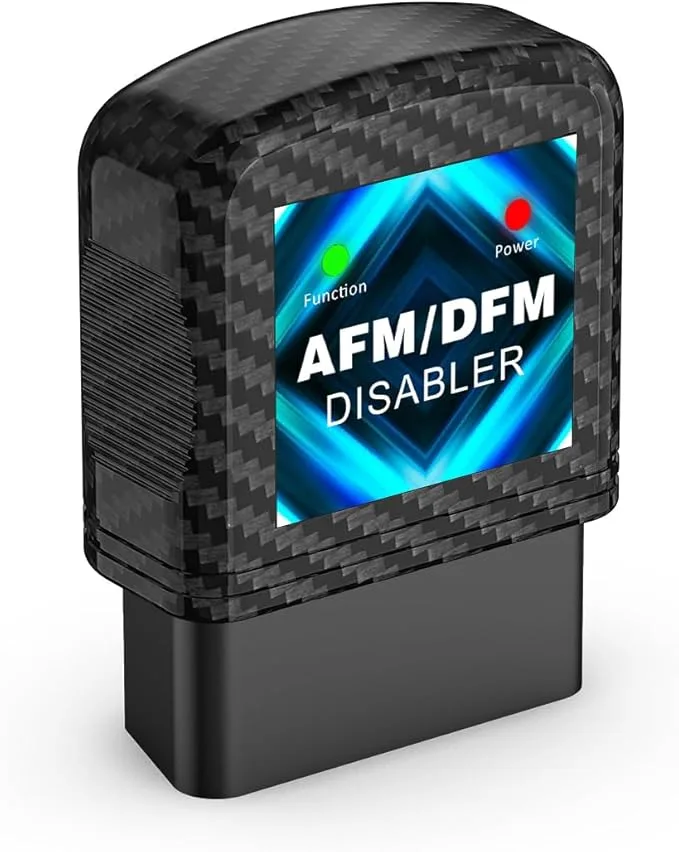
Why AFM Disablers Don’t “Fix” the Cylinder Issue
Many owners install AFM disablers or tuning devices.
Important reality:
- Disablers stop cylinder deactivation electronically
- They do not remove AFM lifters
- They do not change which cylinders were designed for AFM
If wear has already begun on cylinders 1, 4, 6, or 7, disabling AFM will not undo it.
This is why Reddit is full of posts that say:
“I disabled AFM early and still lost a lifter.”
How This Affects Buyers and Owners
Knowing which cylinders AFM deactivates helps you:
- Diagnose ticking noises more accurately
- Understand why certain misfire codes repeat
- Make informed decisions when buying used
- Decide whether AFM delete work is worth it
It also explains why oil consumption often precedes failure. AFM lifters rely heavily on oil pressure. Once oil control degrades, the AFM cylinders suffer first.
Common Symptoms Tied to AFM Cylinders
Owners frequently report:
- Ticking from the driver side rear (cylinder 7 area)
- Random misfire on cylinder 1 or 6
- Rough idle after highway driving
- Noise that disappears under throttle
These symptoms align directly with AFM cylinder locations.
Final Takeaway
On GM 6.2L V8 engines with AFM:
- Cylinders 1, 4, 6, and 7 are deactivated
- The pattern is fixed
- These cylinders experience unique wear
- Most AFM-related failures trace back to this design
AFM was built to save fuel. It succeeded at that.
But it also introduced uneven mechanical stress, and over time, that stress shows up exactly where the system operates.
Once you understand which cylinders AFM deactivates, a lot of GM V8 “mysteries” suddenly make sense.
Connect with us


