

Is Mazda Bringing Back the RX-7?
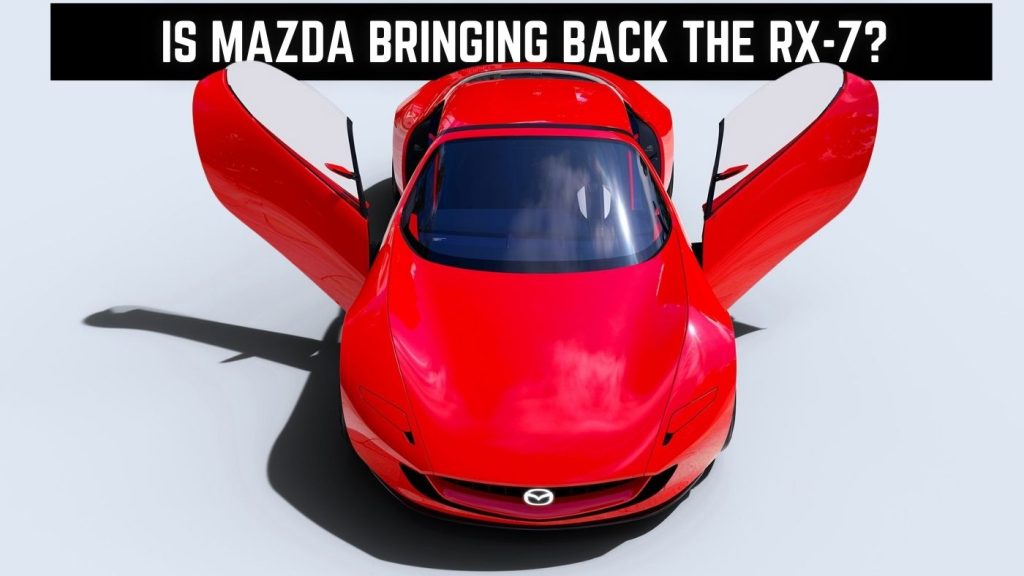
For years, enthusiasts have asked one question: Will Mazda bring back the RX-7? It seems the dream may be closer to reality than ever before.
Recent reports from MotorTrend and insider sources suggest that Mazda is once again exploring rotary engine development, not just as a range extender for EVs but as a potential core powerplant for a future performance vehicle. Whether this materializes as a next-gen RX-7, a rotary-powered MX-5 Miata variant, or something entirely new, one thing is clear: Mazda hasn’t given up on rotary dreams.
As the Bay Area’s #1 Mazda dealership, Marin Mazda is diving deep into what this means for performance fans, why rotary tech matters in 2025, and how Mazda may be preparing for a sports car renaissance.
The Legacy of the Rotary Engine: Why It Still Matters
Mazda has always walked its own path. While others chose pistons and displacement, Mazda chose innovation. The rotary engine, known for its compact design, high-revving nature, and smooth power delivery, became legendary thanks to cars like:
- Mazda RX-7 (1978–2002)
- Mazda RX-8 (2004–2012)
- Mazda 787B – Winner of the 1991 24 Hours of Le Mans
The RX-7, in particular, has a cult following thanks to its perfect weight balance, lightweight chassis, and iconic rotary power.
Even after production stopped, Mazda continued development in the background. In 2023, the company reintroduced rotary power as a range extender in the MX-30 R-EV, proving the technology remains viable.
Why 2025 Is the Right Time for a Rotary Revival
With increasing demand for EVs and hybrids, a rotary sports car might seem like an outlier. But Mazda has always focused on driver engagement, and there is space in the market for an efficient, lightweight, enthusiast-first vehicle.
Recent Mazda patents reveal:
- A new-generation rotary engine with multi-fuel capability (including hydrogen)
- Hybrid-electric integration, possibly as a plug-in rotary range extender
- Rear-wheel-drive sports car chassis developments
Combined, these elements suggest a new halo vehicle could be under serious consideration.
RX-7 Successor vs. Rotary-Powered Miata: Which Is More Likely?
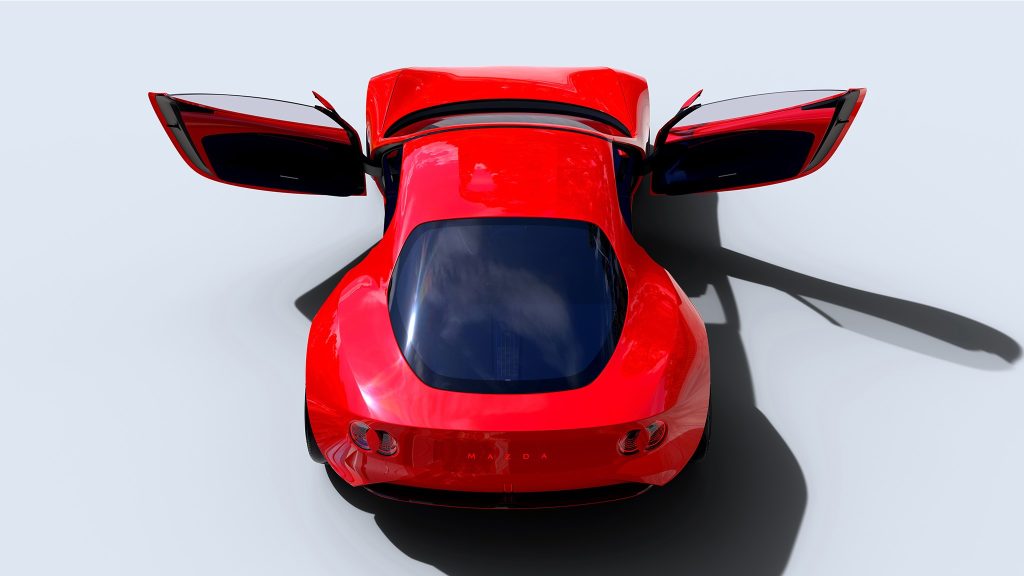

Mazda has hinted that the rotary engine is not dead, but what form will it take?
Possibility 1: All-New RX Sports Car (RX-9 or Next-Gen RX-7)
- RWD platform, low-slung design
- Lightweight chassis, ~2,800 lbs
- Rotary hybrid powertrain (est. 300+ hp)
- Limited production, premium pricing (~$45,000 USD+)
Possibility 2: Rotary-Extended Miata (MX-5 R-EV)
- MX-5 with added electric assist
- Range-extending rotary generator
- No direct drive from the rotary engine
- Lightweight, sub-$35,000 price point
Either direction would reignite Mazda’s reputation for accessible performance.
How Does This Tie Into Mazda’s Electrification Strategy?
Mazda plans to electrify 100% of its global lineup by 2030 through hybrids, plug-in hybrids, and full EVs.
The rotary engine’s compact size makes it ideal as a range extender, especially in longitudinal layouts. This aligns with Mazda’s Large Vehicle Platform used in the CX-70 and CX-90, which supports inline-six engines and electrified drivetrains.
Mazda could leverage that tech to create:
- A rotary generator for high-performance hybrid systems
- A modular architecture that allows combustion or full-electric driving
Rotary isn’t a detour—it could be Mazda’s secret weapon in the performance EV era.
What Could the Performance Numbers Look Like?
If Mazda builds an RX-7 successor or MX-5 variant using rotary-hybrid tech, here’s what we could expect:
| Model | Estimated Power (hp) | Torque (lb-ft) | 0-60 mph (sec) | Price (USD) | Drivetrain |
|---|---|---|---|---|---|
| RX-7 Successor | 300+ | 250+ | ~4.5 sec | $45,000+ | RWD |
| MX-5 Rotary Hybrid | 200+ | 180+ | ~5.8 sec | $34,000 | RWD |
That would position Mazda’s halo car directly against the Toyota GR Supra, Nissan Z, and even entry-level Porsches.
What About Reliability? Is Rotary Really Ready?
Mazda has learned from past rotary challenges. Here’s what might make the new-gen rotary more reliable:
- Use as a generator means consistent, lower-stress operation
- Advanced cooling and lubrication systems
- Cleaner combustion with hybrid integration
- Lower emissions, especially if using hydrogen
With lessons from the RX-8 and modern tech, Mazda could finally make rotary power practical again.
Enthusiast Buzz: The Internet Is Watching
Forums and social media are already lighting up with speculation. Phrases like “RX-9 confirmed,” “rotary Miata in testing,” and “Mazda sports car revival” are gaining momentum.
Here’s why it matters:
- Mazda knows the RX-7 badge has global prestige
- A halo performance car draws attention to the entire brand
- Millennials and Gen Z grew up with the RX-7 in gaming and tuner culture
There is demand. Mazda just needs to deliver.
Why This Matters for San Francisco Bay Area Buyers
If Mazda launches a new rotary-powered sports car, Marin Mazda customers will be among the first to see it.
Regional Relevance:
- Perfect for weekend drives along Highway 1 or Mount Tamalpais
- Compact dimensions ideal for urban San Francisco streets
- Unique powertrain that makes your car stand out in a crowd
Drivers in San Rafael, Oakland, and the Peninsula love cars with character. And nothing screams personality like a rotary.
Marin Mazda: Your Source for the Next-Gen Mazda Lineup
While a rotary RX-7 revival isn’t officially confirmed, we’re ready to help you get behind the wheel of what Mazda is building right now.
Explore:
And don’t miss our new vehicle specials for lease and finance deals on high-performance trims.
Need insider updates? Contact our team to be added to our rotary interest list.
Final Thoughts: Are We Witnessing the Return of the RX?
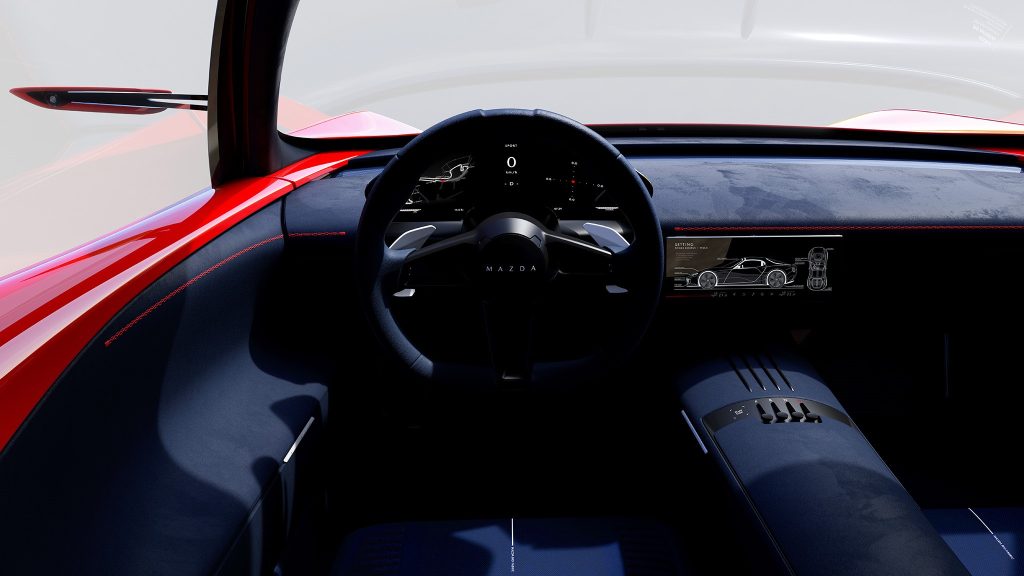
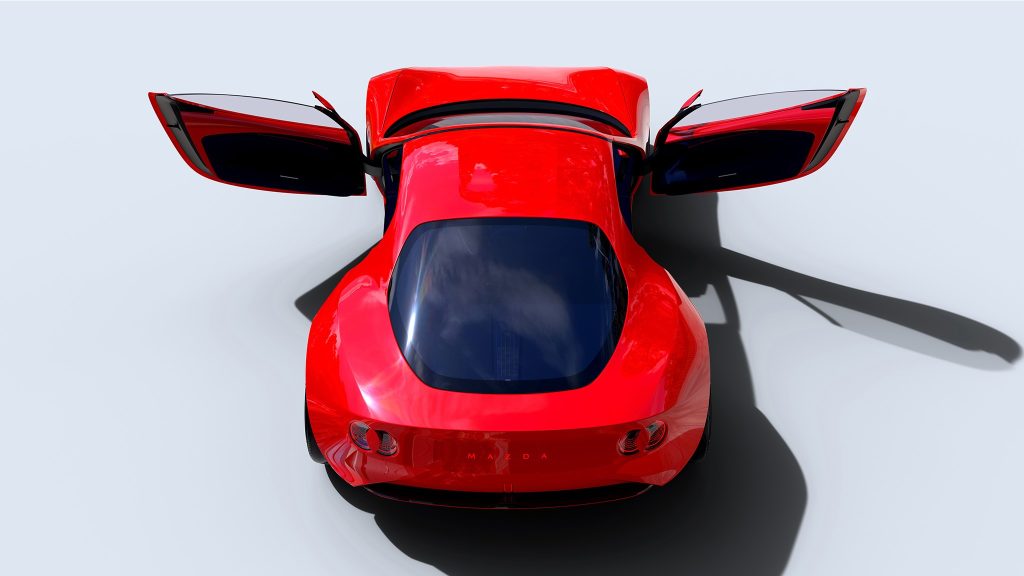
Mazda is a brand that refuses to abandon its performance roots. As the industry rushes toward electric everything, Mazda is quietly preparing to deliver a vehicle that blends past innovation with future sustainability.
Whether it’s a new RX-7, an MX-5 R-EV, or something entirely new, the signs are pointing to rotary-powered excitement on the horizon.
And if you’re looking to be among the first to experience Mazda’s next chapter, there’s only one place to be:
Marin Mazda – Bay Area’s #1 Mazda Dealership
Browse Our Performance Models | See Current Specials | Contact Us for Updates and Reserve Your Test Drive Today.
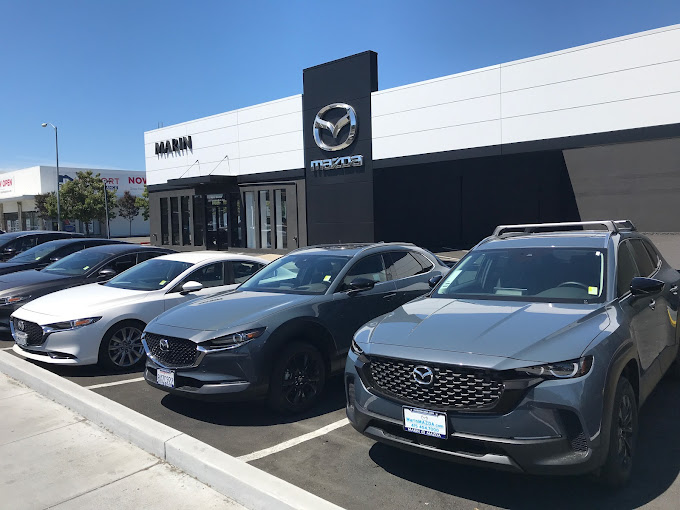
Mazda San Francisco | Bay Area Mazda Dealership | Marin Mazda
Looking for a Mazda San Francisco dealer that combines exceptional pricing, availability, and personalized care? Marin Mazda in San Rafael is the Bay Area’s trusted alternative — serving drivers across San Francisco with top-tier Mazda service, inventory, and deals, just a quick drive across the Golden Gate.
Whether you’re in the Sunset District, SoMa, or the Richmond — Marin Mazda offers a better way to shop, drive, and save on a new or used Mazda.
Why Marin Mazda Is the Smart Alternative to Mazda San Francisco Dealers
Local drivers know that not all Mazda dealerships offer the same value. At Marin Mazda, we’re proud to deliver what San Francisco shoppers often can’t find right in the city:
- Huge Selection of 2025 Mazda Models
Explore the full lineup — including the 2025 Mazda CX-5, Mazda CX-30, Mazda3 Sedan & Hatchback, Mazda MX-5 Miata, and the all-new 2025 CX-70 and CX-90. More options. No city traffic.
- Certified Pre-Owned Mazda Vehicles
Looking for a low-mileage used Mazda? Our CPO inventory features factory-certified vehicles that are safety-inspected, reconditioned, and come with warranty protection.
- Transparent Lease & Finance Offers
Our financing team helps San Francisco drivers access low interest rates, flexible lease terms, and special offers with no pressure and no surprises.
- Fast, Friendly, Expert Service
We’re known for delivering the kind of customer service that big-city dealerships can’t match. You’ll get real answers and real help — from first visit to final delivery.
Conveniently Located – Just 20 Minutes from Downtown SF

While many shoppers search for a “Mazda dealer in San Francisco,” the reality is Marin Mazda offers:
- A better-stocked showroom
- Shorter wait times for test drives and service
- Easy in-and-out access from Highway 101
- A no-hassle, high-transparency buying process
- No San Francisco gridlock
- Free parking
- Easy Golden Gate Bridge access
Mazda Service Center for San Francisco Owners
Already own a Mazda in SF? Our factory-certified service technicians are here to keep it running like new. Marin Mazda provides:
- Oil changes, brakes, tires, alignments
- Warranty work and diagnostics
- OEM Mazda parts & accessories
- Online appointment booking
Many San Francisco Mazda owners make the short trip north to experience faster service and more attentive care.
Why San Francisco Mazda Drivers Choose Marin Mazda
We’re proud to serve Mazda enthusiasts across the Bay Area — from SF to Mill Valley to Richmond — with a professional, pressure-free experience and real value.
Here’s what sets us apart from Mazda dealers in San Francisco:
- Transparent pricing — no games or markups
- Higher trade-in offers with instant evaluations
- Multilingual team available
- Easy freeway access & free customer shuttle
- Award-winning customer satisfaction
Live in San Francisco? Your Mazda Dealership Is Just Across the Bridge
Don’t settle for high-pressure showrooms or limited availability in the city. Make the short drive to Marin Mazda — and find out why more Mazda San Francisco shoppers are heading across the bridge to buy and service their vehicles.
➡️ Book Your Test Drive Today
Call us or visit www.marinmazda.net to explore current offers, view our inventory, or schedule service.
Marin Mazda – The Bay Area’s Trusted Mazda San Francisco Alternative
Proudly serving San Francisco, Marin County, the North Bay, and beyond.
Car Loan Calculator California
🚗 California Car Loan Calculator
Calculate your monthly payments with California-specific rates
Payment Breakdown
🏛️ California Auto Loan Information
Average Interest Rates in California:
- New Car Loans: 4.5% – 7.5% APR
- Used Car Loans: 6.0% – 10.0% APR
- Credit Union Rates: Often 1-2% lower
California Sales Tax: Varies by location (7.25% base + local taxes). Average total: 8.5% – 10.5%
Registration Fees: Approximately $50-$200+ depending on vehicle value and type
Looking to finance your next Mazda in California? Our Car Loan Calculator with Taxes makes it easy to estimate your monthly payments—accurately and instantly.
Whether you’re shopping for a new Mazda CX‑5, Mazda3, or a pre-owned vehicle, this tool gives you a realistic payment estimate that includes California’s sales tax, DMV fees, and more.
Why Use Our Car Loan Calculator?
At Marin Mazda, we’ve designed this calculator to do more than just crunch numbers. It helps you answer key questions like:
- How much car can I afford?
- What will my payment be if I pay weekly, biweekly, or annually?
- Can I lower my payments with a bigger down payment or shorter term?
- How do California car loan interest rates impact my loan?
- Do I qualify for an auto loan?
Calculator Features You Can Use Today
Our tool isn’t just another generic loan estimator—it’s tailored for California buyers and includes:
✔ Car Loan Calculator With Taxes
Input your ZIP code or select your sales tax rate (e.g. 9.25% for Marin County) to get a real total—not just a base vehicle cost.
✔ Additional Payments Option
Want to pay your loan off faster? Our calculator lets you see how extra monthly payments can reduce your total interest and shorten your term.
✔ Weekly, Biweekly, and Annual Payments
Prefer non-monthly payment schedules? You can estimate:
- Weekly car loan payments
- Biweekly payments (common with direct deposit)
- Annual lump-sum paydowns
✔ Car Lease Calculator California
Leasing instead of financing? Use the lease payment estimator to see how leasing a Mazda compares to buying, especially for models like the Mazda CX‑30 or Mazda MX‑5 Miata.
California Car Loan Interest Rates – What to Expect
Interest rates in California depend heavily on your credit score, loan length, and lender. Here’s a breakdown of average APR ranges:
| Credit Score | Estimated APR |
|---|---|
| 750+ (Excellent) | 3.9% – 5.5% |
| 700–749 (Good) | 5.6% – 7.5% |
| 600–699 (Fair) | 7.6% – 11.9% |
| Below 600 | 12% and above |
Pro Tip: Use the calculator to test different rates based on your credit score and compare financing vs. leasing.
Example: Monthly Car Loan Estimate (With Taxes)
Let’s say you’re financing a 2025 Mazda CX‑5 in San Rafael:
- Vehicle Price: $32,000
- Down Payment: $4,000
- Loan Term: 60 months
- APR: 6.5%
- Sales Tax (Marin County): 9.25%
- Fees (DMV + Title): $350
➡ Estimated Monthly Payment: ~$540/month
➡ Weekly Equivalent: ~$124/week
➡ Biweekly Equivalent: ~$270/2 weeks
Use our calculator above to input your own numbers.
Do I Qualify for a Car Loan in California?
Most California buyers do qualify, even with less-than-perfect credit. Here’s what lenders typically look at:
- Credit Score and credit history
- Down payment amount
- Debt-to-Income (DTI) ratio
- Employment and income proof
Marin Mazda works with local banks, credit unions, and national lenders to give you the best chance of approval—and the best rates.
Need pre-approval? Start your finance application here.
🛠 What Is the Best Car Loan Calculator in California?
We believe you’re already on it.
Our Marin Mazda Car Loan Calculator is optimized for:
- Real-time tax estimates
- Flexible payment frequency (monthly, biweekly, weekly)
- Down payment and trade-in value inputs
- Early payoff planning
- Lease and finance comparison
It’s everything you need to make an informed, confident car-buying decision.
Why Marin Mazda?
We’re proud to be Marin County’s trusted Mazda dealership, serving buyers from San Rafael, Novato, Petaluma, and the greater Bay Area.
At Marin Mazda, you’ll find:
- Transparent pricing
- Flexible finance and lease options
- Competitive trade-in offers
- A team that’s here to help—not pressure
Final Thoughts – Calculate, Compare, Buy with Confidence
Don’t let financing stress you out. Our California Car Loan Calculator with taxes and flexible payment schedules is here to make your journey simple and stress-free.
Use it to:
- Compare weekly vs monthly vs annual payments
- See how different interest rates change your total cost
- Explore lease vs loan options
- Calculate with real California taxes and DMV fees
When you’re ready, our team is here to help finalize your purchase—whether it’s a new Mazda CX‑90 or a quality pre-owned vehicle.
📞 Visit us or contact Marin Mazda today!
📍 807 Francisco Blvd E, San Rafael, CA
🌐 www.marinmazda.net
📱 Call: (415) 454-7000
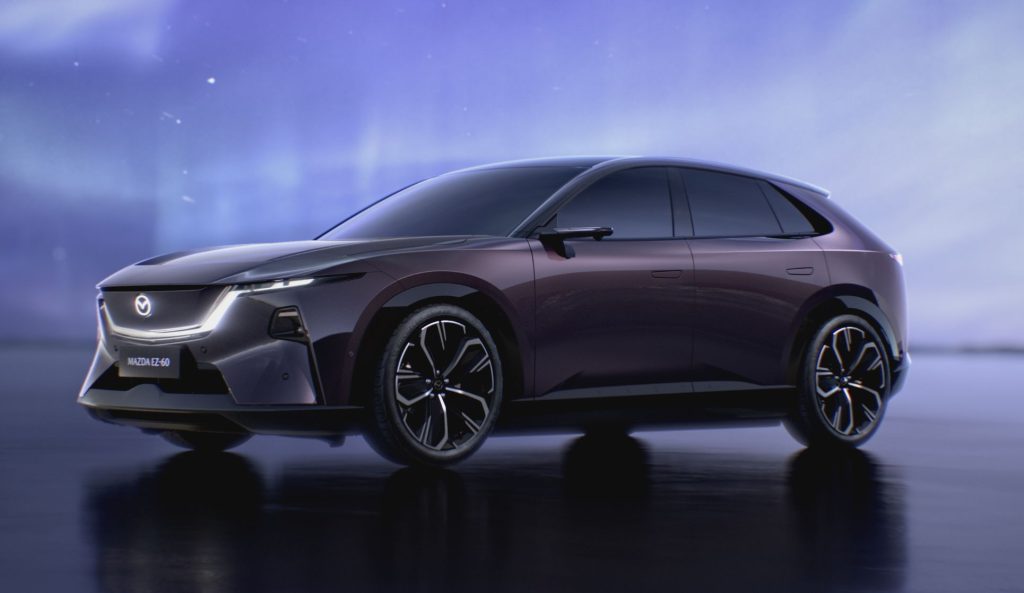
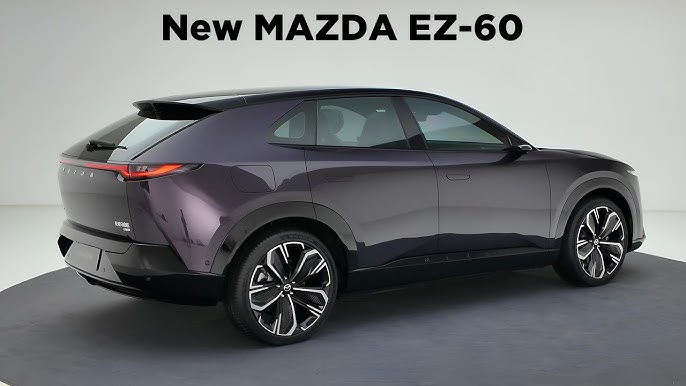
The 2026 Mazda EZ-60 is a significant entry in Mazda’s growing lineup of electric vehicles. Co-developed with Changan in China under a 50:50 joint venture, the EZ-60 marks Mazda’s transition into a new era of electrification and connectivity. This all-electric SUV is positioned in the mid-size segment and will initially launch in China, followed by international rollouts under the global nameplate Mazda CX-6e.
Exterior Design and Dimensions
The Mazda EZ-60 reflects the brand’s evolutionary design language, building on Mazda’s Kodo aesthetics while introducing elements more aligned with next-generation electric SUVs. Its silhouette is sleek, with coupe-like lines, a sloped roofline, and flush door handles. A closed-off grille, narrow LED light bars, and aerodynamic styling enhance both aesthetics and performance.
Dimensionally, the EZ-60 measures approximately 4,850 mm in length, 1,935 mm in width, and 1,620 mm in height, with a long 2,902 mm wheelbase. These proportions place it in the same league as competitors like the Tesla Model Y and Ford Mustang Mach-E. Mazda has paid special attention to minimizing drag and improving energy efficiency with advanced aerodynamic cues, including a sealed underbody and optional camera-based side mirrors.
Interior and Cabin Features
Inside, the EZ-60 introduces a futuristic yet minimalist approach. The cabin design is dominated by a massive 26.4-inch 5K ultra-wide touchscreen display that spans the dashboard. This screen handles infotainment, navigation, climate control, and vehicle settings. It supports advanced voice commands and multi-user customization. Mazda has reduced physical buttons significantly, aligning with modern EV interior trends.
The digital cockpit is accompanied by an augmented reality head-up display (AR-HUD) measuring 100 inches diagonally, projecting navigation and safety information directly onto the windshield. Ambient lighting, premium upholstery, and soft-touch surfaces throughout give the EZ-60 an upscale feel. Rear passengers enjoy individual screens, climate controls, and generous legroom thanks to the flat floor and long wheelbase.
Cargo capacity is impressive. Behind the second row, the EZ-60 offers 350 liters of cargo space, expandable to over 2,000 liters with the rear seats folded flat. A front trunk (or “frunk”) adds 126 liters of additional storage, a feature often expected in electric SUVs.
Powertrain Options
The Mazda EZ-60 will be available in two configurations: a pure battery electric vehicle (BEV) and an extended-range electric vehicle (EREV).
1. Battery Electric Version (BEV) This variant features a rear-mounted electric motor producing approximately 255 horsepower. It is powered by a 77.9 kWh lithium-ion NMC battery, providing an estimated driving range of 600 kilometers on the CLTC cycle. While real-world range is expected to be lower, it should comfortably exceed 500 kilometers in mixed driving conditions. The vehicle supports fast DC charging and has an estimated 10 to 80 percent charge time of under 30 minutes.
2. Extended-Range Version (EREV) The EREV uses the same rear-wheel-drive architecture and electric motor but adds a 1.5-liter four-cylinder gasoline engine that acts solely as a generator. This engine does not drive the wheels directly. The EREV version is equipped with a smaller 31.7 kWh LFP battery, enabling approximately 160 kilometers of electric-only range. The petrol generator extends the total range beyond 1,000 kilometers, making it a practical solution for long-distance drivers who want EV performance without charging anxiety.
Performance and Driving Dynamics
Mazda emphasizes driving enjoyment, even in electric formats. The EZ-60 follows the Jinba-Ittai philosophy of driver and car in harmony. It features electronically controlled dampers, a near 50:50 weight distribution, and rear-wheel-drive handling characteristics.
The low center of gravity, flat battery placement, and optimized chassis tuning contribute to confident cornering and a smooth ride. Steering is precise, and the suspension soaks up imperfections while retaining road feedback. While not a performance EV, the EZ-60 offers quick acceleration and agile dynamics that set it apart from other mid-size electric SUVs.
Technology and Connectivity
Technology is one of the EZ-60’s most notable aspects. Apart from the expansive dashboard screen and AR-HUD, the vehicle includes smartphone integration, remote control via mobile app, and over-the-air updates. Wireless Apple CarPlay and Android Auto come standard, and users can personalize settings such as seat position, climate control, and ambient lighting through cloud profiles.
An optional 23-speaker Dolby Atmos sound system delivers a cinematic audio experience, while dual-zone or tri-zone climate control ensures comfort for all passengers. Interior surfaces feature sustainable materials, reflecting Mazda’s commitment to both luxury and environmental responsibility.
Safety and Driver Assistance
Mazda’s advanced driver-assistance systems (ADAS) package in the EZ-60 includes:
- Adaptive cruise control with stop-and-go functionality
- Lane centering and lane-keep assist
- Automatic emergency braking with pedestrian and cyclist detection
- Blind spot monitoring
- Rear cross-traffic alert
- Parking assist with 360-degree camera
The vehicle uses a suite of high-definition cameras, ultrasonic sensors, and millimeter-wave radar to support semi-autonomous functions. A total of nine airbags, including front center and knee airbags, are standard. Battery safety is enhanced through a multi-layered protection system and fire-retardant battery casing.
Trim Levels and Equipment
While exact trims vary by region, the EZ-60 is expected to be offered in three primary trims:
- Standard: Includes LED lighting, base infotainment features, cloth seating, and the full ADAS suite.
- Premium: Adds leatherette or leather seating, upgraded infotainment, heated seats, panoramic roof, and wireless charging.
- Elite: Includes all available features, AR-HUD, Dolby Atmos system, camera mirrors, digital key, and advanced lighting features.
Launch Timeline and Markets
The Mazda EZ-60 will debut in China in late 2025 with production based in Nanjing. Global rollouts are expected to follow in 2026 under the name Mazda CX-6e. The North American and European markets are key targets for the global model. Mazda plans to offer both BEV and EREV variants globally, depending on regional demand and infrastructure.
Competitive Landscape
The EZ-60 competes with electric SUVs like the Tesla Model Y, Hyundai Ioniq 5, Nissan Ariya, and Toyota bZ4X. Compared to its rivals, it offers a compelling blend of Mazda’s driving dynamics, high-tech interiors, and long-range capability. Unlike Mazda’s first EV, the MX-30, which was criticized for limited range and power, the EZ-60 addresses those concerns with serious hardware and global ambitions.
Final Thoughts
The 2026 Mazda EZ-60 represents a turning point for the brand’s electrification journey. Combining thoughtful design, competitive range, luxury features, and driving engagement, it marks a serious effort by Mazda to position itself in the competitive electric SUV market.
Whether you’re a loyal Mazda fan or a newcomer seeking a practical, stylish, and modern EV, the EZ-60 deserves attention. Its dual powertrain options, impressive interior, and well-rounded technology suite make it a standout contender in the next wave of electric mobility.
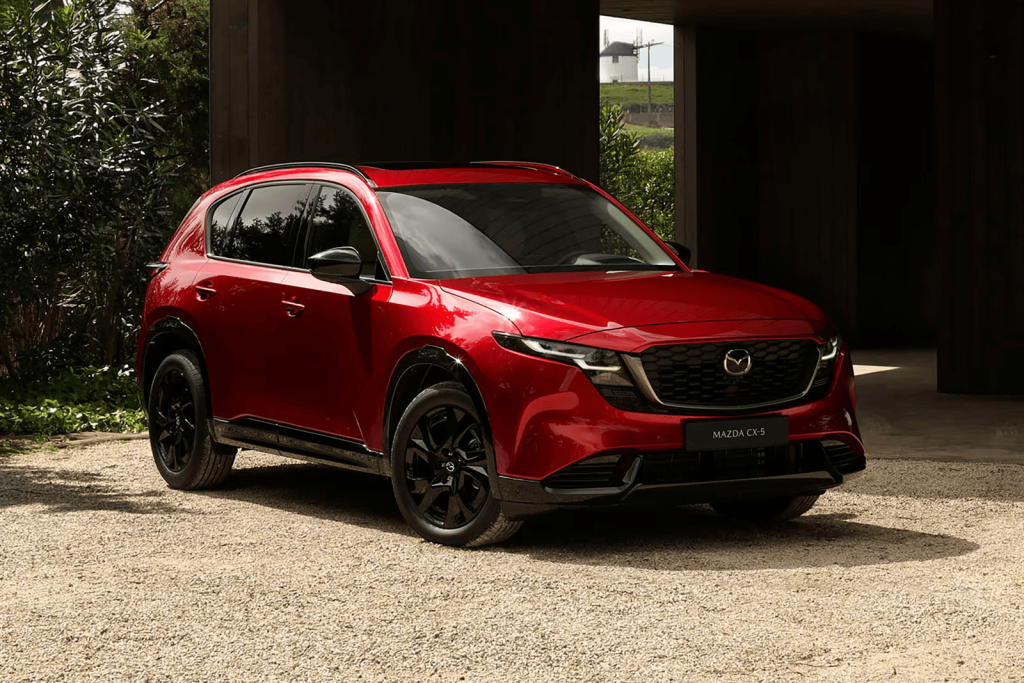
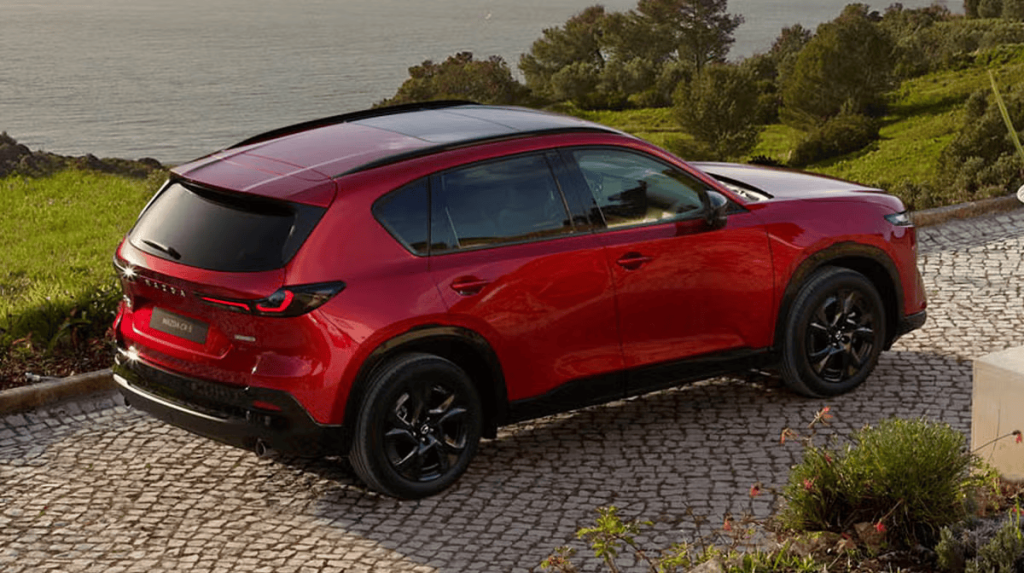
The Mazda CX-5 has been one of the Japanese brand’s best-selling models for over a decade, and for 2026, it enters its third generation fully redesigned. With a new platform and major improvements in technology, efficiency, space, and refinement, the 2026 CX-5 aims to redefine the compact SUV segment.
Below, we break down everything you need to know about the new 2026 CX-5: design, powertrain, interior, technology, space, handling, and arrival date at dealerships.
Modernized Exterior Design
The third-generation CX-5 features a more robust look inspired by larger Mazda SUVs like the CX-70 and CX-90. While it retains the essence of Mazda’s “Kodo: Soul of Motion” design language, the new CX-5 has straighter lines, a wider stance, and a more commanding grille.
Dimensions have grown: it is 11 cm longer, nearly 8 cm longer in wheelbase, and slightly wider. These changes not only enhance the vehicle’s presence but also improve interior space and on-road stability.
Minimalist and Technological Interior
Inside, the 2026 Mazda CX-5 takes a bold step forward. The interior design is clean and functional, with clear inspiration from Japanese minimalism. Soft-touch materials, metallic trim, and real wood accents on select trims elevate the cabin’s premium feel.
A standout feature is the new 15.6-inch touchscreen powered by a Google-based infotainment system. This interface replaces traditional controls and offers direct access to Google Maps, Google Assistant, and the Play Store, while maintaining wireless Apple CarPlay and Android Auto support.
Climate controls remain physical for ease of use while driving. The steering wheel now integrates haptic buttons, and a 12.3-inch digital instrument cluster provides customizable layouts depending on drive mode.
Powertrain and Efficiency
At launch, the 2026 CX-5 will be offered with a naturally aspirated 2.5-liter Skyactiv-G engine producing 187 horsepower and 185 lb-ft of torque. This proven engine is paired with a six-speed automatic transmission and standard all-wheel drive.
For select markets such as Europe and possibly Canada, Mazda will offer a mild-hybrid version with a 48-volt electric assist system to improve fuel efficiency without compromising performance.
By 2027, Mazda plans to introduce a full hybrid version (Skyactiv-Z), designed to compete with rivals like the Toyota RAV4 Hybrid and Honda CR-V Hybrid. This system will pair a turbocharged combustion engine with a self-charging electric drive unit.
Space and Comfort
Thanks to its increased dimensions, the 2026 CX-5 offers significantly improved cabin space. Rear passengers enjoy more legroom, shoulder room, and headroom. Larger rear doors make access easier, especially for installing child seats.
The cargo area has also been redesigned. It now provides more volume, a wider opening, and a lower load floor, making it more practical for daily use or family travel.
Driving Dynamics
Mazda has long been praised for its driver-focused vehicles, and the 2026 CX-5 continues this tradition. Even with the carryover six-speed transmission, the new platform delivers a more refined ride thanks to revised suspension tuning.
Steering is precise, body control is strong in corners, and cabin noise has been significantly reduced. The longer wheelbase and better weight distribution contribute to a more composed feel on the road.
Safety and Driver Assistance
The 2026 CX-5 features the next generation of Mazda’s i-Activsense safety suite. Key features include:
- Automatic emergency braking with pedestrian and cyclist detection
- Adaptive cruise control with stop-and-go functionality
- Lane keep assist with lane centering
- Blind spot monitoring with rear cross-traffic alert
- 360-degree camera and front/rear parking sensors
These features position the 2026 CX-5 as one of the safest in its class, with Mazda targeting five-star crash test ratings across global markets.
Technology and Connectivity
Technological advancements are a highlight. In addition to the Google-based infotainment, the 2026 CX-5 includes over-the-air (OTA) updates, LTE connectivity for live map updates, and a smartphone app to control various vehicle functions remotely.
Interior lighting is full LED, with customizable ambient lighting in higher trims. An optional 12-speaker Bose premium audio system delivers an immersive listening experience, enhancing the premium atmosphere.
Available Trims
While full trim details for North America have yet to be confirmed, a similar lineup to current offerings is expected, including:
- CX-5 GS
- CX-5 GS-L
- CX-5 GT
- CX-5 Signature
Each trim will include more standard equipment, particularly in safety and connectivity. Even the base model is expected to come with the 15.6-inch touchscreen and AWD.
Pricing and Availability
Mazda has confirmed that the 2026 CX-5 will arrive at North American dealerships in early Q2 2026. Estimated starting prices are around 32,000 CAD in Canada and 27,000 USD in the U.S., depending on trim and configuration.
Compared to competitors, the CX-5 remains positioned as a near-premium choice in the mainstream compact SUV segment, offering elevated quality and refinement at a competitive price.
Conclusion
The 2026 Mazda CX-5 is not just another refresh—it is a comprehensive reinvention of the brand’s most successful SUV. With improvements in space, design, technology, efficiency, and safety, this new model is poised to remain a top contender in its segment.
Whether you’re looking for a family SUV, a road trip companion, or a daily commuter with style and comfort, the 2026 CX-5 presents a well-rounded package that delivers everything you expect from a modern vehicle.
More technical details, test drive reviews, and official evaluations will follow once the first units hit dealership lots.
Mazda CX-5 2026: More space, more tech, same spirit.
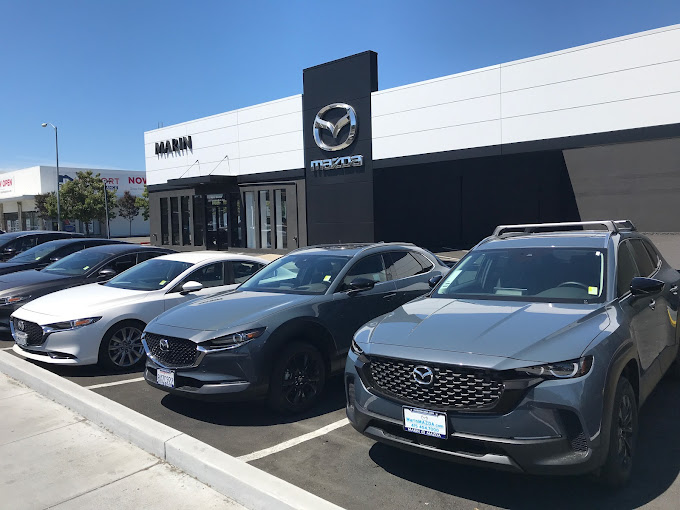
If you’re in the market for a high-quality, low-risk used vehicle, the Mazda Certified Pre-Owned (CPO) program at Marin Mazda offers exceptional value wrapped in premium assurance. Located at 807 Francisco Boulevard East in San Rafael, CA, Marin Mazda’s Certified Pre-Owned lineup brings together the appeal of a gently used Mazda, the reliability of rigid manufacturer standards, and the support of a comprehensive warranty—all at a more accessible price point.
What Makes a Mazda CPO?
A Mazda Certified Pre-Owned vehicle isn’t just any used car—it’s been carefully inspected, refurbished, and backed by Mazda’s manufacturer-level warranty. To earn the CPO badge, each Mazda must:
- Be under 5 years old and have fewer than 60,000 miles.
- Pass a 160-point inspection, including checks on mechanical systems, safety features, cosmetics, and more.
- Receive a comprehensive reconditioning using Genuine Mazda parts.
- Have a clean vehicle history report, verifying it’s free from major damage or salvage titles.
These rigorous standards provide the peace of mind that comes from buying a vehicle with known quality and proven dependability.
Top Benefits of Choosing Mazda Certified Pre-Owned
1. Extended Peace of Mind Each certified Mazda includes a 12-month/12,000-mile limited vehicle warranty, fully backed by Mazda Motors. This is paired with a 7-year/100,000-mile limited powertrain warranty from the original in-service date.
2. 160-Point Inspection & Genuine Parts Mazda CPO vehicles undergo a factory-level 160-point inspection. All repairs are completed using Genuine Mazda parts to ensure top-tier performance.
3. Roadside Assistance Enjoy 24/7 Mazda Roadside Assistance for 7 years/100,000 miles. Services include emergency fuel delivery, jump starts, flat tire changes, and towing.
4. Competitive Financing Offers Mazda CPO vehicles often qualify for low-interest financing, including special rates directly from Mazda Financial Services.
5. Vehicle History Reports Each CPO vehicle includes a comprehensive CARFAX® Vehicle History Report, so you know exactly what you’re getting.
Marin Mazda’s Certified Pre-Owned Lineup
At Marin Mazda, you can find a diverse selection of Certified Pre-Owned vehicles to fit your lifestyle:
- Mazda CX-5 – A favorite for families, offering ample space and available all-wheel drive.
- Mazda CX-30 – A compact crossover that blends sleek design with utility.
- Mazda CX-50 & CX-90 – Newer models that bring adventure-ready features and upscale interiors.
- Mazda3 Sedan & Hatchback – Ideal for those seeking sporty performance and stylish design.
Each CPO vehicle in stock has been thoroughly vetted and often includes added value features such as premium sound systems, navigation, and driver-assistance technologies.
The Marin Mazda CPO Shopping Experience
Online Convenience Browse Marin Mazda’s Certified Pre-Owned inventory online with detailed photos, Carfax reports, and pricing breakdowns. You can even calculate payments and apply for financing directly from their website.
In-Person Confidence Visit the dealership to test drive your preferred model. Marin Mazda’s experienced team provides a no-pressure environment and full transparency throughout the buying process.
Trade-In & Financing Get a Kelley Blue Book® Instant Cash Offer for your trade-in, and explore competitive financing packages tailored to your credit profile.
Why Choose Marin Mazda for Your Certified Pre-Owned Mazda?
Trusted Dealer in Marin County Marin Mazda has built its reputation on customer satisfaction and premium vehicle offerings.
Local Advantage Conveniently located in San Rafael, Marin Mazda serves drivers across the Bay Area. Their all-in-one location includes sales, service, and parts for continued support long after your purchase.
Customer Praise Buyers appreciate the dealership’s friendly service, detailed inspections, and willingness to go above and beyond—making the CPO experience even more reassuring.
Steps to Get Started
- Explore Inventory – Visit the Certified Pre-Owned section on marinmazda.net.
- Schedule a Test Drive – Try before you buy with zero pressure.
- Apply for Financing – Get pre-approved through their secure finance portal.
- Trade or Sell Your Vehicle – Bring your old car and get a fair offer instantly.
- Drive with Confidence – Enjoy a like-new Mazda with full warranty protection.
Final Thoughts
Choosing a Mazda Certified Pre-Owned vehicle from Marin Mazda means getting the best of both worlds: value and quality. With a rigorous certification process, long-term warranty protection, and exceptional service, Marin Mazda helps ensure your CPO experience is smooth, transparent, and rewarding.
Ready to make your move? Visit Marin Mazda at 807 Francisco Blvd E, San Rafael, CA, call (415) 454-7000, or browse their CPO inventory online today.
Marin Mazda Certified Pre-Owned: Premium Quality Without the New Car Price Tag.

The 2006 Mazda3 marked a high point in compact car design during the mid-2000s. Stylish, affordable, and engaging to drive, it stood out in a segment typically dominated by bland transportation. As part of Mazda’s zoom-zoom brand philosophy, the 2006 Mazda3 delivered more than expected in terms of performance, build quality, and design. Nearly two decades later, it remains a popular choice in the used car market for buyers who want a sporty yet reliable ride without breaking the bank.
This blog offers a complete breakdown of the 2006 Mazda3, including specs, trims, performance, reliability, and more.
Model Overview
The 2006 Mazda3 was available in two primary body styles: a four-door sedan and a five-door hatchback. It came in two main trims:
- Mazda3 i (sedan only)
- Mazda3 s (sedan or hatchback)
Both trims offered unique styling cues and performance characteristics. The Mazda3 i catered to buyers looking for better fuel economy, while the Mazda3 s offered more power and premium features for those willing to spend a bit more.
Engine and Performance
The Mazda3 was praised for its tight steering, agile chassis, and responsive acceleration, especially compared to its Japanese and American compact competitors of the time.
Mazda3 i
- Engine: 2.0-litre DOHC inline-4
- Horsepower: 150 hp @ 6,500 rpm
- Torque: 135 lb-ft @ 4,500 rpm
- Transmission: 5-speed manual or 4-speed automatic
- Fuel Economy: Approx. 8.4 L/100 km city / 6.2 L/100 km highway (28/35 mpg)
Mazda3 s
- Engine: 2.3-litre DOHC inline-4
- Horsepower: 160 hp @ 6,500 rpm
- Torque: 150 lb-ft @ 4,500 rpm
- Transmission: 5-speed manual or 4-speed automatic
- Fuel Economy: Approx. 9.8 L/100 km city / 7.1 L/100 km highway (24/33 mpg)
Despite the difference in power, both versions felt nimble and responsive, thanks to Mazda’s focus on chassis dynamics. The MacPherson strut front suspension and independent multi-link rear suspension offered a more athletic driving experience than many of its rivals.
Interior and Features
The 2006 Mazda3 delivered a surprisingly upscale cabin for a compact car of its era. High-quality materials, a well-laid-out dashboard, and supportive front seats gave it a premium feel that surpassed many competitors like the Toyota Corolla or Ford Focus.
Standard features on most models included:
- Air conditioning
- Power windows and locks
- AM/FM/CD stereo system
- Tilt and telescoping steering wheel
Higher trims and optional packages offered:
- Leather upholstery
- Heated front seats
- Sunroof
- Bose premium audio system
- Cruise control
- Steering wheel-mounted audio controls
Interior space was generous for the class, with decent rear-seat legroom and ample headroom, particularly in the hatchback. The hatchback also boasted up to 43.8 cubic feet of cargo space with the rear seats folded, making it one of the most versatile compact cars of the time.
Safety and Reliability
Safety was decent by mid-2000s standards. The 2006 Mazda3 came with standard front airbags, while side and curtain airbags were optional or standard on higher trims. Anti-lock brakes (ABS) were also included on some versions, particularly the Mazda3 s.
Crash test ratings from the National Highway Traffic Safety Administration (NHTSA) were:
- Frontal Crash: 4 out of 5 stars
- Side Crash: 3-4 stars depending on configuration
- Rollover: 4 out of 5 stars
The Insurance Institute for Highway Safety (IIHS) rated the 2006 Mazda3 “Good” in frontal offset crash tests but lower in side impact unless equipped with side airbags.
In terms of reliability, the 2006 Mazda3 performed well. Common issues were relatively minor and included:
- Premature brake wear
- Suspension bushing wear
- Rust in colder climates (especially around wheel wells and underbody)
Regular maintenance and inspection are essential, particularly with older used models, but many owners have driven the 2006 Mazda3 well beyond 300,000 km with routine care.
Driving Experience
Mazda designed the 2006 Mazda3 to feel more like a European sports sedan than a basic commuter car. The steering was tight and communicative, offering excellent feedback through corners. The suspension was firm but not harsh, balancing road comfort with handling stability.
The 2.3-litre engine, while not class-leading in power, had enough grunt to make the Mazda3 s feel genuinely sporty. Acceleration from 0 to 100 km/h took around 8.5 seconds, respectable for the segment.
Whether cruising on the highway or zipping through city traffic, the Mazda3 felt composed and confident, with minimal body roll and good overall control.
Ownership Costs
One of the 2006 Mazda3’s key advantages is its low cost of ownership. Here’s what to consider:
- Fuel Economy: Excellent for a non-hybrid compact, especially with the 2.0L engine.
- Insurance: Affordable, though slightly higher for younger drivers due to its sporty nature.
- Maintenance: Parts are inexpensive and widely available. Basic servicing is straightforward.
- Resale Value: Decent, though lower than Honda Civic or Toyota Corolla, partly due to perception and rust issues in northern climates.
Used Market and Pricing
As of today, the 2006 Mazda3 remains a common find on the used market. Pricing varies depending on mileage, condition, and location. In Canada and the U.S., expect:
- Mazda3 i sedan: $2,000 – $4,500 CAD/USD
- Mazda3 s sedan or hatchback: $3,000 – $5,500 CAD/USD
Well-maintained, low-mileage examples may fetch higher prices, especially hatchback versions with more features.
Should You Still Buy One?
The 2006 Mazda3 is a solid option for someone looking for:
- A reliable daily driver with sporty handling
- A budget-friendly used vehicle
- A compact car with versatile cargo options (especially the hatchback)
However, it may not be the best choice if you are seeking:
- The latest safety tech like stability control or advanced driver-assistance systems
- A luxury ride or ultra-quiet cabin
- Rust-free longevity in heavily salted regions
If you can find a rust-free 2006 Mazda3 with a clean maintenance record, it remains a fun and rewarding compact car for the money.

If you’ve ever driven a Mazda or even just seen one on the road, you may have wondered: Is Mazda a Japanese car brand? The answer is a definitive yes — but the story behind Mazda’s identity is far richer and more complex than a simple label.
Mazda is a Japanese automaker through and through, from its headquarters and historical origins to its design philosophy and manufacturing DNA. But like many major car brands today, Mazda also operates on a global scale, with significant production and business operations outside of Japan.
This article explores Mazda’s Japanese origins, how it has evolved into a global brand, and what its Japanese identity means in the context of today’s automotive landscape.
1. Mazda’s Founding and Headquarters
Mazda was founded on January 30, 1920 in Hiroshima, Japan under the name Toyo Cork Kogyo Co., Ltd. Originally a cork manufacturing company, it eventually transitioned into the machine tools business and later into vehicle production.
In 1931, Mazda released its first vehicle — a three-wheeled motorized truck known as the Mazda-Go. Though the company did not officially adopt the “Mazda” name as its corporate identity until 1984, the name had been used for its vehicles since the 1930s.
To this day, Mazda Motor Corporation remains headquartered in Hiroshima, making it one of the few major automakers still based in the same city where it began over 100 years ago.
2. What Does “Mazda” Mean?
The name “Mazda” holds both linguistic and philosophical significance. It is derived from Ahura Mazda, the ancient Zoroastrian god of light, wisdom, and harmony. The company’s founder, Jujiro Matsuda, saw this as a reflection of the brand’s core values — intelligence, innovation, and unity.
Additionally, “Mazda” is phonetically similar to “Matsuda,” his family name, which provided a unique and culturally resonant identity for the company on a global stage.
3. Japanese Engineering Principles in Mazda Vehicles
Mazda vehicles are distinctively Japanese not just in origin, but also in design philosophy and engineering execution. Here are some elements that embody the brand’s cultural roots:
a. Jinba Ittai
Translating to “horse and rider as one,” this principle defines Mazda’s focus on creating a seamless connection between driver and vehicle. It’s most famously applied in the Mazda MX-5 Miata, but it influences the handling and ergonomics of every model.
b. Kodo Design Language
Introduced in 2010, Mazda’s Kodo: Soul of Motion design philosophy draws on traditional Japanese aesthetics. The focus is on minimalism, purity of form, and emotional expression through motion, even when the car is standing still.
c. Skyactiv Technology
Mazda’s homegrown Skyactiv engine and chassis technologies emphasize fuel efficiency, reduced emissions, and lightweight construction — another reflection of Japanese innovation, which often prioritizes efficiency and simplicity over brute force.
4. Hiroshima’s Influence on Mazda’s Identity
Mazda’s roots in Hiroshima are not just symbolic — they’re deeply influential. The company survived the atomic bombing of Hiroshima in 1945, and its resilience helped drive the city’s post-war recovery. Mazda became one of the region’s largest employers and industrial leaders, a role it continues to play today.
The company’s global headquarters, R&D facilities, and main assembly plants are still located in Hiroshima, maintaining a strong local connection even as it expands globally.
5. Global Manufacturing and Operations
While Mazda is undoubtedly Japanese, it is also a global manufacturer. In order to meet international demand and reduce production costs, Mazda operates assembly and production facilities around the world.
Key Global Operations:
- United States: Mazda Toyota Manufacturing in Huntsville, Alabama (opened 2021)
- Mexico: Salamanca Plant — builds Mazda3, Mazda2, and CX-30 for the Americas
- China: Joint ventures with FAW and Changan to manufacture for the Chinese market
- Thailand and Vietnam: Regional assembly to serve Southeast Asia
Despite these international operations, many of Mazda’s core models — especially those for the Japanese domestic market and premium trims — continue to be produced in Japan. This has helped Mazda maintain consistent build quality and engineering integrity.
6. Mazda and Ford: A Historical Partnership
From the 1970s through the early 2010s, Mazda had a longstanding partnership with Ford Motor Company. At one point, Ford owned a controlling interest in Mazda and collaborated on several vehicle platforms, including the Ford Escort (based on the Mazda Familia) and the Mazda B-Series/Ford Ranger trucks.
Although Ford divested its shares during the global financial crisis, the partnership had a lasting impact. It allowed Mazda to expand its presence in North America and develop manufacturing infrastructure outside Japan. However, once the partnership ended, Mazda refocused on self-reliant engineering and innovation, leading to the Skyactiv platform and a return to its distinctly Japanese identity.
7. How Japanese Is Mazda Today?
Mazda’s leadership, brand strategy, and product development remain firmly rooted in Japanese culture. From the way its vehicles are tuned for road feedback to the subtle refinement of its cabin materials, Mazda reflects a Japanese approach to craftsmanship and precision.
However, it would be inaccurate to say that Mazda is “purely” Japanese in the traditional sense. Its global manufacturing, international design input, and responsiveness to global market demands mean that Mazda is a Japanese brand with global influence.
Still, its corporate culture, commitment to quality, and philosophical foundation all point back to Japan.
8. Comparing Mazda to Other Japanese Brands
Mazda is often compared to fellow Japanese automakers such as Toyota, Honda, Nissan, Subaru, and Mitsubishi. While all share an emphasis on quality and efficiency, Mazda has carved a unique identity by focusing on premium interiors, elegant design, and driver engagement — often compared to European automakers more than its Japanese peers.
Where Toyota might prioritize broad appeal and hybrid leadership, Mazda focuses on the emotional connection between driver and car — a reflection of the Japanese concept of “Monozukuri,” or the art of making things with soul and integrity.
9. Mazda in the Future: Still Japanese, Evolving Rapidly
As the auto industry shifts toward electrification, Mazda is evolving too. Recent developments include:
- The Mazda MX-30: the brand’s first electric vehicle, launched in Japan and Europe
- The CX-90 and CX-70: New premium platforms featuring inline-6 engines and plug-in hybrid powertrains
- Expanded use of sustainable materials in production and interiors
Despite these modern developments, Mazda continues to stay true to its heritage. Its future product roadmap includes hybrid, plug-in hybrid, and EV offerings that maintain the brand’s hallmark driving dynamics and craftsmanship.
Conclusion: Yes, Mazda Is Japanese — And Proudly So
Mazda is a Japanese brand in every meaningful sense. From its Hiroshima roots to its design language, engineering principles, and brand philosophy, Mazda embodies the innovation, resilience, and refinement associated with modern Japanese manufacturing.
Though it now serves a global audience and operates factories around the world, Mazda’s soul remains firmly anchored in Japan. It’s this balance — between cultural tradition and global adaptability — that makes Mazda one of the most respected names in the modern automotive landscape.

The 2004 Mazda RX-8 marked the return of a true rotary-powered sports car to Mazda’s global lineup. As the successor to the beloved RX-7, the RX-8 was designed to blend high-revving performance and sharp handling with practicality — an unusual but intriguing combination in the world of rear-wheel-drive coupes.
Powered by Mazda’s iconic Renesis rotary engine, the RX-8 stood out in a market dominated by piston engines. It offered four doors (with hidden rear-hinged rear doors), seating for four adults, a near-perfect weight distribution, and a redline that soared past 9,000 rpm. Even today, the RX-8 remains one of the most distinctive sports cars of the early 2000s.
1. Rotary Engine: The Heart of the RX-8
The defining characteristic of the RX-8 is its 1.3L Renesis rotary engine. Unlike traditional piston engines, rotary engines use a spinning triangular rotor in an oval housing to generate combustion. This compact, high-revving design allows for a low center of gravity and smooth power delivery.
2004 Engine Specs:
| Configuration | Horsepower | Torque | Redline | Transmission | 0–100 km/h (0–62 mph) |
|---|---|---|---|---|---|
| 6-speed manual | 238 hp @ 8,500 rpm | 159 lb-ft @ 5,500 rpm | 9,000 rpm | 6MT | ~5.9 sec |
| 4-speed automatic | 197 hp @ 7,200 rpm | 164 lb-ft @ 5,000 rpm | 7,500 rpm | 4AT | ~7.2 sec |
Key differences: The manual version produced significantly more horsepower and revved higher than the automatic variant. Mazda tuned the engine differently for each transmission due to reliability and thermal management concerns.
Despite the small 1.3L displacement, the engine behaves like a much larger engine due to its rotary design. But it does so with limited torque, requiring drivers to rev high to access peak performance — something that thrilled enthusiasts but puzzled some casual drivers.
2. Chassis and Handling
Mazda’s engineers placed a strong emphasis on balance and control. The RX-8 boasts a 50:50 front-to-rear weight distribution, achieved by mounting the engine behind the front axle and placing the transmission and fuel tank centrally.
Suspension and Steering:
- Double wishbone front suspension
- Multi-link rear suspension
- Rack-and-pinion steering with hydraulic assist
- Curb weight: ~1,370–1,430 kg (3,020–3,150 lbs)
The result was one of the best-handling cars in its class, with precise turn-in, minimal understeer, and a planted feel through corners. Reviewers praised the RX-8 for feeling light on its feet, agile, and communicative — making it a favorite among track-day enthusiasts.
3. Exterior Design
The RX-8 featured a bold and futuristic design for its time. It took styling cues from the RX-EVOLVE concept and added functional features such as rear-hinged “freestyle” rear doors for improved access to the rear seats — without the need for a full sedan structure.
Notable Exterior Features:
- Swept-back headlights and sculpted hood
- Flared wheel arches and wide stance
- Dual exhaust outlets
- 16″ or 18″ alloy wheels depending on trim
- Compact rear deck with integrated spoiler (GT trim)
Despite being a coupe, the RX-8 was surprisingly practical, offering everyday usability with a sleek and sporty aesthetic.
4. Interior and Features
Inside, the RX-8 blended driver-focused ergonomics with a sporty, minimalist aesthetic. The cabin featured seating for four — two in the front and two individual seats in the rear, with decent legroom for a coupe-style car.
Interior Highlights:
- Three-spoke leather-wrapped steering wheel
- Rotary-themed gauges with digital speedometer
- Sport seats with bolstering and optional leather
- Aluminum pedals and shifter (manual models)
- CD stereo with optional Bose audio system
- Cruise control, air conditioning, and power windows standard on most trims
Trims like the GT and GT-Luxury in Canada added heated leather seats, sunroof, xenon headlights, and premium stereo systems.
5. Trim Levels (Canada/U.S. Market)
| Trim | Key Features |
|---|---|
| Base / GS | Cloth interior, 16″ wheels, 4-speaker audio |
| GT / Sport | Leather seats, 18″ alloys, Xenon headlights |
| GT-Luxury / Grand Touring | Moonroof, heated seats, Bose audio, navigation (optional) |
| Shinka Edition (U.S.) | Special paint, upgraded leather, unique interior trim (limited production) |
Buyers looking for a purist experience often chose the 6-speed manual GT, while others valued the comfort and daily usability of the automatic-equipped trims.
6. Reliability and Ownership Considerations
Here is where the RX-8 becomes polarizing. While the driving experience is exceptional, reliability is a known concern — primarily due to the rotary engine.
Common Issues:
- Flooded engine on cold starts if not warmed up properly
- High oil consumption due to design — owners must check oil levels regularly
- Apex seal wear leading to compression loss
- Ignition coil failure
- Poor fuel economy: ~13.8 L/100 km (17 mpg city)
Owners who followed Mazda’s guidelines — warming up the engine fully before turning it off, checking oil weekly, and using the correct spark plugs — often experienced far fewer issues. Neglect, however, could result in costly repairs or engine rebuilds before 160,000 km (100,000 miles).
7. Fuel Economy and Insurance
The RX-8 is not fuel-efficient, particularly by 2024 standards. Real-world fuel economy ranged from:
- City: 13.8–14.7 L/100 km (~16–17 mpg)
- Highway: 9.8–10.5 L/100 km (~22–24 mpg)
Premium fuel is required. Additionally, because of its performance classification, insurance premiums were higher than average compact cars.
8. Legacy and Enthusiast Appeal
Despite its quirks, the RX-8 has developed a loyal following. It remains one of the last mass-produced rotary-powered vehicles and represents Mazda’s commitment to innovation and driver enjoyment.
The RX-8 is:
- Affordable on the used market
- Easy to modify for track or autocross use
- Supported by an active rotary engine community
- A future classic, especially clean, unmodified manual versions
Today, the RX-8 is appreciated by enthusiasts for what it is: a unique and rewarding car that demands attention and care but offers a driving experience like no other.
Conclusion: The 2004 Mazda RX-8 Is Not for Everyone — But That’s Exactly the Point
The 2004 Mazda RX-8 is an enthusiast’s car, built for those who value precision handling, rev-happy engines, and driving purity over raw horsepower or practicality. It requires more maintenance and attention than the average coupe, but in return, it delivers an experience that few modern vehicles can replicate.
If you’re willing to learn its quirks and treat it right, the RX-8 rewards you with one of the most connected driving experiences of the last two decades. For driving enthusiasts, it remains one of Mazda’s boldest and most memorable creations.
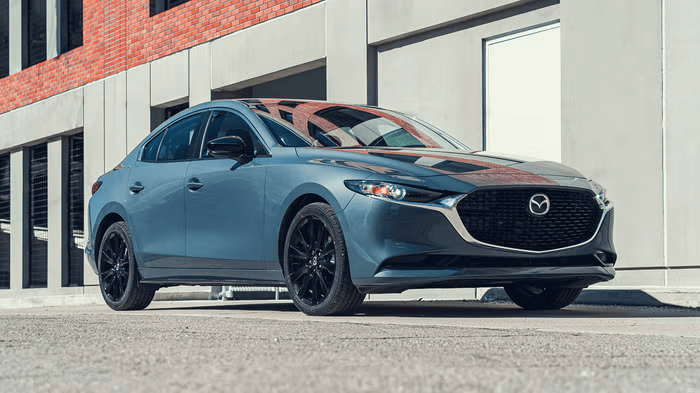
Mazda has quietly become one of the most respected automotive brands on the road today. While it may not carry the prestige of luxury badges like BMW or Lexus, or the mass-market dominance of Toyota and Honda, Mazda has carved out a space for itself by focusing on refinement, driver engagement, and long-term reliability.
But are Mazdas actually good cars? If you’re considering a new or used vehicle, this article breaks down the reasons Mazda consistently ranks among the top choices in automotive reviews, owner satisfaction surveys, and safety evaluations.
1. Long-Term Reliability and Durability
Mazdas are often praised for their mechanical reliability. This is especially important for buyers who plan to keep their car beyond the warranty period or want strong resale value.
Proven Track Record
- Consumer Reports ranked Mazda the most reliable automaker in 2020, beating out traditional leaders like Toyota and Lexus.
- The Mazda3, Mazda6, and CX-5 frequently score high for long-term dependability, often lasting beyond 250,000 km (155,000 miles) with minimal major repairs.
- Mazda’s decision to avoid overcomplicated systems — such as dual-clutch gearboxes or overly complex infotainment — contributes to its vehicles’ longevity.
Routine maintenance is generally straightforward, and Mazda’s naturally aspirated Skyactiv engines have fewer moving parts than turbocharged or hybrid systems, reducing the likelihood of costly failures.
2. Engaging Driving Dynamics
Mazda has made driving enjoyment a key priority across its lineup — not just in performance models like the MX-5 Miata, but also in everyday cars and crossovers.
Why They’re Fun to Drive:
- Precise steering and well-tuned suspension systems offer a more engaging feel than most mainstream competitors.
- Technologies like G-Vectoring Control Plus subtly enhance vehicle stability during cornering and lane changes.
- Even compact models like the Mazda3 or CX-30 handle like much more expensive European cars.
Most automakers design cars to be neutral and inoffensive. Mazda takes a different path — its engineers focus on “Jinba Ittai,” a Japanese philosophy meaning “horse and rider as one.” The result is a more connected, responsive feel behind the wheel.
3. High-Quality Interiors Without Luxury Pricing
Mazda vehicles, especially from model year 2017 onward, are known for interiors that punch well above their weight class. Step inside a Mazda3 GT or CX-5 Signature, and you’ll find materials, stitching, and finishes that would feel at home in a German luxury car.
Notable Interior Features:
- Nappa leather seating available on upper trims
- Real wood or aluminum trim on Signature models
- Heads-up displays, heated/ventilated seats, and dual-zone climate control
- Excellent insulation from road noise, especially in newer generations
The minimalist layout and tactile controls reflect Mazda’s focus on driver-centric design. Unlike some competitors that prioritize screen size over function, Mazda puts usability and ergonomics first.
4. Excellent Safety Ratings Across the Lineup
Safety is another strong point for Mazda. Nearly every vehicle in its lineup receives high scores in crash testing and includes a long list of active safety technologies.
Standard or Available i-Activsense Features:
- Forward Collision Warning with Automatic Emergency Braking
- Lane Departure Warning and Lane Keep Assist
- Blind Spot Monitoring and Rear Cross Traffic Alert
- Adaptive Cruise Control with Stop & Go
- Traffic Sign Recognition (on higher trims)
In Canada and the U.S., most Mazda vehicles are Top Safety Pick or Top Safety Pick+ award winners according to the Insurance Institute for Highway Safety (IIHS). Structural rigidity, smart safety systems, and braking performance all contribute to these top-tier results.
5. Ownership Costs and Warranty Coverage
Mazdas offer strong value retention and lower-than-average repair costs, especially when compared to European rivals. Mazda’s decision to focus on naturally aspirated engines (with the exception of the 2.5L turbo in select trims) keeps running costs lower, while still offering strong performance.
Warranty Coverage (Canada):
- Basic Coverage: 3 years / unlimited km
- Powertrain: 5 years / unlimited km
- Anti-Perforation (Rust): 7 years / unlimited km
- Roadside Assistance: 3 years / unlimited km
The unlimited mileage warranty is unique among non-luxury automakers and is especially attractive to long-distance drivers, rideshare drivers, or those who plan to drive well beyond 20,000 km/year.
6. Resale Value and Market Perception
Mazda vehicles hold their value well, particularly the Mazda3, CX-5, and MX-5 Miata. While they may not reach Toyota’s resale levels, they often outperform brands like Hyundai, Nissan, and Ford.
Several factors contribute to strong resale value:
- Positive brand perception among informed buyers
- Reliability and durability
- Timeless design that doesn’t age quickly
- Lower fleet sales, which help preserve resale pricing
For example, a well-maintained 5-year-old Mazda3 still commands a strong asking price in the used market — even with higher mileage.
7. Drawbacks to Consider
Mazdas are not without flaws. Depending on your priorities, these factors may be worth keeping in mind:
- Infotainment systems in models from 2014 to 2020 use a rotary dial and are not touchscreen while driving. Some users find this less intuitive.
- Rear seat and cargo space in the Mazda3 and CX-5 are slightly tighter than class leaders like the Honda CR-V or Toyota RAV4.
- No full EVs or widespread hybrid options (until recent CX-90 PHEV and upcoming EVs) may be a downside for eco-conscious buyers.
These limitations are relatively minor but worth evaluating during a test drive.
8. Standout Models Worth Mentioning
Mazda’s lineup is tight and well-curated, with no filler vehicles. Each model serves a clear purpose and is engineered with care.
| Model | Highlights |
|---|---|
| Mazda3 | Compact sedan/hatch with AWD option, premium design |
| CX-5 | Compact SUV with available turbo engine, refined ride |
| CX-50 | Newer SUV with off-road capability and premium trims |
| MX-5 Miata | Iconic roadster known for lightweight fun |
| CX-90 PHEV | Plug-in hybrid with 323 hp and 42 km electric range |
Mazda has also introduced inline-6 engines and rear-wheel drive platforms in newer models like the CX-90, signaling its move further into the premium segment.
Conclusion: Are Mazdas Good Cars? Absolutely.
Mazdas combine reliability, driving enjoyment, upscale design, and long-term value in a way few automakers in their price range can match. Whether you’re buying your first vehicle, upgrading to something sportier, or downsizing from a luxury brand, Mazda delivers across the board.
They may not shout for attention, but once you drive one — and own one — it becomes clear why Mazda earns such loyal fans. For many drivers, it’s not just a good car — it’s the smartest choice in its class.
Connect with us


Leave a Reply