

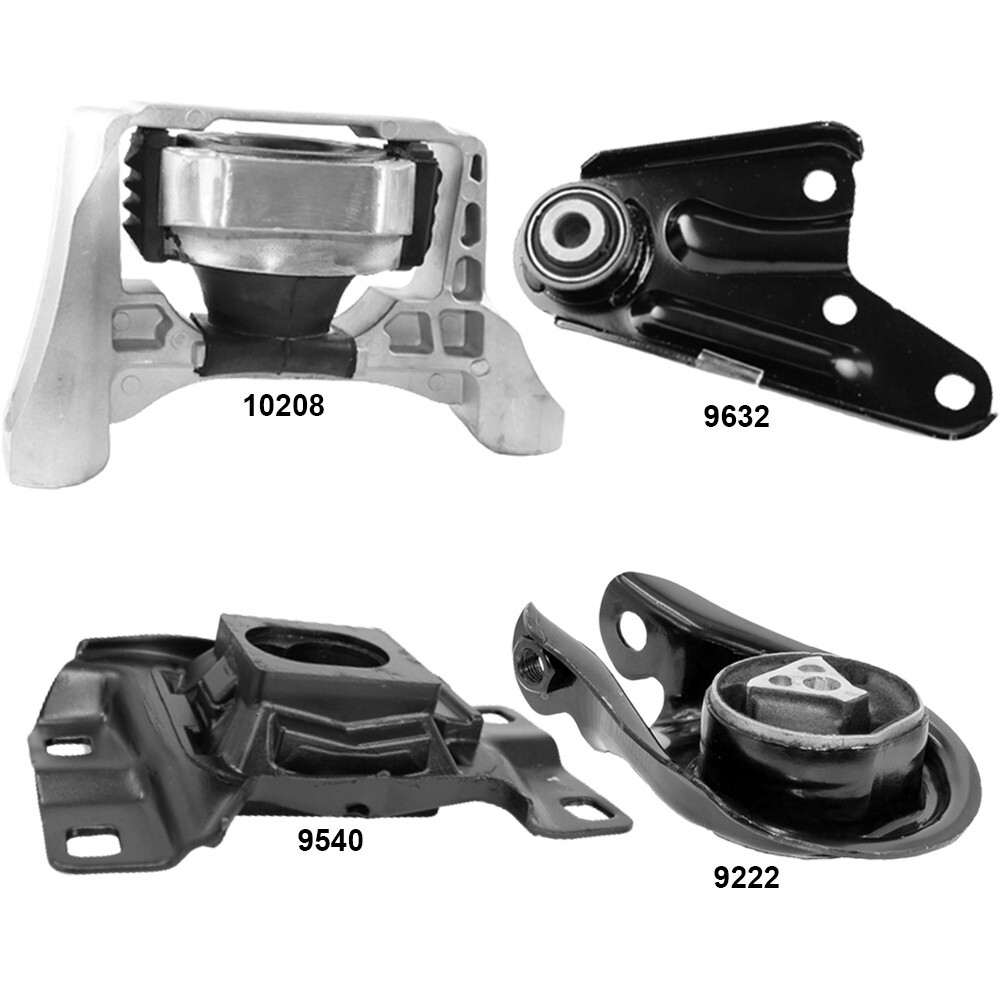
If you are searching for the best Mazda3 engine mount, the most important thing to understand is this:
the “best” mount depends on how the car is driven, but for most owners, comfort, longevity, and correct vibration control matter far more than stiffness or performance branding.
Below is a clear, no-nonsense breakdown of which Mazda3 engine mount is actually the best, why it fails, and which option you should choose depending on your goals.
The Short Answer (For Most Owners)
The best engine mount for a Mazda3 is an OEM hydraulic engine mount or a true OEM-equivalent replacement.
That applies to:
- Daily-driven Mazda3
- Stock engines
- Commuter cars
- Seniors or comfort-focused drivers
- Anyone who wants factory-level smoothness
Performance mounts are not better for most people. They solve one problem and create another.
Why Engine Mount Choice Matters More on the Mazda3
Mazda tunes the Mazda3 for:
- Tight chassis response
- Low NVH (noise, vibration, harshness)
- Smooth idle characteristics
To achieve that, Mazda relies heavily on hydraulic engine mounts, not simple solid rubber mounts. These mounts use fluid chambers to absorb vibration at idle while still controlling engine movement under load.
If you install the wrong type of mount, the car will feel worse than before, even if the mount is technically “new.”
Best Mazda3 Engine Mount by Category
1) Best Overall Mazda3 Engine Mount (Daily Driving)
OEM Mazda Hydraulic Engine Mount
Why it is the best:
- Designed specifically for Mazda3 vibration frequencies
- Best idle smoothness
- Best cabin comfort
- Correct engine geometry and height
- Long service life when oil leaks are addressed
This is the mount Mazda engineered the car around. If your priority is comfort and correctness, this is the benchmark.
Who should choose it
- Stock Mazda3 owners
- City/highway commuters
- Drivers sensitive to vibration
- Anyone who wants the car to feel “normal” again
2) Best OEM-Equivalent Mazda3 Engine Mount (Value Option)
High-quality OEM-equivalent hydraulic mount (not solid rubber)
A good OEM-equivalent mount must:
- Be hydraulic, not solid rubber
- Match factory durometer (rubber stiffness)
- Match factory height and geometry
- Be designed specifically for the Mazda3, not a generic fit
When done right, these mounts offer:
- Near-OEM comfort
- Lower cost than dealer parts
- Acceptable longevity
Avoid “economy” mounts that delete the hydraulic design. Those save money upfront and cost comfort every time you stop at a red light.
3) Best Mazda3 Torque Mount (Lower Mount)
OEM or OEM-equivalent torque mount
The lower torque mount controls fore-aft engine movement during:
- Acceleration
- Braking
- Shifting
For daily driving:
- OEM torque mount = best balance
- Slightly firmer aftermarket torque mount = acceptable if vibration increase is minimal
A worn torque mount causes:
- Clunks on takeoff
- Jerky throttle response
- Wheel hop
Replacing this mount often makes the car feel tighter without hurting comfort, as long as it is not overly stiff.
4) Best Performance Mazda3 Engine Mount (Not for Everyone)
High-durometer performance mounts
These are only “best” if:
- You accept increased vibration
- You want sharper throttle response
- You drive aggressively or track the car
Downsides:
- Increased cabin vibration at idle
- Buzz through steering wheel and seats
- Can feel harsh in traffic
- Often mistaken for misfires or bad work
Performance mounts are not defective. They are just not designed for comfort.
Which Mazda3 Engine Mount Fails Most Often?
Across generations, the most common failure is:
Upper passenger-side hydraulic engine mount
Why:
- Carries significant engine weight
- Exposed to heat cycling
- Hydraulic fluid degrades over time
Symptoms when it fails:
- Strong vibration at idle
- Steering wheel shake at stops
- Cabin buzzing in Drive
- Visible collapse or fluid seepage
If you replace only one mount, this is usually the one.
Best Strategy: One Mount or Multiple?
Replace One Mount If:
- Only one mount shows visible failure
- Mileage is moderate
- Other mounts are still firm and intact
Replace Multiple Mounts If:
- High mileage Mazda3
- Vibration + clunking present
- More than one mount shows cracking or collapse
Installing one new mount next to worn mounts can overload the new part and shorten its life.
Why Cheaper Mazda3 Engine Mounts Often Feel Worse
Common issues with low-quality mounts:
- Too stiff rubber
- Incorrect height
- No hydraulic damping
- Generic design reused across multiple vehicles
These cause:
- Idle vibration that did not exist before
- Harsh shifting feel
- “Something feels wrong” complaints even though parts are new
If a mount makes the car feel worse immediately, the mount is the problem.
What the Best Mazda3 Engine Mount Should Feel Like After Installation
When the correct mount is installed properly:
- Idle vibration drops noticeably
- Steering wheel becomes calmer
- Shifts feel smoother
- Throttle transitions feel controlled
- Engine movement is reduced but not eliminated
You should not feel a dramatic increase in vibration.
Final Verdict: Best Mazda3 Engine Mount
For 90 percent of Mazda3 owners, the best engine mount is an OEM or true OEM-equivalent hydraulic mount.
Choose:
- OEM for maximum comfort and correctness
- OEM-equivalent hydraulic for value
- Performance mounts only if you knowingly accept more vibration
There is no upgrade that beats factory engineering for a daily-driven Mazda3.
FAQ: Best Mazda3 Engine Mount (Straight Answers)
1) What is the best engine mount for a Mazda3?
For most owners, the best Mazda3 engine mount is an OEM hydraulic engine mount or a true OEM-equivalent hydraulic replacement. It delivers the correct balance of vibration control, durability, and factory ride quality.
2) Are aftermarket engine mounts good for a Mazda3?
Some are acceptable, but many are not. Aftermarket mounts are only good if they retain the hydraulic design and factory stiffness. Solid rubber or overly stiff mounts usually increase vibration and reduce comfort.
3) Why does Mazda use hydraulic engine mounts on the Mazda3?
Mazda uses hydraulic mounts to absorb idle vibration while still controlling engine movement under load. This is especially important on the Mazda3, which has a firm chassis and transmits vibration easily if mounts are incorrect.
4) Which Mazda3 engine mount fails the most?
The upper passenger-side engine mount fails most often. It carries significant engine weight and is exposed to heat, which causes the hydraulic fluid and rubber to degrade over time.
5) What are the symptoms of a bad Mazda3 engine mount?
Common symptoms include:
- Strong vibration at idle
- Steering wheel shake when stopped
- Clunk when shifting from Park to Drive or Reverse
- Jerky throttle response
- Visible rubber cracking or mount collapse
6) Should I replace one engine mount or all of them?
Replace one mount if only one is clearly failed and others are solid. Replace multiple mounts if the car has high mileage or you experience both vibration and clunking. Mixing new and worn mounts can shorten the life of the new one.
7) Are performance engine mounts better for the Mazda3?
Only for aggressive driving or track use. Performance mounts reduce engine movement but increase cabin vibration, especially at idle. For daily driving, they are usually worse, not better.
8) Can a bad engine mount feel like a transmission problem?
Yes. A worn mount can cause harsh shifts, drivetrain lash, and clunks that feel like transmission issues. Replacing the correct mount often restores smooth shifting.
9) Can a bad engine mount cause vibration only at idle?
Yes. Hydraulic mount failure often shows up as idle-only vibration, especially in Drive. Vibration that improves slightly with higher RPM is a classic sign of mount degradation.
10) Is it safe to drive with a bad Mazda3 engine mount?
Short-term driving is usually possible, but not recommended long-term. A failed mount can cause:
- Axle stress
- Exhaust flex joint damage
- Premature transmission mount wear
- Increased drivetrain movement
11) Does engine mount replacement require an alignment?
No, engine mount replacement does not require a wheel alignment. However, a post-repair inspection is recommended to confirm nothing is contacting or misaligned.
12) Why do cheap Mazda3 engine mounts cause more vibration?
Cheap mounts often:
- Delete the hydraulic design
- Use overly stiff rubber
- Have incorrect height or geometry
This causes vibration that did not exist before, even though the mount is new.
13) How long do Mazda3 engine mounts usually last?
Typically 80,000 to 120,000 miles, depending on driving style, heat exposure, and whether oil leaks are present. Oil contamination significantly shortens mount life.
14) Can oil leaks damage Mazda3 engine mounts?
Yes. Oil softens rubber and can destroy a mount quickly. Valve cover seepage is a common cause. Oil leaks should be repaired before or at the same time as mount replacement.
15) What should the Mazda3 feel like after installing the best engine mount?
You should notice:
- Reduced idle vibration
- Smoother shifts
- Less clunking on throttle changes
- Stable engine movement without harshness
If vibration increases after replacement, the mount choice is wrong or improperly installed.
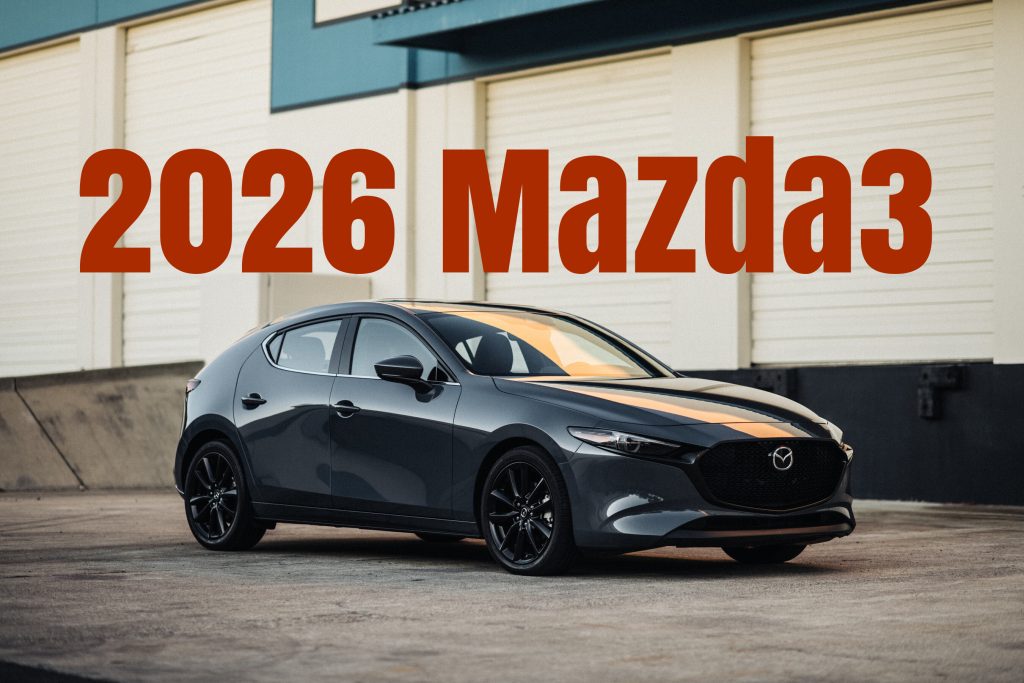
In an era where compact cars are increasingly treated as entry-level appliances, the 2026 Mazda3 continues to challenge the category’s lowest common denominator. It does so not by chasing gimmicks or overloading spec sheets, but by refining fundamentals: design, driving feel, material quality, and mechanical honesty. The result is a compact car that feels deliberately engineered rather than cost-optimized.
For drivers who still care about how a car feels from behind the wheel — not just how it looks on a comparison chart — the Mazda3 remains one of the most compelling vehicles in its class.
Explore current Mazda3 availability at Marin Mazda:
https://www.marinmazda.net/
Design Philosophy: Subtle Confidence Over Excess
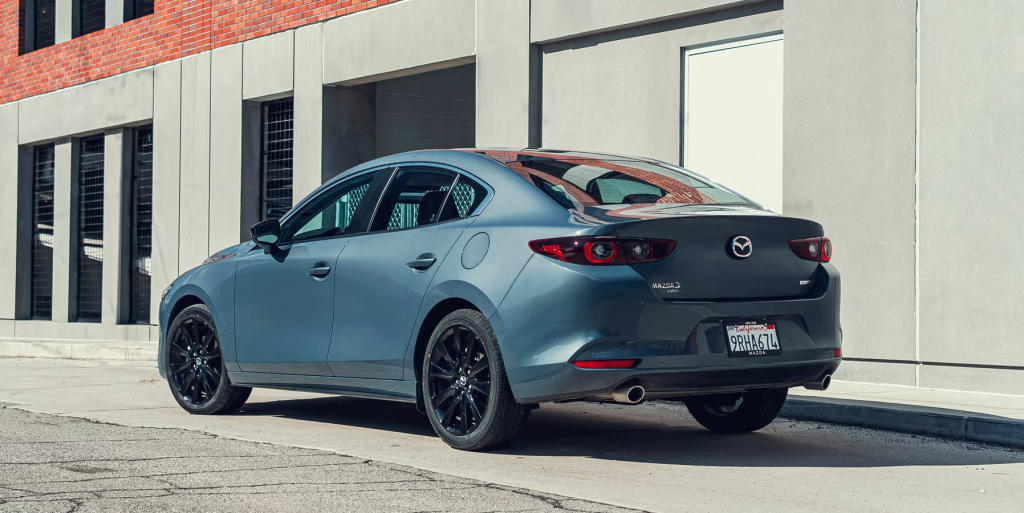
Mazda’s design language has matured significantly over the past decade, and the 2026 Mazda3 represents one of its most restrained and confident executions. Rather than relying on sharp creases or aggressive styling cues, the Mazda3 uses light, curvature, and proportion to create visual tension.
The body panels are intentionally clean, allowing reflections to define the car’s character depending on lighting conditions. This approach gives the Mazda3 a premium presence that ages better than trend-driven competitors. Whether in sedan or hatchback form, the vehicle projects cohesion rather than visual noise — a quality more often associated with higher-end European brands.
This restraint isn’t accidental. Mazda’s designers prioritize emotional durability — the idea that a vehicle should still feel desirable five or ten years into ownership.
See current Mazda3 trims and colors at Marin Mazda:
https://www.marinmazda.net/
Powertrain Engineering: Purposeful, Not Overcomplicated
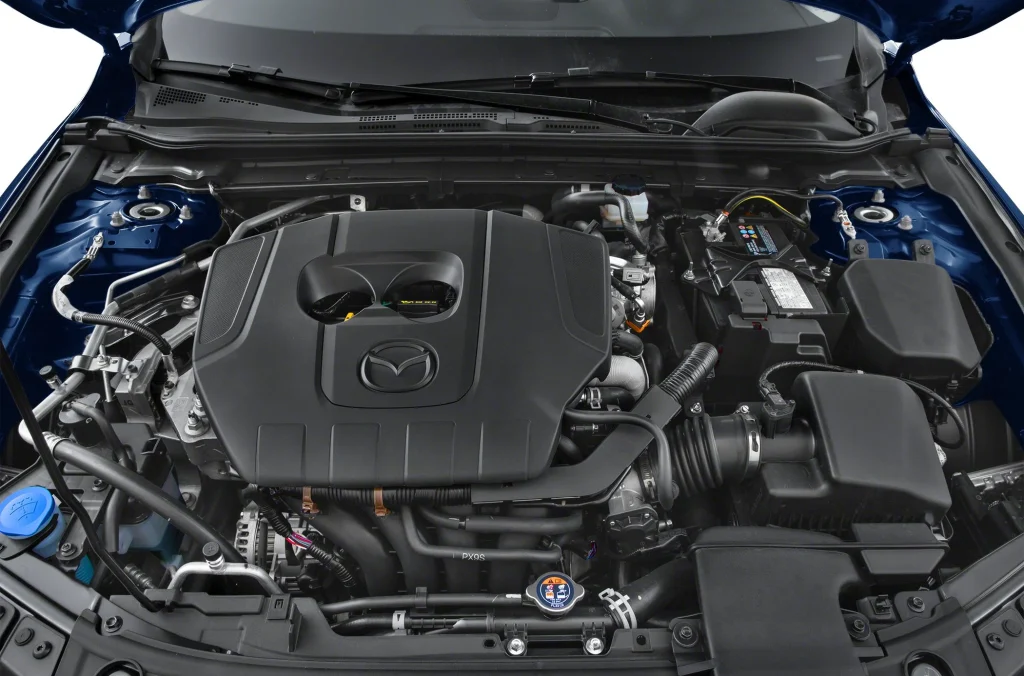
The 2026 Mazda3 lineup continues to focus on naturally aspirated and turbocharged gasoline engines — a deliberate decision that prioritizes responsiveness, reliability, and weight balance over complexity.
Naturally Aspirated 2.5-Litre Engine
The standard engine delivers smooth, predictable power that feels immediately accessible in real-world driving. Throttle response is linear, torque delivery is usable at everyday speeds, and the engine avoids the artificial feel common in smaller turbocharged competitors.
For commuting, highway driving, and mixed urban use, this engine strikes a near-ideal balance between performance and efficiency.
Available Turbocharged Powertrain
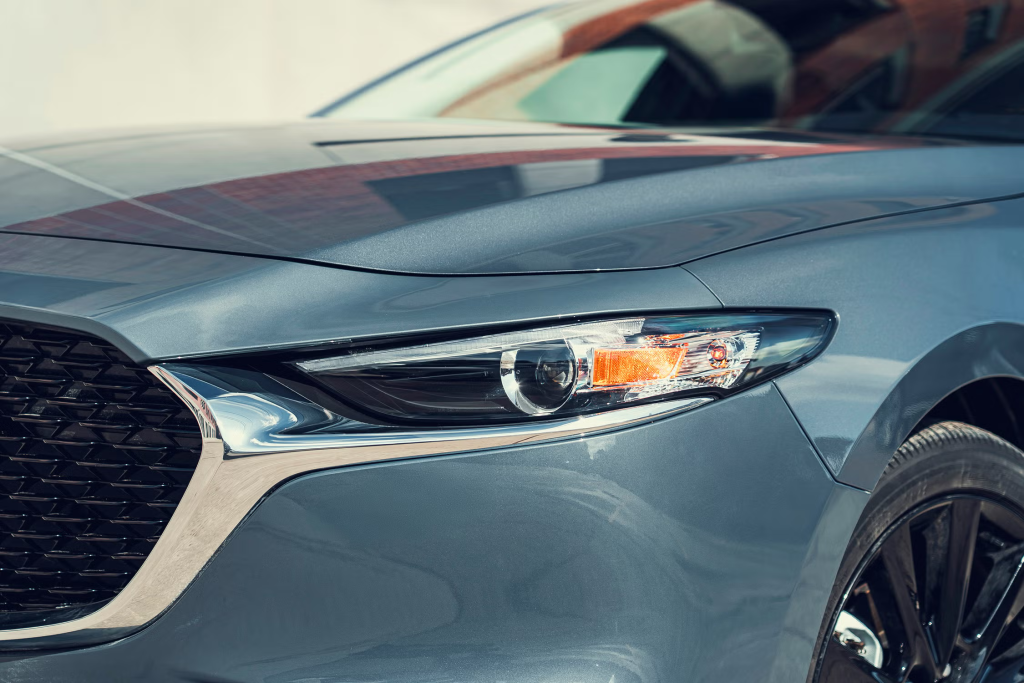
For drivers who want something more engaging, the available turbocharged 2.5-litre engine transforms the Mazda3’s character. Torque arrives early and decisively, making highway merges and passing maneuvers effortless. Importantly, the turbo model maintains composure rather than becoming overly aggressive — it feels confident, not frantic.
This powertrain choice positions the Mazda3 uniquely in the segment: quick enough to satisfy enthusiasts, yet refined enough for daily use.
Discover powertrain options at Marin Mazda:
https://www.marinmazda.net/
Driving Dynamics: Still Built for People Who Like Driving
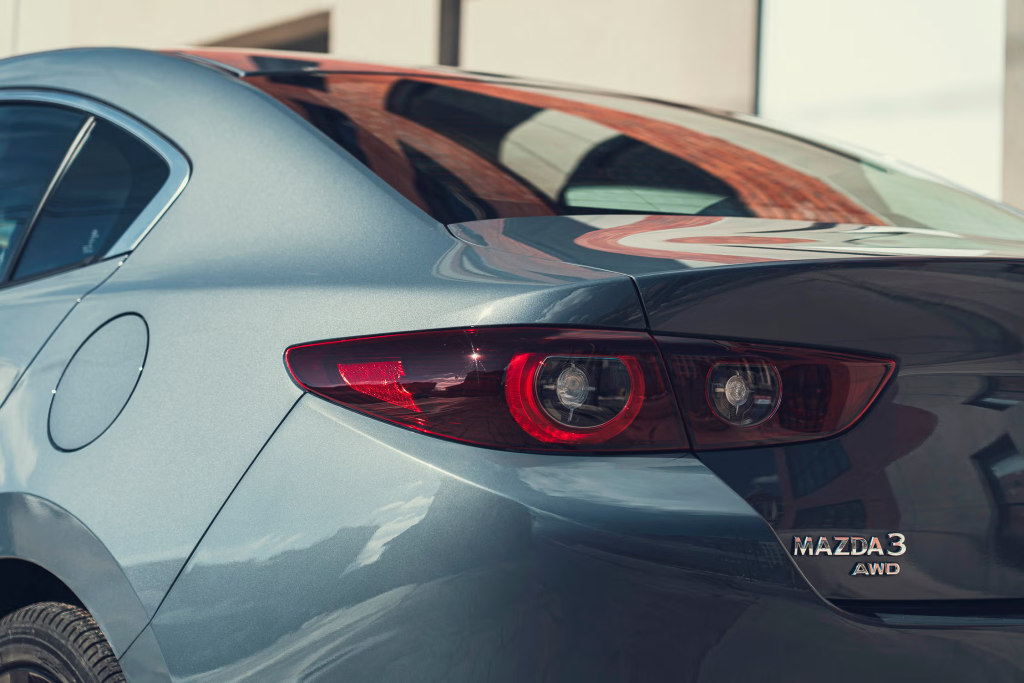
Mazda’s reputation for driver engagement is not marketing fiction — it is the result of careful chassis tuning, steering calibration, and weight distribution.
The 2026 Mazda3 delivers:
- Steering that communicates road texture without harshness
- Predictable cornering behavior with minimal body roll
- A suspension setup that balances ride comfort with control
Unlike many compact cars that isolate the driver entirely, the Mazda3 maintains a sense of connection. You feel what the front tires are doing. You understand how the car responds to inputs. This mechanical transparency builds confidence, especially on winding roads or uneven surfaces.
Available all-wheel drive further enhances stability in adverse conditions, making the Mazda3 particularly well-suited to varied California driving environments.
Schedule a test drive at Marin Mazda:
https://www.marinmazda.net/
Interior Craftsmanship: Where Mazda Separates Itself
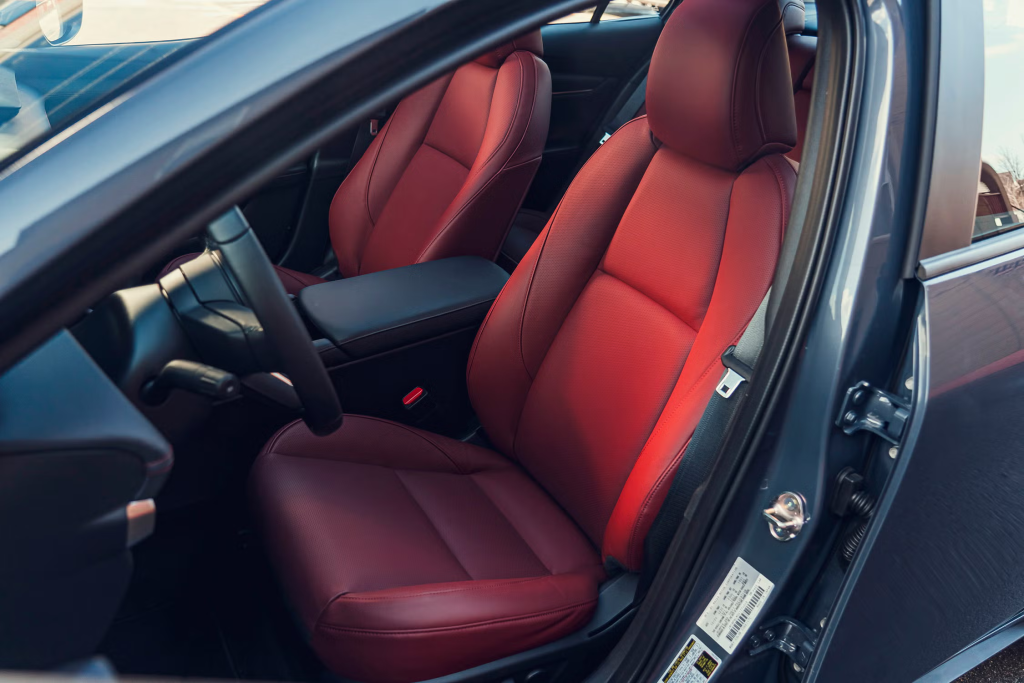
The interior of the 2026 Mazda3 is where the car most clearly distances itself from mainstream competitors. Material selection, panel fitment, and tactile feedback are executed with uncommon discipline.
Rather than flooding the cabin with screens and flashy graphics, Mazda emphasizes:
- Clean horizontal lines for visual calm
- High-quality soft-touch materials in key contact points
- Logical control placement that reduces distraction
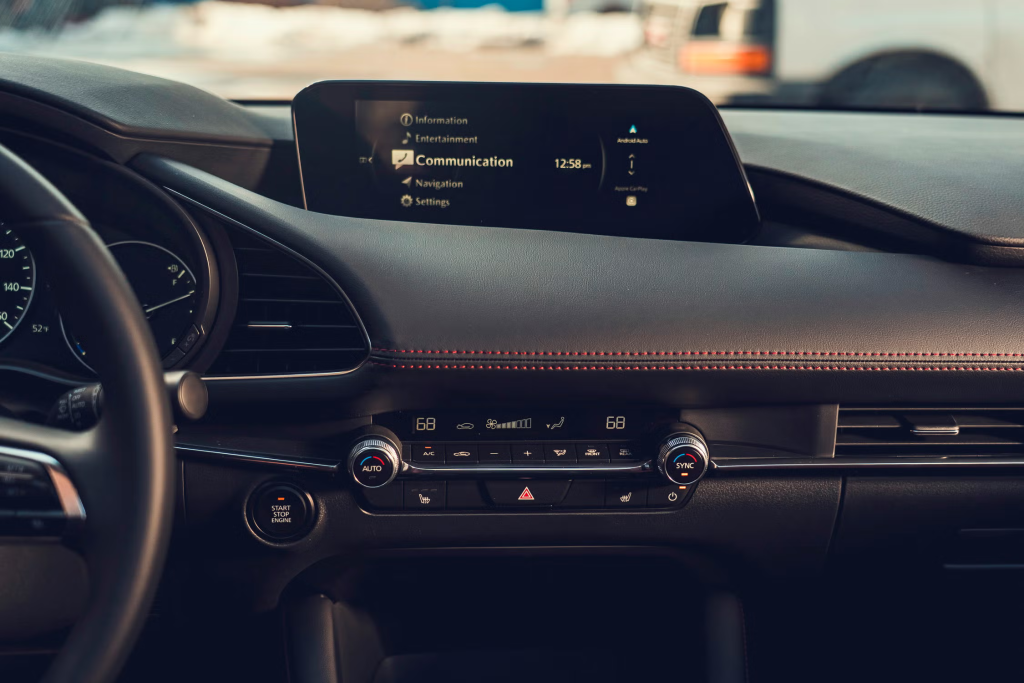
The infotainment system is intentionally minimalist, designed to be operated with minimal eye movement. This philosophy reflects Mazda’s belief that technology should support the driving experience, not dominate it.
Higher trims introduce premium upholstery, enhanced audio systems, and subtle luxury touches that elevate the Mazda3 into near-luxury territory — without the pricing penalties typically associated with that segment.
Explore interior options at Marin Mazda:
https://www.marinmazda.net/
Safety Engineering: Quietly Comprehensive

Mazda approaches safety as an integrated system rather than a checklist of features. The 2026 Mazda3 incorporates a full suite of driver-assistance technologies designed to work unobtrusively in the background.
Key safety systems include:
- Intelligent braking assistance
- Lane monitoring and correction support
- Blind-spot awareness
- Adaptive cruise functionality
The emphasis is on prevention rather than intervention. Systems are calibrated to assist the driver without constant alerts or intrusive corrections — a balance that improves trust and reduces fatigue over long drives.
Learn more about Mazda safety at Marin Mazda:
https://www.marinmazda.net/
Trim Strategy: Intelligent Escalation, Not Forced Upselling
Mazda’s trim structure for the 2026 Mazda3 is refreshingly logical. Each step up the lineup adds meaningful value rather than cosmetic fluff.
Entry trims focus on mechanical integrity and safety. Mid-level trims enhance comfort and technology. Upper trims introduce performance and luxury elements without compromising the car’s original character.
This approach allows buyers to choose based on genuine priorities rather than artificially restricted feature sets.
View current Mazda3 trims at Marin Mazda:
https://www.marinmazda.net/
Ownership Perspective: Long-Term Satisfaction Over Short-Term Flash
The Mazda3 has built a strong reputation for long-term reliability and owner satisfaction. Its engineering simplicity, combined with thoughtful material choices, contributes to durability that extends well beyond the warranty period.
For buyers who plan to keep their vehicle — rather than lease and replace — the Mazda3 offers an ownership experience that rewards patience and care.
Discuss ownership options with Marin Mazda:
https://www.marinmazda.net/
Final Verdict: A Compact Car for Adults
The 2026 Mazda3 is not designed to impress everyone immediately — and that may be its greatest strength. It rewards drivers who value substance over spectacle, refinement over excess, and engineering over marketing trends.
In a segment increasingly defined by cost-cutting and homogenization, the Mazda3 stands as a reminder that compact cars can still be aspirational.
For availability, test drives, and detailed configuration, visit Marin Mazda:
https://www.marinmazda.net/
Human-Centered Engineering: Mazda’s Quiet Advantage
One of the most overlooked strengths of the 2026 Mazda3 is not something easily quantified on a spec sheet — it is how intentionally human the car feels. Mazda’s engineering philosophy places disproportionate weight on how a vehicle interacts with its driver at a subconscious level.
Pedal response, steering resistance, seat positioning, and even the angle of the steering wheel are calibrated to reduce fatigue and improve natural posture. This approach stems from Mazda’s belief that a relaxed, confident driver is a safer and more engaged driver — a principle that becomes especially evident on longer drives.
Unlike many compact cars that feel optimized primarily for regulatory targets or cost efficiency, the Mazda3 feels optimized for people.
Experience this philosophy firsthand at Marin Mazda:
https://www.marinmazda.net/
Noise, Vibration, and Harshness: Refinement You Feel by Not Noticing
Another area where the 2026 Mazda3 quietly excels is NVH (Noise, Vibration, and Harshness) control — a category often neglected in the compact segment.
Mazda engineers have invested heavily in:
- Additional sound insulation at key structural points
- Strategic chassis bracing to reduce resonance
- Improved sealing around doors and windows
The result is a cabin that remains calm at highway speeds and composed over rough pavement. Road noise is muted without feeling isolated, and engine sound — particularly in the turbo models — is controlled yet characterful.
This refinement contributes significantly to perceived quality. It’s the reason the Mazda3 often feels like it belongs in a higher segment than its price would suggest.
Explore available models at Marin Mazda:
https://www.marinmazda.net/
Infotainment Philosophy: Intentional Restraint in a Screen-Obsessed Era
The 2026 Mazda3 continues Mazda’s counter-cultural stance on in-car technology. While many manufacturers chase ever-larger touchscreens, Mazda maintains that excessive screen interaction distracts from driving.
Instead, the Mazda3’s infotainment system is designed to:
- Minimize eye movement away from the road
- Reduce cognitive load through simple menus
- Prioritize tactile controls over touch dependency
This is not technological conservatism — it is purposeful design. The system integrates modern connectivity features while maintaining an interface that feels intuitive after minutes, not weeks.
For drivers who find modern interiors increasingly overwhelming, the Mazda3 offers a refreshing alternative that respects attention rather than competing for it.
See technology features at Marin Mazda:
https://www.marinmazda.net/
Sedan vs Hatchback: Two Personalities, One Philosophy
The 2026 Mazda3 lineup continues to offer both sedan and hatchback body styles, each appealing to different sensibilities.
Mazda3 Sedan
The sedan emphasizes balance and maturity. Its longer roofline and traditional proportions create a more understated presence, appealing to buyers who value elegance and practicality. Rear-seat comfort and trunk usability make it well-suited for commuters and professionals.
Mazda3 Hatchback
The hatchback leans into sportiness and versatility. Its shorter rear overhang and more aggressive stance give it a dynamic visual edge. Cargo flexibility and fold-flat seating enhance everyday usability, especially for active lifestyles.
Despite their visual differences, both variants share identical engineering principles, ensuring the same driving confidence regardless of body style.
Compare body styles at Marin Mazda:
https://www.marinmazda.net/
Real-World Efficiency: Balanced, Predictable, Honest
While efficiency figures are often discussed in abstract terms, the Mazda3’s real-world fuel economy tends to be one of its most satisfying traits. Rather than chasing extreme numbers under ideal conditions, Mazda focuses on consistent efficiency across varied driving scenarios.
The naturally aspirated engine rewards smooth driving habits, while the turbo model offers power without disproportionate fuel penalties when driven responsibly. This predictability builds trust — drivers know what to expect regardless of terrain or traffic conditions.
For daily driving, this balance proves more valuable than headline numbers alone.
Discuss efficiency expectations at Marin Mazda:
https://www.marinmazda.net/
Competitive Landscape: Why the Mazda3 Still Stands Apart
In a segment populated by long-standing competitors, the Mazda3’s differentiation lies not in one standout feature, but in cohesion. Every element feels aligned toward a singular goal: delivering a satisfying driving experience without unnecessary excess.
Where rivals may excel in isolated areas — interior space, infotainment size, or hybrid availability — the Mazda3 excels in harmony. Nothing feels out of place. Nothing feels compromised.
This cohesion is precisely why the Mazda3 continues to attract buyers who could easily choose larger or more technologically aggressive vehicles — but deliberately do not.
See why buyers choose Mazda at Marin Mazda:
https://www.marinmazda.net/
Long-Term Ownership: Built for the Second and Third Owner
Mazda designs vehicles with longevity in mind, and the Mazda3 reflects this philosophy clearly. Material choices favor durability over short-term visual impact. Controls resist wear. Interior surfaces age gracefully.
For owners planning to keep their vehicle beyond the typical ownership cycle, this attention to durability becomes increasingly apparent over time. The Mazda3 does not feel disposable — it feels considered.
This is a critical distinction in a market where many compact cars are designed with short ownership horizons in mind.
Learn about Mazda ownership at Marin Mazda:
https://www.marinmazda.net/
Editorial Perspective: Who the 2026 Mazda3 Is Really For
The 2026 Mazda3 is not trying to win every buyer — and that restraint is intentional.
It is for drivers who:
- Enjoy driving, even during routine commutes
- Appreciate design that matures rather than trends
- Value tactile quality and mechanical honesty
- Prefer calm confidence over constant stimulation
For this audience, the Mazda3 is not merely a good compact car — it is one of the most thoughtfully engineered vehicles available at its price point.
Final Editorial Takeaway
With the 2026 Mazda3, Mazda continues to prove that compact cars can still be emotionally engaging, mechanically satisfying, and intellectually honest. It resists the industry’s drift toward over-digitization and instead doubles down on fundamentals that endure.
In doing so, it doesn’t just compete — it quietly elevates the entire segment.
For availability, configurations, and expert guidance, visit Marin Mazda:
https://www.marinmazda.net/
2026 Best AFM Disabler None is Talking About
Quick question: Does your Silverado or Sierra feel like it’s stumbling over itself when you’re cruising at 40 mph? Do you hear that annoying tick-tick-tick sound coming from under the hood? You’re not alone—and you’re definitely not crazy.
Thousands of GM truck owners are asking the same question on Reddit right now: “Should I buy an AFM disabler?“

Let me walk you through everything you need to know. No fluff, just real talk from someone who’s spent hours digging through Reddit threads, owner forums, and mechanic reports.
What’s Actually Happening to Your Engine? (The AFM Problem Explained)
Here’s the deal: Your GM V8 has a feature called Active Fuel Management (AFM) or Dynamic Fuel Management (DFM) if you have a 2019+ truck. GM designed it to save you maybe 1-2 MPG by shutting down half your engine’s cylinders when you’re cruising.
Sounds great on paper, right?
Wrong.
The Real-World AFM Nightmare
Here’s what’s actually happening inside your engine:
| The Problem | What You Experience | What It Actually Costs |
|---|---|---|
| AFM Shudder | Vibration at 25-45 mph that feels like rumble strips | Annoying every single day |
| Lifter Failure | Loud ticking/tapping noise, loss of power | $2,500-$7,000 repair |
| Oil Consumption | Burning through oil between changes | $30+ every few weeks |
| Camshaft Damage | Metal-on-metal grinding, engine failure | $5,000-$12,000 repair |
One Reddit user on r/Silverado put it perfectly:
“My truck’s lifters went out at 80,000 miles. Took 3 months to fix due to parts availability. GMC lost a customer for life.”
Do You Actually Need an AFM Disabler? (Take This Quick Test)
Answer these questions honestly:
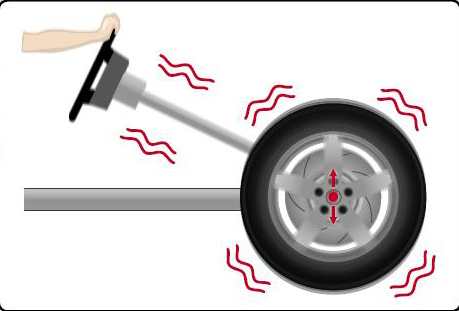
- Does your truck vibrate or shudder when cruising at steady speeds?
- If YES → You’re experiencing AFM cycling issues
- Do you hear a ticking noise from your engine?
- If YES → Your lifters might already be failing
- Do you tow or haul regularly?
- If YES → AFM constantly cycles on/off, wearing components faster
- Is your truck between 2007-2024 with a V8 engine?
- If YES → You have AFM/DFM and are at risk
- Do you plan to keep your truck past 100,000 miles?
- If YES → The risk of $5,000+ repairs increases dramatically
If you answered YES to 2 or more questions, keep reading. An AFM disabler might save you thousands.
What Exactly Is an AFM Disabler? (And How Does It Work?)
An AFM disabler is a small electronic device that plugs into your truck’s diagnostic port and tells your engine computer: “Hey, keep all 8 cylinders running all the time.“
That’s it.
No permanent modifications. No voiding warranties (technically). No cutting wires.
How It Actually Works (Technical But Simple)
The disabler sends signals through your truck’s computer network (CAN bus) that modify the parameters controlling AFM. Your engine computer thinks the conditions are never right for cylinder deactivation, so it just keeps running as a full V8.
| Feature | AFM Disabler | ECM Tuning | Full AFM Delete |
|---|---|---|---|
| Installation Time | 2 minutes | 1-2 hours | 16+ hours |
| Cost | $50-$235 | $400-$800 | $2,000-$4,500 |
| Reversible | Yes (unplug it) | No | No |
| Warranty Safe | Usually yes | Maybe | Definitely no |
| Solves AFM Issues | Yes | Yes | Yes (permanently) |
The Reddit Questions Everyone’s Asking (Answered)
“Will an AFM disabler void my warranty?”
The honest answer: Technically, no—but here’s the nuance.
Under the Magnuson-Moss Warranty Act, GM can’t void your entire warranty just because you plugged in a disabler. BUT if you have an engine problem (especially lifter-related), they might claim the disabler contributed and deny that specific claim.
The smart move? Remove it before service appointments, reinstall after.
One Corvette Forum user shared:
“Had my Range disabler in for 30,000 miles. Removed it for dealer service, they never knew. Put it back in same day. No issues.”
“Does it actually hurt fuel economy?”

Real-world data from actual owners:
| Driving Condition | MPG Change with Disabler | Owner Reports |
|---|---|---|
| City Driving | 0 to -0.5 MPG | 78% report no change |
| Highway Cruising | -1 to -2 MPG | Mixed results |
| Mixed Driving | 0 to -1 MPG | Most see no difference |
| Towing/Hauling | +1 to +2 MPG | Actually improves! |
Why might fuel economy stay the same or improve? When AFM constantly cycles on/off (especially in hilly terrain or city traffic), it’s actually less efficient than just running all cylinders consistently.
“What’s the difference between a $50 disabler and a $235 one?”
This is the million-dollar question.
Here’s what I found digging through forums:
Most disablers are Range Technology knockoffs. According to a forum tech who took them apart:
“The hardware is identical. Range designs got leaked and firmware got copied around 2021. The market flooded with clones.”
The catch? Cheap clones often:
- Don’t get firmware updates for new truck models
- Have compatibility issues with 2019+ DFM systems
- Lack customer support when things go wrong
- May cause emissions test failures
The Range AFM/DFM Disabler costs more because:
- Works on both AFM (2007-2019) and DFM (2019+) systems
- Regular firmware updates
- Actual customer support
- Won’t brick your diagnostic port
- Proven track record since 2015
“What if my lifters are already ticking?”
Be honest with yourself: If you already hear ticking, a disabler is a band-aid, not a cure.
| Your Situation | What You Should Do |
|---|---|
| No symptoms, just worried | Install disabler NOW – Prevention is everything |
| Slight vibration/shudder | Install disabler ASAP – Lifters are cycling excessively |
| Occasional light ticking | Get diagnosis first – May need repairs before disabler |
| Loud ticking/clicking | Too late – Need mechanical repairs ($2,500-$7,000) |
| Check engine light ON | Diagnosis required – Damage may be done |
From a Silverado Forum mechanic:
“AFM disabler is an insurance policy. Install it when your engine is healthy. Once lifters fail, you need real repairs.”
How Much Money Can This Actually Save You?
Let’s do the math on real repair costs:
Actual Repair Costs from GM Dealerships (2020-2025 Data)
| Repair Type | Parts | Labor | Total Cost | Source |
|---|---|---|---|---|
| Replace 8 AFM lifters (one bank) | $400-800 | $1,500-2,500 | $2,500-3,500 | Multiple dealer quotes |
| Replace all 16 lifters | $800-1,200 | $2,000-3,500 | $3,500-5,000 | CorvetteForum, SilveradoSierra |
| Lifters + Camshaft | $1,500-2,500 | $2,500-4,000 | $4,500-7,000 | Reddit r/Silverado |
| Complete engine replacement | $6,000-8,000 | $2,000-4,000 | $8,000-12,000 | Hull Truth Forum |
Real owner testimonial from Reddit:
“2016 Silverado Z71, 5.3L at 120K. Lifter issue reared its ugly head. $7,000 to replace the engine with a new one. OUCH.”
Another from CorvetteForum:
“Having right side lifters and the VLOM replaced. Total cost at GM: $6,040!!”
Now compare that to:
- AFM Disabler: $50-$235
- Installation: Free (you plug it in yourself)
You could buy 25-120 AFM disablers for the cost of one lifter repair.
The Best AFM Disabler for GM Trucks (2026)
After reading through hundreds of Reddit posts, forum threads, and owner reviews, here’s the consensus:
Top Recommendation: Range Technology AFM/DFM Disabler
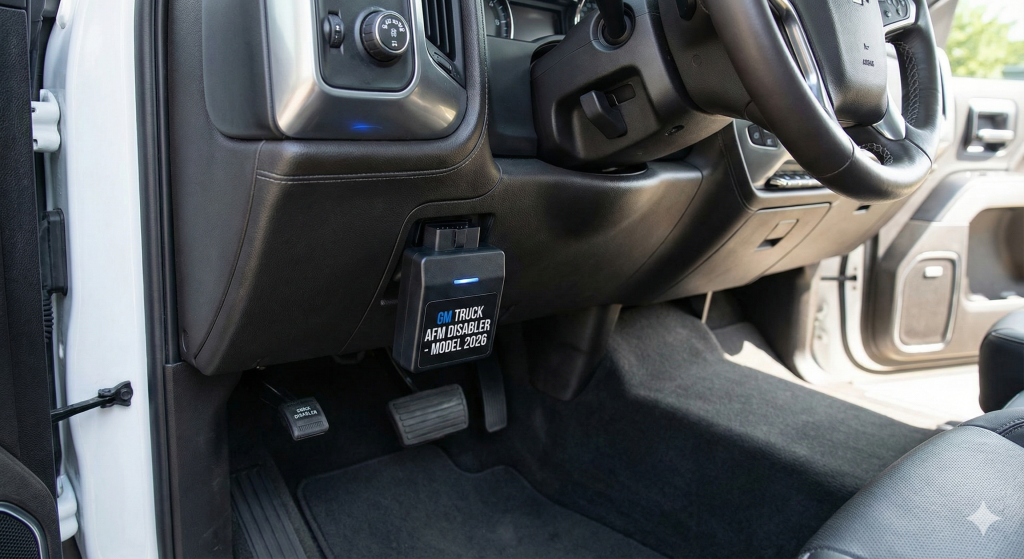
Why this one specifically?
✓ Works on 2007-2024 GM vehicles (both AFM and newer DFM systems)
✓ Plug-and-play installation (literally 60 seconds)
✓ No check engine lights (properly coded to avoid triggering diagnostics)
✓ Firmware updates available (keeps working with new GM software)
✓ Proven reliability (on the market since 2015, thousands of successful installs)
Get the Range AFM/DFM Disabler Here
Real Owner Reviews:
From r/ChevyTahoe:
“Wish I had done it sooner. Truck stopped hunting for the right gears/RPM. This mod plus using E85 has got me enjoying this truck all over again.”
From Trail Boss Forum:
“Installed mine on a ’24 5.3 liter Friday. Drove the truck a couple hundred miles over the weekend. As of now it has been great.”
From CorvetteForum:
“I just installed this device in my 2019 Z51. About a month ago. There is no issues, no codes, it works as advertised. Easy install, or removal when it needs to be. Car responds better, no loss in fuel mileage. Money well spent!”
Installation Guide (Easier Than Changing Your Oil)
Seriously, this is embarrassingly simple:
Step 1: Find Your OBD-II Port
- Look under your dashboard on the driver’s side
- It’s usually above the pedals, left side
- Takes 10 seconds to find
Step 2: Plug In the Disabler
- Push the device into the port until it clicks
- That’s it. Seriously.
Step 3: Start Your Truck
- The disabler LED should light up
- Device starts working immediately
- No programming, no buttons, no apps needed
Total time: 60 seconds
Tools required: Your hands
Difficulty level: If you can charge your phone, you can do this
What You’ll Notice Immediately After Installation
Based on hundreds of owner reports:
Within the First 5 Minutes:
- ✓ Engine sounds smoother and more consistent
- ✓ No more vibration/shudder at 40 mph
- ✓ Throttle response feels crisper
Within the First Tank of Gas:
- ✓ Transmission shifts more smoothly
- ✓ Engine doesn’t “hunt” for the right gear
- ✓ More predictable power delivery
Within 1,000 Miles:
- ✓ Oil consumption stabilizes
- ✓ Engine runs quieter overall
- ✓ Towing feels more confident
Reddit user testimony:
“It was worth it. So far, no issues. Used to jump in the truck and start pounding buttons, now it’s get in and go.”
The Emissions Testing Reality (Important!)
Here’s what nobody tells you:
Some states require OBD-II “readiness monitors” to complete before you can pass emissions. AFM disablers can reset these monitors, causing you to fail—not because of emissions, but because the monitors show “not ready.”
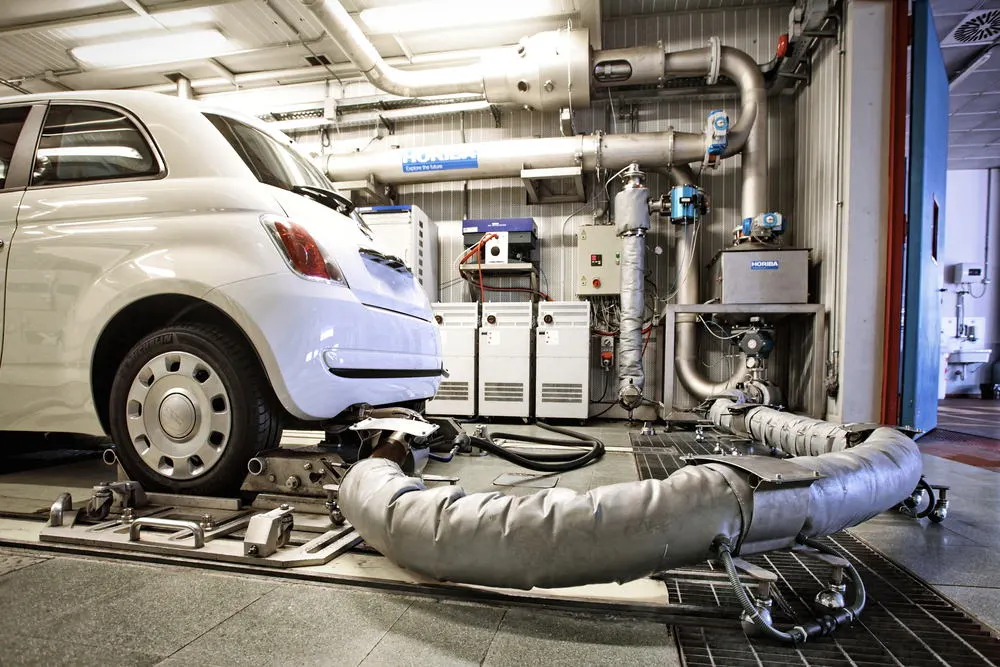
The Solution (Super Easy):
- Unplug the disabler 3-5 days before your test
- Drive 50-100 miles (mix of highway and city)
- Get your emissions test (you’ll pass)
- Plug the disabler back in immediately
From Missouri owner on SilveradoSierra Forum:
“Range Tech told me to drive 50-100 total miles with device removed before testing. Did that, passed no problem, plugged it back in same day.”
This is only an issue in states with OBD-II testing (about 15 states). If your state uses a sniffer test or has no emissions testing, this doesn’t apply.
Common Concerns Debunked
“Won’t this damage my engine?”
The opposite is actually true.
AFM systems cause damage by:
- Making lifters collapse and expand thousands of times
- Creating oil pressure fluctuations
- Causing carbon buildup in deactivated cylinders
A disabler prevents this damage by keeping everything working normally.
10-year mechanic on BITOG Forum:
“AFM lifters are inherently flawed and can fail whether exercised or not. A disabler reduces lifter failure significantly.”
“What about resale value?”
Two scenarios:
Scenario 1: You don’t use a disabler
- Lifters fail at 90,000 miles
- $5,000 repair bill
- Now you’re selling a truck with a “rebuilt engine” history
- Lost value: $5,000-8,000
Scenario 2: You use a disabler
- Engine runs perfectly at 150,000 miles
- No repair history
- Unplug disabler before selling (takes 10 seconds)
- Lost value: $0 (buyer never knows, engine is healthy)
“Can it cause battery drain?”
Short answer: Only if you leave your truck sitting for weeks/months without driving.
Real-world impact: Most users report zero battery issues. The disabler draws minimal power—about the same as your clock.
If you store your truck for long periods: Just unplug it. Takes 10 seconds.
Who Should DEFINITELY Get an AFM Disabler?
You’re in the “High Risk” Category if:

✓ You have 2007-2019 GM vehicle with AFM (these have the worst failure rate)
✓ You’re between 50,000-150,000 miles (prime failure window)
✓ You tow or haul frequently (AFM cycles constantly under load)
✓ You do mostly city driving (constant on/off cycling wears lifters)
✓ You drive in hilly terrain (AFM activates/deactivates constantly)
✓ You plan to keep your truck long-term (prevention now saves thousands later)
✓ You’ve already replaced lifters once (don’t make the same mistake twice)
Real Owner Wisdom:
From Hull Truth Forum (2022):
“I have a 2018 Sierra with the 5.3 and AFM. I’ve been running a Range AFM disabler since 30,000 and I just turned 100,750 today. Oil changes every 6k. Haven’t had a questionable moment yet.”
From r/Silverado:
“2013 Silverado, 134k. Did NOT delete AFM. Currently 20 PSI in cylinder #1. Would not buy another one unless assured AFM had been deleted.”
The Bottom Line: Is It Worth It?
Let’s be real about the math:
| Investment | Cost | Benefit |
|---|---|---|
| Range AFM Disabler | $165-235 | Prevents $2,500-$7,000 repairs |
| Installation | $0 (DIY) | 60 seconds of your time |
| Total Cost | ~$200 | Potential savings: $2,500-12,000 |
ROI (Return on Investment): If it prevents just ONE lifter failure, you’ve saved 12-60X your investment.
The Real Question Isn’t “Should I Buy One?”
The real question is: “Can I afford NOT to?”
Think about it:
- $200 now vs. $5,000+ later
- 60 seconds to install vs. weeks without your truck for repairs
- Peace of mind vs. constant worry about that ticking noise
My Honest Recommendation
If you’re still on the fence, here’s my take after researching hundreds of owner experiences:
Buy the Range AFM/DFM Disabler if:
- You have a GM truck/SUV with AFM/DFM
- You want to keep your vehicle past 100,000 miles
- You hate that shudder/vibration
- You don’t want to gamble with a $5,000+ repair
Skip it if:
- Your vehicle is still under full warranty AND you never plan to keep it past warranty
- You’re planning to sell in the next 6 months anyway
- Your lifters are already making loud ticking noises (get repairs first)
For 95% of GM truck owners, this is a no-brainer investment.
Final Thoughts: Prevention vs. Repair
One Cadillac Forum user summed it up perfectly:
“Is a product only worth the cost to produce? Or is the value equal to the problem it solves? A band-aid that prevents gangrene is nearly priceless.”
The AFM disabler isn’t just about eliminating a shudder or saving 1-2 MPG. It’s about protecting your engine from a design flaw that’s cost GM owners millions in repairs.
For the price of a couple oil changes, you’re buying:
- Engine protection
- Smoother driving experience
- Peace of mind
- Potentially thousands in avoided repairs
Ready to protect your investment?
Get the Range AFM/DFM Disabler Here
Same-day shipping available. 60-second installation. No tools required.
If you own (or are about to buy) a Chevy Silverado, GMC Sierra, Tahoe, Suburban, Yukon, Escalade, Camaro, or any GM truck/SUV with AFM or DFM, here’s the uncomfortable truth:

You’re gambling with a known weak point every time cylinder deactivation kicks in.
Why You Should Get an AFM / DFM Disabler (Plain, No-BS Comparison)
| Problem You’re Facing | What Happens If You Do NOTHING | What Happens When You Install the AFM/DFM Disabler |
|---|---|---|
| AFM/DFM lifter failure risk | Lifters constantly collapse/relock → higher chance of failure over time | AFM/DFM never activates → lifters stay in full-time V8 mode |
| $6,000–$12,000 repair bills | One collapsed lifter can wipe the cam and contaminate the engine | Cheap preventative step that drastically lowers risk |
| Engine constantly switching modes | V8 → V4 → V8 hundreds of times per drive | Full-time V8 operation = stable, predictable engine behavior |
| Throttle lag / hesitation | Delayed response when AFM/DFM engages or disengages | Immediate throttle response, smoother acceleration |
| Annoying vibration or shudder | Common during cylinder deactivation transitions | Eliminated because deactivation never happens |
| Oil consumption concerns | AFM/DFM operation can contribute to oil control issues | Many owners report reduced or stabilized oil usage |
| Warranty anxiety | Engine failure outside warranty = you pay everything | Plug-and-play, removable device = lower modification risk |
| Fear of tuning or ECU flashing | Tunes can be detected and permanently change the ECU | No tuning, no flashing, unplug anytime to return to stock |
| Cost to “fix it right” | Full AFM delete = thousands + engine teardown | ~$99, installs in under a minute |
| Peace of mind | Constantly waiting for “the tick” to start | Drive it like a normal V8 and stop worrying |
Collapsed lifters. Wiped camshafts. Bent pushrods. Oil consumption. Random misfires. $6,000–$12,000 repair bills.
And the worst part?
Most of these failures happen without warning — even on well-maintained trucks.
That’s why thousands of owners are no longer asking “should I disable AFM/DFM?”
They’re asking “why didn’t I do this sooner?”
The Hard Truth About AFM / DFM (No Sugarcoating)
AFM and DFM were never designed for longevity.
They were designed to satisfy fuel economy regulations.
To make cylinder deactivation work, GM added:
- Special collapsing lifters
- Locking pins
- Oil-pressure-controlled solenoids
- Extra complexity in the valvetrain
Every time the engine switches modes, those parts move, unlock, relock, and rely on perfect oil pressure.
Bottom Line (Decision Made Easy)
| Option | Cost | Risk |
|---|---|---|
| Do nothing | $0 now | High risk later |
| AFM/DFM Disabler | ~$99 | Low risk, high upside |
| Full AFM delete | $3,000–$6,000+ | Lowest risk, massive cost |
That’s fine on paper.
In the real world? That’s where failures start.
GM V8s ran reliably for decades before AFM existed.
The problems didn’t become common until after cylinder deactivation was introduced.
Why Disabling AFM/DFM Is the Smart Move (And Why Waiting Isn’t)
Here’s what matters most:
AFM/DFM lifters don’t usually fail because the engine is abused
They fail because they’re mechanically weaker than standard lifters.
Every AFM/DFM transition adds wear
More transitions = more chances for a lifter to stick or collapse.
Once a lifter fails, the damage snowballs
One bad lifter can:
- Destroy a camshaft
- Send metal through the engine
- Turn a simple fix into a full engine teardown
Disabling AFM/DFM dramatically reduces how often those failure-prone components are stressed.
Is it a 100% guarantee? No mechanical solution ever is.
But compared to doing nothing?
It’s not even close.
Why a Plug-and-Play AFM/DFM Disabler Is the Best First Step
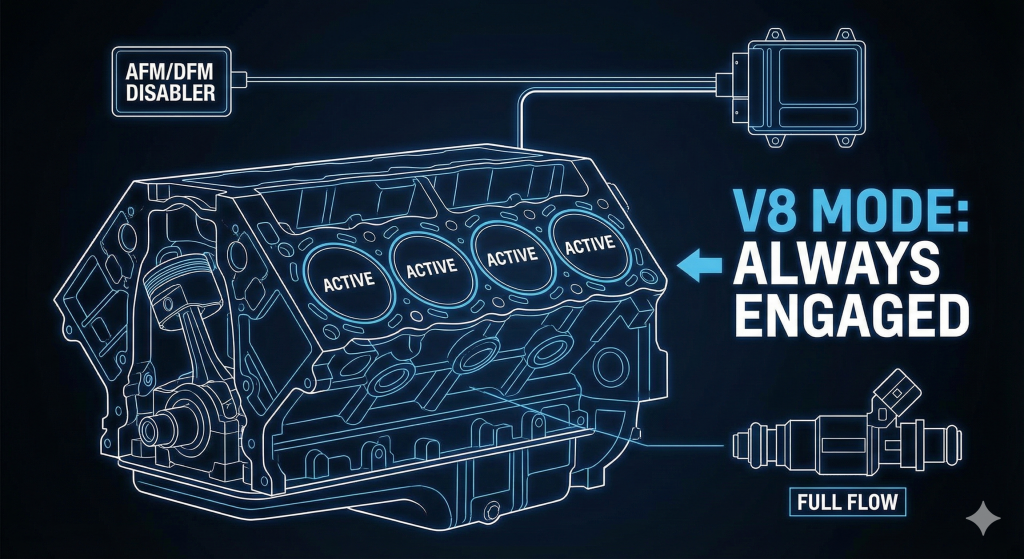
A full mechanical delete works — but it costs thousands, requires tearing the engine apart, and makes no sense unless the motor is already coming out.
A plug-and-play AFM/DFM disabler gives you:
- Immediate full-cylinder operation
- No permanent ECU changes
- No tuning required
- No engine teardown
- No learning curve
- Install in under 60 seconds
You plug it in.
Your engine stays in V8 mode.
You unplug it — you’re back to stock.
That’s it.
The AFM/DFM Disabler We Recommend (And Why)
Not all disablers are created equal.
The AFM/DFM Disabler (B0CTJNM7XQ) stands out because it’s:
- Designed specifically for GM AFM & DFM systems
- True plug-and-play OBD-II device
- No flashing, no tuning files, no laptop
- Leaves no permanent footprint when removed
- Works while driving — not just at startup
This is the kind of solution owners install and then forget about — because the truck simply drives better afterward.
What Owners Notice Immediately After Installing a Disabler
These are the most commonly reported changes:
Smoother driving
No more constant switching between cylinder modes.
Better throttle response
The truck feels more predictable and responsive.
Less vibration and hesitation
Especially at low speeds and light throttle.
Peace of mind
You’re no longer relying on fragile AFM/DFM lifters cycling hundreds of times per drive.
Some owners even report similar or slightly improved real-world MPG, depending on driving style — but that’s just a bonus.
The real win is reducing risk.
“But GM Fixed It, Right?” (Short Answer: No)
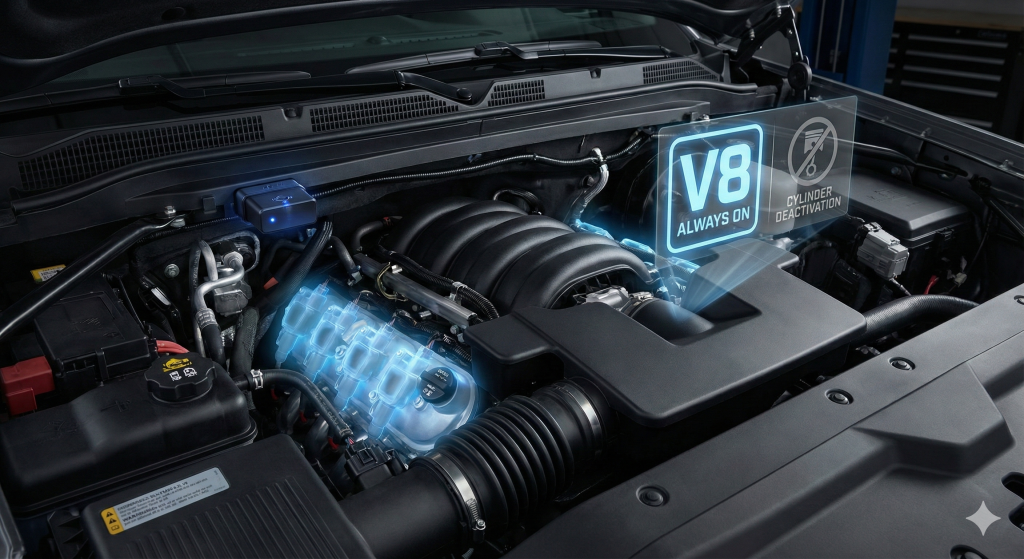
This is one of the most dangerous assumptions.
Yes, GM changed AFM.
Yes, GM introduced DFM.
Yes, GM refined the system.
But lifter failures still happen — even on newer trucks.
Ask any independent engine builder or GM technician off the record:
- AFM/DFM lifters are still a known failure point
- Disabling them early is cheaper than repairing them later
If the system were truly bulletproof, entire aftermarket companies wouldn’t exist just to disable it.
Cost Breakdown: Why This Is a No-Brainer
Let’s be real about the math:
- AFM/DFM disabler: ~$99
- Lifter + cam failure repair: $6,000–$12,000
- Full engine replacement: $10,000–$15,000+
Even if a disabler only reduces your risk, it pays for itself hundreds of times over.
This is not a performance mod.
This is cheap insurance.
Who Should Buy This Immediately
You should buy an AFM/DFM disabler now if:
- You plan to keep your GM truck long-term
- You’re out of warranty (or close)
- You tow, idle, or drive in stop-and-go traffic
- You’ve noticed ticking, hesitation, or odd shifts
- You simply don’t trust cylinder deactivation
Waiting does not improve your odds.
It only increases mileage on failure-prone components.
Final Verdict: Buy It Before You Regret It
If you’re serious about protecting your GM V8, the smartest move isn’t arguing on forums or hoping you’re “one of the lucky ones.”
It’s taking a simple, reversible step that thousands of owners already swear by.
Get the AFM/DFM Disabler here:

Install it once.
Drive with confidence.
And stop letting a fuel-economy gimmick decide the fate of your engine.
Reality Check: What Happens If You “Wait and See”
Most AFM/DFM failures don’t give you a warning light.
They don’t ask for permission.
And they don’t care how well you maintained your truck.
Here’s what usually happens in the real world:
- The truck drives perfectly fine… until it doesn’t
- A faint tick starts (or doesn’t)
- A lifter collapses suddenly
- The camshaft gets damaged
- Metal circulates through the engine
- What could’ve been prevented becomes a five-figure repair
By the time symptoms appear, it’s already too late.
An AFM/DFM disabler only works as prevention — not a cure.
Waiting for signs means you’ve already lost the advantage.
This is why experienced owners install one early, not after problems start.
AFM Disabler – Frequently Asked Questions
1. What is an AFM disabler?
An AFM disabler is a plug-and-play device that stops GM’s Active Fuel Management (AFM) or Dynamic Fuel Management (DFM) from turning off cylinders, keeping the engine in full-time V8 mode.
2. What does an AFM disabler do?
It prevents cylinder deactivation while driving, so the engine never switches between V8 and V4 (or partial cylinder modes).
3. Do AFM disablers really work?
Yes. When installed correctly, an AFM disabler reliably blocks AFM/DFM activation and keeps all cylinders firing.
4. Are AFM disablers safe?
Yes. Running a GM engine in full-cylinder mode is normal operation. AFM is for fuel economy—not engine survival.
5. Will an AFM disabler hurt my engine?
No. In fact, many owners install one to reduce stress on AFM lifters, which are a known weak point.
6. Is an AFM disabler worth it?
For most GM truck and SUV owners, yes. A ~$100 device can help reduce the risk of $6,000–$12,000 lifter and camshaft repairs.
7. What is AFM in a Chevy?
AFM (Active Fuel Management) is GM’s system that shuts off cylinders in Chevy vehicles to improve fuel economy during light driving.
8. What does AFM mean in cars?
AFM means the engine actively changes how many cylinders are firing based on driving conditions.
9. How does AFM work on GM engines?
AFM uses special hydraulic lifters and oil pressure to deactivate cylinders when cruising and reactivate them under load.
10. Which cylinders does AFM deactivate on a GM 6.2L V8?
AFM typically deactivates four cylinders, turning the engine into a V4 during light throttle conditions.
11. Do AFM disablers cause problems?
Quality AFM disablers do not cause engine problems. Cheap or poorly designed devices can cause warning lights, which is why buying a proven unit matters.
12. Does an AFM disabler affect fuel economy?
You may see a small MPG decrease, but many drivers report similar real-world mileage with much smoother driving.
13. What’s the difference between an AFM disabler and an AFM delete?
- AFM disabler: Plug-and-play, reversible, inexpensive
- AFM delete: Mechanical engine teardown, thousands of dollars
Most owners choose a disabler first.
14. Does an AFM disabler void warranty?
Because it does not flash or modify the ECU, it is far less risky than tuning. It can be unplugged at any time.
15. What is DFM and how is it different from AFM?
DFM (Dynamic Fuel Management) is a newer system that can deactivate different cylinder combinations dynamically instead of a fixed V4 mode.
16. Does an AFM disabler work on DFM engines?
Yes. Modern AFM/DFM disablers are designed to work on both AFM and DFM systems.
17. Can an AFM disabler fix lifter tick?
If damage already exists, no device can repair it. But installing one early can help prevent lifter issues from developing.
18. What years of GM engines should avoid AFM?
Many owners are cautious with 5.3L and 6.2L AFM-equipped engines, especially when planning long-term ownership.
19. Are AFM disablers better than tuning?
For most owners, yes. A disabler:
- Requires no tuning
- Leaves no permanent ECU changes
- Is reversible
- Takes under a minute to install
20. Why do so many GM owners buy AFM disablers?
Because AFM lifter failures are expensive, unpredictable, and common enough that preventative action makes sense.
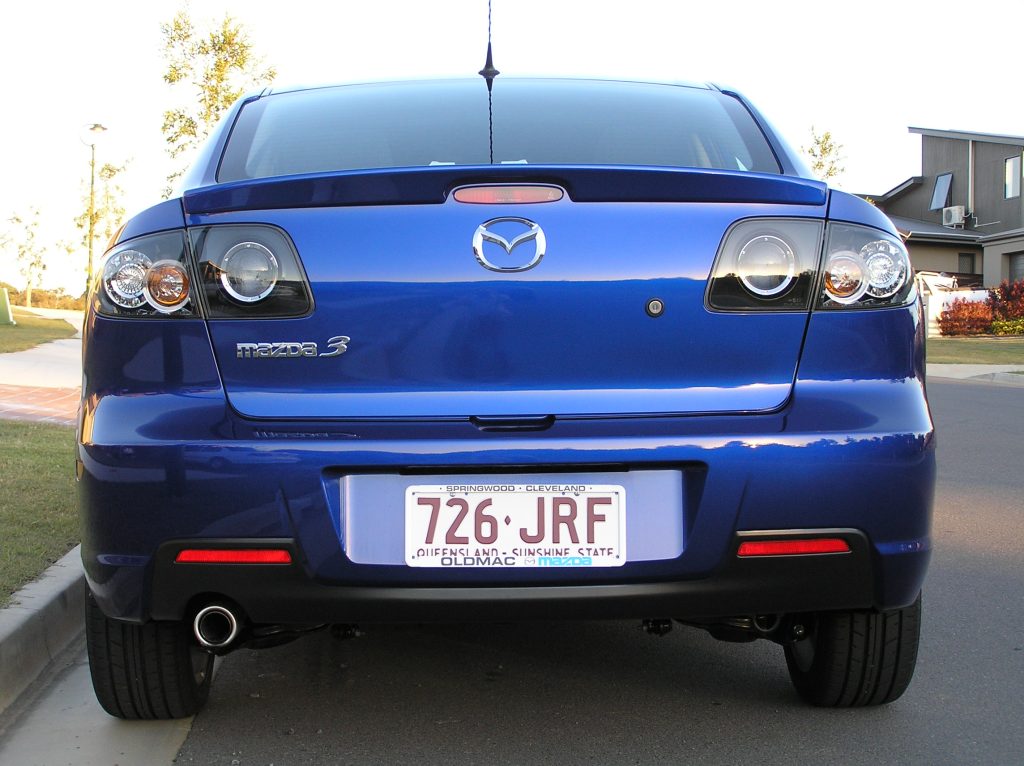
Are you searching for a reliable and fun-to-drive used car? The 2006 Mazda 3 often catches the eye of smart buyers. It offers a great mix of practicality and performance. But what exactly makes this car tick?
Understanding the 06 Mazda 3 specs is crucial. It helps you make an informed decision. This guide dives deep into every detail. You’ll learn about its engine, interior, safety, and more.
Let’s explore what this popular compact car brings to the table.
Engine Options: Power and Efficiency
The 2006 Mazda 3 came with two main engine choices. Both offered a good balance for daily driving. Your choice depended on your preference for power or fuel economy.
Here are the details for each engine type:
- 2.0-liter DOHC 4-cylinder engine: This engine was the standard option. It offered 148 horsepower. You also got 135 lb-ft of torque. This setup provided decent acceleration for city driving. It was also quite fuel-efficient.
- 2.3-liter DOHC 4-cylinder engine: For those seeking more punch, this engine was available. It produced a healthy 160 horsepower. Torque figures stood at 150 lb-ft. This larger engine offered a more spirited driving experience. It was perfect for highway merging or tackling hilly roads.
Both engines were known for their reliability. Regular maintenance keeps them running smoothly. They delivered a responsive feel on the road.
Transmission Choices: Manual or Automatic?
The 06 Mazda 3 offered two transmission options. This allowed drivers to pick their preferred style. You could choose between a manual or an automatic gearbox.
Consider these points for each option:
- 5-speed Manual Transmission: Many enthusiasts loved this choice. It gave you full control over gear shifts. The manual transmission often provided a more engaging drive. It could even slightly improve fuel economy in some cases.
- 4-speed Automatic Transmission: This option was popular for convenience. It made driving easier in heavy traffic. The automatic transmission offered smooth shifts. It was a great choice for daily commuting.
The manual transmission was typically paired with both engine sizes. The automatic was also available across the range. Your driving habits will guide your best choice.
Performance and Handling: A Driver’s Car
Mazda built its reputation on “Zoom-Zoom” driving dynamics. The 2006 Mazda 3 certainly lived up to this motto. It offered a surprisingly fun driving experience for a compact car.
Here’s what made it stand out:
- Responsive Steering: The steering felt precise and direct. This made the car feel nimble. It was easy to maneuver in tight spaces.
- Firm Suspension: The suspension provided a sporty ride. It handled corners with confidence. While firm, it was still comfortable enough for daily use.
- Agile Chassis: The car’s structure contributed to its agility. It felt stable at higher speeds. This added to driver confidence.
The 06 Mazda 3 was not just about getting from A to B. It made the journey enjoyable. It truly was a driver’s car in its segment.
Fuel Economy: How Far Can You Go?
Fuel efficiency is a big concern for many car buyers. The 2006 Mazda 3 offered competitive MPG figures for its time. These numbers varied depending on the engine and transmission.
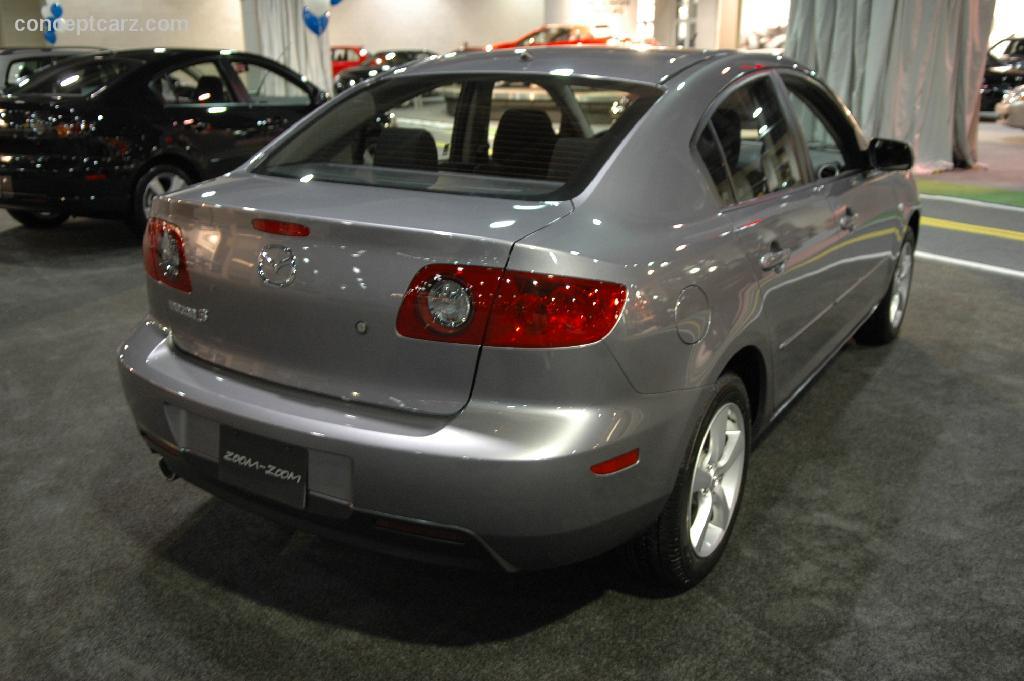
Let’s break down the approximate fuel economy for the 06 Mazda 3:
- 2.0-liter engine with Manual Transmission: Expect around 24 MPG in the city. On the highway, it could reach up to 30 MPG.
- 2.0-liter engine with Automatic Transmission: City MPG was typically 23. Highway MPG was similar at 29.
- 2.3-liter engine with Manual Transmission: This larger engine got about 22 MPG city. Highway driving could yield 29 MPG.
- 2.3-liter engine with Automatic Transmission: City figures dropped to 22 MPG. Highway efficiency was around 27 MPG.
These figures are estimates. Your actual mileage may vary. Driving conditions, maintenance, and driving style all play a role.
It is interesting to note how fuel economy has changed. For example, a 01 Jeep Cherokee mpg l 100km would show much different numbers. Its larger engine and typical 4WD system mean higher fuel consumption. Similarly, comparing to a 01 Jeep Cherokee mpg 4wd model highlights the efficiency of compact sedans. The 2001 Jeep Cherokee gas tank size was also often larger to accommodate its thirstier engine.
Interior Specs: Comfort and Practicality
The interior of the 2006 Mazda 3 was well-designed. It focused on driver comfort and practicality. The cabin felt modern and inviting.
Here are some key interior features and dimensions:
- Seating Capacity: The Mazda 3 seats five passengers. However, the rear middle seat is best for short trips.
- Quality Materials: Mazda used good quality materials for its class. The dashboard plastics felt solid. The cloth seats were durable.
- Driver-Focused Cockpit: All controls were within easy reach. The gauges were clear and easy to read. This enhanced the driving experience.
- Cargo Space:
- Sedan: The trunk offered about 11.4 cubic feet of space. This was decent for groceries or small luggage.
- Hatchback: The hatchback version provided much more versatility. It had 17.1 cubic feet with seats up. Folding the rear seats expanded this to 31.2 cubic feet.
- Standard Features: Entry-level models included power windows and locks. Air conditioning was also standard. Higher trims added features like a CD changer and cruise control.
The interior was a strong point for the Mazda 3. It offered a pleasant environment for both short and long drives.
Exterior Specs: Style and Dimensions
The 2006 Mazda 3 had a distinctive and sporty exterior design. It looked modern and appealing. The car was available in two body styles.
Let’s look at its dimensions and design elements:
- Body Styles:
- 4-door Sedan: This classic sedan offered a sleek profile. It was a popular choice for many buyers.
- 5-door Hatchback: The hatchback provided a sportier look. Its practical tailgate made loading larger items easier.
- Overall Length:
- Sedan: Approximately 177 inches (4496 mm).
- Hatchback: Approximately 175.6 inches (4460 mm).
- Width: Both body styles measured around 69.1 inches (1755 mm).
- Height: Approximately 57.7 inches (1466 mm) for both.
- Wheelbase: A consistent 103.9 inches (2639 mm) across all models. This contributed to its stable ride.
- Wheel Options: Standard wheels were often 15-inch steel. Higher trims featured 16-inch or 17-inch alloy wheels. These larger wheels enhanced the car’s sporty appearance.
The design remains appealing even today. It did not look dated quickly. This adds to its lasting appeal as a used car.
Safety Features: Protecting Occupants
Safety is always a top priority. The 2006 Mazda 3 included a range of safety features. These aimed to protect occupants in case of an accident.
Key safety components included:
- Airbags: Dual front airbags were standard. Side-impact airbags and side curtain airbags were optional. These provided extra protection.
- Anti-lock Braking System (ABS): ABS helped prevent wheel lock-up during hard braking. This allowed the driver to maintain steering control. It was often optional on base models.
- Electronic Brakeforce Distribution (EBD): EBD optimized braking force to each wheel. It improved stopping performance.
- Traction Control System (TCS): TCS helped prevent wheel spin during acceleration. It provided better grip in slippery conditions. This was also an optional feature.
It’s important to check specific vehicle history. Ensure any used 06 Mazda 3 you consider has all its safety systems in working order. Look for a clean accident history.
Trim Levels: Finding Your Perfect Match
The 2006 Mazda 3 was available in different trim levels. Each offered a varying set of features. This allowed buyers to choose based on their needs and budget.
The primary trim levels were:
- Mazda 3 i (Base Model): This trim came with the 2.0-liter engine. Standard features included power windows and mirrors. Air conditioning and an AM/FM/CD stereo were also included. It was a solid entry-level option.
- Mazda 3 S (Sportier Trim): The ‘S’ trim typically featured the more powerful 2.3-liter engine. It often added larger alloy wheels. Other upgrades included sport seats and fog lights. Cruise control and a leather-wrapped steering wheel were common additions.
Optional packages could further customize these trims. You might find a base ‘i’ with some ‘S’ features. Always verify the exact specifications of any car you consider.
Common Issues and Things to Look For
Even reliable cars can have common issues. The 06 Mazda 3 is no exception. Knowing what to look for can save you headaches later.
Here are a few things to check:
- Rust: Pay close attention to wheel wells and rocker panels. Older models, especially in colder climates, can show rust.
- Power Steering Pump: Some owners reported issues with the power steering pump. Listen for unusual noises during turns. Check for fluid leaks.
- Engine Mounts: Worn engine mounts can cause excessive vibration. You might feel it through the steering wheel or floor.
- Automatic Transmission Issues: While generally robust, check for rough shifts. Ensure the transmission fluid looks clean.
- Suspension Components: Listen for clunks or squeaks over bumps. Worn bushings or struts can affect ride quality.
A pre-purchase inspection by a trusted mechanic is always recommended. This can uncover potential problems. It gives you peace of mind.
Frequently Asked Questions
What are the main differences between the 06 Mazda 3 i and S trims?
The ‘i’ trim typically features the 2.0-liter engine. It has more basic standard features. The ‘S’ trim usually comes with the more powerful 2.3-liter engine. It also adds sportier aesthetics and more comfort features like alloy wheels and fog lights.
Is the 2006 Mazda 3 a reliable car?
Generally, yes. The 2006 Mazda 3 is known for good reliability when maintained properly. However, like any older car, individual condition varies. Look for a well-documented service history. A pre-purchase inspection is highly recommended.
What kind of fuel economy can I expect from an 06 Mazda 3?
Fuel economy ranges from about 22 MPG city to 30 MPG highway. This depends on the specific engine and transmission. The 2.0-liter engine typically offers slightly better mileage than the 2.3-liter. Manual transmissions can also be more efficient.
Does the 06 Mazda 3 have a timing belt or a timing chain?
Both the 2.0-liter and 2.3-liter engines in the 2006 Mazda 3 use a timing chain. This is generally a more durable component than a timing belt. It usually does not require regular replacement, unlike a timing belt which typically needs changing every 60,000-100,000 miles.
What are the common rust spots on the 06 Mazda 3?
Common rust spots often include the rear wheel wells. Also check the rocker panels, and sometimes the lower edges of the doors. This is more prevalent in regions that use road salt in winter. Always check these areas thoroughly during an inspection.
Conclusion: Is the 06 Mazda 3 Right for You?
The 2006 Mazda 3 remains a compelling choice in the used car market. It offers a blend of sporty performance and practical features. Its reliability record is also quite strong. You get a lot of car for your money.
Understanding these 06 Mazda 3 specs empowers you. You can confidently evaluate potential purchases. Whether you choose the efficient ‘i’ or the spirited ‘S’ trim, you’re getting a well-engineered vehicle.
With careful inspection and regular maintenance, an 06 Mazda 3 can provide years of enjoyable driving. It truly embodies Mazda’s “Zoom-Zoom” spirit.

Few modern automotive technologies have generated as much debate among owners, mechanics, and engineers as Active Fuel Management, better known as AFM. Introduced by General Motors as a fuel-saving innovation, AFM promised better efficiency without sacrificing V8 performance. On paper, it sounded brilliant.
In practice, it became one of the most polarizing engine technologies of the last two decades.
As a result, an entire aftermarket industry emerged around one deceptively simple device: https://amzn.to/4bu3c2g. But what exactly is an AFM disabler? How does it work? Why do so many owners install one? And does disabling AFM actually solve the problems associated with GM’s cylinder-deactivation engines?
This article answers all of those questions—properly, in depth, and without marketing fluff.
Understanding AFM: What Is Active Fuel Management?
To understand an AFM disabler, you first need to understand AFM itself.
Active Fuel Management is GM’s cylinder deactivation system, designed to improve fuel economy by temporarily shutting down half of the engine’s cylinders during light-load driving. In most applications, this means a V8 engine operates as a V4 when cruising at steady speeds.
AFM was primarily deployed in:
- GM V8 engines (5.3L, 6.0L, 6.2L variants)
- Chevrolet Silverado and Tahoe
- GMC Sierra and Yukon
- Cadillac Escalade
- Chevrolet Camaro (V8 models)
- Some GM SUVs and performance vehicles
The goal was simple: reduce pumping losses, improve highway fuel economy, and meet tightening emissions standards.

How AFM Works Inside the Engine
AFM is not a software trick. It is a mechanical system integrated deeply into the engine’s valvetrain.
Key components include:
- AFM lifters (special collapsible lifters)
- Oil pressure control solenoids
- An AFM valley cover with oil passages
- ECU logic to command cylinder deactivation
When AFM activates:
- The ECU detects light engine load.
- Oil pressure is routed to specific lifters.
- Those lifters collapse internally.
- Intake and exhaust valves stop opening on selected cylinders.
- Fuel injection and spark are disabled for those cylinders.
The engine now runs on fewer cylinders until load increases again.
Why AFM Became So Controversial
AFM works—until it doesn’t.
While many vehicles operate for years without issues, a significant number experience serious long-term problems. These issues are not minor inconveniences; they often involve catastrophic engine damage.
Common AFM-related problems include:
- Collapsed AFM lifters
- Stuck lifters that fail to re-engage
- Excessive oil consumption
- Camshaft lobe wear
- Misfires and rough running
- Complete engine failure in extreme cases
The root issue is that AFM lifters are more complex than standard lifters and rely heavily on oil quality, pressure, and cleanliness. Any deviation—sludge, pressure loss, delayed oil changes—accelerates wear.
Once an AFM lifter fails, metal debris often spreads through the engine, turning a single component failure into a full rebuild.

What Is an AFM Disabler?
An AFM disabler is an electronic device designed to prevent Active Fuel Management from engaging, while leaving the engine and ECU otherwise stock.
It does not:
- Reprogram the ECU
- Permanently alter engine hardware
- Delete emissions systems
- Change engine tuning
Instead, it works by intercepting or modifying signals that tell the ECU when AFM conditions are met.
In simple terms: the engine always stays in full-cylinder mode.
How an AFM Disabler Works
Most AFM disablers are plug-and-play devices that connect to the vehicle’s OBD-II port or inline with specific engine sensors.
Their function is to:
- Override the AFM enable command
- Prevent the ECU from switching into cylinder-deactivation mode
- Maintain full V8 operation at all times
Crucially, the ECU still believes everything is operating normally. No warning lights appear. No diagnostic trouble codes are triggered. The vehicle remains emissions-compliant.
When the device is removed, the vehicle immediately returns to factory behavior.
Why Owners Use AFM Disablers
AFM disablers are rarely installed for performance reasons. They are installed for longevity and drivability.
1. Preventing Lifter Failure
By keeping all cylinders active:
- AFM lifters never collapse
- Oil pressure remains consistent
- Valvetrain stress is reduced
This significantly lowers the risk of lifter-related failures, especially in high-mileage engines.
2. Eliminating AFM “Feel”
Many drivers dislike how AFM feels:
- Subtle vibration changes
- Exhaust tone fluctuations
- Hesitation during transitions
- Unpredictable throttle response
With an AFM disabler installed, the engine behaves like a traditional V8 at all times.
3. Reducing Oil Consumption
AFM engines are notorious for oil consumption issues, particularly during cylinder deactivation cycles. Disabling AFM often stabilizes oil usage and reduces the need for constant top-offs.
AFM Disabler vs AFM Delete: Not the Same Thing
This distinction is critical.
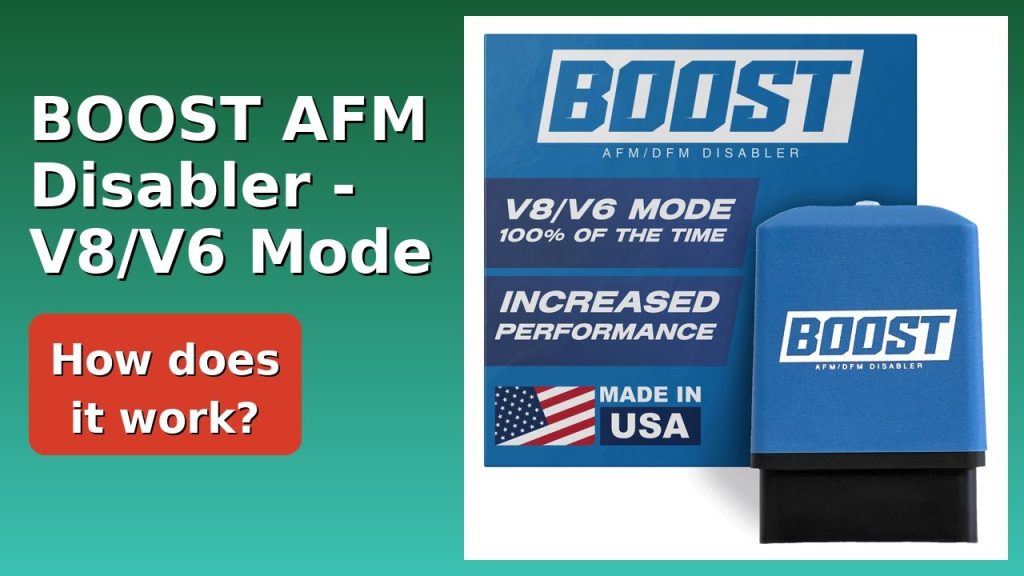
AFM Disabler
- Electronic
- Reversible
- No engine teardown
- No tuning required
- Low cost
- Prevents AFM from activating
AFM Delete
- Mechanical modification
- Requires engine teardown
- Replaces AFM lifters with standard lifters
- Often includes camshaft replacement
- Requires ECU tuning
- Expensive but permanent
An AFM disabler is a preventative measure. An AFM delete is a long-term mechanical solution, usually performed after failure or during an engine rebuild.
Does an AFM Disabler Affect Fuel Economy?
Yes—but not as dramatically as many expect.
Since the engine remains in full-cylinder mode:
- Highway fuel economy typically drops slightly
- City driving is largely unaffected
Most owners report a reduction of 1–2 MPG, depending on driving style and vehicle weight. Many consider this a reasonable trade-off for improved reliability and drivability.
Does an AFM Disabler Increase Power?
Not in peak horsepower terms.
AFM does not reduce peak power when the engine is under load because it disengages automatically during acceleration. However, disabling AFM can improve:
- Throttle response
- Consistency of power delivery
- Exhaust sound quality
The engine feels more predictable, even if it is not technically more powerful.
Is an AFM Disabler Safe?
When properly designed and vehicle-specific, yes.
Quality AFM disablers:
- Do not interfere with emissions systems
- Do not trigger fault codes
- Do not modify ECU programming
- Do not void warranties outright (though manufacturers may dispute claims)
However, poor-quality or generic devices can cause electrical issues, so brand reputation and compatibility matter.
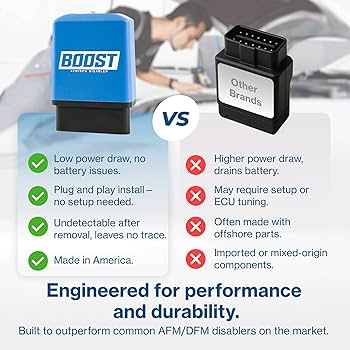
Vehicles That Benefit Most From an AFM Disabler
AFM disablers are most commonly used on:
- GM trucks and SUVs used for towing
- High-mileage V8 vehicles
- Vehicles with early signs of lifter noise
- Owners planning long-term ownership
- Drivers who prioritize smoothness over marginal fuel savings
They are less beneficial for:
- Low-mileage leased vehicles
- Owners planning to trade in soon
- Engines already mechanically deleted
Common Myths About AFM Disablers
“AFM disablers are illegal”
False. They do not remove emissions equipment or alter ECU calibration.
“They damage the engine”
False. They reduce mechanical complexity during operation.
“They’re just a gimmick”
False. They address a known mechanical stress point.
“They fix already damaged lifters”
False. They prevent future AFM activation but cannot repair existing mechanical damage.
Long-Term Reliability Perspective
An AFM disabler does not magically make an engine bulletproof. Oil quality, maintenance intervals, and driving habits still matter.
However, by eliminating one of the most failure-prone operational modes, an AFM disabler can significantly improve long-term reliability odds, especially for owners who plan to keep their vehicles past 150,000 miles.
Final Verdict: What Is an AFM Disabler, Really?
An AFM disabler is not a performance mod.
It is not a shortcut.
It is not a cure-all.
It is a risk-reduction tool for engines burdened with an overly complex fuel-saving system.
For many GM V8 owners, it represents a pragmatic decision: trade a small amount of fuel efficiency for smoother operation, greater consistency, and a lower chance of catastrophic failure.
In that context, the AFM disabler is not controversial at all. It is simply a response to engineering compromise—made by owners who prefer their V8s to behave like V8s.
Below is a comprehensive, publication-grade FAQ section designed to sit directly under the AFM Disabler article.
Tone is technical, neutral, and authoritative, suitable for SEO, enthusiasts, and editorial review.
AFM Disabler vs AFM Delete vs Doing Nothing: A Practical Comparison
Understanding the difference between using an AFM disabler, performing a full AFM delete, or leaving AFM untouched is essential. Each path has distinct costs, risks, and long-term implications.
High-Level Comparison Table
| Factor | AFM Disabler | AFM Delete | Do Nothing |
|---|---|---|---|
| Type | Electronic (plug-and-play) | Mechanical modification | Factory operation |
| Reversibility | Fully reversible | Permanent | N/A |
| Engine Teardown Required | No | Yes | No |
| ECU Tuning Required | No | Yes | No |
| Upfront Cost | Low | High | None |
| Labor Required | Minimal | Extensive | None |
| Prevents AFM Activation | Yes | Yes (removed entirely) | No |
| Fixes Existing AFM Damage | No | Yes (if rebuilt correctly) | No |
| Fuel Economy Impact | Slight decrease | Slight decrease | Best MPG |
| Long-Term Reliability Risk | Reduced | Lowest | Highest |
| Best For | Prevention & daily driving | Long-term ownership, rebuilds | Short-term ownership |
Option 1: AFM Disabler — Preventative and Reversible
An AFM disabler is best understood as risk management.
Pros
- Prevents AFM lifters from cycling
- Reduces likelihood of lifter collapse and cam damage
- Improves drivability and throttle consistency
- No tuning, no engine work, no permanent changes
- Ideal for owners planning to keep the vehicle
Cons
- Does not repair existing damage
- Slight reduction in highway fuel economy
- Still relies on AFM hardware being present (just inactive)
Best For
- Daily-driven GM trucks and SUVs
- Owners concerned about long-term reliability
- Vehicles with no current AFM-related damage
- Drivers who want a reversible solution
Option 2: AFM Delete — Permanent Mechanical Solution
An AFM delete is a complete removal of the system at the mechanical level.
What It Involves
- Removing AFM lifters
- Installing standard lifters
- Replacing the camshaft
- Blocking AFM oil passages
- ECU tuning to remove AFM logic
Pros
- Eliminates AFM hardware entirely
- Solves existing lifter and camshaft failures
- Longest-term reliability solution
- Preferred during engine rebuilds
Cons
- Very expensive
- Requires major engine teardown
- Not reversible
- Downtime during installation
Best For
- Engines with failed AFM lifters
- Performance builds
- Owners planning to keep the vehicle indefinitely
- Vehicles already undergoing engine work
Option 3: Doing Nothing — Factory Operation
Leaving AFM untouched means accepting the engine as designed.
Pros
- No upfront cost
- Maximum fuel economy
- No modifications or warranty concerns
Cons
- AFM lifters continue cycling
- Higher long-term risk of lifter failure
- Potential for catastrophic engine damage
- Inconsistent drivability and throttle response
Best For
- Short-term ownership or leases
- Low-mileage vehicles with planned resale
- Owners unconcerned with long-term reliability
Which Option Makes the Most Sense?
Choose an AFM Disabler if:
- Your engine is currently healthy
- You want to reduce future failure risk
- You prefer a low-cost, reversible solution
- You value smoother driving over peak MPG
Choose an AFM Delete if:
- AFM lifters have already failed
- You are rebuilding or modifying the engine
- Long-term reliability is the top priority
- Cost and downtime are acceptable
Do Nothing if:
- You plan to sell the vehicle soon
- The vehicle is leased
- Fuel economy matters more than longevity
- You accept the risk associated with AFM
Frequently Asked Questions: AFM Disablers
What is an AFM disabler?
An AFM disabler is an electronic device that prevents Active Fuel Management (AFM) from engaging in GM vehicles. It keeps the engine operating in full-cylinder mode at all times, without permanently modifying the ECU or engine hardware.
How does an AFM disabler work?
Most AFM disablers plug into the vehicle’s OBD-II port or interface with engine sensors. They prevent the ECU from entering cylinder-deactivation mode while allowing all other engine functions to operate normally. The system is reversible and does not require tuning.
Does an AFM disabler permanently delete AFM?
No. An AFM disabler does not permanently remove AFM. It only prevents AFM from activating while the device is installed. Once removed, the vehicle immediately returns to factory AFM operation.
Will an AFM disabler fix collapsed lifters?
No. An AFM disabler cannot repair existing mechanical damage. If AFM lifters are already collapsed or the camshaft is damaged, a mechanical repair or full AFM delete is required. The disabler is a preventative solution, not a repair.
Is an AFM disabler safe for the engine?
Yes, when using a high-quality, vehicle-specific disabler. By keeping all cylinders active, oil pressure remains consistent and lifter stress is reduced. Many owners install AFM disablers specifically to lower long-term failure risk.
Does an AFM disabler affect fuel economy?
Slightly. Most drivers report a decrease of 1–2 MPG on the highway, with little to no change in city driving. The trade-off is improved drivability and reduced mechanical stress.
Will an AFM disabler increase horsepower?
No measurable peak horsepower increase occurs. However, many drivers notice improved throttle response, smoother power delivery, and more consistent engine behavior—especially at cruising speeds.
Does an AFM disabler cause check engine lights?
A properly designed AFM disabler will not trigger warning lights or diagnostic trouble codes. Low-quality or incompatible devices, however, may cause electrical or communication issues.
Is an AFM disabler legal?
Yes. AFM disablers do not remove emissions equipment or alter ECU tuning. They simply prevent a fuel-saving mode from activating. Regulations may vary by region, but they are generally considered legal for on-road use.
Will an AFM disabler void my warranty?
An AFM disabler does not automatically void a warranty. However, manufacturers may deny specific claims if they believe the device contributed to a failure. Because AFM disablers are removable, many owners uninstall them before dealer service visits.
What vehicles use AFM?
AFM is commonly found in GM V8 engines, including:
- Chevrolet Silverado
- GMC Sierra
- Chevrolet Tahoe
- GMC Yukon
- Cadillac Escalade
- Chevrolet Camaro (V8 models)
Always verify engine compatibility before purchasing a disabler.
AFM disabler vs AFM delete: which is better?
They serve different purposes.
- AFM Disabler:
Electronic, reversible, inexpensive, preventative. - AFM Delete:
Mechanical, permanent, expensive, requires engine teardown and tuning.
A disabler is ideal for preventing problems before they occur. A delete is often chosen after failure or during a rebuild.
Can I install an AFM disabler myself?
Yes. Most AFM disablers are plug-and-play and require no tools. Installation typically takes less than five minutes.
Should I install an AFM disabler on a new vehicle?
Many owners do, especially if they plan long-term ownership. Installing a disabler early prevents AFM lifters from ever cycling, which may reduce wear over time.
Is an AFM disabler worth it?
For owners concerned about AFM reliability, drivability, or long-term ownership costs, the answer is often yes. It trades a small amount of fuel efficiency for smoother operation and reduced mechanical complexity.
2026 Mazda3 Sedan Expert Review: Why Mazda’s Small Sedan Still Thinks It’s a Sports Car
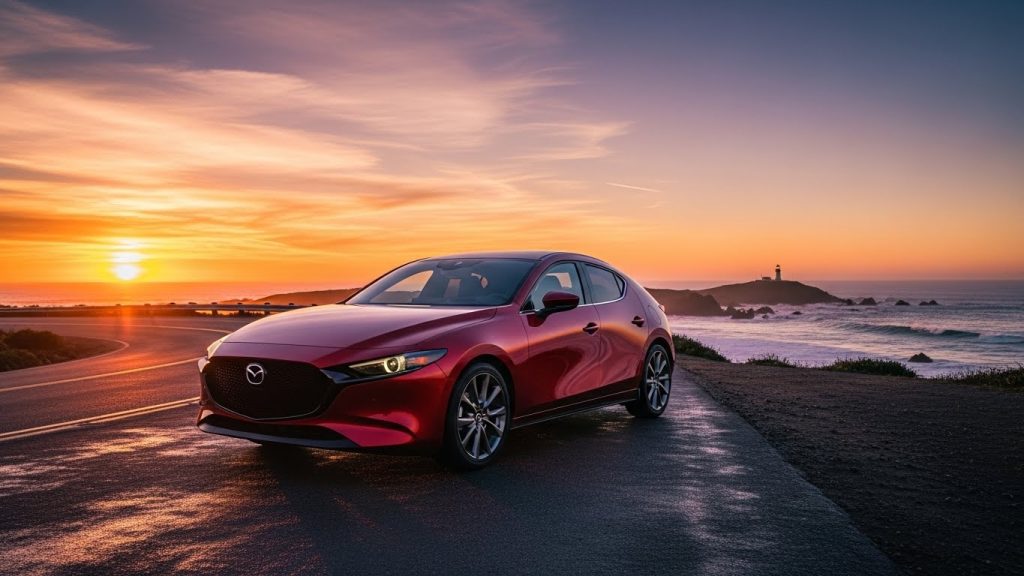
The compact sedan is dying. Not in a dramatic explosion of smoke and recalls, but in a slow, quiet way—being edged off the road by crossovers pretending to be adventurous and SUVs pretending to be efficient. Most manufacturers have responded by giving up, turning their small sedans into rolling appliances: numb steering, soulless CVTs, tablet-heavy dashboards, and a driving experience best described as “adequate.”
Mazda did not get that memo.
The 2026 Mazda3 Sedan exists for one reason: Mazda still believes that driving should feel like something. Not a thrill ride. Not a track weapon. Just… alive. And in 2026, that makes it an oddity—and arguably one of the most interesting cars left in the segment.
This is not a radical redesign year. There are no wild promises, no gimmicks, no TikTok-friendly features. Instead, Mazda has doubled down on what the Mazda3 has always done better than its rivals: balance, feel, and restraint.
Design: The Anti-Trend Sedan
Most compact sedans in 2026 are trying very hard to look aggressive. Huge grilles. Fake vents. Sharp creases designed to look fast while parked at a Costco.
The Mazda3 Sedan does none of that.
Mazda’s Kodo design language has matured into something quietly confident. The body surfaces are smooth, almost liquid. The reflections flow naturally across the panels rather than being chopped up by unnecessary lines. It is a design that rewards walking around the car slowly, noticing how light plays across the doors and rear quarters.
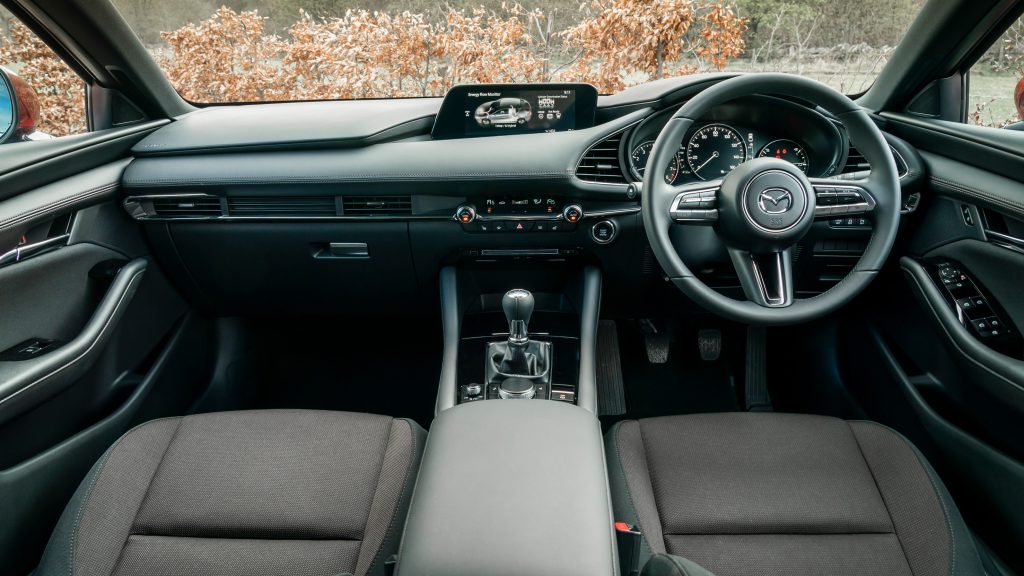
The proportions matter:
- A long hood relative to the cabin
- A low beltline
- A rear end that looks planted rather than stubby
The sedan form suits the Mazda3 better than many will admit. Where the hatchback is bold and slightly controversial, the sedan feels timeless. It looks like a car someone will still admire ten years from now, not something trapped in the styling trends of the mid-2020s.
Interior: Minimalism With a Point
Climb inside the 2026 Mazda3 Sedan and the philosophy becomes immediately clear: this car was designed by people who actually drive.
There is no iPad glued to the dashboard. No climate controls buried three menus deep. No gimmicky ambient lighting trying to distract you from cheap plastics.
Instead, Mazda has done something unfashionable: they trusted the driver.
Layout and Ergonomics
The dashboard is clean and horizontal, emphasizing width rather than height. The infotainment screen sits high enough to be seen easily, but not so high that it dominates the cabin. Crucially, it is not designed to be poked constantly.
Mazda’s rotary controller remains, and once you adapt to it, you realize why Mazda refuses to abandon it:
- You can operate it without taking your eyes off the road
- Muscle memory develops quickly
- It reduces distraction at speed
This is not nostalgia. It is ergonomics.
Materials and Ambience
For a compact sedan, the Mazda3’s interior quality borders on the absurd. Soft-touch materials are everywhere you expect them to be. The stitching is clean. The surfaces feel deliberate.
This is not luxury in the sense of excess. It is luxury in the sense of coherence. Everything feels like it belongs.
You sit low, the steering wheel comes toward you properly, and the pedals are placed exactly where they should be. Mazda understands something many manufacturers seem to have forgotten: driving position matters.
Technology: Calm, Not Chaotic
The 2026 Mazda3 Sedan does not try to overwhelm you with technology. That is both its greatest strength and, for some buyers, its biggest weakness.
The infotainment system is fast, stable, and refreshingly simple. It does what you ask, when you ask it, without drama. Smartphone integration is there, but it does not hijack the entire experience.
Digital driver displays are clear rather than flashy. Alerts are gentle rather than alarming. Driver assistance systems intervene smoothly, not aggressively.
This is technology designed to support driving, not replace it.
Engines: Sensible, and Proud of It
In a world obsessed with downsized turbo engines chasing paper efficiency numbers, Mazda’s powertrain philosophy feels almost rebellious.
Naturally Aspirated: The Purist’s Choice
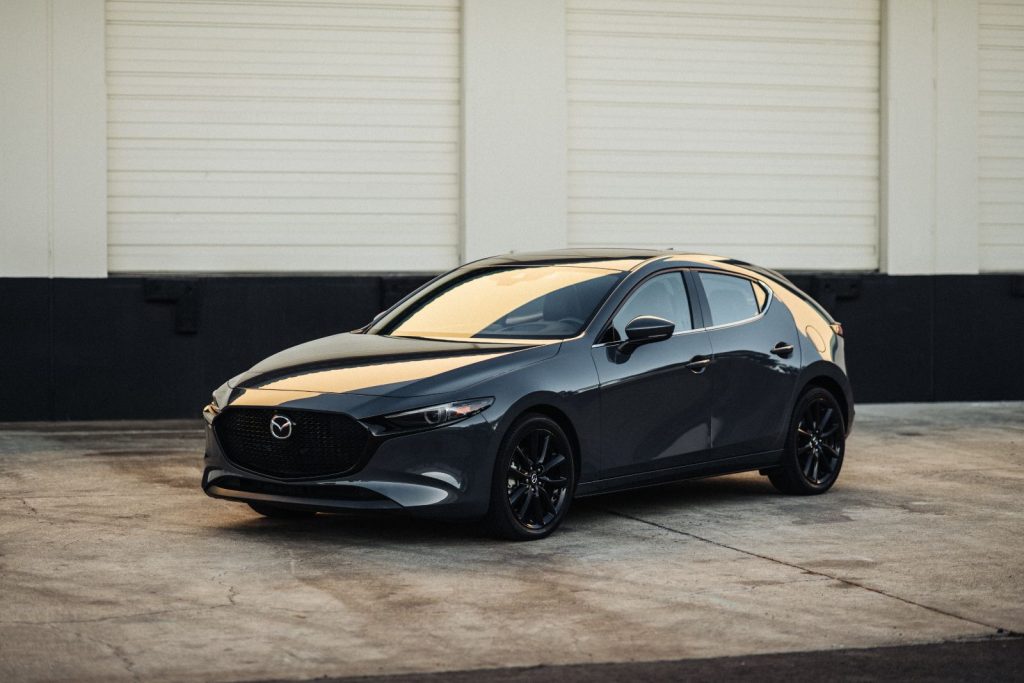
The naturally aspirated engine in the Mazda3 Sedan is not exciting on paper. No massive torque figures. No marketing buzzwords.
What it delivers instead is:
- Linear throttle response
- Predictable power delivery
- Smoothness across the rev range
You press the accelerator, the car responds immediately. No lag. No hesitation. No artificial sound enhancement pretending something dramatic is happening.
It is honest, and that honesty becomes addictive.
Turbocharged Option: Quietly Quick
For those who want more shove, the turbocharged Mazda3 transforms the character of the car without ruining it.
The turbo does not turn the Mazda3 into a hot sedan. Instead, it gives it:
- Strong low-end torque
- Effortless highway acceleration
- A sense of calm authority rather than aggression
This is not a boy-racer turbo setup. It is mature, refined, and very effective in the real world.
Transmission: A Rare Act of Sanity
While most rivals have surrendered entirely to CVTs, Mazda has stubbornly stuck with a traditional automatic transmission.
Thank goodness.
Gear changes are crisp and predictable. Throttle inputs translate directly into motion rather than being filtered through a rubber band effect. Downshifts make sense. The car behaves like a car, not a spreadsheet.
In 2026, this alone sets the Mazda3 Sedan apart.
Driving Dynamics: Where the Mazda3 Earns Its Reputation
This is the part that matters.
The 2026 Mazda3 Sedan is not the fastest car in its class. It is not the most powerful. It is not the most spacious.
It is, however, the best to drive.
Steering
Mazda’s steering tuning remains one of the best in the industry. There is real weight. Real feedback. Real communication through the wheel.
You feel what the front tires are doing. You know how much grip you have. The steering does not isolate you from the road—it introduces you to it.
Chassis Balance
The suspension is firm enough to control body roll, but never harsh. The car flows through corners rather than attacking them. Mid-corner adjustments feel natural. There is composure here, not nervousness.
This is a sedan that encourages smooth driving rather than punishing mistakes.
Ride Quality
Despite its driver focus, the Mazda3 Sedan remains perfectly livable:
- Broken pavement is handled with maturity
- Highway cruising is quiet and stable
- Long drives are genuinely comfortable
It is one of the rare cars that manages to be engaging without being exhausting.
Refinement: More Premium Than It Has Any Right to Be
Mazda’s work on noise and vibration suppression deserves praise.
Road noise is subdued. Wind noise is minimal. The structure feels solid and well damped. At highway speeds, the Mazda3 Sedan feels closer to an entry-level luxury car than a budget compact.
This sense of solidity is something you notice immediately—and miss immediately when you step into most competitors.
Safety Systems: Subtle, Not Overbearing
Mazda’s driver assistance systems operate with restraint.
Lane assist nudges rather than yanks. Adaptive cruise behaves predictably. Alerts inform instead of panicking.
This is a car that assumes you are paying attention—and supports you accordingly.
Ownership: The Long Game
Mazda’s conservative engineering choices pay dividends over time.
Naturally aspirated engines, traditional transmissions, and restrained technology generally translate into:
- Fewer long-term issues
- Lower maintenance costs
- Better reliability as the car ages
The Mazda3 Sedan is built for people who plan to keep their cars, not lease them for three years and walk away.
The Competition: Why the Mazda3 Feels Different
Against the Honda Civic, the Mazda feels more refined and more engaging, though slightly smaller inside.
Against the Toyota Corolla, the Mazda feels vastly more alive and premium.
Against the Hyundai Elantra, the Mazda trades tech theatrics for cohesion and build quality.
None of these cars are bad. The Mazda3 simply has a point of view, which is increasingly rare.
Final Verdict: A Car for People Who Still Like Cars
The 2026 Mazda3 Sedan is not trying to win everyone over.
It is not chasing trends. It is not desperate for attention. It does not care if you think it should be an SUV instead.
It exists for people who:
- Appreciate steering feel
- Value design restraint
- Want a car that feels engineered, not assembled
- Believe driving should still be enjoyable, even on a commute
In 2026, that makes the Mazda3 Sedan not just good—but quietly brilliant.
If this is one of the last compact sedans standing that still cares about the act of driving, then it is a fitting standard-bearer.
2026 Mazda3 Sedan – Frequently Asked Questions
Is the 2026 Mazda3 Sedan a full redesign?
No. The 2026 Mazda3 Sedan continues as a refinement year, not a clean-sheet redesign. Mazda has focused on incremental improvements—calibration, materials, software stability, and build quality—rather than radical styling or platform changes. This is very much in line with Mazda’s long-term, engineering-led approach.
Is the Mazda3 Sedan still worth buying in 2026?
Yes—if you care about how a car drives. While many competitors now prioritize screen size, interior space, or headline fuel economy, the Mazda3 Sedan remains one of the few compact sedans that still prioritizes steering feel, chassis balance, and refinement. It is less compelling if rear-seat space or infotainment theatrics are your top priorities.
Does the 2026 Mazda3 Sedan have a CVT?
No. One of the Mazda3’s biggest differentiators is that it does not use a CVT. Mazda continues to use a traditional automatic transmission, which delivers more predictable throttle response, better engagement, and generally superior long-term durability compared to many CVT-equipped rivals.
Is the Mazda3 Sedan fun to drive?
By modern compact-sedan standards, absolutely. The Mazda3 Sedan is not a hot sedan, but it is engaging, composed, and communicative. Steering feedback, chassis balance, and throttle response are all well above average for the segment. It rewards smooth, deliberate driving rather than brute-force acceleration.
How does the 2026 Mazda3 Sedan compare to the Honda Civic?
The Civic offers more interior space and a slightly sportier image in certain trims. The Mazda3 counters with:
- Better interior materials
- Quieter cabin
- More natural steering feel
- A more premium overall driving experience
The Mazda feels more mature; the Civic feels more youthful. Which is better depends on what you value.
Is the Mazda3 Sedan reliable long term?
Historically, yes. Mazda’s avoidance of overcomplicated powertrains works in its favor. Naturally aspirated engines, conservative turbo tuning, and traditional transmissions tend to result in strong long-term reliability, especially for owners who plan to keep the car beyond the warranty period.
Does the Mazda3 Sedan come with all-wheel drive?
Yes, all-wheel drive is available, which remains unusual in the compact sedan segment. Mazda’s AWD system is tuned primarily for stability and traction, not off-road use. It is particularly beneficial in poor weather conditions and adds confidence during spirited driving.
Is the Mazda3 Sedan considered a luxury car?
Not officially—but it flirts with the idea. While it does not wear a luxury badge, the Mazda3 Sedan offers:
- Interior materials comparable to entry-level luxury cars
- Excellent noise isolation
- Refined ride quality
It occupies a space between mainstream and luxury, which is exactly where Mazda wants it.
Is the infotainment system touch-based?
No, and that is intentional. Mazda uses a rotary controller rather than a touchscreen while driving. The goal is reduced distraction and better ergonomics. While this may feel unfamiliar at first, most drivers adapt quickly and appreciate the logic behind it.
Who should buy the 2026 Mazda3 Sedan?
The Mazda3 Sedan is ideal for drivers who:
- Value steering feel and balance
- Prefer understated, timeless design
- Want refinement without luxury-brand costs
- Plan to own their car long term
It is less ideal for buyers who prioritize maximum rear-seat space, flashy tech features, or aggressive styling.
Is the Mazda3 Sedan being discontinued?
As of now, no. However, compact sedans are becoming increasingly rare, which makes the Mazda3 Sedan something of an endangered species. Mazda’s continued commitment suggests it still sees value in serving drivers who want a proper small car, not a crossover substitute.
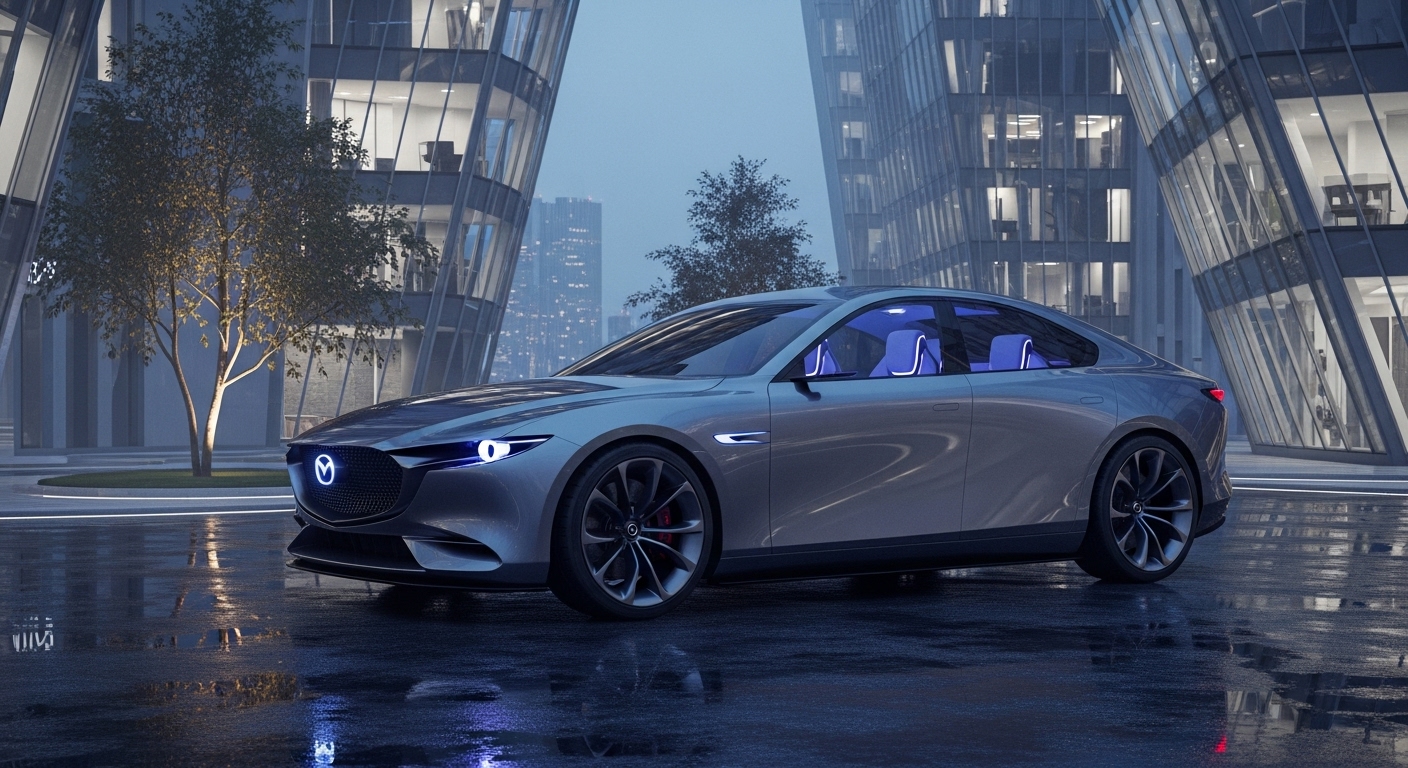
The electric SUV world just got a shock. Mazda has officially released a new video showcasing the Mazda EZ60, and the internet is scrambling to understand what this means for the brand’s electric future. For months, the EZ60 Mazda project lived in leaks, patent filings, and quiet factory movements in China. Now that the video is out, the speculation has turned into full-blown hype.
Is this Mazda’s boldest EV yet?
Is it coming to the USA?
And what will the Mazda EZ60 price and range actually look like?
Here is everything you need to know.
What Is the Mazda EZ60? The Electric SUV Mazda Didn’t Want to Talk About—Until Now
The Mazda EZ60 is a mid-size electric crossover developed under Mazda’s joint-venture program in China. It launched first in the Chinese domestic market as a premium EV built on the EPA1 platform, featuring sharp styling, upscale interior quality, and a surprising blend of performance and efficiency.
For months, the model was whispered about as a China-only EV. But the newly released video has opened the door to something bigger:
Mazda may be positioning the EZ60 for international markets, including North America.
The video shows the EZ60 in full production form—sleek LED lighting, sculpted surfaces, an aerodynamic body, and a near-luxury cabin design Mazda fans have been waiting for.
This is no longer a rumor. The EZ60 Mazda exists, and it’s ready for export.
Mazda EZ60 Range: What the New Video Reveals
Mazda’s biggest headline from the video is the range estimate.
The official Chinese cycle rating for the EZ60 BEV version reaches around 600 km, which converts to more than 370 miles.
However, Chinese test cycles tend to rate EVs higher than U.S. EPA standards.
If Mazda brings the EZ60 to America, expect:
Mazda EZ60 USA Estimated EPA Range:
300 to 340 miles (projected)
This would put the EZ60 directly against the:
- Tesla Model Y Long Range
- Hyundai Ioniq 5
- Kia EV6
- Ford Mustang Mach-E
But Mazda has one major advantage:
Driving feel. Mazda’s chassis tuning and steering dynamics traditionally outperform competitors in the real world.
The EZ60 could become one of the best-handling electric SUVs on the market.
Mazda EZ60 Price: What to Expect If It Comes to the U.S.
The hottest search terms right now are mazda ez60 price and mazda ez60 USA—and there’s a good reason. The Chinese market offers aggressive pricing that does not translate to North America.
In China, the EZ60 equivalent starts around the equivalent of $16,000–$20,000 USD due to local incentives and market structure.
That will not be the U.S. price.
Here are the realistic projections:
Mazda EZ60 USA Price Predictions
- Base Model: $38,000 to $44,000
- Mid Trim: $45,000 to $49,000
- Top Trim / AWD: $50,000 to $55,000
These numbers put the EZ60 squarely between the CX-70 EV and CX-90 Plug-In Hybrid.
Mazda is targeting the sweet spot of the EV market: accessible premium.
Is the Mazda EZ60 Coming to the USA? Everything We Know
Mazda has not confirmed the U.S. release — but the newly released video offers several hints:
1. Global-grade production design
The EZ60 shown in the video looks fully export-ready, with:
- English-language displays
- Global-spec lighting
- International crash structure dimensions
2. Mazda’s EV expansion plan includes North America
Mazda’s recent announcements highlight:
- Expanding EV lineup
- Introducing global BEV models
- Scaling beyond China-only electric cars
The EZ60 fits perfectly into the next wave.
3. The EZ60 fills a gap in Mazda’s U.S. lineup
Mazda has:
- CX-30
- CX-5
- CX-50
- CX-70
- CX-90
What they don’t have is a dedicated, mid-size electric SUV at an affordable price point.
The EZ60 would solve that immediately.
4. The newly released video uses Western-market cues
The voiceover, visual pacing, and studio shots are clearly designed for an international audience—not just China.
Mazda knows the world is watching.
Mazda EZ60 Performance: What to Expect Under the Hood
While exact specs vary by market, here’s what is expected:
- Single-motor and dual-motor options
- Power outputs between 215–255 hp
- RWD standard
- AWD optional
- Ultra-smooth EV torque delivery
- Strong structural rigidity due to the EPA1 platform
If tuned with Mazda’s traditional handling philosophy, the EZ60 could outperform most mainstream EV SUVs dynamically.
Mazda EZ60 Interior: The Surprise Highlight
The EZ60 cabin shown in the video is one of the most premium interiors Mazda has ever showcased for a non-flagship vehicle.
Highlights include:
- Floating center console
- Crystal-style interior lighting
- Massive panoramic roof
- 15-inch center display
- Premium textile and soft-touch materials
- Driver-focused ergonomics
This could easily pass for an interior from a $60,000 luxury EV.
Why the Mazda EZ60 Video Release Matters
For a model Mazda hasn’t officially confirmed for the U.S., releasing a polished feature video at this stage is a massive clue.
Videos like this usually appear:
- The year before a global reveal
- Before North America allocation announcements
- When a model is shifting from domestic Chinese production to global evaluation
And Mazda knows the EV market is exploding in North America.
If they want to compete with Tesla, Hyundai, and Kia, this is the moment.
Final Thoughts: The Mazda EZ60 Could Become Mazda’s Breakout Electric SUV
With a projected 300+ mile range, competitive pricing, and a premium driving experience, the Mazda EZ60 could be one of the most important electric SUVs Mazda has ever built.
The video release confirms the EZ60 Mazda is no longer a rumor—it’s an emerging global product with real potential for the U.S.
Search trends don’t lie.
People want to know:
- Mazda EZ60 USA
- Mazda EZ60 price
- Mazda EZ60 range
- When is the Mazda EZ60 coming
And for good reason.
If Mazda plays this right, the EZ60 could disrupt the EV market just like the CX-5 disrupted the SUV market a decade ago.
Mazda Iconic SP: The Rotary Revival No One Saw Coming — And Why Marin Mazda Might Be the First Place You’ll See It

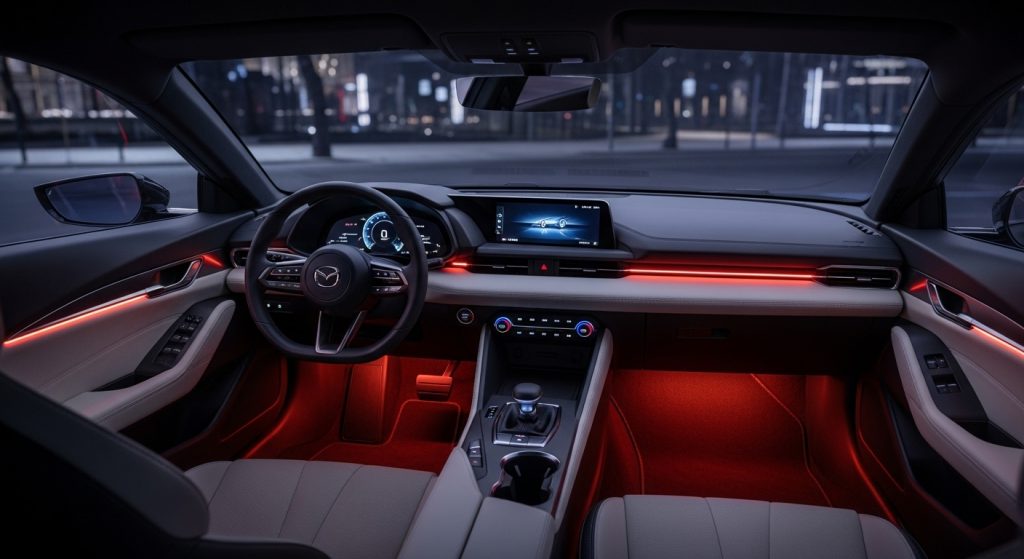
Every few years a concept car drops that doesn’t just get attention — it sets the entire enthusiast world on fire. In 2023 it was the Cybertruck. In 2024 it was the new Supra rumors.
But in 2025?
It’s not even a close contest.
The Mazda Iconic SP has officially become the most talked-about concept car in the performance world. And not because of a marketing stunt. Not because of nostalgia bait. But because it appears Mazda is doing the unthinkable:
bringing the rotary engine back to life — and pairing it with electrification.
If this car makes it to production even at 60 percent of what we’ve seen, it won’t just revive Mazda’s halo sports car lineage.
It will rewrite it.
Here’s the full story, the insider rumors, the projected timeline, and why Bay Area enthusiasts believe Marin Mazda could become ground zero for the biggest rotary comeback in decades.
The Mazda Iconic SP: A Shock to the Entire Industry
Nobody expected Mazda to reveal anything close to a successor to the RX-7 or RX-8. The rotary engine had been called “dead” more times than anyone could count.
And then, on a quiet morning in Japan, Mazda dropped the Iconic SP — and the internet lost its mind.
What stunned everyone wasn’t just the design.
It was the powertrain:
A lightweight electric sports car powered by a rotary generator.
This isn’t a rotary sports car.
It’s an electric sports car with a rotary heart.
This is Mazda rewriting the rotary future instead of repeating its past.
A Design That Looks Like It Drove Out of a Future Mazda Museum
The Iconic SP’s design breaks every rule while still feeling unmistakably Mazda:
Key Styling Highlights
- Long hood, short deck, traditional sports-car proportions
- Low, wide stance with RX-7 vibes
- Sharp LED signature lighting
- A cabin pushed rearward for true front-mid-engine geometry
- A concept body finished in “Viola Red,” instantly iconic
- A roofline reminiscent of the Miata RF but cleaner
- Curves that feel handcrafted rather than computer generated
Design critics called it:
“Classic rotary proportions with 2030s EV aggression.”
This isn’t a retro rehash.
This is everything Mazda has learned from 30 years of sports cars — distilled into one shape.
The Rotary Engine Returns… Just Not How Anyone Expected
Mazda made a quiet promise years ago:
The rotary will return when the world is ready for it.
The world is finally ready.
But not as a high-revving, fuel-hungry primary engine.
The Iconic SP uses the rotary as an electric range extender, working alongside a dual-motor battery-electric platform.
Projected Powertrain Breakdown
- Dual electric motors
- Around 365–370 hp combined
- RWD performance
- Lightweight battery pack for true sports-car feel
- Rotary engine used strictly as a generator
- Instant torque with a unique rotary sound signature
This solves the rotary’s biggest historical flaws:
- Poor fuel economy
- Emissions limitations
- Reliability concerns
- Low torque at low RPM
Mazda didn’t revive the rotary.
Mazda evolved it.
The Driving Philosophy: Human-Centric Performance
Mazda engineers describe the Iconic SP as:
“A lightweight EV that behaves like a combustion sports car.”
That philosophy means:
- Ultra-precise steering
- Rear-drive balance
- Analog-feeling feedback
- Rapid torque delivery
- A chassis designed to communicate, not isolate
Sports cars today have become software-driven.
Mazda wants the Iconic SP to feel alive.
Power, Weight, and Performance — The Numbers Everyone Is Whispering About
Mazda hasn’t confirmed production specs, but insiders and supplier rumors suggest the following targets:
Projected Performance
- 0–60 mph in the low 4-second range
- Curb weight under 3,200 lbs
- 70–100 kWh class battery pack
- Rotary generator recharging on-the-fly
- Close to 50/50 weight distribution
- Multi-link rear suspension
- Instant torque with rotary-supplemented endurance
If this is true, the Iconic SP would land between:
- Toyota Supra
- BMW Z4
- Alpine A110
- Tesla Roadster (if it ever launches)
But with one huge advantage:
It doesn’t need to be plugged in constantly.
Why Bay Area Enthusiasts Think Marin Mazda Will Get the Earliest Units
California — and especially Northern California — is Mazda’s electrification hotspot.
But Marin Mazda stands out for several reasons:
1. EV-friendly region
The Bay Area leads U.S. EV adoption, making it Phase 1 territory for new electrified models.
2. High-volume premium market
Mazda sends first allocations to dealers with strong MX-5, CX-70, and CX-90 sales.
Marin Mazda checks all the boxes.
3. Seen testing in nearby regions
Multiple Mazda EV mules have been spotted in:
- San Rafael
- Novato
- Oakland
- Napa test loops
It’s no secret Mazda tests early units in the Bay Area before national rollouts.
4. Enthusiast culture
The Bay Area has one of the most passionate rotary followings in America.
This is where RX-7s and RX-8s still command cult status.
Mazda knows it.
Marin Mazda knows it.
Early adopters know it.
If the Iconic SP launches in the U.S., it’s almost guaranteed to debut in California first — and Marin Mazda is at the top of that list.
Production Rumors: When Could the Iconic SP Become Real?
Here’s what the industry believes right now:
2025–2026:
Prototype testing, validation of rotary generator, weight tuning.
2026–2027:
Final design approval, supplier contracts, production feasibility analysis.
2028 Model Year:
Possible early production release in limited numbers.
Mazda has not confirmed production, but they also haven’t denied it.
That alone has the entire industry buzzing.
And here’s the biggest indicator:
Mazda recently filed for rotary-related patents that perfectly match the Iconic SP’s layout.
Mazda is not playing around.
Iconic SP vs. the Miata — Will This Replace Mazda’s Legend?
Short answer: No.
Long answer: The Iconic SP is a sibling, not a successor.
Miata = affordable lightweight roadster
Iconic SP = premium rotary-electric halo car
If anything, the Iconic SP will elevate the Mazda brand while the Miata remains the accessible enthusiast hero.
Think of it as:
- Mazda’s NSX
- Mazda’s R8
- Mazda’s high-tech flagship
Except with Mazda’s trademark focus on purity and balance.
This Is Bigger Than a Concept. This Is a Message.
The Iconic SP is Mazda reminding the world:
“We still build cars for human beings.”
In a market flooded with heavy SUVs, touchscreens, and self-driving software, Mazda is quietly fighting for the purity of driving — using the rotary engine, of all things, to do it.
This isn’t nostalgia.
It’s evolution.
It’s Mazda positioning itself for a future where electrification doesn’t erase emotion.
The Iconic SP represents the idea that an electric sports car can still feel like a car — not a computer.
Final Take: The Mazda Iconic SP Might Be the Most Exciting Sports Car of the Next Decade
Whether it launches in 2027, 2028, or never, the Iconic SP has already changed the direction of Mazda’s performance future.
It signals:
- The rotary is back
- Mazda is entering the EV performance arena
- Lightweight sports cars still matter
- Driving feel isn’t dead
- Electrification can be emotional
And if the whispers are true, the first place many Northern California drivers will see it — or put a deposit on it — is Marin Mazda in San Rafael.
The Truth Behind Mazda’s 0% Financing — And Why Bay Area Drivers Are Using It to Beat Rising Car Costs

Car prices have climbed almost every year since 2020 — but a quiet financial loophole still exists for buyers who know where to look. It’s not a coupon, not a rebate, and not a one-day flash sale. It’s Mazda 0% APR financing, and it’s quietly become one of the most powerful tools Bay Area buyers are using to outsmart the market in 2025.
This isn’t the usual dealership pitch. In fact, many shoppers misunderstand what 0% actually means, who qualifies, and how it fits into the bigger strategy to save thousands of dollars over the next five to six years. Marin Mazda, one of Northern California’s highest-rated Mazda stores, has seen an influx of buyers specifically seeking this offer — not because it sounds good, but because the math makes sense.
This article explores the new angle no one talks about:
Why 0% APR isn’t just a financing deal — it’s a long-term hedge against inflation, rising interest rates, and the Bay Area cost-of-living squeeze.
Why 0% APR Is More Valuable in 2025 Than It Was a Decade Ago
Before 2020, 0% financing was a common marketing tool. In today’s market, where average auto loan interest rates sit between 6%–11%, the same promotion suddenly becomes extremely rare — and extremely valuable.
When interest rates rise:
- The true cost of a car inflates
- Banks profit more
- Monthly payments grow even on inexpensive vehicles
- Buyers lose negotiating power
But Mazda occasionally goes against the trend.
The result:
When every other major brand is offering 4–9% financing, Mazda occasionally drops an offer that effectively reverses inflation for qualified buyers.
It’s not a discount.
It’s not a rebate.
It’s interest-free money — a financial advantage that compounds over years.
The Hidden Math Most Buyers Never See
A typical buyer looks at monthly payment first. That’s normal.
But the real opportunity with 0% APR is in the long-term cost.
Two buyers. Same car. Two different financial outcomes.
Buyer A finances a $36,000 Mazda CX-50 at 7%.
Buyer B finances the same car at 0% from Mazda Financial Services.
After 60 months:
- Buyer A pays roughly $40,200
- Buyer B pays exactly $36,000
They aren’t getting different cars.
They aren’t getting different features.
But Buyer B simply understood how the system works — or walked into the dealership at the right time.
At Marin Mazda, more and more buyers are becoming Buyer B.
Mazda 0% APR Is Not a Sales Gimmick — It’s a Strategic Partnership
Many shoppers assume 0% financing is a dealership trick.
It isn’t.
Dealers do not set the APR.
Mazda Financial Services does — and they do it for strategic reasons:
- To keep Mazda competitive with luxury brands (Acura, Lexus, Volvo)
- To support dealerships in high-cost regions like the Bay Area
- To help customers move up to better trims with more features
- To maintain brand loyalty with high-quality, low-risk buyers
0% is a manufacturer investment — a subsidy paid by Mazda, not the dealership.
This is why Marin Mazda pushes it heavily when available:
It genuinely reduces the cost for their customers.
Where Marin Mazda Fits Into the Equation
Marin Mazda’s advantage isn’t that they “offer” 0%. Only Mazda Financial Services can do that.
The advantage is that Marin Mazda:
- Has the volume needed to secure more promotional allocations
- Has the credit support team to help more buyers qualify
- Has the inventory depth to actually pair shoppers with eligible trims
- Has a finance office skilled at converting borderline credit into approvals
- Works closely with Mazda corporate on Northern California incentive plans
In simple terms:
Shoppers are more likely to find a model with 0% APR available at Marin Mazda than at a smaller or lower-volume store.
Why High-Income Bay Area Buyers Love 0% APR
It may sound counterintuitive, but buyers with high credit scores and strong incomes pursue 0% APR more aggressively than anyone.
Because they understand one principle:
Interest saved is interest earned.
Instead of tying up cash in a depreciating asset, they finance the car at 0% and keep their capital in:
- High-yield savings
- Short-term T-bills
- Index funds
- Business accounts
- Real estate investments
In 2025, when high-yield savings accounts pay 4–5%, a 0% APR loan from Mazda becomes an investment multiplier.
Your car payment stays low.
Your savings keep growing.
You beat inflation in two directions at once.
This is why professionals from San Francisco, Marin, Oakland, and Silicon Valley are taking the deal — not because they can’t afford to pay cash, but because they’re thinking strategically.
The Models Most Likely to Get 0% Financing
While Mazda promotions vary month to month, Marin Mazda frequently sees 0% financing on:
- Mazda CX-5
- Mazda CX-50
- Mazda CX-30
- Mazda3 Sedan & Hatchback
When inventory is strong, Turbo trims and Carbon Editions may also qualify.
Hybrids and electrified models occasionally receive promotional APR when Mazda wants to accelerate adoption.
The Fine Print — Readable, Honest, and to the Point
No dealership can promise 0% for everyone.
To maximize approval chances:
- 680+ FICO score recommended
- Clean credit history
- Verified income
- Reasonable debt-to-income ratio
- Stable employment
But Marin Mazda’s finance department routinely helps buyers who assume they won’t qualify — often finding them incentives or alternative structures that outperform their bank or credit union.
Why This Matters in a Bay Area Economy Defined by High Costs
Bay Area residents face challenges other regions don’t:
- Higher insurance premiums
- Higher registration fees
- Higher cost of living
- Limited parking
- Longer commute options
That’s exactly why 0% financing hits different here.
It removes one of the major financial friction points of car ownership.
Lower interest = lower pressure.
Lower long-term cost = long-term stability.
In a market where everything costs more, 0% APR is one of the few levers left that actually reduces total spending.
Final Takeaway: Mazda 0% APR Is Not Just a Promotion — It’s a Financial Strategy
For Marin Mazda shoppers, 0% APR is more than a monthly payment incentive.
It’s a way to:
- Beat interest rate inflation
- Reduce long-term ownership costs
- Upgrade to a better trim
- Maintain financial flexibility
- Protect savings and liquidity
Connect with us


